
Reviewed · HISTORICAL TOURS
Albayzín y Sacromonte, Unesco Heritage Neighborhoods
Granada rewards slow walking, and this route makes it easier to do. You get two UNESCO Albaycín and Sacromonte neighborhoods in one guided stroll, with history tied to real streets, caves, and viewpoints. I love that you are not left to wander maze-like lanes alone, and I especially like the photo moments aimed at the Alhambra and Sierra Nevada. One thing to consider is that this is a real walking tour with hills and stairs, so comfy shoes matter.
You start in the early evening, which fits the mood of these neighborhoods. You’ll cover compact areas, but the terrain makes it feel like you traveled farther than you did. The group is small, up to 15 people, and the tour runs in English, so you can ask questions and actually hear the answers.
In This Review
- Key details that matter before you go
- Entering Albaycín and Sacromonte, the UNESCO way
- Price and logistics for a 2 to 3 hour walk
- The start at Plaza de Santa Ana, and why timing helps your photos
- Murallas del Albaycín: winding lanes, mosque remnants, and cármenes
- Viewpoints you’ll actually care about
- The likely drawback: it’s uphill and sometimes narrow
- Sacromonte caves: caló culture, ravines, and the music connection
- Why the caves feel like streets
- What to watch for
- The guide as your anti-lost tool (and your story source)
- Views and photo strategy: when to stop and how to frame it
- Who this tour suits best
- Should you book Albaycín y Sacromonte?
- FAQ
- How long is the Albaycín y Sacromonte tour?
- Where does the tour start and end?
- What time does the tour begin?
- Is it offered in English?
- What is included in the price?
- Are there monument or entry tickets included?
- What is the group size limit?
- Final take
Key details that matter before you go
- Small group size (max 15) means the guide can keep everyone together on tight streets
- Starts at 5:00 pm so you can catch golden light from the miradors
- Two UNESCO neighborhoods in one outing, with Albaycín’s Muslim-era layers and Sacromonte’s cave culture
- Views are part of the plan, including lookouts tied to the Alhambra and the Sierra Nevada
- Monument tickets not included, so plan on free-entry viewpoints and sights during the walk
Entering Albaycín and Sacromonte, the UNESCO way
Albaycín and Sacromonte feel like Granada’s two sides arguing, then agreeing. Albaycín is all angles, alleys, and neighborhood life. Sacromonte is a hillside of caves, where music and tradition are part of the scenery. Together, they give you a fuller picture of how this city shaped itself over centuries, across Muslim, Christian, and later flamenco-era identities.
What I like about this combo is that it is not just sightseeing. You walk through the physical setting where stories make sense. In Albaycín, you move through narrow lanes and intimate squares, and you can still sense the old footprint of mosques and minarets. In Sacromonte, you see how homes and gathering spaces developed around ravines, so the “caves as streets” idea clicks fast.
Other days out near Granada
- Segway Your Way Through Granada’s History: The Ultimate Ride
★ 5.0 · 334 reviews - Granada: Historic Center and Lower Albaicin Walking Tour
★ 4.7 · 136 reviews - Granada: 3-hour Historical Tour by Segway
★ 5.0 · 104 reviews
Price and logistics for a 2 to 3 hour walk
This tour is priced around $21.78 per person and typically takes about 2 to 3 hours. For that money, you are buying two things that are hard to replicate on your own: navigation through tricky streets and an organized narrative that connects what you see. If you have ever tried to find the right turn in the Albaycín, you understand why this is value.
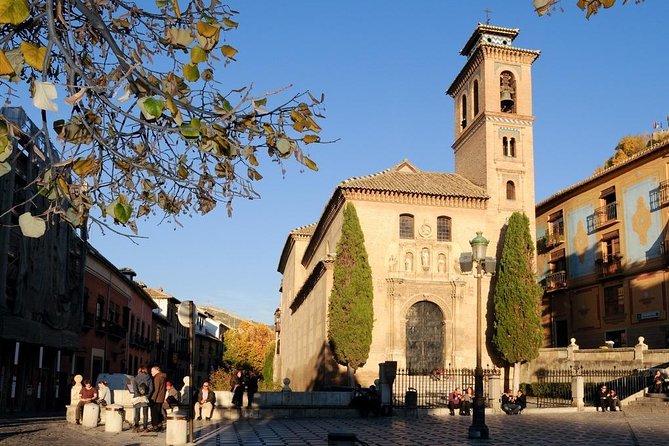
The tour starts at 5:00 pm at Plaza de Santa Ana, and it ends in the Albaycín area. It is offered in English, and it is limited to 15 travelers. That small size helps because these neighborhoods are not designed for wide sidewalks and easy U-turns.
One practical note: the listed stops are free-entry, but monument tickets are not included. So think of the walk as guided access to viewpoints and neighborhood heritage, not as a ticketed interior marathon. Also, no food or drinks are included, so plan to eat before or after.
And here’s a balanced reality check. Any walking tour can be affected by no-shows or miscommunication, even when companies work hard to prevent it. To protect your time, confirm the meeting point details you receive at booking, arrive a bit early, and keep the meeting location pin handy on your phone.
The start at Plaza de Santa Ana, and why timing helps your photos
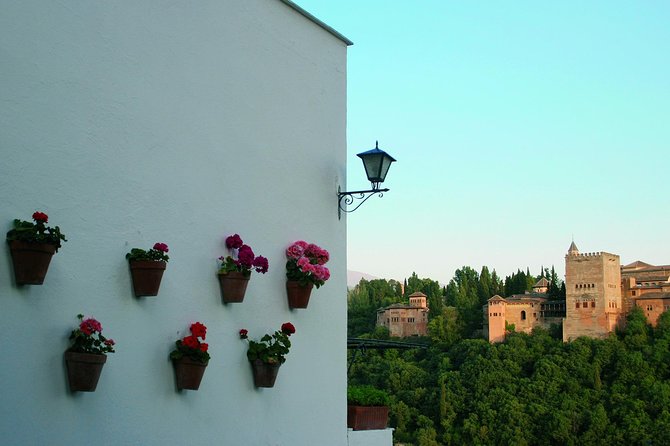
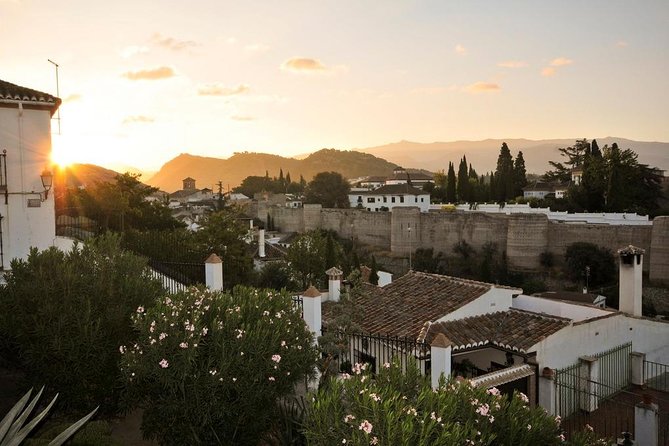
Starting at 5:00 pm is smart. Light shifts quickly in Granada, and the viewpoints in Albaycín are exactly the kind of places that look better as the sun lowers. You’ll have time for the stair-and-side-street rhythm without feeling rushed, and you should be positioned to frame the Alhambra during that softer evening glow.
You also get a benefit that is easy to underestimate: momentum. If you have just arrived, or you are still figuring out the city, the guide gets you moving in the right direction right away. The neighborhoods are beautiful, but they are not forgiving for first-time navigation.
Bring what you would bring for a neighborhood stroll with hills:
- Comfortable shoes with grip
- A light layer for evening air
- Your camera or phone, because the viewpoints are frequent
- Water if you get thirsty on climbs
Murallas del Albaycín: winding lanes, mosque remnants, and cármenes
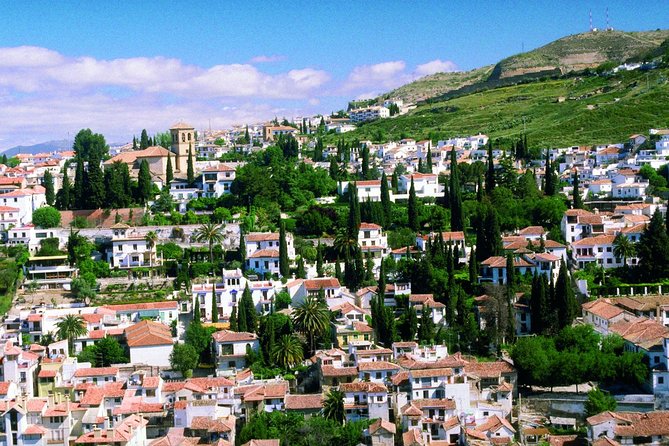
Albaycín is one of Granada’s ancient nuclei, tied closely to the Muslim city alongside the Alhambra and other historic quarters. This is the part where you really feel the neighborhood’s structure. The streets are narrow, winding, and at times elusive. Squares feel luminous and tucked away, like small rooms open to the sky.
Historically, Albaycín held a huge population for its time, around 40,000 people, and there were reportedly about 30 mosques. Even when the buildings have changed, you can still find traces that help you understand what came before. The area includes remains of mosques and minarets, plus cisterns linked to Spanish-Muslim water systems.
One of my favorite details here is the cármenes. These are houses with gardens, a signature of Granada’s style, often featuring Mudejar towers. When you spot a hidden garden behind a wall or catch glimpses of old architectural flourishes, it turns the streets from scenery into living heritage.
Also within reach of Granada:
- Granada: Alhambra & Nasrid Palaces Tour with Tickets
★ 4.7 · 19,801 reviews - Granada: Alhambra & Generalife Fast-Track Guided Tour
★ 4.7 · 8,313 reviews - Granada: Alhambra & Gardens Tour w/Nasrid Palaces Option
★ 4.2 · 7,022 reviews - Granada: Alhambra Entry Ticket with Audio Guide
★ 4.1 · 5,950 reviews
Viewpoints you’ll actually care about
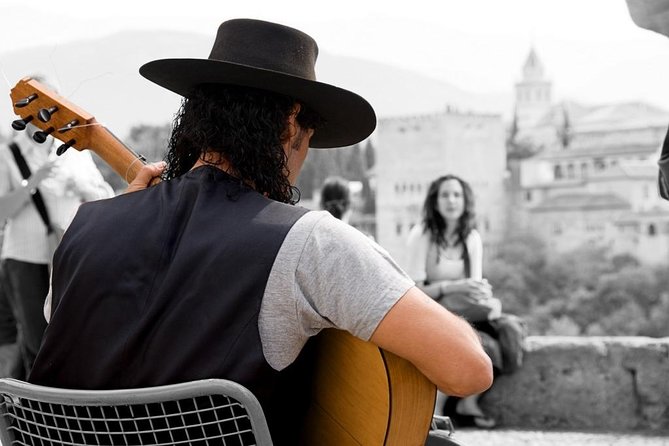
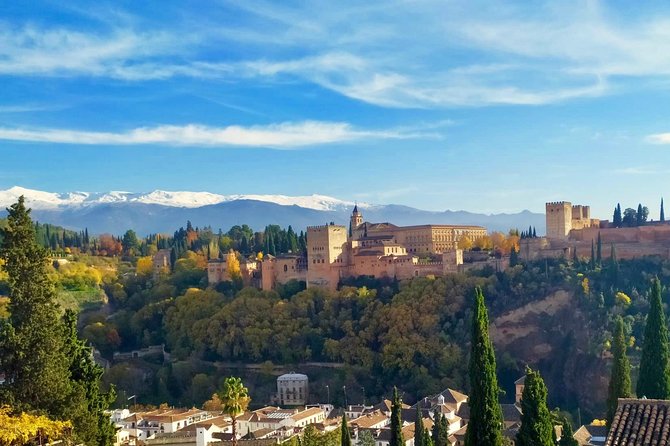
You are guided through spots with famous city views, especially the miradors at San Nicolás and San Cristóbal. These are the kind of overlooks where the Alhambra becomes more than a distant landmark. From the angles you get on this walk, the Alhambra and Granada feel connected, not separate.
You also get big-picture photo opportunities, including views toward the Sierra Nevada. Even if you only use your phone, you’ll appreciate seeing mountains and city landmarks in the same frame.
The likely drawback: it’s uphill and sometimes narrow
This is not a flat walk. You will deal with hills and stairs, and some lanes are just plain narrow. The tour helps because the guide keeps you on a route that makes sense. Still, if you struggle with steep climbs or long stair segments, this may feel like hard work rather than easy sightseeing.
Sacromonte caves: caló culture, ravines, and the music connection
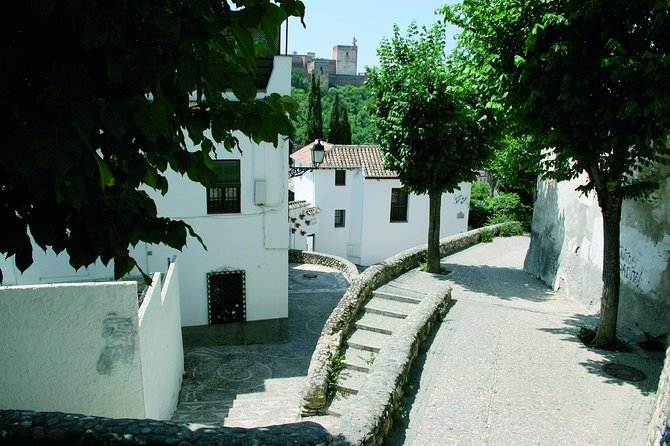
Sacromonte is the other world, the one that feels drier, hillier, and more dramatic. The hillside is reddish and dry, dotted with hardy plants like pitas and prickly pears. As you look out, the panoramas feel wide and steep: Alhambra towers, the bright slopes of the surrounding farmhouse areas, and the greenery in the Valparaíso Valley where the Darro runs.
Sacromonte is also linked to the traditional suburb of the gypsies of Granada. They spoke caló, and their story ties back to movement across regions and continents, including arrival in Spain in the 15th century. That background helps you understand why the cave district is not just architecture, it is community and identity.
Why the caves feel like streets
Here’s what makes Sacromonte special in real-world terms: the caves are grouped around ravines. That grouping creates a street-like layout, so you navigate through natural corridors of space rather than through a straight grid of urban streets. It gives you that wow moment quickly, because the geography is doing the organizing for you.
The cave homes have been used for centuries, and the area is associated with gypsies, bohemians, and flamenco artists. You’ll also hear how the famous zambras, often described as flamenco spectacles, connect to these spaces. Even without a full indoor show, the idea makes sense once you see the setting.
You may also get a practical sense of how cave homes are arranged. Typically, the entrance area leads to a kitchen next to the dining room, with one or two bedrooms deeper inside depending on the layout of the cave and the land. It’s the kind of detail that makes the caves feel lived-in, not like a museum set.
What to watch for
Sacromonte’s terrain can be uneven, and the walk includes real outdoors time. If you are sensitive to steep grades or shaky footing, take your time. Also, caves and cultural performances come with a respect factor. Move quietly where needed, follow the guide’s cues, and keep your camera use considerate.
The guide as your anti-lost tool (and your story source)
The best part of a walking tour like this is not the fact that it exists. It’s what the guide prevents. Albaycín is exactly the kind of place where you can wander for 30 minutes and still end up nowhere helpful. Here, the guide handles the navigating, so you spend your energy looking, not figuring.
I also like that the explanations connect neighborhoods to each other, especially the long thread between Muslim and Christian Granada. When you hear those connections out loud while you are standing in the street layout, it sticks better than reading it later.
The tour has attracted strong guides, and names like Ana, Jaime, Juana, and Alexandra come up for a reason: people praise clear, history-forward explanations and a pace that does not feel like a forced march. That matters because this walk is about comfort and rhythm. You’ll still climb, but it should feel like a reasonable, manageable walking pace rather than a workout disguised as culture.
Views and photo strategy: when to stop and how to frame it
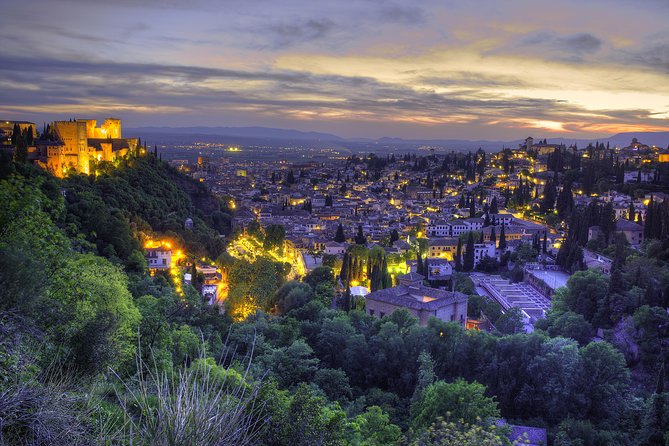
This tour is built with photo opportunities in mind. You’re not just walking past pretty corners. The plan points you toward viewpoints where the Alhambra and Granada line up in a way you can actually capture.
A helpful way to think about it:
- Early stops in Albaycín are about orientation and architectural textures
- Midway moments are about miradors and wide city angles
- Later moments in the route are where the light and views get stronger for photos
If you like taking photos, you’ll appreciate that the pacing includes time for stops rather than rushing everyone through like a conveyor belt. You will also get strong chances to include the Sierra Nevada and the Alhambra in your pictures, since the viewpoints are part of the walking story.
Who this tour suits best
This is a great fit if you:
- Want a first-time understanding of Granada’s UNESCO neighborhoods
- Enjoy history you can see in the streets, not just in book form
- Like evening viewpoints and want a guided plan for photos
- Prefer a small group setting for easier navigation
It may be a less ideal fit if you:
- Want mostly indoor attractions and ticketed monument interiors
- Have limited mobility for hills and stair-heavy walking
- Expect food, drinks, or a performance to be included
Should you book Albaycín y Sacromonte?
I think you should book this if you want a smart, efficient way to experience two of Granada’s most iconic UNESCO neighborhoods with a guide that keeps you oriented. The price feels fair for what you get, especially the guided navigation and the viewpoint focus that helps you turn the Albaycín and Sacromonte into a real story instead of a random walking loop.
If you are comfortable with hills and you want sunset-style views, this is the kind of tour that can become one of your strongest memories of Granada.
FAQ
How long is the Albaycín y Sacromonte tour?
It lasts about 2 to 3 hours.
Where does the tour start and end?
It starts at Plaza de Santa Ana in Granada and ends in the Albaycín area of Granada.
What time does the tour begin?
The start time listed is 5:00 pm.
Is it offered in English?
Yes, it is offered in English.
What is included in the price?
The tour includes an official tourism guide and a 2 hours and 30 minutes visit.
Are there monument or entry tickets included?
Monument tickets are not included. The listed stops show admission ticket free.
What is the group size limit?
The tour has a maximum of 15 travelers.
Final take
Book it if you want a guided evening walk that connects the Albaycín’s Muslim-era traces to Sacromonte’s cave culture, with viewpoints built into the route. Skip it if stairs and hills are a no-go for you, or if you were hoping for paid monument interiors and meals included.
Recently added around Granada
- Alhambra Guided Tour with Generalife Gardens★ 3.5 · 216 reviews
- Guided visit Alhambra and Generalife★ 3.5 · 86 reviews
- Walking tour in Alhambra, Nasrid Palaces and Generalife★ 3.0 · 135 reviews
- Private Tours Alhambra : Tickets & Tour Guide & Skip-the-Line★ 5.0 · 106 reviews
- Small group visit to the Alhambra with tickets included★ 5.0 · 97 reviews
- Traditional Flamenco Show★ 4.5 · 138 reviews
- Traditional Flamenco Show at Tablao Casa Ana★ 5.0 · 517 reviews
- Tickets included: Alhambra Tour (Gardens, Alcazaba, Generalife)★ 4.5 · 101 reviews
Historical Tours, compared.
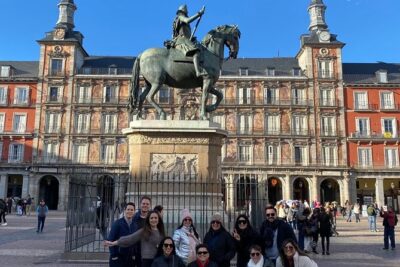
Madrid Essential: Historic Center, Plaza Mayor & Royal Palace
Read our review →
Tapas Walking Tour with Food, Wine, and History
Read our review →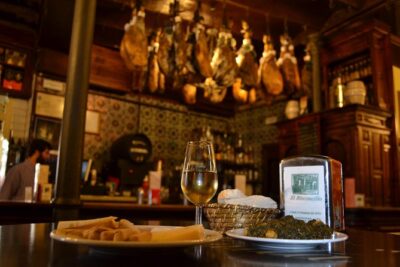
Sevilla Food Tour: Tapas, Wine, History & Traditions
Read our review →
Valencia Old Town Tour with Wine & Tapas in 11th Century Historic Monument
Read our review →
Madrid Tapas & Taverns Small Group Food & History Tour
Read our review →
Barcelona Tapas Walking Tour: Food, Wine & History
Read our review →
Ultimate Seville Tapas, Wine & History Small Group Tour
Read our review →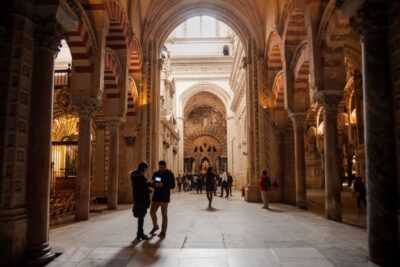
Skip-the-Line Great Mosque-Cathedral History Tour
Read our review →Browse the lists this tour appears in