

Reviewed · SIGHTSEEING BUS TOURS
Barcelona: City Sightseeing Hop-On Hop-Off Bus Tour
Barcelona is easier when you can see it fast. This hop-on hop-off bus gives you two routes, 38 stops, and a full audio tour with headphones. I like that it covers both the big landmark game and the everyday neighborhoods, so you can mix must-sees with wandering time.
My other favorite part is how simple it feels to build your own plan, from the Gothic Quarter and La Rambla area to the Sagrada Familia stop. The main drawback to plan around: the last bus leaves at 7pm from Stop 1, so late-day plans can force a taxi if you are far from your hotel.
In This Review
- Key things that make this bus tour work
- Two routes, one ticket mindset: how to use it without stressing
- Red Line: Gothic Quarter to beaches, then back toward Sagrada Familia
- Central anchors and architecture stops
- Montjuïc approach and views
- Columbus down to La Rambla energy
- Port, beaches, and the eastern waterfront
- The Sagrada Familia and photo timing reality
- Blue Line: modernism stops, Park Guell area, and Camp Nou for fans
- Passeig de Gracia and major modernism landmarks
- Park Guell and hill walking planning
- Monestir de Pedralbes and quieter stops
- Camp Nou and the football fan payoff
- Timing that actually helps: 9am to 7pm, plus how long the loop lasts
- Audio guide, free Wi-Fi, and headphones: what you get on board
- Stop selection strategy: what to hop off for and what to enjoy from the top deck
- Small frictions to plan for, so you do not lose momentum
- Stop signage and navigation
- Photo timing versus bus schedule
- Wi-Fi and audio reliability
- Weather and the open-top factor
- Price and value: is around $39 a smart buy?
- Who this tour fits best in Barcelona
- Should you book this hop-on hop-off bus in Barcelona?
- FAQ
- How long does the bus route take?
- What time do the buses run?
- How often do the buses come?
- How many routes and stops are there?
- Is an audio guide included, and in what languages?
- Can I use a 48-hour ticket on any two days?
- What is included in the price?
- What is not included?
- When does the tour operate?
- Are pets or smoking allowed?
Key things that make this bus tour work

- Two routes (Red and Blue), 38 stops that help you cover Barcelona in a short visit
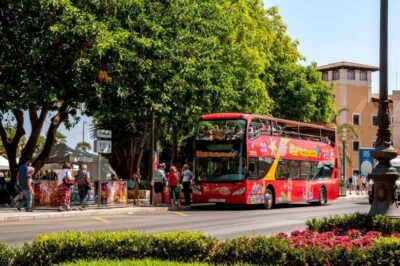
- Open-top double-decker ride with audio guide in 16 languages and free Wi-Fi
- Good for orientation, especially if you are hopping between spread-out sights
- Sagrada Familia and La Rambla are built into the route rhythm
- Camp Nou access via the Futbol Club Barcelona stop, great for football fans
Two routes, one ticket mindset: how to use it without stressing
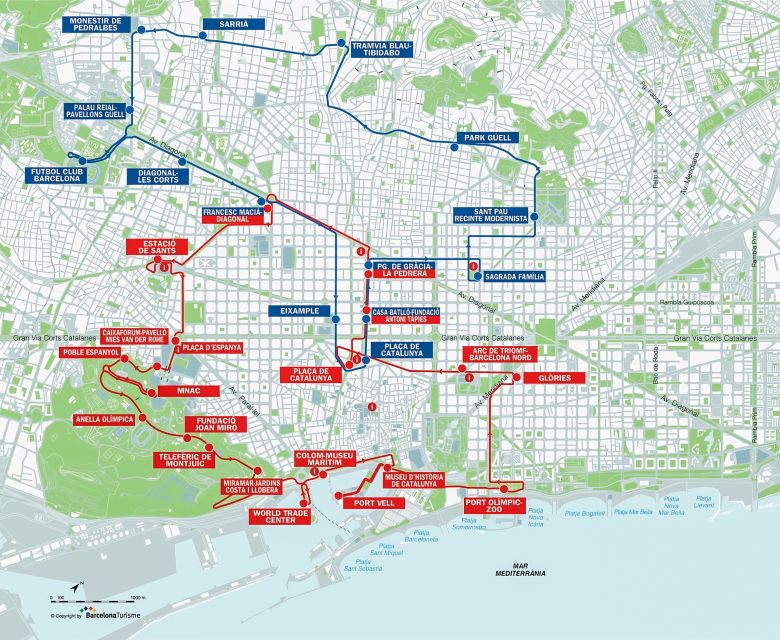
This tour is built for flexibility. You get a 24 or 48-hour hop-on hop-off ticket and you can ride the open-top double-decker buses as many times as you want within your ticket window. Each route runs as a loop, and the total route time is listed as 120 minutes, with buses running about every 20 minutes.
That matters because Barcelona is not compact. The city’s best-known sights are spread across central streets, beaches, and hillier areas. A bus ticket turns that problem into a schedule you can manage, instead of a day where you guess and backtrack.
Practical tip: use the first hour to just get your bearings. Get on, ride, listen, then decide where you actually want to get off. With a hop-on hop-off setup, the best day usually comes from choosing fewer stops and enjoying them longer.
Other days out near Barcelona
- Barcelona: 24 or 48-Hour Hop-On Hop-Off Bus Tour
★ 4.4 · 20,872 reviews - City Sightseeing Barcelona Hop-On Hop-Off Bus Tour: 24 or 48-Hour
★ 4.0 · 5,250 reviews - Barcelona City Tour Hop-On Hop-Off with Optional Boat
★ 4.0 · 3,012 reviews
Red Line: Gothic Quarter to beaches, then back toward Sagrada Familia
The Red Line is the more scenic “big swath” loop. It starts at Plaça de Catalunya, then heads through several major city zones before bringing you to the Sagrada Familia side of town.
Here are the Red Line stops, grouped by vibe, and what you should watch for as you ride:
Central anchors and architecture stops
You begin at Plaça de Catalunya, one of the easiest places to orient yourself. From there you hit Casa Batlló – Fundació Antoni Tàpies and Eixample, which is a smart early hop if you want to understand the grid and the broad avenues that shape how you move around the city.
If you want an “old meets new” contrast, this is where it starts. The route keeps you moving through recognizable areas so you can map your future walks.
Montjuïc approach and views
Later on, the Red Line heads toward the Montjuïc zone with stops like CaixaForum – Pavelló Mies Van der Rohe, Poble Espanyol, and Museu Nacional d’Art de Catalunya. Then you get into Montjuïc’s higher-feeling stops: Anella Olimpica, Fundacio Joan Miro, Teleferic de Montjuic, Miramar – Jardins Costa i Llobera.
What I like here is that you get a chance to see the hillier viewpoints without committing to a climb right away. You can always hop off and explore if you feel up for it, but you can also treat these as “preview stops” for later.
One consideration: a lot of these areas are tied to elevation. If you know walking will be hard for you, plan to hop off only once in this zone and keep the rest as ride-and-look time.
Also within reach of Barcelona:
- Barcelona: Sagrada Familia Entry Ticket with Audio Guide
★ 4.6 · 105,312 reviews - Barcelona: Park Güell Admission Ticket
★ 4.4 · 76,534 reviews - Barcelona: Casa Batlló Entry with Self-Audioguide Tour
★ 4.7 · 25,359 reviews - Barcelona: Montjuïc Cable Car Roundtrip Ticket
★ 4.5 · 22,368 reviews
Columbus down to La Rambla energy
The route then transitions toward the waterfront and classic strolling streets. You pass World Trade Center, then land at Colom – La Rambla. This is one of the best places to get off if you want nightlife and food energy, since La Rambla is highlighted as a vibrant stretch with countless bars and eateries.
This is also where you can “reset” your day: hop off, wander, snack, then come back when you are ready for another neighborhood.
Port, beaches, and the eastern waterfront
Continuing along the Red Line you hit Museu d’Historia de Catalunya, Port Olimpic, and the beach series: Platja del Bogatell, Platja Nova Mar Bella. Then the route keeps going with Forum and Parc Diagonal Mar, plus Poblenou and Torre Glories.
This run is useful if you want a taste of Barcelona beyond the postcard blocks. You are not stuck only in historic centers. You also get a sense of where the city breathes out toward the coast.
The Sagrada Familia and photo timing reality
Near the end you reach Sagrada Familia and then Arc De Triomf.
Here is a practical note: the stop near Sagrada Familia can be busy, but the route positioning is still a big win for first-time visitors. One helpful tip from the experience of others is that you may find photo opportunities from the area around the stop, rather than needing a long extra walk before you reach the sights.
Also, if you care about photos from the bus itself, remember the bus is moving and stops only briefly. Plan for a few “bus shots,” then do the real photos on foot at the main hop-off stops.
Blue Line: modernism stops, Park Guell area, and Camp Nou for fans

The Blue Line is a clean “another angle on Barcelona” loop. It also starts at Plaça de Catalunya, but the route quickly swings into more north and hillier stops.
Passeig de Gracia and major modernism landmarks
You pass Casa Batllo – Fundacio Antoni Tapies again, then go to Passeig de Gracia – La Pedrera. The route also includes Sant Pau Recinte Modernista, which is exactly the kind of stop that makes this line feel like more than just a transportation shortcut.
If you like strolling, this is a good line to pair with self-guided wandering later. You will see where the big boulevards are, and you can come back on foot when you want to slow down.
Park Guell and hill walking planning
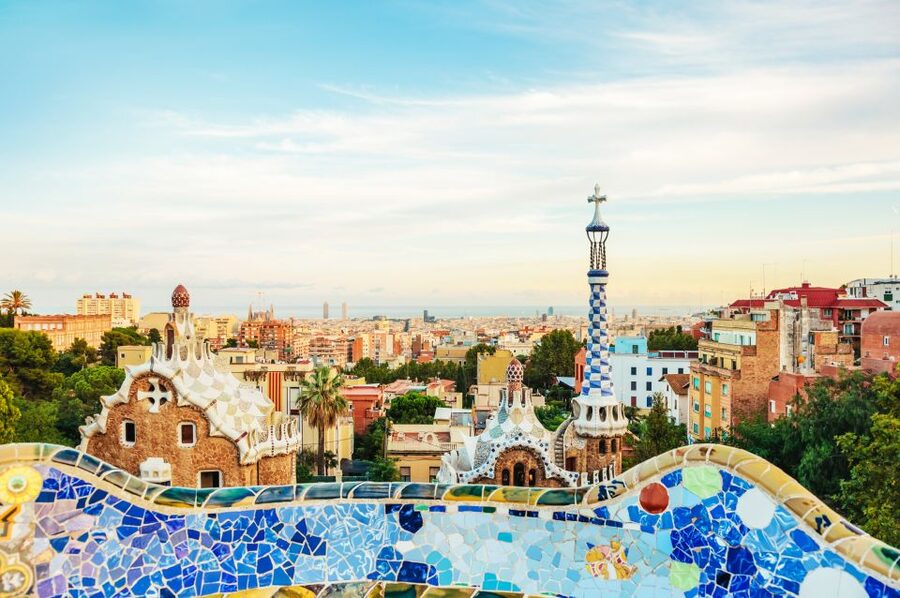
The Blue Line takes you toward Park Guell, plus Tramvia Blau – Tibidabo and the surrounding higher areas. This is where you need to plan your expectations about walking.
A real-world consideration is that the bus stop for Park Guell may be a distance from the entrance, which can mean a steep uphill walk. If you want to minimize effort, treat this as a “decide on the ground” stop: hop off only if you are ready for that climb, or plan a shorter visit.
Monestir de Pedralbes and quieter stops
The route also hits Sarria, Monestir de Pedralbes, and Palau Reial – Pavellons Guell. These can feel like a change of pace from the central bustle. Even if you do not get off, the ride gives you a sense of how varied Barcelona is.
Camp Nou and the football fan payoff
The Blue Line includes Futbol Club Barcelona. If football matters to you, this is a straightforward way to reach the stadium area without relying on transfers and timing.
Practical tip: treat this as a “get there, then do your thing” stop. If you have a match or tour booking, build in buffer because the bus schedule has a loop rhythm, and you do not want to cut it close.
Timing that actually helps: 9am to 7pm, plus how long the loop lasts
The tour runs all year except 1st January and 25th December. On top of that, you can use both routes each day, and the schedule is consistent: the first bus departs from Stop 1 at 9am, and the last bus leaves Stop 1 at 7pm.
Two timing facts to keep in mind:
- The loop time for a route is about 120 minutes
- Buses run about every 20 minutes (and the company also notes exclusive buses can run more frequently in high season)
So, if you want to do more than two major stops, start earlier. A tight day can work, but only if you pick your priorities and do not get pulled into “just one more” stop that turns into a late hop-off scramble.
One more timing gotcha: if you assume the buses end when you reach the final stop in the route, you can get caught. The end of the day is tied to that last bus time, so if you are somewhere mid-route close to the cutoff, plan for an alternate ride.
Audio guide, free Wi-Fi, and headphones: what you get on board
This tour includes an audio guide in 16 languages: Spanish, Catalan, Chinese, English, French, German, Italian, Japanese, Portuguese, Russian, Dutch, Hebrew, Swedish, Arabic, Turkish, Norwegian.
I like that you are not stuck only with one language. It makes the ride feel like part of your day’s sightseeing, not just a bus ride. And headphones are supplied on site, though you can bring your own.
You also get free Wi-Fi. In real life, Wi-Fi performance can be uneven, so do not treat it like a guarantee for streaming or heavy work. Use it as a bonus, not your backbone.
If you are the type who likes learning without turning your day into homework, the audio guide is paced to be usable. Just keep an eye on the bus map so you know when you want to hop off, because the stop time can be short.
Stop selection strategy: what to hop off for and what to enjoy from the top deck
The tour has 38 stops, and that can tempt you into doing too much. My recommendation is simple: pick your “anchor stops,” then use the rest as ride previews.
Here are strong categories of hop-off stops you can build around:
- Orientation stops near Plaça de Catalunya and Eixample, so you understand the layout quickly
- Iconic landmark stops, especially around Sagrada Familia
- Stroll and food areas, especially La Rambla (via Colom – La Rambla)
- Neighborhood contrasts, like the move from central areas toward the waterfront and beaches
- Interest-driven stops like the Picasso Museum stop that is part of the wider route story, plus the Picasso-linked city arts options referenced in the experience overview
About photographs: the open-top deck is great, but the bus moves through busy streets and stops can be brief. If you want crisp photos, treat it like this:
- Take a few quick shots from the top deck as you pass major sights
- Do your slow photo work when you step off
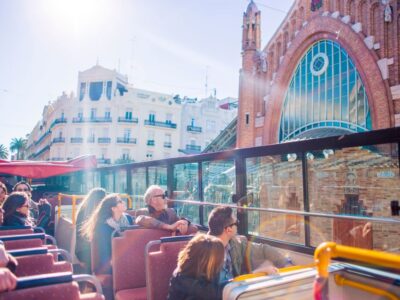
A small operational reality: sometimes getting from the lower level to the top deck takes a bit, and drivers may keep timing tight. If you want the top deck, be ready when the bus pulls in.
Small frictions to plan for, so you do not lose momentum
Hop-on hop-off tours are smooth when you expect them to be exactly what they are: shared public transport with a sightseeing agenda. Here are the main frictions worth planning around, based on real patterns of how the service feels.
Stop signage and navigation
Even when stops are labeled, you may still find that some areas are not clearly signed once you get off. Build in a minute or two to confirm your direction, especially around major attractions where multiple bus lines can overlap.
Photo timing versus bus schedule
If you are chasing the perfect shot at a famous site, the bus might not pause long enough for you to get everything. Keep your expectations realistic, then plan a foot stop for your priority photos.
Wi-Fi and audio reliability
The audio guide is included and works in many languages. That said, there can be moments where the audio cuts out briefly, and Wi-Fi can be spotty from bus to bus. This is not a dealbreaker, just a reason to keep the map handy.
Weather and the open-top factor
The buses are open-top double-deckers, but you are not locked out in bad weather. In rain, the roof can be activated to keep you drier, which helps if your Barcelona day turns from sun to drizzle.
Price and value: is around $39 a smart buy?

Pricing can feel hard to judge in a city like Barcelona, because there are dozens of separate tickets for separate sights. This tour tries to do something different: it packages transportation and orientation plus a guided layer.
At about $39 per person, here is how the value adds up:
- You are paying once for the chance to ride across multiple neighborhoods without constant metro planning
- You get 38 stops and audio narration in 16 languages
- You can structure your day around your interests, not around your legs
- If you buy 48-hour and spread it across consecutive days, you get a better shot at covering more than just a single “highlights run”
The best value usually comes from using the tour early in your trip, then returning on foot later. Treat it like your city map you can ride. If you try to cram it like a strict one-day checklist, you might feel rushed, even if the route is excellent.
Who this tour fits best in Barcelona
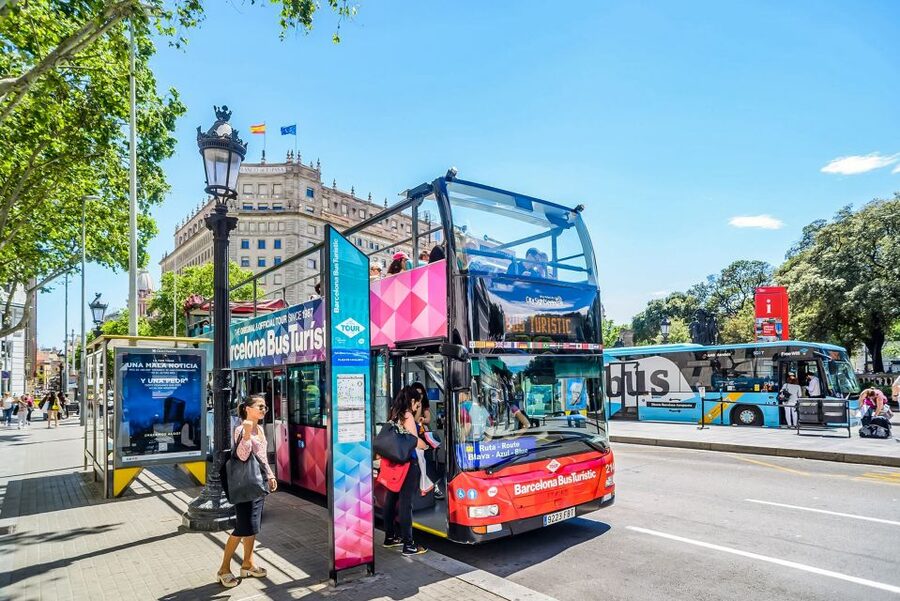
This bus works especially well if:
- You want to get your bearings fast without doing math on transit routes
- You like a mix of famous sights and real neighborhoods, including the La Rambla nightlife zone
- You want minimal walking between far-apart areas, especially if you have a tight itinerary
- Football is on your must-do list, since Futbol Club Barcelona is on the Blue Line
It may be less ideal if you already know Barcelona well and plan to rely mainly on one or two focused neighborhoods. In that case, you might skip the bus and spend your time walking straight to what you came for.
Should you book this hop-on hop-off bus in Barcelona?
Yes, I think you should book it if your goal is an easy first pass at Barcelona that covers Sagrada Familia, the central city blocks around Plaça de Catalunya and Eixample, and the classic walking energy near La Rambla. The two-line setup also gives you a lot of flexibility for a 1 to 2 day stay.
I would book with a simple plan: start earlier, pick a few anchor stops, and do the deeper exploration after the bus has helped you understand where everything sits. If you hate time limits and hate walking uphill, then pay extra attention to where you choose to get off, especially around higher-area stops like the Park Guell region.
If you want a low-stress way to see more of Barcelona without constantly switching transit and rechecking routes, this is one of the most practical buys you can make.
FAQ
How long does the bus route take?
The tour duration listed for a route is 120 minutes.
What time do the buses run?
The first bus departs from Stop 1 at 9am, and the last bus departs from Stop 1 at 7pm.
How often do the buses come?
Buses run every 20 minutes. The operator also notes that in high season you may see exclusive buses running every 5 minutes to reduce waiting.
How many routes and stops are there?
There are 2 routes and 38 stops total.
Is an audio guide included, and in what languages?
Yes. You get an audio guide commentary in 16 languages, with headphones provided on site.
Can I use a 48-hour ticket on any two days?
No. A 48-hour ticket must be used on consecutive days.
What is included in the price?
Included items are the 24 or 48-hour hop-on hop-off bus tour, audio guide commentary with headphones, free Wi-Fi, a Barcelona city map, and a discount booklet.
What is not included?
Attraction tickets, food, and drink are not included.
When does the tour operate?
It operates all year round except 1st January and 25th December.
Are pets or smoking allowed?
Pets are not allowed. Smoking is also not allowed.
Recently added around Barcelona
- Barcelona Grand 2-Hour Segway Tour★ 4.8 · 240 reviews
- Barcelona Insiders Segway Tour 1.5h★ 4.8 · 149 reviews
- From Barcelona: Girona and Costa Brava Day Tour★ 4.7 · 397 reviews
- Barcelona: Park Güell Guided Tour with Skip-The-Line Entry★ 3.6 · 124 reviews
- Gaudi’s Crypt in Colonia Güell with Audioguide★ 4.4 · 201 reviews
- Gaudí Experiència Barcelona Admission Ticket★ 4.0 · 516 reviews
- From Barcelona: Dalí Triangle and Cadaques Tour★ 4.8 · 207 reviews
- From Barcelona: Tossa de Mar Day Tour with Beach Time★ 4.9 · 306 reviews
Sightseeing Bus Tours, compared.


City Sightseeing Barcelona Hop-On Hop-Off Bus Tour: 24 or 48-Hour
Read our review →
Granada City Train 1 or 2-Day Hop-On Hop-Off Ticket
Read our review →
Barcelona City Tour Hop-On Hop-Off with Optional Boat
Read our review →Browse the lists this tour appears in