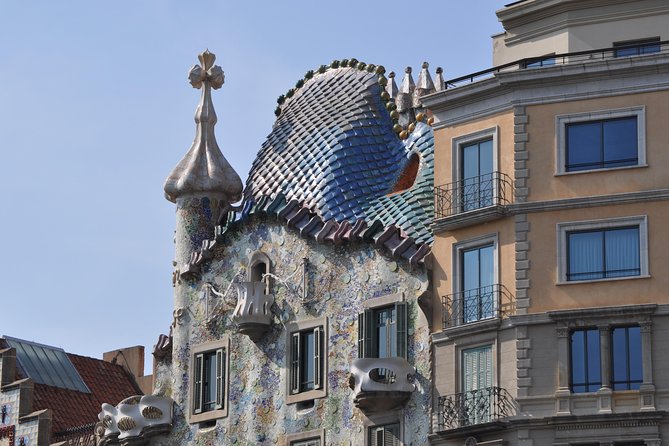
Reviewed · BARCELONA TOURS & ACTIVITIES
Barcelona & Gaudi. Regular Tour
Gaudí on the street, explained by architects. This 3 hour walk threads Modernist Barcelona into one storyline, from early social concerns to the spiritual, late-life intensity you see in the city’s most famous facades. You’ll be stationed right in the Eixample area, with multiple landmark exteriors and plenty of interpretive talk so the buildings make sense fast.
I especially like two things about this tour. First, it is led by practicing architects, so the explanations land like real architecture talk, not just movie-tour trivia. Second, the group stays small, with a maximum of 20 people, which means Q and A actually works and you can get answers as you go.
One drawback to plan for: this is an outdoor-focused route. You don’t go inside the buildings, so if your main goal is interior access, you’ll need to pair this with other ticketed stops.
In This Review
- Key things to know before you go
- Modernism makes more sense when architects narrate the walk
- Where you start and how to time your day in Barcelona
- Casa Milà, La Pedrera: why the outside view is the whole point
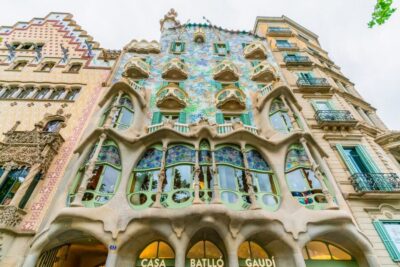
- Casa Batlló: seeing the Gaudí arc as you compare facades
- Casa Calvet and La Mansana de la Discordia: architecture as a neighborhood argument
- Fundació Antoni Tàpies: how the walk extends beyond Gaudí
- The Modernism route themes you’ll actually carry with you
- Price and value: is $54.44 worth 3 hours of architecture talk?
- Who should book this Barcelona Architecture Walk (and who should skip it)
- Should you book? My straightforward take
- FAQ
- How long is the Barcelona and Gaudi regular tour?
- What time does the tour start, and where is the meeting point?
- How many people are in the group?
- Do you go inside the buildings during this tour?
- What are the main stops on the route?
- Is the tour offered in English?
- Does the tour use mobile tickets?
- What is the cancellation policy if my plans change?
Key things to know before you go
- Architect-led, not script-led: you get Modernism context from people who work with design every day
- Small group, max 20: easier to ask questions and keep a steady pace
- No interior visits: you’ll study exteriors and ideas, not buy tickets for rooms
- Stops across the Gaudí universe: Casa Milà, Casa Batlló, Casa Calvet, plus the comparison block of La Mansana de la Discordia
- Big ideas along the route: socialism, anarchism, eclecticism, and the end of Modernism all get woven into what you see
Modernism makes more sense when architects narrate the walk
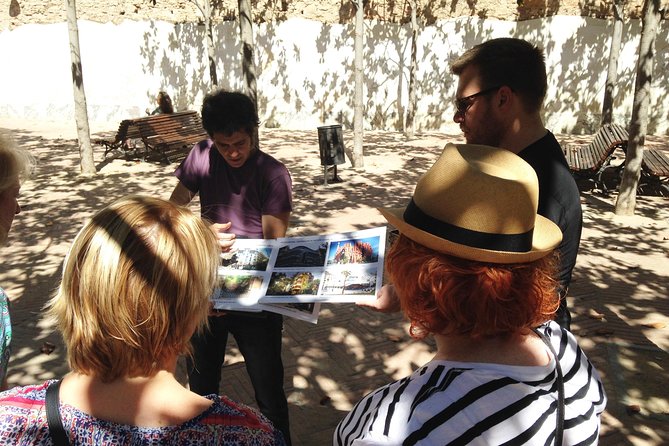
Barcelona’s Modernisme can feel like visual overload if you only skim facades and take photos. What makes this tour different is the tone. You’re not just told which architect did what. You’re shown how ideas shaped the work, and how the city’s social and political currents helped push Modernism into its final, dramatic phase.
And yes, the guide matters. This experience is led by practicing architects, and that shows in the way the tour connects form to meaning. In the same way a good lecturer can clarify a hard textbook, the explanations here help you read the buildings without needing a degree in design.
I also like that the Modernism story is not forced into a single straight line. The talk covers the arc from Gaudí’s early concerns to a total absorption with the divine, then it zooms out to cover broader movements like eclecticism and the end of Modernism. It is the kind of framing that makes later independent sightseeing easier, because you start recognizing patterns instead of just collecting names.
Other days out near Barcelona
- Barcelona: Sagrada Familia Entry Ticket with Audio Guide
★ 4.6 · 105,312 reviews - Barcelona: Park Güell Admission Ticket
★ 4.4 · 76,534 reviews - Barcelona: Casa Batlló Entry with Self-Audioguide Tour
★ 4.7 · 25,359 reviews
Where you start and how to time your day in Barcelona
This walk starts at 10:30 am at Monument al Llibre, Gran Via de les Corts Catalanes, 634, L’Eixample, 08007 Barcelona. It ends back at the same meeting point, so you are not stranded across town when you finish.
The tour is about 3 hours. That timing is practical in Barcelona, where half-day plans often get derailed by long waits and transit zig-zags. Here, you can build this into a day that also includes a major Gaudí stop later on, or you can treat it like your “orientation walk” before you dive deeper on your own.
A few practical prep tips based on how these tours operate:
- Bring comfortable walking shoes. This is a city neighborhood walk.
- Dress for weather. The experience requires good weather, so plan a flexible day or keep an indoor backup option nearby.
- Plan around your own energy. “Most travelers can participate” tells you it is not an extreme hike, but it is still real walking.
Also, the tour uses a mobile ticket, and it is offered in English. If you care about audio clarity, you’ll appreciate that the pace is designed for small-group conversation rather than one long monologue.
Casa Milà, La Pedrera: why the outside view is the whole point
Casa Milà, La Pedrera is your first stop, and that is smart. It sets the emotional and visual tone early, so later comparisons feel sharper instead of confusing. Even without entering, the exterior lets you focus on how Gaudí treats surface and mass as part of the story.
During this part of the walk, the themes you hear about include deliquescent surfaces and the broader turn in Gaudí’s life. That matters because it gives you a lens to look through. Instead of treating details like decoration, you start reading them like “ideas made visible.” This is especially helpful on a tight schedule. You do not have to master every architectural term. You just learn what to pay attention to.
The realistic downside is also clear here: because there is no interior access, you won’t get the room-by-room experience that some ticketed tours offer. But for many people, that is not a problem. Exterior Modernism is still the main event in the Eixample, and this tour is built for the street-level version of understanding.
Casa Batlló: seeing the Gaudí arc as you compare facades
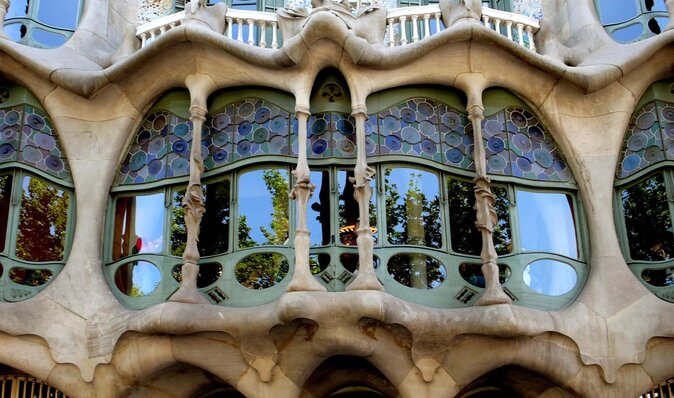
Stop two is Casa Batlló. This is where the experience shifts from “here is a famous building” into “here is a pattern.” If you’re the type who wanders and wonders why two facades feel related, you’re going to like how the tour guides your comparisons.
You’ll connect what you see to the wider storyline the guide is building: Gaudí’s shift from social concerns toward a more divine obsession. That narrative thread helps you make sense of why the work feels emotionally intense rather than just stylistic. Even if you don’t memorize the timeline, you will feel how the tour keeps asking the same underlying question: what is Gaudí trying to do to the viewer?
Another reason this stop works on a walk is pace control. With a maximum of 20 people, you can actually slow down at the moments that matter. When a guide points out what to look for, you can turn, compare, and ask. That is the big advantage of a small-group format, especially with architecture where the details are easy to miss when you rush.
Also within reach of Barcelona:
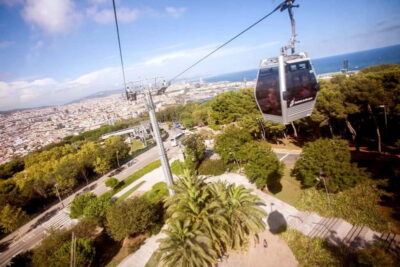
- Barcelona: Montjuïc Cable Car Roundtrip Ticket
★ 4.5 · 22,368 reviews - Barcelona: Hola Barcelona Public Transport Travel Card
★ 4.5 · 20,985 reviews - Barcelona: 24 or 48-Hour Hop-On Hop-Off Bus Tour
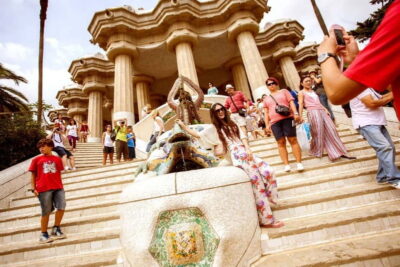
★ 4.4 · 20,872 reviews - Barcelona: Park Guell Guided Tour with Skip The Line Entry
★ 4.7 · 17,563 reviews
Casa Calvet and La Mansana de la Discordia: architecture as a neighborhood argument
Then you hit Casa Calvet. It’s a great “breather” stop, because it keeps you grounded in Gaudí while the tour builds momentum toward the comparison block.
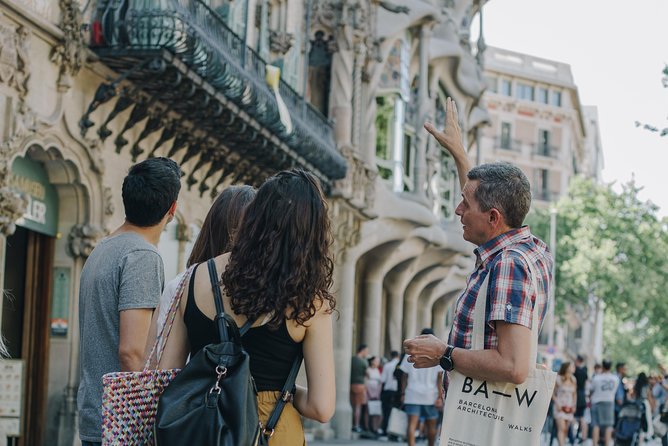
After that, you go to La Mansana de la Discordia. This is the part of the walk that feels almost like a living debate between architects, because the area gathers different Modernist voices into one compact stretch. The experience highlights how this kind of eclecticism plays out in the Eixample, and it connects those visual differences to cultural and intellectual currents.
In the tour’s framing, you also hear about the intellectual bourgeoisie and how Modernism gets wrapped up in ideas from the period. You even get references to the Spanish Civil War and anarchism, which might sound far from pastel facades. But the point is not to turn the walk into a history lecture. The point is to show how the “end of Modernism” mood arrived from the same world that produced political pressure and cultural argument.
What you’ll likely enjoy here is how the tour makes you switch from “look at building” to “look at relationships.” Instead of treating each facade as separate, you start seeing how they face off within the same urban block.
One more practical note: if it is crowded outside on your day, this stop can feel busy. You’ll still get value because the group stays small and the guide keeps everyone moving intentionally, but you should keep expectations realistic. You are in one of Barcelona’s most famous streetscapes.
Fundació Antoni Tàpies: how the walk extends beyond Gaudí
Stop five is Fundació Antoni Tàpies. This helps the tour avoid the common trap of turning everything into a straight Gaudí-only sprint. Even when your main goal is Modernism and Gaudí, it helps to see how Barcelona’s creative story continues through later art and cultural work.
This stop also gives you a mental reset. After a cluster of famous residential facades, the foundation context broadens the conversation. You start thinking about the city as a place where ideas keep evolving, not just a museum of one architect’s peak decade.
I like this kind of ending because it makes the walk feel complete rather than chopped off. You finish with a sense of where these design ideas live in Barcelona culture beyond street photography.
The Modernism route themes you’ll actually carry with you
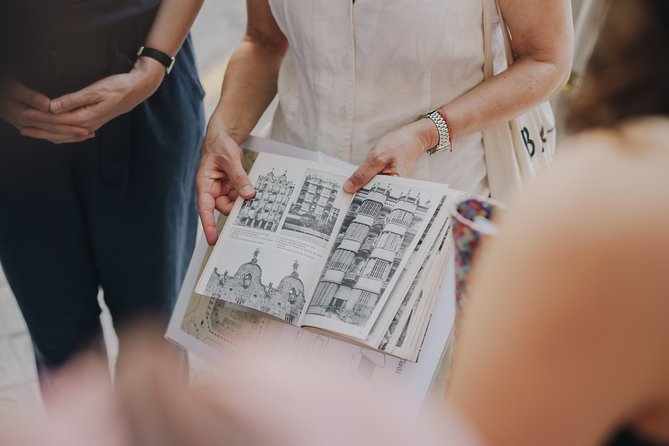
The tour is built around a Modernism storyline, often using Gaudí as the central thread. It traces the route from his social concerns to a later total absorption with the divine, then it widens to cover the end of Modernism and why it unfolded the way it did.
Here are the themes you can expect to hear, and how they help you when you’re walking Barcelona on your own afterward:
- The spiritual turn in Gaudí’s work: you’ll hear how his life changes what the architecture tries to do
- Connections to major works you may not visit on this walk: the guide talks about the Crypt of Colònia Güell and the Sagrada Família, so you’re not stuck with only what you see in front of you
- Eclecticism and the end of Modernism: you’ll understand why the style feels like it is reaching an endpoint, not just continuing forever
- Political and intellectual pressure: utopian socialism, positivist materialism, the intellectual bourgeoisie, the Spanish Civil War, and anarchism are woven in so the art does not feel disconnected from the era
- Beatification and deliquescent surfaces: these ideas help you interpret Gaudí’s late-life intensity as more than aesthetic experimentation
If that sounds like a lot, here is the practical part. The best architecture guides do not dump terms at you. They use concepts to tell you what to notice at each stop. So you end up with a set of “looking habits,” like paying attention to how surfaces read emotionally, how comparison blocks change your perception, and how political context can explain why styles got extreme.
And yes, the vibe matters here too. The tour has a reputation for a friendly, humorous approach. If your guide is Pia, you can expect a mix of warmth, compassion, and a sense of humor that keeps the talk light even when the themes get serious.
Price and value: is $54.44 worth 3 hours of architecture talk?
At $54.44 per person for about 3 hours, you are paying for three things: expert guidance, a curated sequence of landmark exteriors, and interpretation that helps you understand what you’re seeing.
Is it cheap? No, not in the way a “hop on a hop off” bus is cheap. But it is good value if architecture is your thing and you want context instead of just a checklist of buildings. A big chunk of what you’re buying is time with an architect-led perspective, plus the convenience of hitting several major Gaudí and Modernist points in one focused outing.
There’s also a quality-of-experience angle. The group size maxes at 20, and that usually means less waiting, fewer bottlenecks at each facade, and a better chance your questions get answered on the spot. In Barcelona, where crowds can turn walking tours into a slow shuffle, that small-group format is not a minor detail. It is the difference between hearing ideas and just standing near them.
Another practical value point: this experience tends to book ahead, on average about 41 days. If you’re traveling in peak season, treat it like a plan you should lock in early rather than waiting until the last week.
Who should book this Barcelona Architecture Walk (and who should skip it)
You should book if:
- You want Gaudí and Modernisme explained through real architecture thinking
- You like guided walks where the guide connects buildings to broader ideas
- You prefer small groups and a talk that you can participate in
- You are happy to study exteriors rather than needing inside access
You might skip it if:
- Your top priority is entering specific buildings and seeing interiors
- You only want fast photo stops with minimal discussion
- Weather is a big risk for your dates, since the tour requires good weather
If you fall in the middle, a good approach is pairing this with at least one major ticketed stop later in your trip. Let this walk give you the “why,” then use your separate tickets for the “what it looks like inside.”
Should you book? My straightforward take
I’d book this if you want your Barcelona time to feel smarter, not just longer. The best part is the architect-led perspective, combined with a small group size that keeps the tour interactive. You also get a clear storyline that covers more than Gaudí trivia, including how political and intellectual currents shaped Modernism into its dramatic final chapter.
The tradeoff is simple: no interior visits. If you can live with exterior-focused sightseeing, this tour is a strong way to get oriented and to understand what you’ll see for the rest of your trip.
FAQ
How long is the Barcelona and Gaudi regular tour?
It runs about 3 hours.
What time does the tour start, and where is the meeting point?
It starts at 10:30 am at Monument al Llibre, Gran Via de les Corts Catalanes, 634, L’Eixample, 08007 Barcelona, Spain.
How many people are in the group?
The tour has a maximum of 20 travelers.
Do you go inside the buildings during this tour?
No. The tour does not go inside the buildings.
What are the main stops on the route?
The stops include Casa Milà, Casa Batlló, Casa Calvet, La Mansana de la Discordia, and Fundació Antoni Tàpies.
Is the tour offered in English?
Yes, it is offered in English.
Does the tour use mobile tickets?
Yes, it includes a mobile ticket.
What is the cancellation policy if my plans change?
Free cancellation is available up to 24 hours in advance of the experience start time for a full refund. The tour also requires good weather, and if it is canceled due to poor weather, you will be offered a different date or a full refund.
Recently added around Barcelona
- E-Bike tour in Barcelona with English Guide★ 5.0 · 128 reviews
- 2 Wineries Small Group Tour with Free Hotel PickUp from Sitges★ 5.0 · 83 reviews
- Barcelona: Wine Tasting and 5 Course Tapas Pairing Dinner★ 4.5 · 129 reviews
- Wine Tasting Experience in Barcelona★ 5.0 · 172 reviews
- Barcelona: Guided Rooftop Wine Tasting – Enjoy 6 Spanish Wines★ 4.5 · 61 reviews
- Barcelona Luxury Yacht Cruise – Day or Sunset, Open Bar & Snacks★ 5.0 · 154 reviews
- Entrance to the Mirador Torre Glories Barcelona★ 4.5 · 193 reviews
- Barcelona Wax Museum Admission Ticket★ 4.5 · 237 reviews
Barcelona Tours & Activities, compared.
Sagrada Familia Entry Ticket with Audio Guide
Read our review →

Park Guell Guided Tour with Skip The Line Entry
Read our review →