
Reviewed · AUDIO TOURS
Barcelona: Mies van der Rohe Pavilion Ticket and Audio Guide
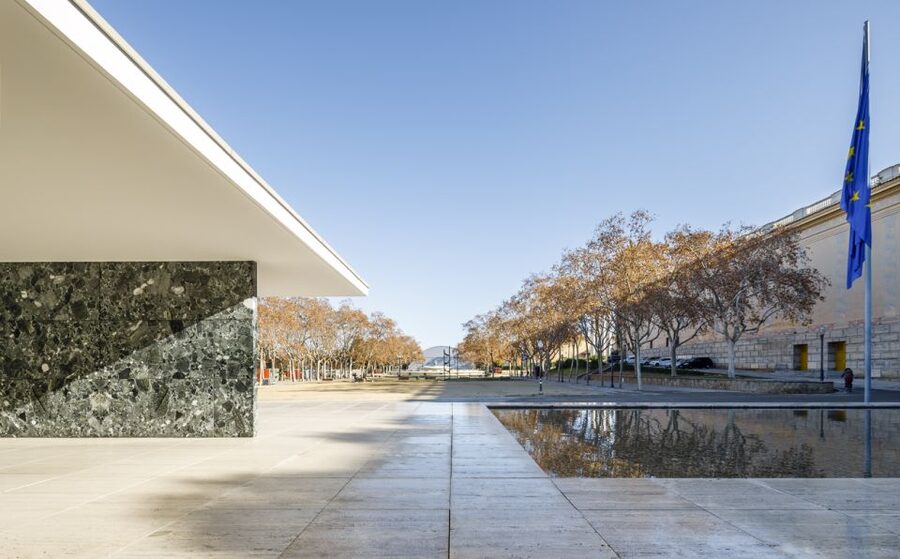
Minimal buildings can feel huge. The Mies van der Rohe Pavilion is one of Barcelona’s most influential Modern Movement spaces, built with such restraint that you start noticing details you’d normally miss. This skip-the-line ticket plus a built-in audio guide makes it easy to understand why architects still treat this place like a reference point.
I especially like the way the pavilion stays calm. There is no clutter, no noise needed. Just clean lines, carefully chosen materials, and an atmosphere that encourages you to slow down.
One possible drawback: the pavilion is intentionally minimal. If you come expecting big spectacle, you may finish thinking, that was it? The payoff is how much meaning you can pull from a small space, once you use the audio guide.
In This Review
- Key Things You Should Know Up Front
- Arrive Ready to See One Idea, Not a Whole Museum
- Your Ticket Plus the 5-Language Audio Guide (This Is the Real Value)
- Stepping Into the Pavilion: What You’ll Notice First
- The Design Details: Material Contrasts and Why They Matter
- The 1929 Story and the 1986 Reconstruction You Should Understand
- A Calmer Visit Than Big Sights, With One Caveat
- Where to Focus Your Time (So You Do Not Rush the Point)
- Rules That Affect Your Experience (Easy to Follow)
- Pricing and Value: Is $10 Worth It?
- Who This Is Best For (And Who Might Want to Skip)
- Should You Book This Mies Pavilion Ticket?
- FAQ
- How long is the visit?
- What languages are available for the audio guide?
- Is there an option to skip the ticket line?
- Is the pavilion wheelchair accessible?
- Are pets allowed inside?
- Are food and drinks permitted?
- Can I cancel if my plans change?
Key Things You Should Know Up Front
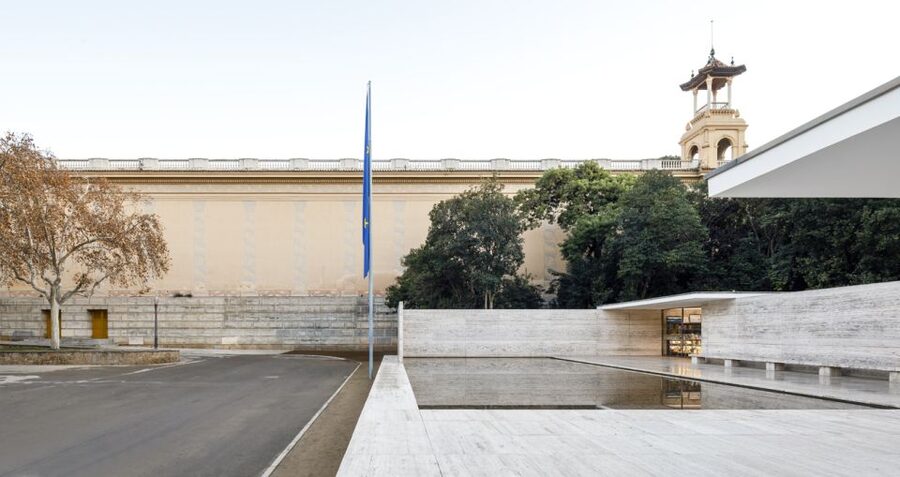
- Pared-down modernism you can actually read with your eyes
- A 5-language audio guide that helps you connect the design to its 1929 purpose
- A real reconstruction story, reopened on its original site in 1986
- Material choices with geographic clues, including stones associated with the Alps, Tivoli, Atlas, and Tinos
- A quieter visit pace than many top sights, with occasional artistic interventions
- A short nature trail nearby for an easy after-walk stretch
Arrive Ready to See One Idea, Not a Whole Museum
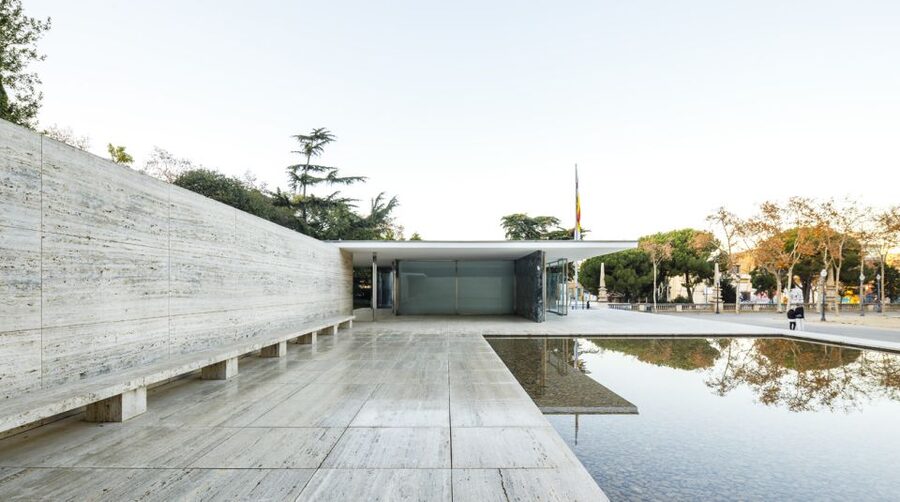
The best way to enjoy the Mies van der Rohe Pavilion is to treat it like a short architectural “argument.” It presents one strong idea: how far you can strip things down and still make a place feel exact, balanced, and powerful.
So when you arrive, set expectations for a calm, focused visit. Think of it as a guided looking exercise. You are not chasing rooms and galleries. You are studying proportions, edges, and the relationship between interior and exterior space.
If you can, time your arrival so you are ready to start when your visit begins. One very practical tip from real-world visits: arrive on time. When you do, the experience feels smoother, and you spend less energy figuring out what to do next.
Other days out near Barcelona
- Barcelona: Sagrada Familia Entry Ticket with Audio Guide
★ 4.6 · 105,312 reviews - Barcelona: Park Güell Admission Ticket
★ 4.4 · 76,534 reviews - Barcelona: Casa Batlló Entry with Self-Audioguide Tour
★ 4.7 · 25,359 reviews
Your Ticket Plus the 5-Language Audio Guide (This Is the Real Value)
This experience is sold as an entrance ticket that includes an audio guide in Spanish, Catalan, English, French, and German. That matters because the pavilion’s impact is not just visual. It is interpretive.
When you have the audio, you get context on what you are looking at, including the pavilion’s role in the 1929 Barcelona International Exhibition as the German national pavilion. You also learn why it disappeared and why it came back.
For me, this is the difference between viewing a striking modern building and actually understanding why it became a benchmark. Even if your architectural knowledge is basic, the audio gives you a map for your attention. You start noticing the precise contrast between materials, and you begin to understand the sobriety of the forms as an intentional design choice, not a lack of ornament.
The site is also described as wheelchair accessible, which is great if mobility is a factor for you. You can still get the full experience because the space is designed to be seen as a whole.
Stepping Into the Pavilion: What You’ll Notice First
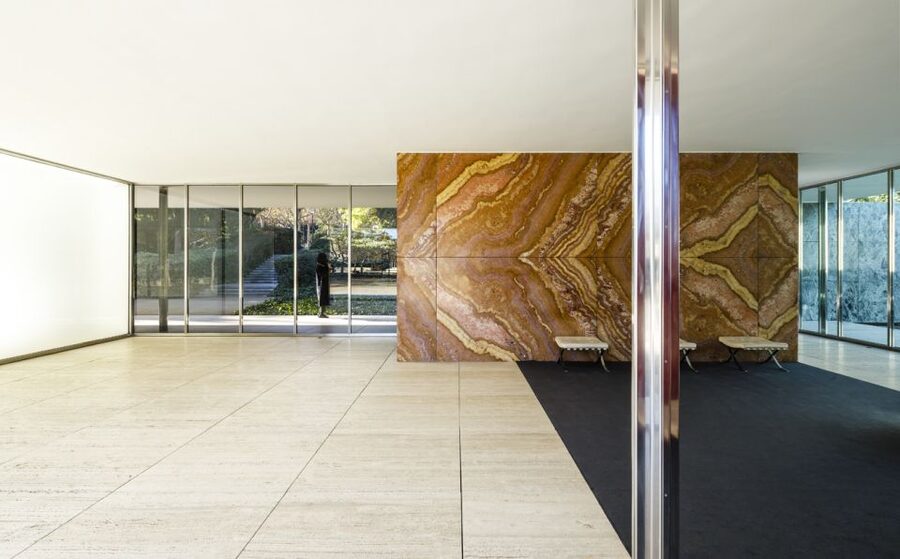
The pavilion is all about essentials: purity of form, sobriety, and how space flows. You will quickly see that the design uses the relationship between interiors and exteriors as part of the composition.
Here is what to watch for as you move through:
- How walls, floors, and open sections seem to guide your eye
- The balance between solid surfaces and the air around them
- The way you can feel the structure’s logic even when it is visually light
It helps to think of the pavilion like a “frame.” It does not overwhelm you with objects. It frames space so you can experience geometry at human scale. That is why so many architects reference it, even when they never visit. The idea travels better than the building itself.
The Design Details: Material Contrasts and Why They Matter
One of the most rewarding aspects of the pavilion is how the materials create a quiet drama. The description highlights a precise palette, with components brought from places associated with the Alps, Tivoli, Atlas, and Tinos.
You do not have to memorize stone sources to appreciate the effect. What matters is that the contrast is intentional. The pavilion is basically teaching you to look:
- at how different surfaces meet
- at how light reads across planes
- at how the palette stays controlled, so nothing competes with the overall form
If you like architecture for its craft, this is a sweet spot. The site is small enough that you can take your time, but not so small that you feel stuck. You are free to pause and let details register.
It is also worth knowing that the pavilion has been used by professionals for photography and modeling. That can happen during your visit, and it can actually change the feel of the space, because the pavilion was designed for strong visual alignment. If you see equipment, the key rule is simple: tripods are not allowed.
Also within reach of Barcelona:
- Barcelona: Montjuïc Cable Car Roundtrip Ticket
★ 4.5 · 22,368 reviews - Barcelona: Hola Barcelona Public Transport Travel Card
★ 4.5 · 20,985 reviews - Barcelona: 24 or 48-Hour Hop-On Hop-Off Bus Tour
★ 4.4 · 20,872 reviews - Barcelona: Park Guell Guided Tour with Skip The Line Entry
★ 4.7 · 17,563 reviews
The 1929 Story and the 1986 Reconstruction You Should Understand
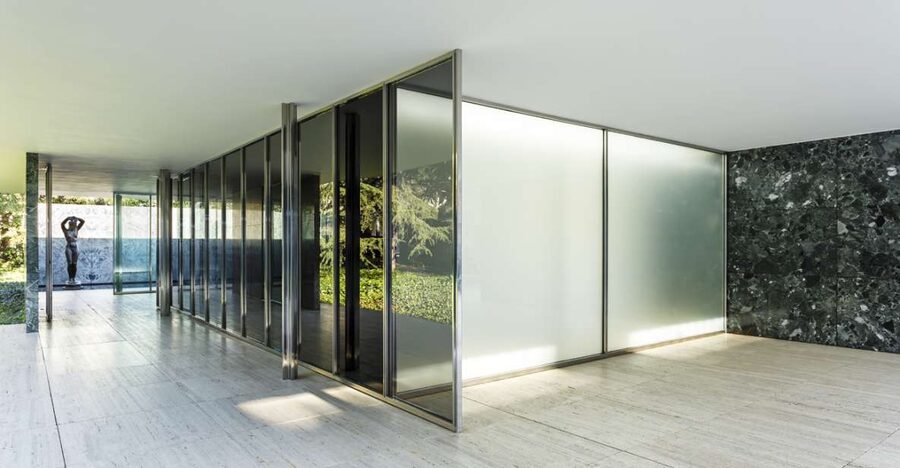
This pavilion does not have a normal life story. It was designed by Mies van der Rohe and Lily Reich for the 1929 Barcelona International Exhibition, serving as the German national pavilion. After the exhibition ended, the pavilion was dismantled.
So the building you visit today is not just a monument sitting still. It is the result of preservation thinking: the pavilion’s significance was recognized, and it was later reconstructed.
The reconstruction reopened on its original site in 1986. That timing is important because it shapes your understanding. You are not only seeing Modern Movement design. You are also seeing the idea that modern architecture deserves accurate return, not just a photo and a memory.
When you connect that history to the design, the pavilion hits harder. The “essence” you see in the forms feels more meaningful because it survived dismantling and rebuilding. The place becomes a statement about architectural legacy, not just style.
A Calmer Visit Than Big Sights, With One Caveat
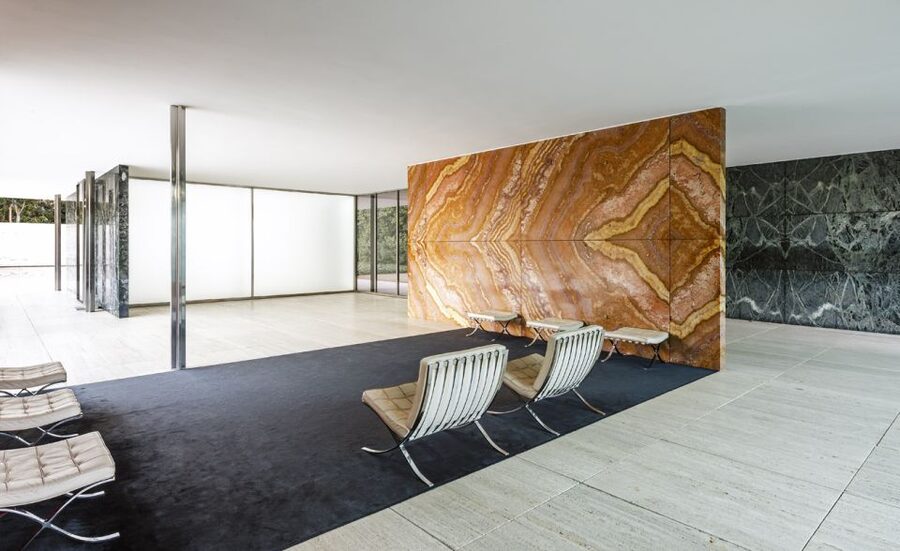
People often love the pavilion because it is not a grind. The overall tone is calm, and it is described as one of the most beautiful spaces in the city. Many visitors appreciate that you can spend time without fighting crowds.
That said, there is one caveat to keep on your radar: the pavilion can host artistic interventions, which may alter its appearance. You do not need to cancel your expectations. Just know that it is possible the pavilion may look slightly different than the photo you saw online.
Also, opening hours may change. This is not unusual for public sites, so plan to check the day’s schedule before you commit time.
Where to Focus Your Time (So You Do Not Rush the Point)
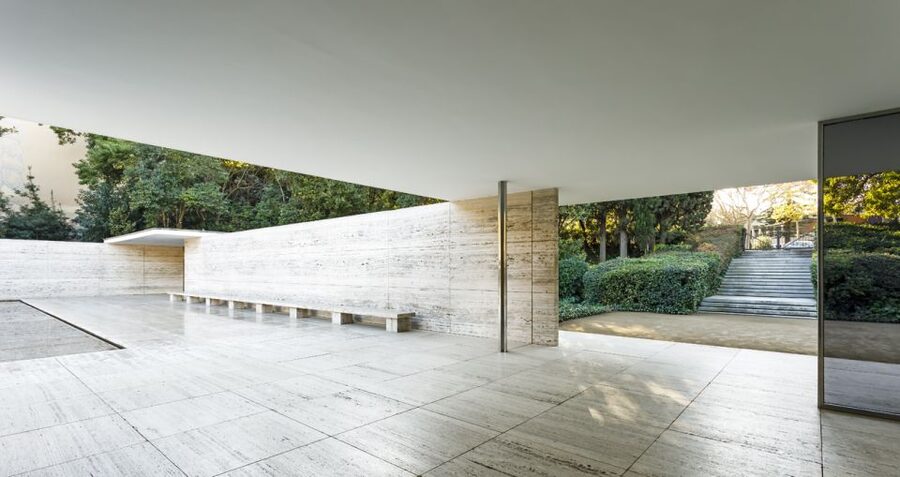
With a site like this, speed is the enemy. The pavilion’s message is subtle, and it rewards slow looking. Since your ticket is valid for one day, you can also structure your time around when the light feels best to you.
A good rhythm:
- Start with the audio guide so you know what to look for.
- Spend time observing material contrasts and the interior-exterior balance.
- Pause often. The design is simple, but it is not empty.
- Finish with a last scan of the whole composition before you leave.
If you want a little extra movement after your architectural focus, there is a short nature trail nearby mentioned by visitors. It is an easy way to shift gears without losing the calm mood of the place.
Rules That Affect Your Experience (Easy to Follow)
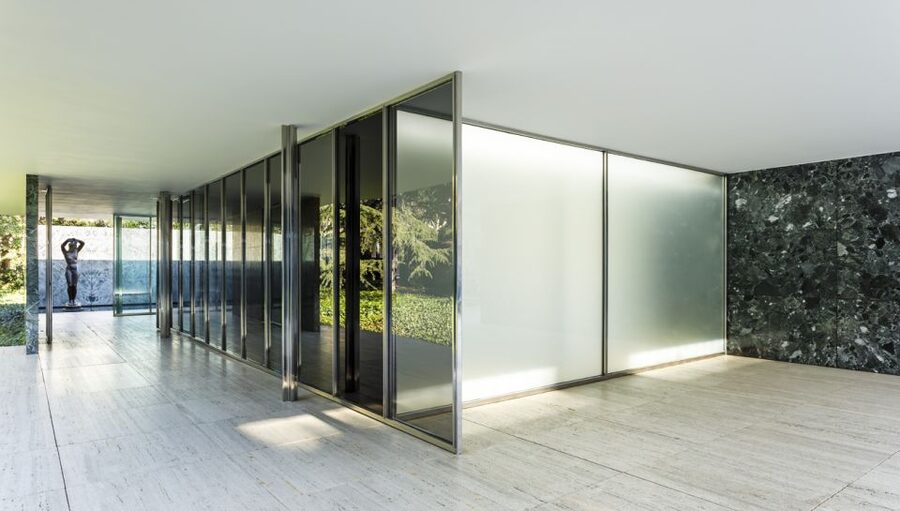
The pavilion experience is fairly straightforward, but these rules can matter to your planning:
- No smoking
- No food and drinks
- Pets are not allowed (assistance dogs are allowed)
- No tripods
- The space is wheelchair accessible
These are the kinds of restrictions that keep the visit smooth and quiet. If you hate tripods, you might actually like this rule because it reduces bulky setups. If you are carrying snacks, you will want to plan for that outside the pavilion area.
Pricing and Value: Is $10 Worth It?
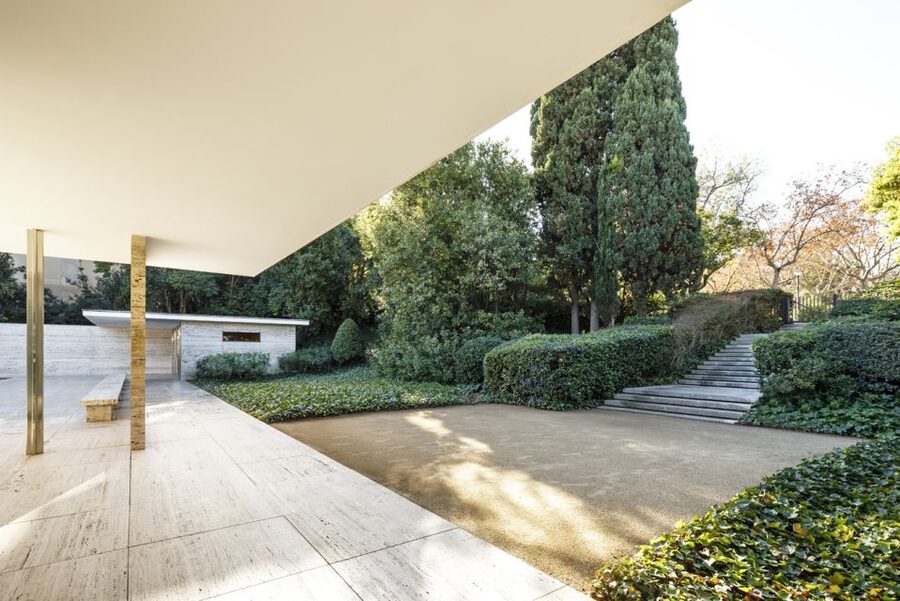
At about $10 per person, the price is modest for one of the most influential architectural works associated with Modern Movement design. The value comes from two places:
- You get the pavilion entry itself, which is not just a pretty building, it is a benchmark space
- You also get an audio guide in five languages, which is what turns the visit from sightseeing into understanding
Do note that some visitors feel the pavilion should be free, especially given how calm and compact the experience is. That reaction makes sense if you expect a larger attraction, long guided programming, or a museum-style experience.
If you are the type who enjoys short, high-focus cultural stops, $10 can feel like a fair deal. If you need a lot of content and hands-on exhibits, you might feel differently.
Who This Is Best For (And Who Might Want to Skip)
You will probably love this if you:
- care about architecture and design, even casually
- like calm spaces where you can take your time
- want the context behind why a small structure became a global reference point
- enjoy audio guides that actually help you interpret what you see
You might hesitate if you:
- want a full-day museum experience with lots of rooms
- prefer highly interactive exhibits over quiet looking
- dislike sites where artistic interventions can change the appearance
Pairing tip: If you are doing Barcelona’s big architecture day, the pavilion fits nicely alongside other iconic sights. It is a different mood, more restrained, but it makes the city’s design story feel bigger.
Should You Book This Mies Pavilion Ticket?
Book it if you want a focused, high-impact architectural stop with built-in interpretation. The audio guide in five languages plus the pavilion’s clear Modern Movement identity make this a worthwhile use of time, even if your visit is short. For $10, you are paying for access and understanding, not for a long entertainment program.
Skip or reconsider if you need constant action, lots of rooms, or a museum-style flow. The pavilion is minimal by design, and that is exactly why it works.
If you choose to go, go slowly, start with the audio, and let the calm space do its job. You’ll leave thinking about what happens when design strips itself down to essentials.
FAQ
How long is the visit?
This activity is listed as lasting 1 day. You’ll check availability to see starting times.
What languages are available for the audio guide?
The audio guide is included in Spanish, Catalan, English, French, and German.
Is there an option to skip the ticket line?
Yes. The ticket includes skip the ticket line entry.
Is the pavilion wheelchair accessible?
Yes, wheelchair access is listed as available.
Are pets allowed inside?
Pets are not allowed, but assistance dogs are allowed.
Are food and drinks permitted?
No, food and drinks are not allowed.
Can I cancel if my plans change?
You can cancel up to 24 hours in advance for a full refund.
Recently added around Barcelona
- Barcelona Grand 2-Hour Segway Tour★ 4.8 · 240 reviews
- Barcelona Insiders Segway Tour 1.5h★ 4.8 · 149 reviews
- From Barcelona: Girona and Costa Brava Day Tour★ 4.7 · 397 reviews
- Barcelona: Park Güell Guided Tour with Skip-The-Line Entry★ 3.6 · 124 reviews
- Gaudi’s Crypt in Colonia Güell with Audioguide★ 4.4 · 201 reviews
- Gaudí Experiència Barcelona Admission Ticket★ 4.0 · 516 reviews
- From Barcelona: Dalí Triangle and Cadaques Tour★ 4.8 · 207 reviews
- From Barcelona: Tossa de Mar Day Tour with Beach Time★ 4.9 · 306 reviews
Audio Tours, compared.
Sagrada Familia Entry Ticket with Audio Guide
Read our review →
Casa Batllo Admission Ticket with Intelligent Audio Guide
Read our review →
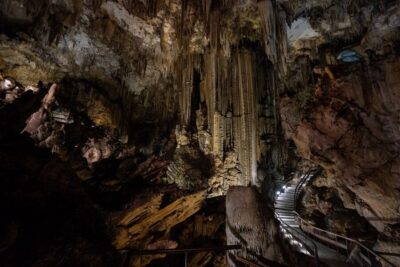
Nerja: Caves of Nerja Entry Ticket with Audio Guide
Read our review →
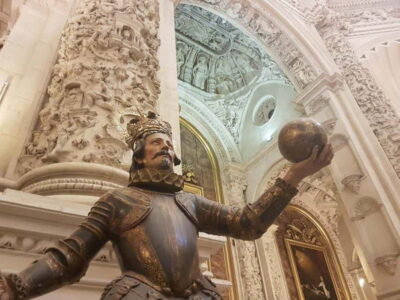
Cathedral and Giralda Entry Ticket with Audio Guide
Read our review →Browse the lists this tour appears in