
Reviewed · WALKING TOURS
Barcelona: Old Town and Gothic Quarter Walking Tour
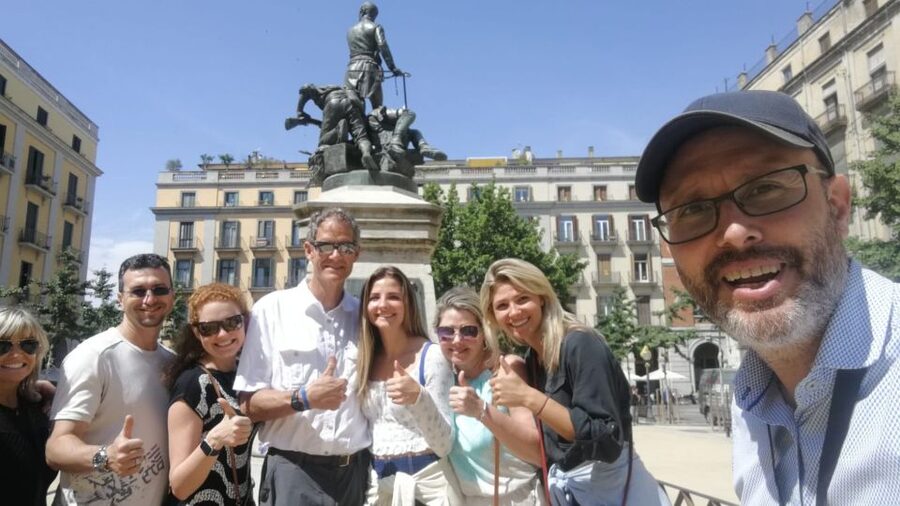
Barcelona’s Old Town tells a story. This walking tour strings together Roman, medieval, and city-life moments in just a few hours. I especially like how it connects Plaça de Sant Jaume to the Gothic Quarter, then keeps pulling you forward with stops on La Rambla and at La Boqueria.
Two things I’d put near the top of my list are the Roman-to-medieval wayfinding (you’ll walk streets that still feel political, religious, and everyday) and the market atmosphere where local food culture takes over. You’ll also hear strong, story-first guiding from names you’ll see again and again, like Alba and Omid, who keep the pace friendly and the explanations clear.
One drawback to consider: it’s built for walking time, so some sights are mainly pass-by views and you will need solid stamina. Also, they ask you to travel light because luggage or large bags are not allowed.
In This Review
- Key Points You’ll Actually Use
- Entering Plaça de Sant Jaume, Roman Barcelona Still Calls the Shots
- Gothic Quarter Power Spots: Plaça del Rei, Columbus, and Cathedral Scale
- La Rambla Morning Energy: Flower Stalls, Performers, and Easy People-Watching
- La Boqueria Market: Over 300 Stalls and the Real Taste of Catalonia
- El Born and the Medieval Coast Mood Shift
- Timing, Group Size, and What 2.5 to 4 Hours Really Feels Like
- How Much Value You Get for $21
- Who Should Book This Gothic Quarter Tour
- Should You Book This Barcelona Old Town and Gothic Quarter Walk?
- FAQ
- How long is the Barcelona Old Town and Gothic Quarter walking tour?
- Where does the tour start?
- What will I see during the tour?
- How big is the group?
- What languages are the guides?
- Is a private group available?
- What should I bring and wear?
- Are large bags allowed?
- FAQ
- Is the tour free to cancel?
- Can children join?
Key Points You’ll Actually Use
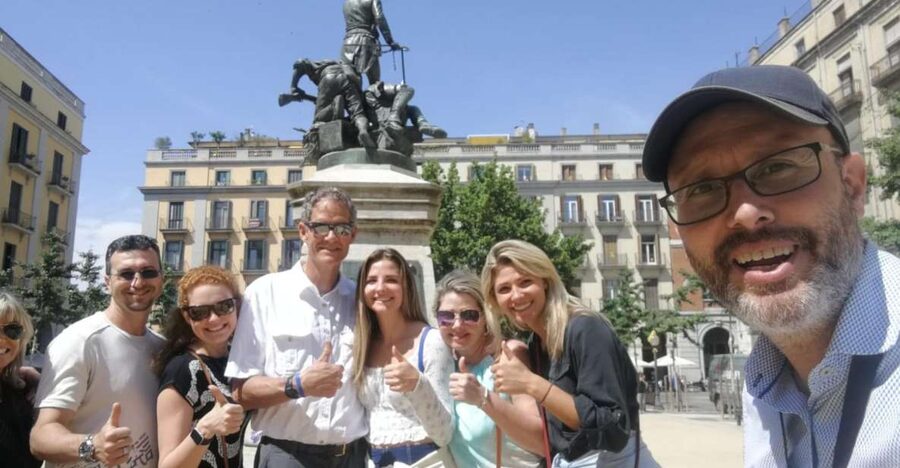
- Plaça de Sant Jaume sets the timeline, starting where a Roman forum once stood and explaining why the square stayed politically important for centuries.
- Roman walls and Pati Llimona baths stories give you everyday context, not just big-name landmarks.
- Plaça del Rei and Palau Reial link Barcelona to Columbus through the welcome by the Catholic Monarchs.
- Cathedral and Santa Maria del Mar viewpoints matter, especially Santa Maria del Mar’s fast medieval build.
- La Rambla to La Boqueria is the food-culture core, with over 300 stalls and plenty to see even if you do not snack.
Entering Plaça de Sant Jaume, Roman Barcelona Still Calls the Shots
Most walking tours in Barcelona jump straight to Gothic drama. This one starts with the political pulse: Plaça de Sant Jaume, a place where the Roman Forum once stood and where the civic heart of Catalonia kept beating for over 2,000 years. You get the sense that Barcelona did not just “get built,” it kept reusing the same strategic ground.
From there, the tour moves into Roman leftovers that you can actually picture. You’ll walk along one of the best-preserved Roman walls in the world and hear stories tied to the Roman baths of Pati Llimona, which is a great reminder that ancient cities were not only temples and rulers. You learn what everyday bathing life looked like, and how that routine shaped how neighborhoods formed around it.
This is also where pacing helps. Instead of dumping facts, the guide frames each place like a clue: square, wall, baths, then onward to medieval power. You’ll find it’s an easy way to stop feeling lost in the Old Town and start recognizing patterns.
More walking tours in Barcelona:
- Barcelona Tapas and Wine Experience Small-Group Walking Tour
★ 5.0 · 5,804 reviews - Barcelona: Tapas Walking Tour with Food, Wine, and History
★ 4.8 · 4,261 reviews - Barcelona: Food Walking Tour with Tapas and Wine
★ 4.9 · 2,180 reviews
Gothic Quarter Power Spots: Plaça del Rei, Columbus, and Cathedral Scale
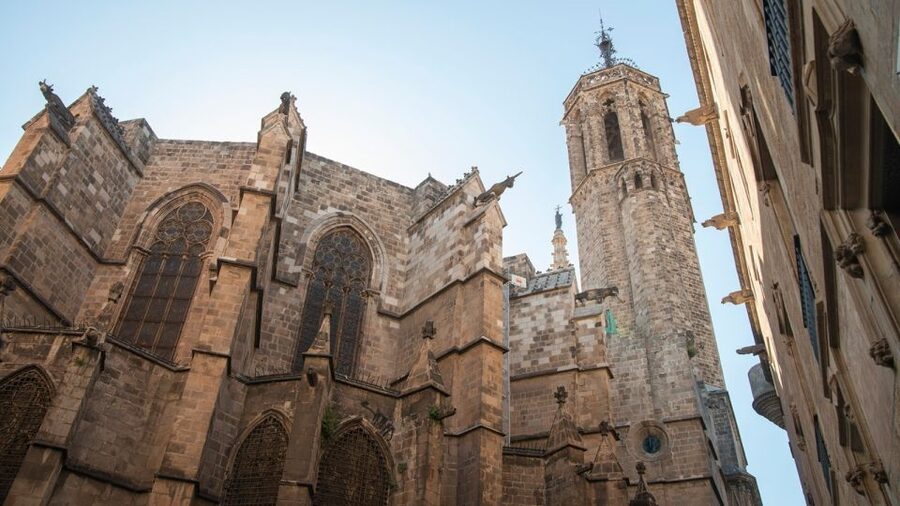
Once you step into the Gothic Quarter, the mood shifts from civic life to royal and religious symbolism. You’ll visit Plaça del Rei, which is more than a pretty square. It’s tied to the Palace of the Viceroy and the Palau Reial, where Columbus was famously welcomed by the Catholic Monarchs after his Americas journey.
Why this matters for your visit: it gives you a story anchor when you’re looking at statues, arches, and palace walls. Without that context, the Quarter can feel like beautiful stones with no thread. With it, you start noticing how the buildings reflect authority, faith, and the way Barcelona positioned itself in European history.
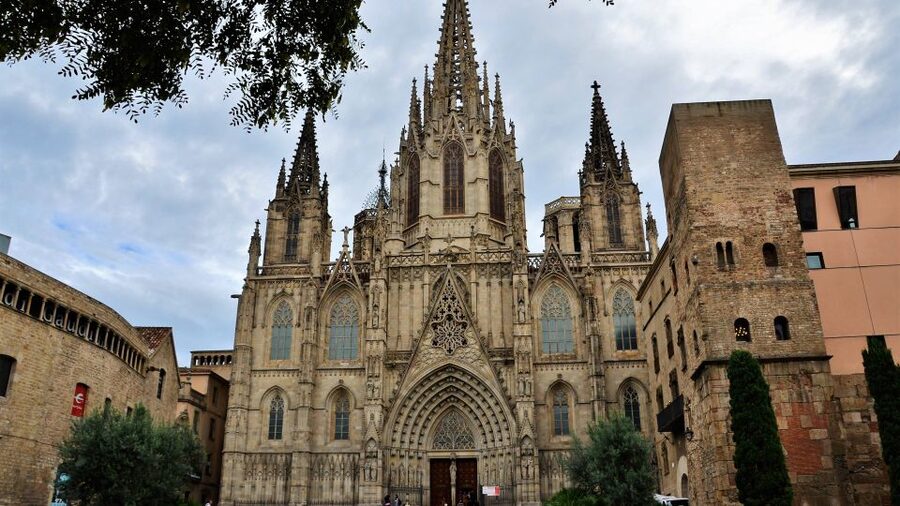
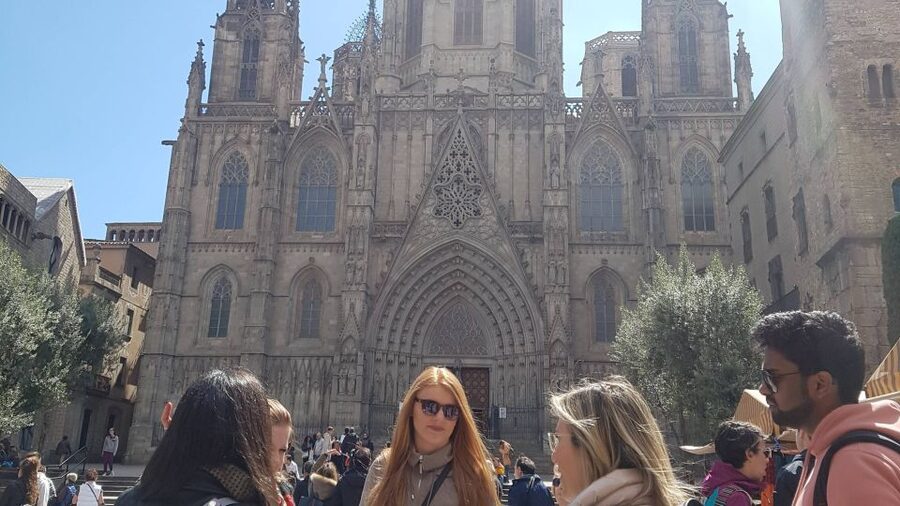
You’ll also get up close to two heavyweights of Catalan Gothic architecture: Barcelona Cathedral and Santa Maria del Mar. The Cathedral stop is a scale moment, and even from outside it helps you understand why this area became such a landmark of identity. Then Santa Maria del Mar adds a practical medieval engineering detail that sticks: it was built in an incredibly short time. That speed explains how communities organized, prioritized, and mobilized resources.
Small group guiding makes this part smoother. With a maximum of 15 people, you’re not getting swallowed by a crowd. Guides also tend to keep you moving as a unit, and many guests highlight that the walk feels organized even when the streets get tight.
La Rambla Morning Energy: Flower Stalls, Performers, and Easy People-Watching
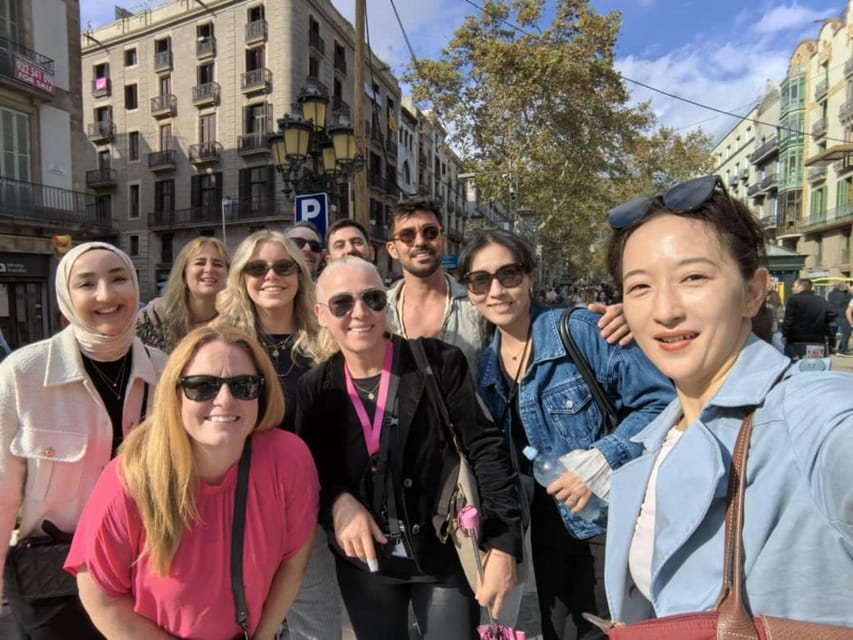
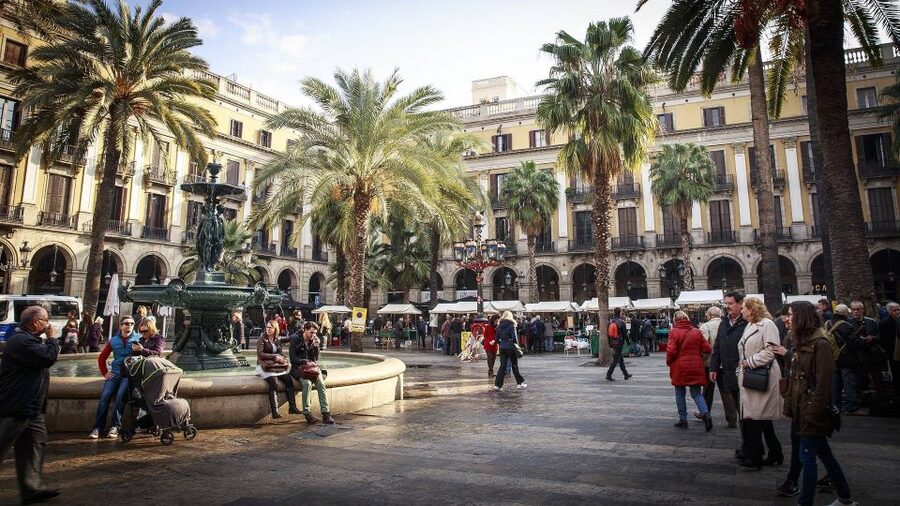
After the medieval layers, you get a street-life reset on La Rambla. This is where the tour turns from “why it was built” to “how the city lives now.” You’ll walk along the boulevard with its flower stalls, entertainers, and the mix of outdoor cafes and quick bites.
Here’s the practical value: La Rambla can be overwhelming on a first pass. A guided segment helps you separate the noise from the useful parts. You learn what to notice, where the foot traffic naturally funnels, and how to read the street like a map.
It’s also a good time to ask your guide for what comes next. Guides on these tours often share food and drink suggestions as they go, and you’ll see names like Alba show up in comments about recommending where to eat and drink. If you want an easier second day, this is the best moment to grab those ideas while your bearings are still fresh.
La Boqueria Market: Over 300 Stalls and the Real Taste of Catalonia
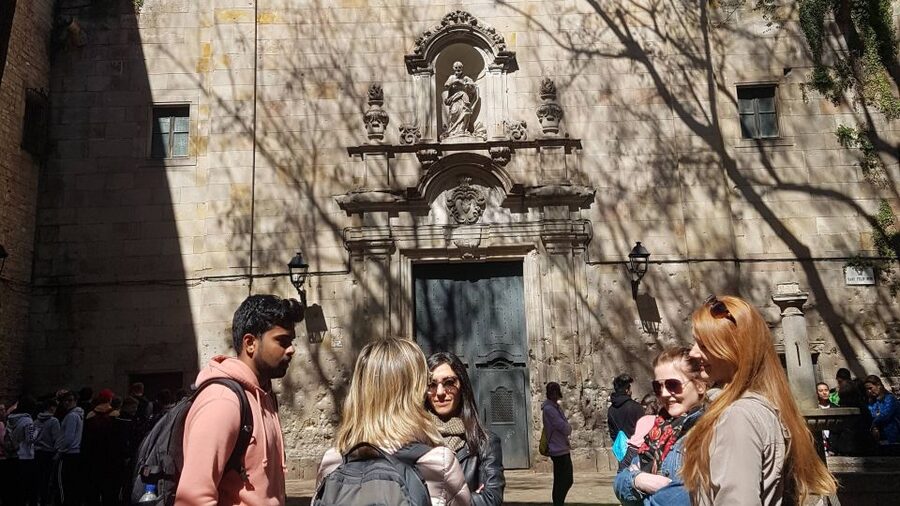
The headline food stop is La Boqueria. Expect a lot more than one or two impressive stalls. This market is known for having over 300 stalls, with a wide variety of local products, so it’s the kind of place where you can keep wandering and still keep finding something new.
What you get from including the market on a history tour is balance. You get the Roman and medieval story beats, then you see the modern city economy in action. It’s Barcelona as a working food culture, not just a museum theme.
One practical tip for you: go in with comfortable walking shoes, and give yourself permission to look first. Even if you plan to buy only later, the market is a sensory education. If you love ingredients, sauces, cured meats, fruit, and snack-sized local culture, this stop is a great return on time.
Also, remember that the tour’s price is about guiding and the walk, not about covering market spending. If you want to eat your way through Boqueria, budget extra.
Other days out near Barcelona
- Barcelona Tapas Walking Tour: Food, Wine & History
★ 4.5 · 1,928 reviews - Barcelona Helicopter, Sailboat & Old Town Private Walking Tour
★ 5.0 · 1,395 reviews - Barcelona: City Walking Tour with a Local Guide
★ 4.9 · 1,384 reviews - Barcelona: Walking tour with Montjuic Castle & Cable Car
★ 4.7 · 832 reviews
El Born and the Medieval Coast Mood Shift
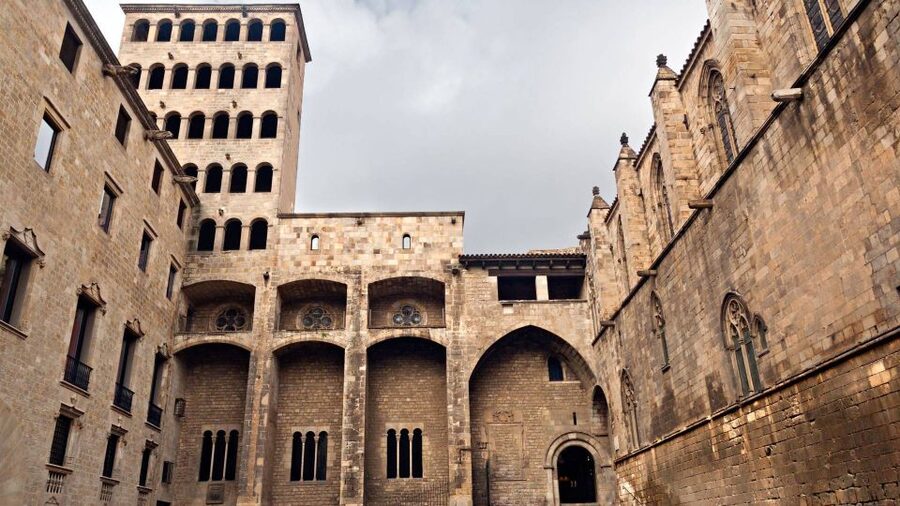
From La Rambla you head toward the atmosphere of El Born, which is often where Barcelona goes from monumental to human-sized. You’ll soak up the feel of the neighborhood with trendy cafes, boutique shops, and lively streets. It’s a softer landing after the Cathedral and market intensity.
In a good guide-led walk, El Born is not just a “nice area to stroll.” It’s a bridge between eras. You start understanding how medieval foundations shaped the street grid and how today’s shops and cafes occupy that same framework.
The tour also includes pass-by moments that still help you plan your next steps. You’ll see St. Mary of the Sea Cathedral from the route and get additional context for why this area matters to the story of the city. And you’ll pass by the Palace of Catalan Music, a stop that can help you decide if you want to come back later for a deeper visit.
Timing, Group Size, and What 2.5 to 4 Hours Really Feels Like
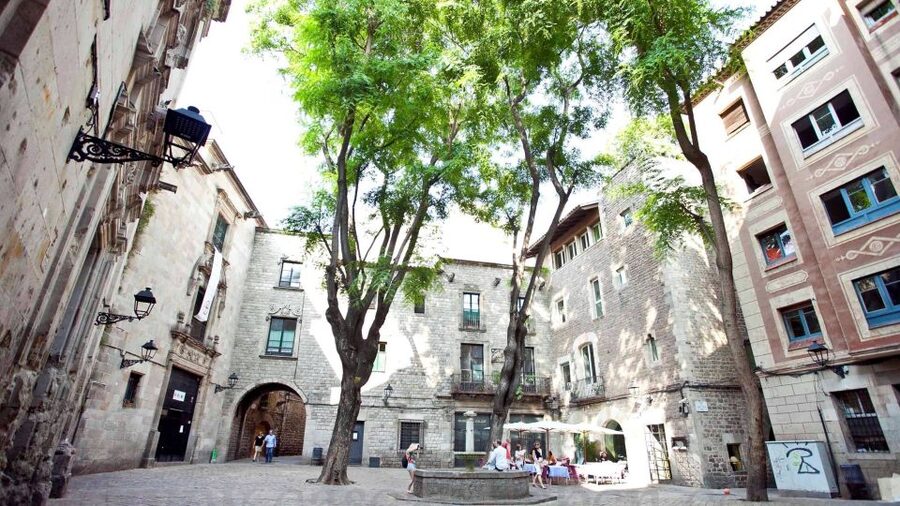
This is a 2.5-hour to 4-hour walking tour, depending on the departure timing. It’s long enough to feel like more than a quick highlight reel, but short enough that you are not spending your whole day in just one neighborhood.
For most people, the sweet spot is the small group format: a maximum of 15 participants. That size is the difference between hearing your guide and constantly turning your head. In fact, many guests comment on how the tone feels personal, and how guides create room for questions.
You’ll also notice the itinerary blends close-up stops with pass-by sightings. That can be a pro if you want an efficient overview, and it can be a con if you were hoping for long, slow time inside every landmark. If you like structured storytelling more than unstructured wandering, you’ll probably feel great with this format.
And bring the right gear. Comfortable shoes are the clear must. They also do not allow luggage or large bags, so travel light if your plan includes a later day of transit or shopping.
How Much Value You Get for $21
At about $21 per person, this tour is priced like a smart intro rather than a premium deep-dive. The value comes from three places.
First, you’re paying for guided interpretation across multiple eras. Roman walls, Roman baths stories, Gothic squares, Columbus connections, and Catalan Gothic architecture in one route saves you the time of piecing it together yourself.
Second, you get a food-and-streets layer with La Rambla and La Boqueria. That turns the walk into more than architecture snapshots, which makes it feel more useful on day one.
Third, the small group cap supports higher guide-to-guest interaction. When you can hear the guide and ask questions, you usually get more out of the time you spend walking.
What’s not included is also part of the value equation. You’ll likely spend some money at La Boqueria if you want to taste. But the walking and guiding are the core purchase, and the price fits that well.
Who Should Book This Gothic Quarter Tour
I think this one fits best if you want:
- A guided first visit to Barcelona’s Old Town and Gothic Quarter
- A story-led route that connects Roman origins to medieval power
- A practical blend of monuments plus modern street life on La Rambla
- A market stop with over 300 stalls that can jumpstart your food cravings
It may be less ideal if you want lots of quiet time or you hate walking. Since you should expect pass-by moments and a full, moving schedule, build in extra downtime after the tour rather than stacking another major activity right away.
Should You Book This Barcelona Old Town and Gothic Quarter Walk?
Yes, if you want a well-paced way to make sense of Barcelona’s oldest core. The big reason to book is the combination: Roman walls and bath stories, Gothic landmarks with clear political and cultural links, then a real-time taste stop at La Boqueria.
If you’re deciding between doing this versus just exploring on your own, do this tour when you can. It saves you from staring at buildings without knowing why they matter, and it gives you food and neighborhood direction for the rest of your trip.
FAQ
How long is the Barcelona Old Town and Gothic Quarter walking tour?
The duration is listed as 2.5 to 4 hours.
Where does the tour start?
The meeting point may vary depending on the option booked. One listed starting option is Movistar Centre.
What will I see during the tour?
You’ll cover the Gothic Quarter and Old Town areas, including stops and pass-by views around places such as Plaça del Rei, Barcelona Cathedral, St. Mary of the Sea Cathedral, La Rambla, La Boqueria, and El Born.
How big is the group?
This is a small group tour with a maximum of 15 participants.
What languages are the guides?
The guide offers English and Spanish.
Is a private group available?
Yes, private group options are available.
What should I bring and wear?
Bring comfortable shoes, since it is a walking tour.
Are large bags allowed?
No. Luggage or large bags are not allowed.
FAQ
Is the tour free to cancel?
You can cancel up to 24 hours in advance for a full refund.
Can children join?
Children under 2 years old can join the tour for free.
Recently added around Barcelona
- Barcelona Grand 2-Hour Segway Tour★ 4.8 · 240 reviews
- Barcelona Insiders Segway Tour 1.5h★ 4.8 · 149 reviews
- From Barcelona: Girona and Costa Brava Day Tour★ 4.7 · 397 reviews
- Barcelona: Park Güell Guided Tour with Skip-The-Line Entry★ 3.6 · 124 reviews
- Gaudi’s Crypt in Colonia Güell with Audioguide★ 4.4 · 201 reviews
- Gaudí Experiència Barcelona Admission Ticket★ 4.0 · 516 reviews
- From Barcelona: Dalí Triangle and Cadaques Tour★ 4.8 · 207 reviews
- From Barcelona: Tossa de Mar Day Tour with Beach Time★ 4.9 · 306 reviews
Walking Tours, compared.
Barcelona Tapas and Wine Experience Small-Group Walking Tour
Read our review →
Tapas Walking Tour with Food, Wine, and History
Read our review →
Madrid Tapas & Wine Tasting Walking Tour – Small Group Local Bars
Read our review →
Albaicín and Sacromonte Guided Sunset Walking Tour
Read our review →
Toledo Tour & Vineyard Walk with Wine Tasting from Madrid
Read our review →
Madrid Walking Tour from Puerta del Sol to Retiro Park
Read our review →

Barcelona Tapas Walking Tour: Food, Wine & History
Read our review →Browse the lists this tour appears in