
Reviewed · CORDOBA TOURS & ACTIVITIES
Best of Cordoba Guided Tour
Cordoba hits you in layers, fast. I love how this Best of Córdoba guided walk pairs Mezquita Cathedral with the Jewish Quarter, and I love how the guides connect what you see to what people actually lived through across eras.
The only real drawback is the walking plus sun, so you’ll want a water plan and smart timing for breaks. In hotter months, the shortest pauses can feel just a bit tight.
In This Review
- Key things to know before you go
- A quick way to understand Cordoba’s stacked cultural eras
- Meeting at Cardinal Salazar Square and how the time plays out
- Mezquita Cathedral de Córdoba, your ticket to the big picture
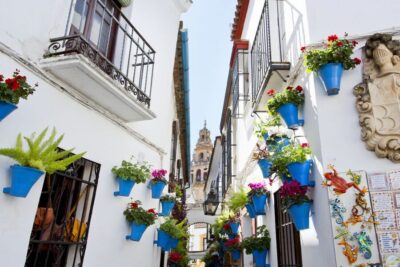
- La Juderia, Sefarad stories, and the Zoco atmosphere
- Chapel of San Bartolome, where Mudéjar style steals the show
- Cordoba Synagogue, short visit, high meaning
- Caliphal Baths (Baños del Alcázar Califal), smell the past
- The Alcazar area and the end-of-walk transition
- Value for about $47, what you actually get
- How guides like Jaime, Carlos, Rafa, Lola, and Daveed affect the experience
- Smart planning: heat, walking breaks, and what to bring
- Who should book this tour, and who might prefer a different style
- Should you book the Best of Córdoba Guided Tour?
- FAQ
- How long is the Best of Córdoba Guided Tour?
- What language is the tour offered in?
- Where does the tour start?
- Which stops are included?
- Are entry fees included?
- Is food and drinks included?
- Do I need hotel pickup?
Key things to know before you go
- Mezquita Cathedral ticket included: you get time inside a major UNESCO site without handling entry paperwork.
- Jewish Quarter focus: you spend real time in the Juderia, including the synagogue area and the Zoco.
- Mudéjar art stop: Chapel of San Bartolome is a standout for its 15th-century style.
- Synagogue visit is short but special: one of the best preserved medieval synagogues in Spain.
- Caliphal Baths by the river: a 10th-century bathing complex tied to the Umayyad palace.
- Group size stays manageable: up to 30 people, with a pace that works for most visitors.
A quick way to understand Cordoba’s stacked cultural eras
Cordoba can feel like you arrived in the middle of a history book. This tour helps you read the pages in the right order, starting with the one monument everybody points to, then moving straight into the streets where Jewish life flourished.
What I like most is the flow: you start with architectural power, then you shift to community life, then you get a sensory break with the baths. It’s not just a checklist of famous sights. You’re learning why these places matter to Cordoba’s identity.
And because it is guided in English, you can actually follow the thread, from the Jewish Quarter under the Caliphate era to the Islamic monuments that still dominate the skyline.
Other days out near Cordoba
- Córdoba: Skip-the-Ticket-Line Mosque-Cathedral Guided Tour
★ 4.6 · 9,634 reviews - Cordoba Mosque-Cathedral: Skip-the-Line Guided Tour
★ 4.7 · 6,610 reviews - Córdoba: Jewish Quarter, Mosque, and Alcázar Tour
★ 4.6 · 5,143 reviews
Meeting at Cardinal Salazar Square and how the time plays out
Most half-day tours fall into two traps: either they feel rushed or they wander. This one tends to stay structured, starting at Cardinal Salazar Square, the centerpiece area for the Jewish Quarter.
Duration is listed at about 3 hours, and it can run closer to 4 depending on the flow and the time spent at each stop. The group stays limited, with a maximum of 30 people, so you should be able to hear the guide and keep moving without feeling like you are stuck behind a busload.
One practical note: this is not a slow stroller walk. Expect cobbles, steady movement between points, and enough stops to keep it interesting, not enough time to linger alone for long periods.
Mezquita Cathedral de Córdoba, your ticket to the big picture
The tour’s first major stop is the Mezquita Cathedral de Córdoba, the Mosque of Cordoba, which once stood as the biggest mosque in the world after the tenth-century expansions. You also get the essentials for context: it could hold more than 20,000 people, and it was declared World Heritage in 1984.
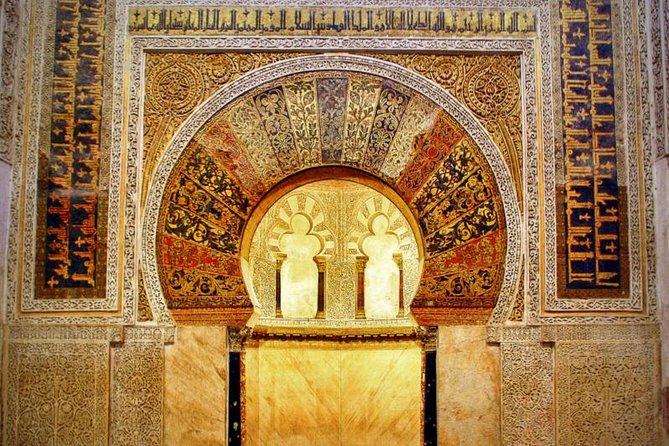
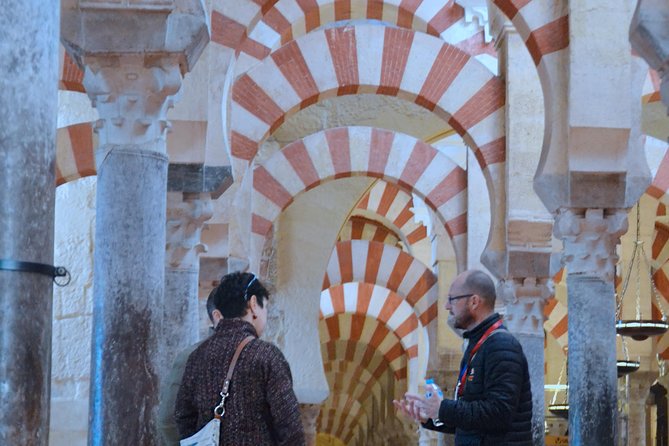
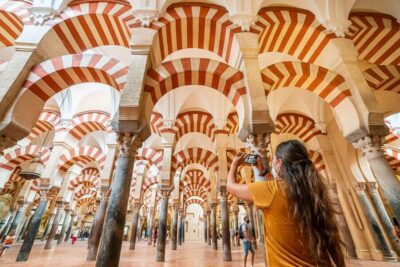
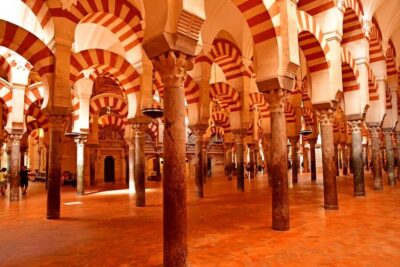
Inside, the focus is on what you can actually see fast: the double arches and the impressive mihrab. The guide also frames it as a layered monument, with multiple architectural styles living side by side, which is why it feels unique even to people who are not big museum people.
Why this stop is worth doing with a guide
- You get the “what to look at” in real time, so you do not just snap photos and move on.
- You learn how later changes created the Mezquita Cathedral you see today, and why that matters for understanding Cordoba as a city of overlapping eras.
A possible drawback
The cathedral period may include a shorter free moment, and toilet options can be limited when multiple tour groups overlap. If you are sensitive to bathroom timing, plan for it early, and do not wait until the last minute when you feel the group preparing to move.
La Juderia, Sefarad stories, and the Zoco atmosphere
After Mezquita, you walk into La Juderia, Cordoba’s Jewish Quarter, and the tour shifts from stone and design to people and daily life. This is where you hear terms and ideas that help the monuments click.
You’ll learn about where Jewish communities came from when they arrived on the Iberian Peninsula, a place they called Sefarad. You also get the sense that Cordoba wasn’t a minor stop in the story. The guide explains how Jews reached very high status during the Caliphate of Córdoba, and how the city’s mixed layers shaped community life.
One highlight is meeting the human faces behind the history. You hear about impressive people born here, including Maimónides, described as a genius of the twelfth century.
Then there is the marketplace feel. The tour connects the Jewish Quarter with the Zoco, a traditional market area, where local craft shops and artist workshops bring the neighborhood’s creative side into view.
What I like here
You do not just see “Jewish Quarter, check.” You connect the synagogue visit to the surrounding street life, including the chapel stop and the market atmosphere. It turns one area of town into a story with geography.
Also within reach of Cordoba:
- Cordoba: Mosque-Cathedral E-Ticket with Audio Guide
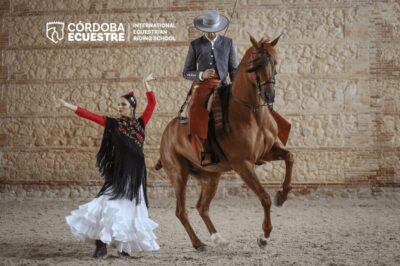
★ 4.1 · 2,895 reviews - Cordoba: Equestrian Show General Entry
★ 4.5 · 2,333 reviews - Cordoba Mosque & Jewish Quarter Tour with Tickets
★ 4.6 · 1,996 reviews - Cordoba: Alcazar Guided Tour and Skip-the-Line Ticket
★ 4.2 · 1,792 reviews
Chapel of San Bartolome, where Mudéjar style steals the show
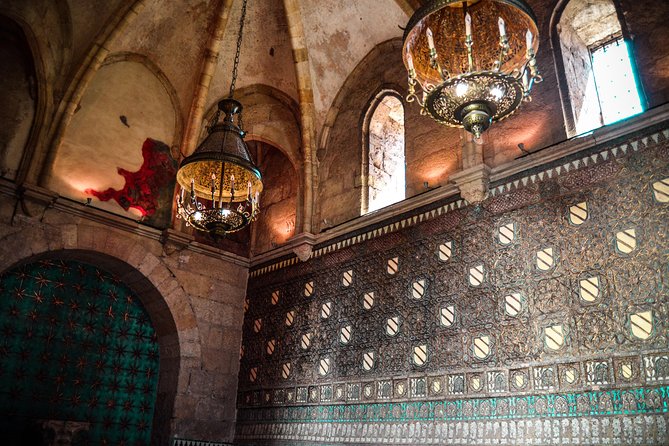
One of the best texture stops is the Chapel of San Bartolome, a fifteenth-century funerary chapel. It is described as one of Cordoba’s finest examples of Mudejar art, and the tour uses this stop to teach you how to spot style changes without needing a degree.
This is the kind of place that can be easy to rush past because it is not as famous as the big two, Mezquita and the Alcazar area. But in a guided format, you get the “why it looks like this” moment, and that makes the chapel feel like a real discovery instead of a side stop.
If you like detail
This is your stop. Even if you are not a huge art fan, it is a good place to slow down for a few minutes and look closely.
Cordoba Synagogue, short visit, high meaning
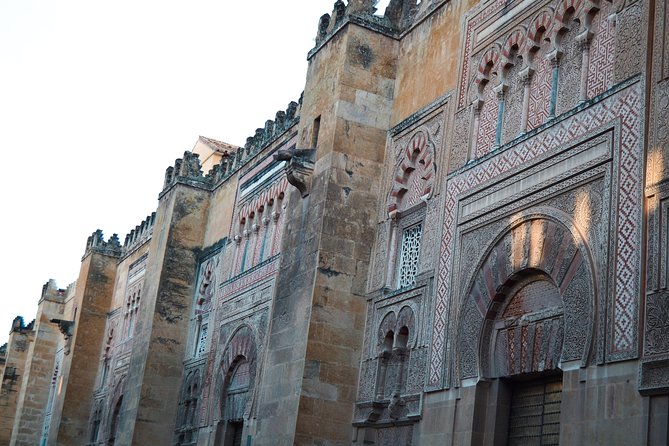
Next is the Cordoba Synagogue, which the tour describes as one of the best preserved medieval synagogues in Spain. The stop is brief, around 15 minutes, but it comes with context that helps you understand what makes it important.
The tour frames the synagogue as one of the purest, oldest, and unique monuments of Jewish heritage from the Iberian Peninsula. In practical terms, that means you are not looking at a generic old building. You are looking at a space tied to survival of tradition through centuries.
Why the guide matters in this stop
Synagogues can feel quiet and uniform unless someone points out the things you should notice. Here, the guide’s framing helps you read the space as history, not just architecture.
A realistic expectation
Because the time is limited, this is not the place for a long sit-down. Treat it as a focused visit where you absorb the meaning fast, then move on while the story is still fresh.
Caliphal Baths (Baños del Alcázar Califal), smell the past
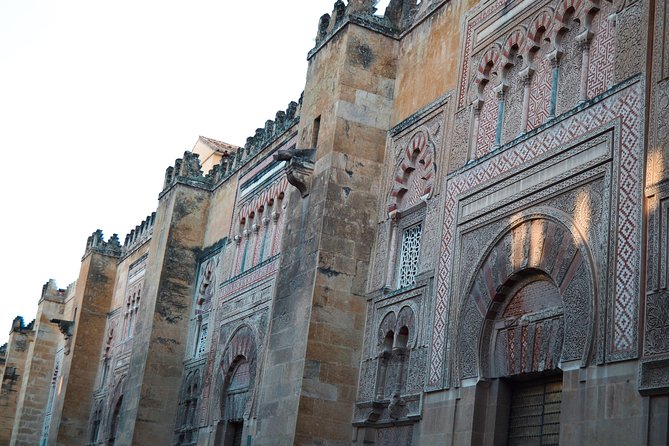
Right near the river, you visit the Caliphal Baths, also called Baños del Alcázar Califal. This is one of those stops that feels different from the rest because it targets atmosphere, not just sight lines.
You get the historical framing: these are tenth-century Arabic baths that belonged to a vanished Umayyad palace. The tour also explains how they were used by the Caliph and his court, not only for hygiene but for political social gathering.
It is a small area compared to the big monuments, and that is part of the charm. You get to reset your senses, then return to the architectural storytelling with a different kind of context: how power and daily life overlapped in the same spaces.
Practical tip
These baths are a short stop, about 15 minutes, so if you want photos, be ready to work quickly. The guide keeps the timing tight so the group can keep the day balanced.
The Alcazar area and the end-of-walk transition
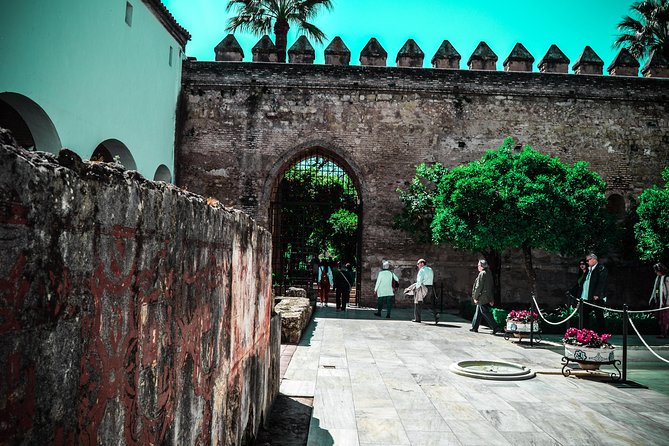
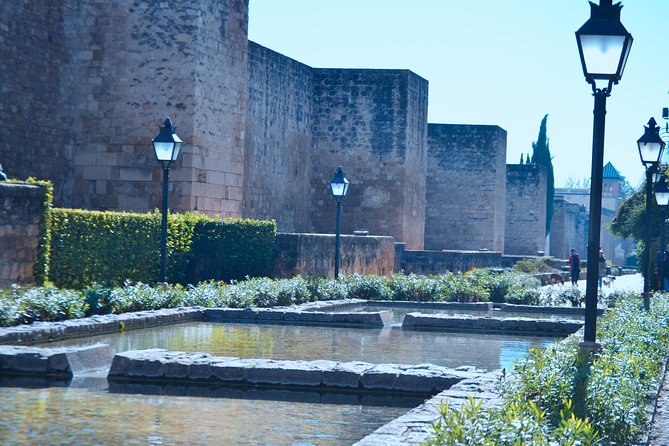
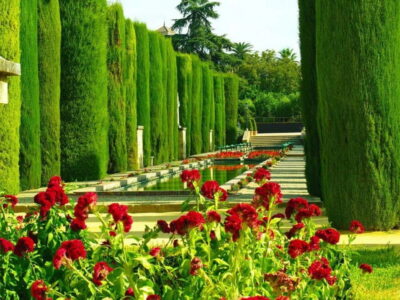
Cordoba’s medieval Alcazar of Cordoba area shows up as part of the later portion of the experience, with many departures ending around the gardens area. This is a helpful shift after the more intense stops, because gardens and courtyards give you breathing room.
One thing to keep in mind: sometimes the Alcazar area can be closed for refurbishment, and the operator may swap in other sites. That does not usually ruin the day, but it can change the last stretch of what you see.
Either way, this is where you typically get a calmer finish, a chance to look at the space from a slower angle, and an easy point to ask the guide what to do next in Cordoba.
Value for about $47, what you actually get
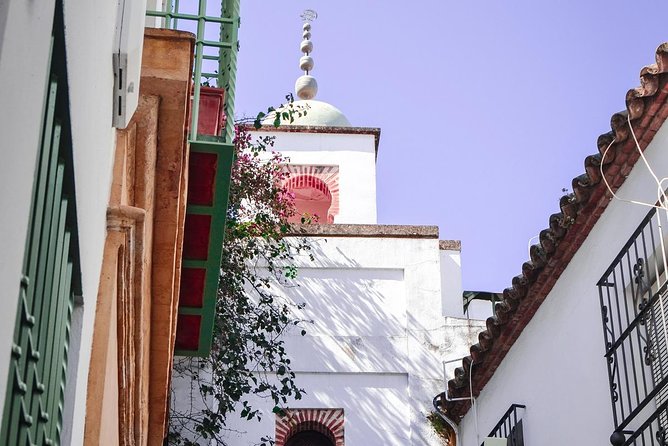
At $47.24 per person, this tour works out well when you consider what is included. You get a local guide, and tickets are included for key monuments such as the Mezquita Cathedral de Córdoba, the Cordoba Synagogue, and the Caliphal Baths.
That matters because entry fees at major sites can add up quickly. Instead of you piecing together timed tickets and figuring out where to go, the tour takes care of the basic framework.
The other value is time. When you only have a day or you want to get the “big picture” quickly, this tour gives you a compact overview that connects monuments through a single theme: Jewish life, Islamic heritage, and the city’s architectural layers.
What’s not included
Food and drinks are on you, and there is no hotel pickup. You will also rely on walking between stops, so plan on comfortable footwear and a water bottle.
How guides like Jaime, Carlos, Rafa, Lola, and Daveed affect the experience
This kind of tour lives or dies by the guide. On recent departures, several English-speaking guides have led parts of the walk, with names like Jaime (and sometimes Jamie), Carlos, Rafa, Rafael, Lola, and Daveed showing up.
What you want to look for in a good guide here is storytelling that stays practical. The best sessions make you notice things, like the design details inside the Mezquita Cathedral, then connect those details to the broader history so it all feels like one story instead of disconnected stops.
If you get Jaime, Carlos, Rafa, Lola, or Daveed, you should expect the tour to be lively, with room for questions and quick adjustments when needed. Guides also tend to share useful local tips for what to do after the tour, which is the kind of value that does not show up on a price tag.
Smart planning: heat, walking breaks, and what to bring
Cordoba can get brutally hot. One departure referenced summer temperatures around 106°F (41°C), and the guide handled it by being aware of shade and water needs.
You should not rely on the guide for your comfort. Bring:
- Water
- Sunscreen and a hat
- Comfortable walking shoes for uneven streets
Also, expect a walking pace that keeps momentum. If you want lots of time sitting down, this tour might feel too active. If you are okay with movement plus short stops, it works nicely.
Bathroom logistics are the one detail worth thinking about. During one stop at the Mezquita Cathedral, a short free time included only one toilet option serving a group of 15+ people. If you need predictable access, go early, not during the rush.
Who should book this tour, and who might prefer a different style
This tour is a strong fit if you want:
- A focused Jewish Quarter introduction
- A guided visit to the Mezquita Cathedral, synagogue, and Caliphal Baths without planning your own route
- A compact overview that makes later self-guided wandering easier
It is also a good choice if you like history that is connected to buildings and streets, not just dates and names.
You might skip or add a different kind of tour if you:
- Hate walking on cobblestones
- Want long free time inside museums
- Need slow, unstructured browsing at each stop
Should you book the Best of Córdoba Guided Tour?
If your goal is to understand Cordoba fast, this tour is one of the better bets. You get a tight theme, key monuments with included tickets, and guidance that helps you see why the city is famous in the first place, then why it matters beyond the postcard.
Book it if you value a guided primer and you are comfortable with a half-day walking plan. Skip it if you want a quiet, leisurely day with lots of independent time.
If you do book, go prepared for sun, keep your expectations realistic for short stops, and come with one question you genuinely want answered about Cordoba’s layered past. The guide time is best spent when you steer it toward what you care about.
FAQ
How long is the Best of Córdoba Guided Tour?
It’s listed at about 3 hours, and you may find it runs closer to 4 depending on the flow and breaks during the day.
What language is the tour offered in?
The tour is offered in English.
Where does the tour start?
The tour begins with a history lesson at Cardinal Salazar Square.
Which stops are included?
The tour includes the Mezquita Cathedral de Córdoba, La Juderia (Jewish Quarter), Cordoba Synagogue, and the Caliphal Baths (Baños del Alcázar Califal), plus additional points of interest around the city.
Are entry fees included?
Yes. Admission tickets are included for key monuments such as the Mezquita Cathedral de Córdoba, Cordoba Synagogue, and the Caliphal Baths. The Jewish Quarter stop is described as admission ticket free.
Is food and drinks included?
No. Food and drinks are not included.
Do I need hotel pickup?
No hotel pickup or drop-off is included.
Recently added around Cordoba
- Tour to the Mosque-Cathedral of Córdoba with admission included★ 5.0 · 103 reviews
- Cordoba’s Authentic Patios: 2-Hour Tour with Tickets★ 4.0 · 62 reviews
- Cordoba Mosque-Cathedral & City Private Tour★ 5.0 · 117 reviews
- Private Tasting of Olive Oil in Córdoba★ 5.0 · 93 reviews
- Olive Oil tasting breakfast & Tour in Cordoba★ 4.5 · 84 reviews
- Cordoba Mosque and Jewish Quarter Guided Tour★ 4.5 · 452 reviews
- Mosque-Cathedral, Alcazar & Jewish Quarter with Tickets★ 4.5 · 793 reviews
- Mosque-Cathedral of Córdoba Guided Tour with Priority Tickets★ 4.5 · 378 reviews
Cordoba Tours & Activities, compared.
Skip-the-Ticket-Line Mosque-Cathedral Guided Tour
Read our review →
Cordoba Mosque-Cathedral: Skip-the-Line Guided Tour
Read our review →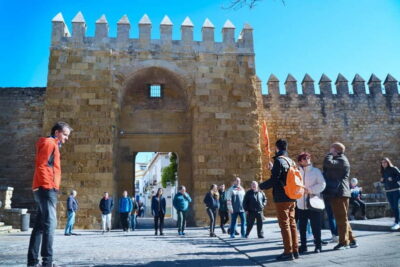
Cordoba Mosque & Jewish Quarter Tour with Tickets
Read our review →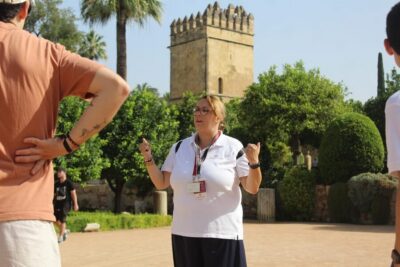
Mosque-Cathedral, Jewish Quarter and Alcázar Tour
Read our review →Browse the lists this tour appears in