Reviewed · TOURS
Complete Roman Tour in Merida (Spain)
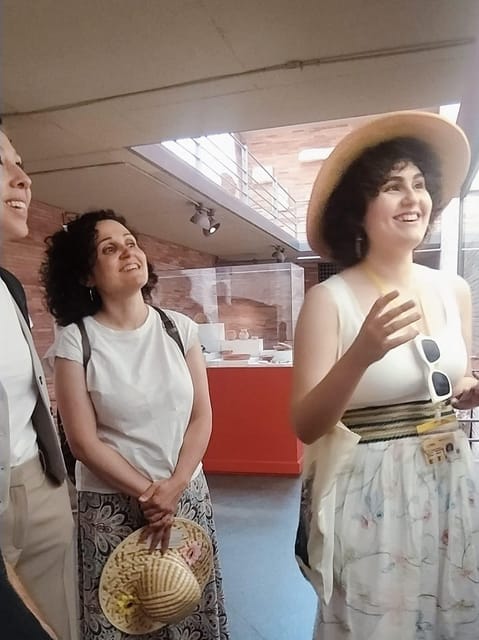
Mérida turns Rome into a walkable story. This 3 to 4 hour tour connects the Temple of Diana, Roman Circus, Roman baths, Roman villa, amphitheatre, and Roman Theatre, so ancient life feels close, not distant, especially in the Roman mosaics. I also like the human side, with Lucía GM bringing crisp explanations and lively Q and A.
One thing to plan for: the $29 price is not the archaeology-site entry ticket. You buy that official ticket at the start, so your total day cost is a bit higher, and you’ll want to be on time. Also note the pace includes real walking and stairs, so it is not a great fit if your feet or knees are sensitive.
In This Review
- Key things I’d highlight before you go
- Why Roman Mérida feels different from other ruins
- Meeting at Casa Romana del Anfiteatro, and why the timing matters
- Casa Romana del Anfiteatro: where you see Roman daily life up close
- Roman Circus of Mérida: built for speed, built for crowds
- Roman baths at Termas Romanas de Mérida, including the snow well
- Temple of Diana: religion, power, and everyday meaning
- Amphitheatre time: gladiators, beasts, and even boat battles
- Roman Theatre of Mérida: the largest, the best preserved, and festival-ready
- Lunch zone after the ruins: where the day naturally winds down
- The +Museum option: what changes if you add Museo Nacional de Arte Romano
- Price and logistics: what $29 plus the ticket really means
- Practical tips for shoes, heat, and getting good photos
- Who should book this Roman tour in Mérida?
- Should you book this tour?
- FAQ
- What is the meeting point for the tour?
- How long is the Complete Roman Tour in Mérida?
- What is included in the tour price?
- Do I need to buy archaeology-site tickets separately?
- What languages does the guide speak?
- Is there a museum option during the tour?
- What should I bring?
Key things I’d highlight before you go
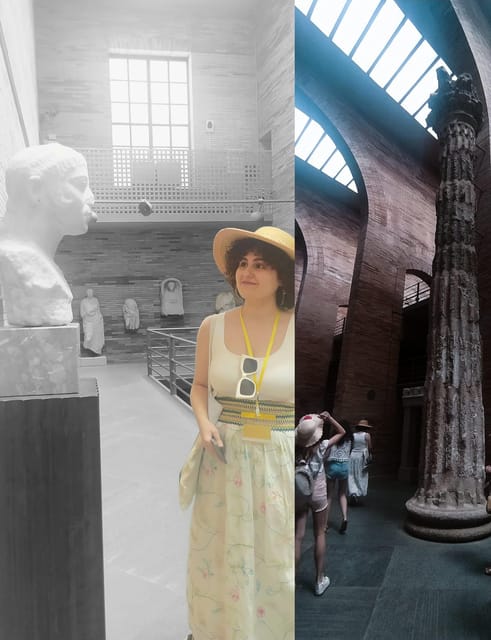
- All the big Mérida Roman landmarks in one loop, from domestic life to arenas and theatre
- Earphones and a radio guide, so you hear the story without craning your neck
- Lucía GM’s multilingual storytelling, with English, Spanish, French, and Portuguese
- Photo help along the route, plus an emphasis on visual details you might miss alone
- Optional Museo Nacional de Arte Romano add-on, timed for a mid-tour break
- That official entry ticket opens more than the tour sites, including other parts of the archaeological complex
Why Roman Mérida feels different from other ruins
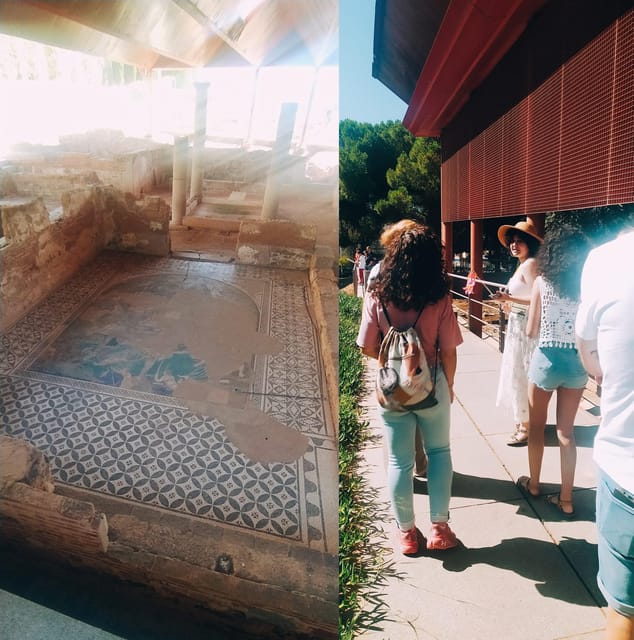
Most Roman ruins are scattered. Mérida’s ruins are stacked, close enough to walk, and built well enough that your brain can do the timeline work on the spot. When you see the theatre, then the amphitheatre, then the baths in the same morning, Roman life stops being a textbook idea.
I like that the tour doesn’t just point at stones. You get explanations that connect the places to daily routines, beliefs, and entertainment. You also get built-in visual support, like illustrative images, so even quick stops feel informative.
More good picks around Spain:
- Barcelona: Sagrada Familia Entry Ticket with Audio Guide
★ 4.6 · 105,312 reviews - Barcelona: Park Güell Admission Ticket
★ 4.4 · 76,534 reviews - Seville: Royal Alcázar Entry Ticket
★ 4.6 · 28,378 reviews
Meeting at Casa Romana del Anfiteatro, and why the timing matters
The tour starts at Casa Romana del Anfiteatro, specifically where the guide waits in front of the building with the giant MERIDA letters. The first practical step is important: you purchase the archaeology-site ticket there, through the official archaeological organization for Mérida, since it is not sold through resellers.
Because that ticket purchase happens right at the start, I recommend arriving a few minutes early, especially if you want a smooth start before walking begins. Think of it as part of the experience, not a hassle, because that entry ticket later lets you roam additional sites beyond the core tour route.
Casa Romana del Anfiteatro: where you see Roman daily life up close
The first stop is the Roman villa inside Casa Romana del Anfiteatro, one of the best preserved Roman homes in Spain. This is where you shift from “I’m seeing monuments” to “I’m imagining a household.”
You’ll spend time in rooms that bring domestic life into focus, including the layout of bedrooms and the look of mosaics that once sat under everyday footsteps. The guide points out practical details like how people ate, what toys existed, and how the home related to gardens and pets. For many people, this is the most surprising part, because villas can feel less dramatic than arenas, yet they say a lot about status, comfort, and routine.
A fair warning: this portion still involves walking, looking up, and moving between areas with uneven ground. Bring comfortable shoes, not fashion sneakers.
Roman Circus of Mérida: built for speed, built for crowds
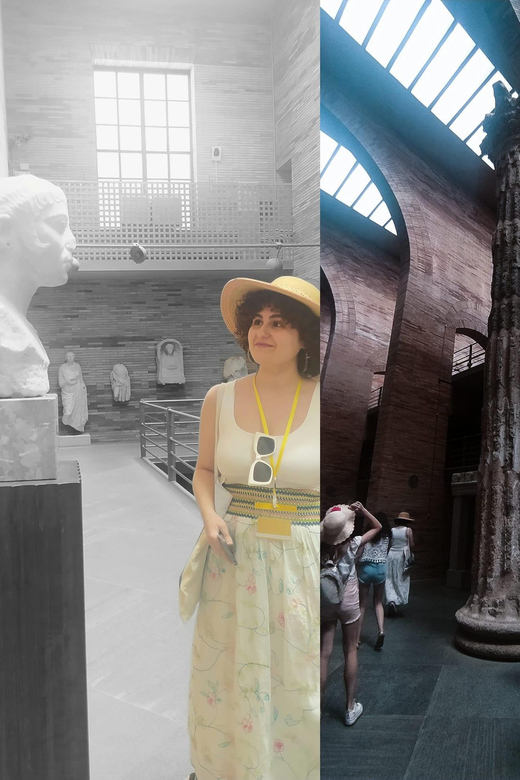
Next you head to the Roman Circus of Mérida, often described as the largest and best preserved Roman circus in Europe. You’re not just looking at ruins, you’re seeing the structure designed for spectacle: seating zones, pathways, and the sense of lines converging toward a track where chariot races would happen.
The effect is immediate. Even if you don’t know the sport, the architecture teaches you the story. It helps that the tour is timed in the morning, when your attention is fresh and you’re more likely to spot the details the guide uses in explanations.
This stop is also a good photo moment, because there are multiple angles that show the scale. The guide’s photo advice helps here, especially when you want a wide shot without losing the sense of how people would have moved through the space.
Also within reach of Spain:
- Barcelona: Casa Batlló Entry with Self-Audioguide Tour
★ 4.7 · 25,359 reviews - Seville: Cathedral and La Giralda Entry Ticket
★ 4.5 · 24,592 reviews - Barcelona: Montjuïc Cable Car Roundtrip Ticket
★ 4.5 · 22,368 reviews - Madrid: Tour Bernabéu Entry Ticket
★ 4.5 · 21,573 reviews
Roman baths at Termas Romanas de Mérida, including the snow well
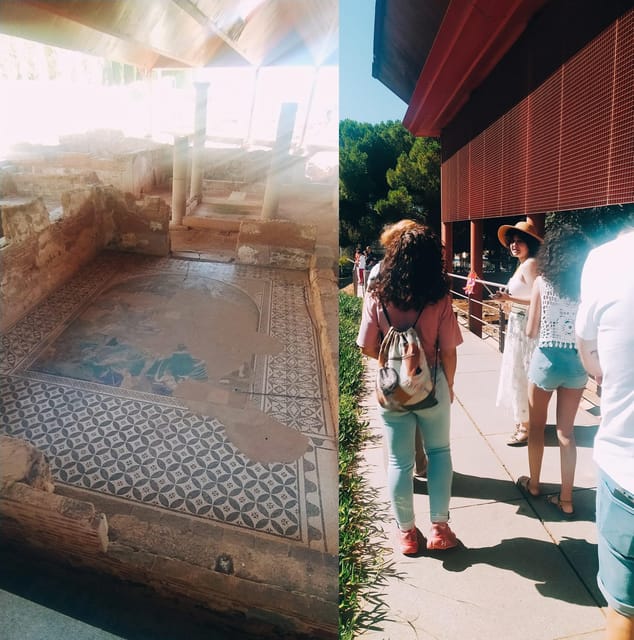
Roman baths are where you understand Roman comfort, logistics, and engineering. At Termas Romanas de Mérida, you’ll see the pools and how they were heated or cooled using furnaces. The tour also points out the snow well, an impressive piece of climate-related planning that connects food storage and cooling to the bath experience.
What I like about this stop is the way it clarifies a question you might not even think to ask: how did ancient builders manage temperatures across multiple pools? The guide turns the site into a working system, so it feels like technology, not just ruins.
You’ll also move through peaceful parks toward the baths, which makes the change of scenery feel intentional. You’re not bouncing directly from one hard-scrubbed monument to another. There’s a breather built into the route.
Temple of Diana: religion, power, and everyday meaning
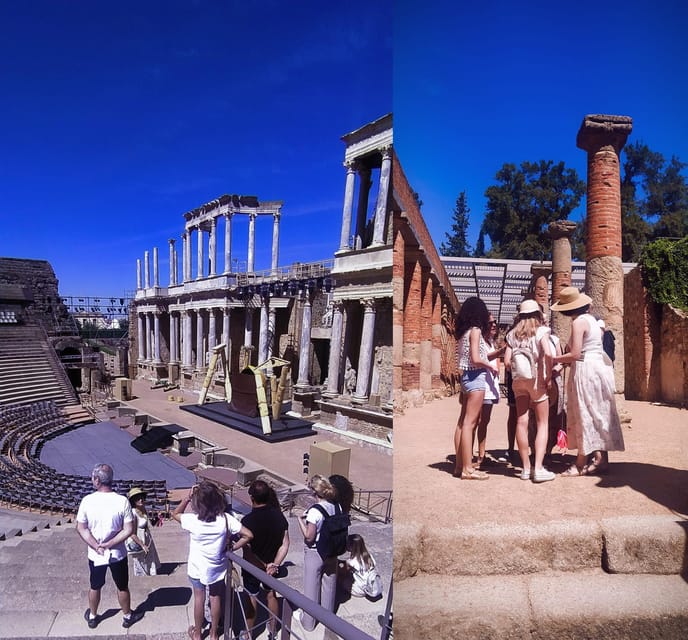
Then you shift into the religious sphere at the Temple of Diana. This isn’t a lecture-only stop. You can participate in the worship atmosphere the tour builds into the explanation, including the connection to gods and the emperor.
The guide also threads the route through the remains of the Roman Forum, where shops selling handmade terracotta and mosaic crafts line the area. It’s a small contrast that makes sense. You’re standing near a place where commerce and civic life lived, and modern craft echoes some of the same materials and design habits.
This part is especially good if you want a well-rounded Roman day, not only entertainment sites. It’s also a solid stop for families, since the guide includes games for children and keeps things engaging.
Amphitheatre time: gladiators, beasts, and even boat battles
Now comes the high drama. In the amphitheatre, you’ll experience the famous gladiatorial combats, fights with wild beasts, and even boat battles in a unique setting. Even when you’re looking at a ruin, the shape of the space makes the imagination work.
The guide’s approach matters here. With the earphones and the visual support, you’re less likely to get lost in scale and more likely to understand the event flow. The explanations are built to help you picture the crowd energy, not just inventory features.
This stop is also where you’ll feel the walking more. You’re going in and out of viewing areas, and you’ll likely use stairs and steps depending on your exact route through the site. If your mobility is limited, this is the section that demands the most from you.
Roman Theatre of Mérida: the largest, the best preserved, and festival-ready
The Roman Theatre of Mérida is the tour’s grand finale on the ruins side, and it’s one of the largest and best preserved in Spain. Here the tone shifts from combat to performance, and the stone lines start to resemble stagecraft.
You’ll get time to take it in, and there’s a break afterward so you can reset. The guide also connects the theatre to the summer festival vibe, when classical theatre keeps the spirit of the place alive.
If you care about acoustics and stage geometry, you’re in the right spot. Even without technical details, the theatre shape makes sense fast. It’s also a great place for photos because the view lines are strong and the building holds up well even in bright daylight.
Lunch zone after the ruins: where the day naturally winds down
When you leave the amphitheatre and then the theatre area, the guide leads you down an area with lots of restaurants and bar options. This matters because Mérida’s best ruins are not right on top of every lunch counter.
By the time you finish, you’re set up to keep the day easy. You can grab something without needing to mentally map the city again.
The +Museum option: what changes if you add Museo Nacional de Arte Romano
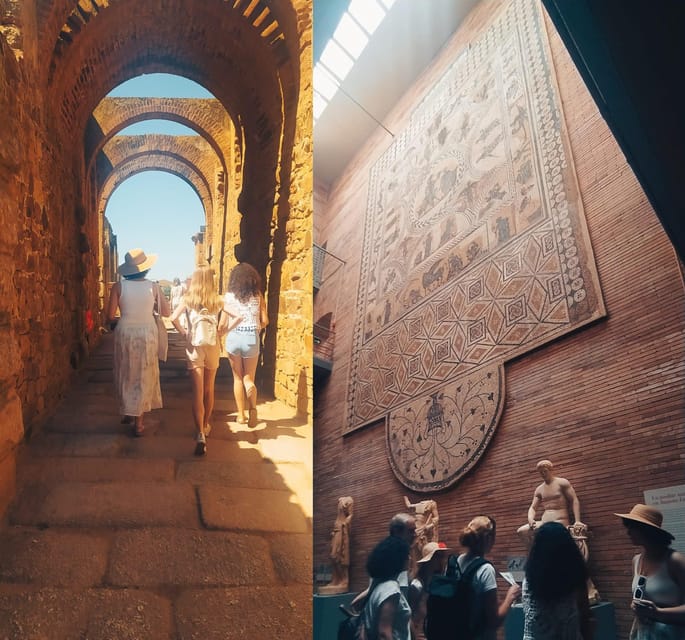
If you choose the +Museum option, you’ll take a break for snacks and refreshments first. Then, at 13:00, you do a one hour tour in the Archaeological Museum of Roman Art.
This museum time focuses on artifacts connected to daily and artistic life: jewels, toys, gigantic sculptures, and mosaics. The guide frames the items as messages left behind by the people who lived in old Mérida, which gives objects more meaning than a simple display label.
This add-on is a good choice if you want the tour to feel like a complete story arc: home, entertainment, public life, then the finds that show what people valued.
Price and logistics: what $29 plus the ticket really means
The advertised price is $29 per person, and that’s the guided component. The archaeology-site ticket is sold exclusively by the Archaeological Consortium of Mérida and cannot be resold through websites. In other words, the tour price alone is not the full ticket cost.
This can feel confusing until you realize what you’re getting for the ticket. The entry you buy at the start is your key to broader access. With that ticket, you can visit the other parts of the archaeological site of Mérida not included in the Roman tour, including the Muslim citadel and Muslim quarter, plus the Basilica of Saint Eulalia.
That makes the value story clearer. You are not only paying for three to four hours of guided stops. You’re also buying yourself the ability to keep exploring after the tour, which is a smart way to stretch your time in Mérida.
One more practical note: if you were planning on using discounts, be ready to verify what applies to you at the ticket office. The tour guide can share information about discounts and free tickets, and the price varies by age group, number of people, family status, date, and festivities.
Practical tips for shoes, heat, and getting good photos
This tour is best done with comfortable shoes, because you’re walking between major sites with steps and changing surfaces. In summer, it can be brutally warm, so sunscreen is a must.
I also suggest bringing a light layer for comfort even when it’s hot. A few people mention bringing a jacket and scarf style layer, which can help you feel better as conditions shift across shaded areas and indoors.
For photos, listen when the guide gives instructions. The tour includes help and advice for pictures throughout, and that guidance saves you time, especially when you want to frame monuments without losing the context.
Who should book this Roman tour in Mérida?
This tour is a strong fit if you want a high-impact Roman day without trying to plan every stop yourself. It’s also great if you like stories tied to real spaces, since the guide uses illustrative images and keeps connecting architecture to what people actually did.
Families can do well too, because there are games for children and the tour naturally alternates between home life, spectacle, and performance. If you’re traveling with mixed ages, the pacing is generally set up to keep interest.
On the other hand, I would hesitate if you have mobility limitations or knee or foot issues. The experience involves plenty of walking and stairs, and it’s not described as a slow, flat route.
Should you book this tour?
Yes, if you want the fastest way to understand Mérida’s Roman core in a single half-day. The price feels fair because you get a guided route that covers major sites, plus radio earphones and photo help. The biggest reason to book is the combination of guided storytelling now, and ticket access that lets you keep exploring the archaeological complex later.
I would book with care if walking is a challenge for you, or if you hate the idea of paying the site ticket separately at the start. If that’s your situation, you might prefer a slower format.
If you’re excited by Roman ruins but you want them explained in a lively, practical way, this is one of the best ways to spend your time in Extremadura.
FAQ
What is the meeting point for the tour?
The guide waits at Casa Romana del Anfiteatro, in front of the building with the giant MERIDA lettering.
How long is the Complete Roman Tour in Mérida?
The tour lasts about 3 to 4 hours.
What is included in the tour price?
You get a radio guide with earphones, illustrative images, games for children, help and advice for photos, and a guided tour in English or Spanish covering Diana’s Temple, the Roman baths, Roman circus, Roman villa of the amphitheatre, and the Roman Theatre and amphitheatre.
Do I need to buy archaeology-site tickets separately?
Yes. The archaeological site ticket is sold exclusively by the Archaeological Consortium of Mérida and is not included in the $29 tour price. The guide informs you about discounts and free tickets, but the ticket must be purchased at the start.
What languages does the guide speak?
The guide offers tours in English and Spanish, and Lucía GM is described as fluent in Spanish, English, French, and Portuguese.
Is there a museum option during the tour?
Yes. With the +Museum option, you take a break for snacks and refreshments and then do a one hour tour at the Museo Nacional de Arte Romano at 13:00.
What should I bring?
Bring comfortable shoes and sunscreen.
Recently added around Spain
- Granada: Traditional Flamenco Show in a Cave Entry Ticket★ 4.6 · 93 reviews
- Granbazán Winery: Guided Tour and Wine Tasting★ 4.9 · 88 reviews
- Guggenheim: Art explained by artists★ 5.0 · 69 reviews
- Granada: Traditional Bath in the Nasrid Palace Hammam★ 4.6 · 624 reviews
- Granada: Traditional Flamenco Show at Tablao Casa Ana★ 4.8 · 390 reviews
- Granada: Historic Center and Lower Albaicin Walking Tour★ 4.7 · 136 reviews
- Granada: Alhambra Palace Guided Tour★ 4.3 · 224 reviews
- Granada: Tapas Crawl★ 5.0 · 86 reviews
Tours, compared.


Park Guell Guided Tour with Skip The Line Entry
Read our review →
Caminito del Rey Guided Tour & Welcome Pack from Málaga
Read our review →
Sagrada Familia Skip-the-Line Entry Ticket & Tour
Read our review →