
Reviewed · DAY TRIPS & EXCURSIONS FROM SEVILLE
From Seville: Italica Roman City & Medieval Monastery Tour
Rome hits hard, and fast, near Seville. This tour pairs Italica Roman ruins with the medieval San Isidoro del Campo monastery, all with guided stops plus transportation from Seville. I love how the guide turns stone, mosaics, and even hidden parts of the site into a story I can actually picture. The main drawback is that on-site facilities are limited, so plan for a quick restroom moment.
You’ll stand in the amphitheater that once held about 25,000 people, and you’ll hear why Game of Thrones fans link it to the Dragonpit. I also like the tight timing, with 105 minutes at Italica and 40 minutes at the monastery. Guides I’ve seen named for this outing include Petra, Miguel, Carlos Leone, and Jesus, and the common thread is strong storytelling plus lots of explanation without dragging.
One more practical note: traffic can stretch the day a bit, so if you have dinner reservations or another plan right after, I’d give yourself a little buffer.
In This Review
- Key things to know before you go
- A 4-Hour Roman and Medieval Pairing from Seville
- Getting to Italica: the coach ride and how to use it
- Italica first: Trajan and Hadrian’s birthplace in plain view
- The amphitheater that fans call the Dragonpit
- Mosaics and the gladiator world under the city
- San Isidoro del Campo: Mudejar, Gothic, and Baroque turns
- Group size, guides, and language options that actually matter
- Transport, drop-offs, and the timing you should plan for
- Is it worth $46? What you get for the money
- Who should book this Italica and monastery tour?
- Should you book this tour?
- FAQ
- How long is the Italica Roman City & Medieval Monastery Tour?
- How much does the tour cost?
- What’s included in the tour price?
- Is food or drinks included?
- Can I choose between shared and private tours?
- What languages are available?
- Where do I meet, and how does pickup work?
- What if the tour is not in my language?
- What are the cancellation and payment options?
Key things to know before you go
- Two major sites, one half-day: Roman Italica first, then the medieval monastery of San Isidoro del Campo.
- A standout amphitheater setting: the scale is still impressive, and it connects to Game of Thrones.
- Mosaic and underworld details: you’ll hear about gladiator tunnels and the lion den.
- Guides with personality: names that show up often include Petra, Miguel, Carlos Leone, and Jesus.
- Flexible options: shared group tour or a private tour, both with Seville transportation.
A 4-Hour Roman and Medieval Pairing from Seville
This is the kind of day trip that fits real life. No overnight bag. No full-day slog. You leave Seville, see Italica’s Roman city remains, then switch gears to a monastery stop that shows how the same landscape carried on into the medieval era.
If you like history but hate museum-bloat, this timing helps. You get guided context for what you’re looking at, then you move on before the sites start to feel repetitive. And at $46 per person, the value is in the package: transportation, entry tickets, and a local guide, all wrapped into about half a day.
The tour is also an easy “win” for people who like both big sights and smaller details. Italica is famous for its amphitheater and mosaics, but the guide also calls attention to less obvious features, like underground passages and animal-holding areas.
More day trips out of Seville:
- From Seville: Pueblos Blancos and Ronda Full-Day Trip
★ 4.5 · 3,849 reviews - From Seville: Ronda+Setenil de las Bodegas Day Trip
★ 4.4 · 3,562 reviews - White Villages and Ronda Day Tour from Seville
★ 4.5 · 2,049 reviews
Getting to Italica: the coach ride and how to use it
The day starts with pickup that depends on your booking option. For shared tours, the meeting point can vary. For the private option, pick-up is optional and depends on where your accommodation sits within the pick-up area.
Once you’re on the bus, the drive is short enough that it doesn’t drain your energy. You’re looking at about 20 minutes to get to Italica, then you’ll return to the road again later for the monastery segment.
A small tip that matters: bring something to keep you comfortable for a few changes of tempo. The tour moves between guided walking time and bus time, so your day will feel best if you’re not rigid about snacks and water. Also, if you care about battery life, one review mentioned USB charging ports on the coach, which is handy for maps and photos.
Italica first: Trajan and Hadrian’s birthplace in plain view
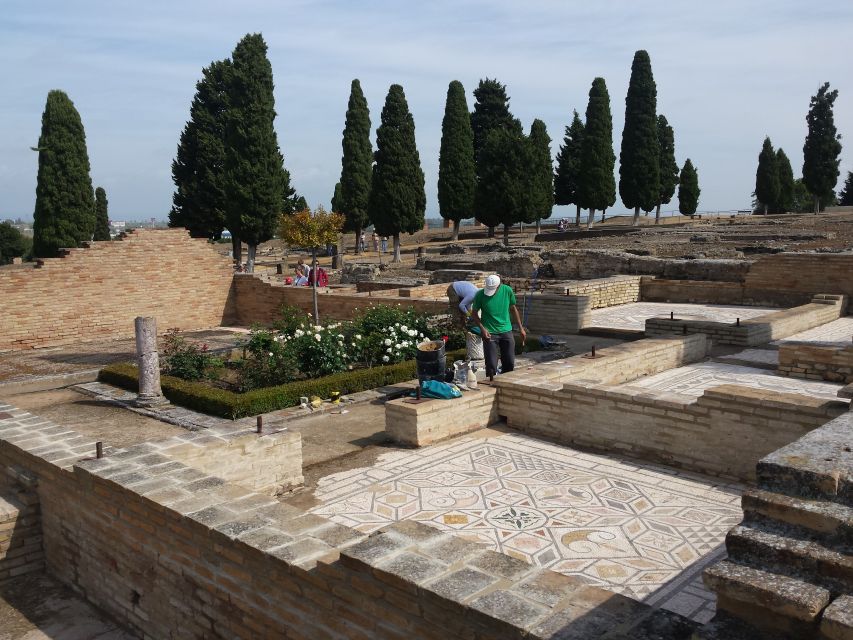
Italica is one of Spain’s most important Roman archaeological sites. It began in 206 BC, founded by General Publius Cornelius Scipio. Then it became famous for producing two emperors: Trajan and Hadrian, both born here.
What I like about starting at Italica is that the guide helps you connect facts to the physical remains. You’re not just looking at ruins, you’re seeing a city that once had streets, public spaces, and entertainment built at a serious scale.
The guided time at Italica is 105 minutes, which is just enough for a meaningful visit without feeling like you’re sprinting. Expect the guide to point out major features, then weave in stories about how people lived around these spaces. That context helps mosaics and architectural leftovers hit harder, because you understand what they were for.
If you’re a Game of Thrones fan, this is also where the tour starts being fun in a non-cringey way. The amphitheater is a big visual reference point for the show’s Dragonpit, but the guide doesn’t treat it like trivia. It uses the pop-culture link as a doorway into Roman public entertainment and crowd spectacle.
The amphitheater that fans call the Dragonpit
The amphitheater is the star for a reason. It was once one of the largest in the Roman Empire, with seating capacity around 25,000. Even in ruins, that scale is hard to ignore.
The guide will walk you through the space in a way that makes sense of the seating and the action area. You’ll also hear about underground routes connected to performances and combat. This is where the experience stops being passive sightseeing and starts feeling like a scene you could step into.
Game of Thrones fans get a recognizable moment when the amphitheater is discussed as the Dragonpit setting. I’d treat that as an entry point, not the whole reason to go. The real win is understanding the Roman mechanics behind a place like this, how crowds were controlled, and how the city engineered the flow of performers and animals.
Practical angle: because you’re at an open archaeological site, wear shoes you trust. This isn’t a flat sidewalk stroll.
Other days out near Seville
- Seville: Royal Alcázar Entry Ticket
★ 4.6 · 28,378 reviews - Seville: Live Flamenco Dancing Show Ticket at the Theater
★ 4.7 · 16,396 reviews - Seville: Alcázar, Cathedral & Giralda Skip-the-Line Tour
★ 4.8 · 11,525 reviews - Seville: 1-Hour Guadalquivir River Sightseeing Eco Cruise
★ 4.2 · 10,281 reviews
Mosaics and the gladiator world under the city
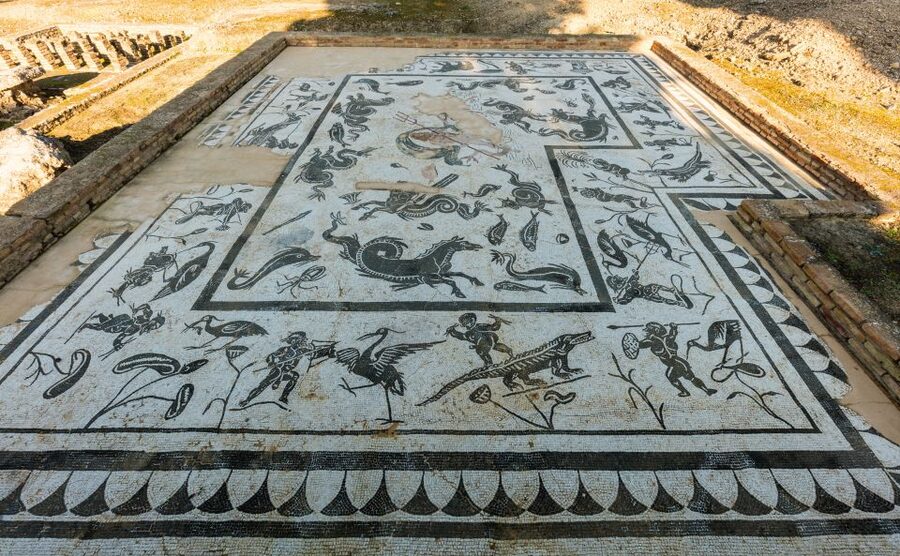
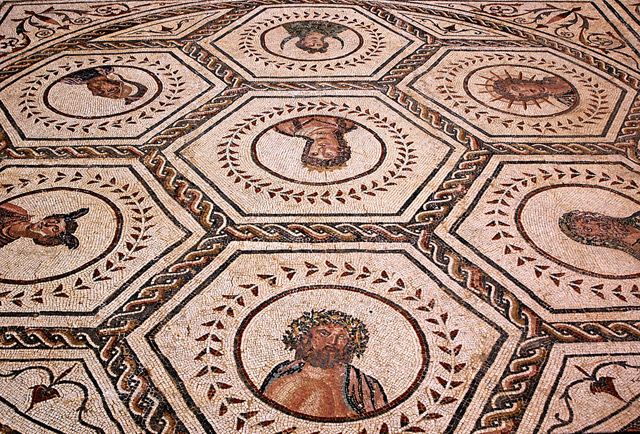
Italica’s best moments often come from the details. You’ll see well-preserved ruins and hear about intricate mosaics that show how skilled Roman artisans were at turning floors and walls into visual storytelling.
But what really makes this tour stand out is that it doesn’t only stay above ground. The guide points out underground passages used by gladiators and also describes the den where lions were held before combat.
That underground piece matters because it changes how you interpret the amphitheater. Once you know performers and animals had to be transported through hidden routes, the ruins feel less like broken architecture and more like a functioning machine that once ran on timing, safety procedures (as much as the era allowed), and spectacle.
Mosaics are visually impressive, yes. Still, the best advice I can give is to let the guide explain first, then look again. If you do that, you’ll notice patterns and placement decisions that you would otherwise miss in a quick photo stop.
One more practical thing to keep in mind: facilities at the ruins are limited. That includes exhibition space and restrooms. You can still have a great experience, but don’t count on long comfort breaks on site.
San Isidoro del Campo: Mudejar, Gothic, and Baroque turns
After Italica, you get a short bus ride, then you switch to the monastery. The drive is about 10 minutes before you arrive at San Isidoro del Campo.
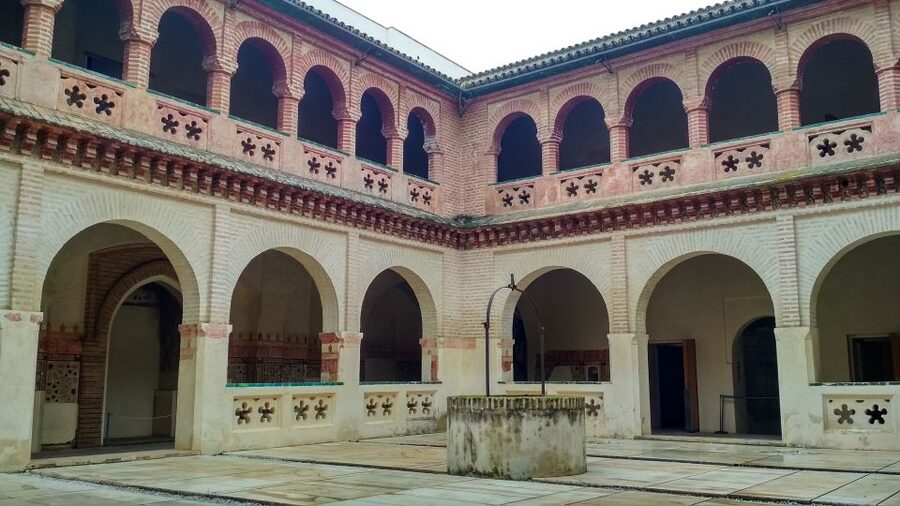
The monastery visit is 40 minutes with a guided explanation. It’s a medieval fortress that blends Mudejar, Gothic, and Baroque architecture, so it gives your brain a satisfying change of pace. Where Italica is all Roman civic life and entertainment, the monastery is tied to religious space, art, and architectural styles that developed over centuries.
This is also where the tour becomes a mini story about continuity in Andalusia. The region you see today is layered. Roman remains can still be present, but medieval builders reshaped meaning, materials, and design around new needs.
If you like architecture, you’ll probably enjoy how the guide points out mixed styles in a way that doesn’t require you to be an art historian. You’ll come away seeing specific elements rather than just getting a vague overview.
The time is short, so I recommend treating the monastery as a focused look. You’ll get the main beats, and the guide will choose what’s worth your attention.
Group size, guides, and language options that actually matter
You can book this tour as a shared group experience or as a private tour for a more personal pace. Shared tours are organized by language groups after boarding, which helps keep explanations clear.
The tour runs in English, French, Italian, and Spanish. One important detail: for the shared tour, there’s a minimum requirement of 4 participants speaking the same language to guarantee the tour in that language. If that condition isn’t met, you’ll be offered an alternative language, different date, or a full refund.
Why I’m emphasizing this: language affects how much you gain from Roman and medieval details. If you can travel in your strongest language, you’ll get far more out of the guide’s stories about amphitheater mechanics, mosaics, and monastery architecture.
As for guide style, the names that come up often include Petra, Miguel, Carlos Leone, and Jesus. Across those examples, the common theme is humor plus clear explanations. If you’re the type who normally tours on your own, this is one of the rare guided trips that can feel like it saves time rather than spending it.
Transport, drop-offs, and the timing you should plan for
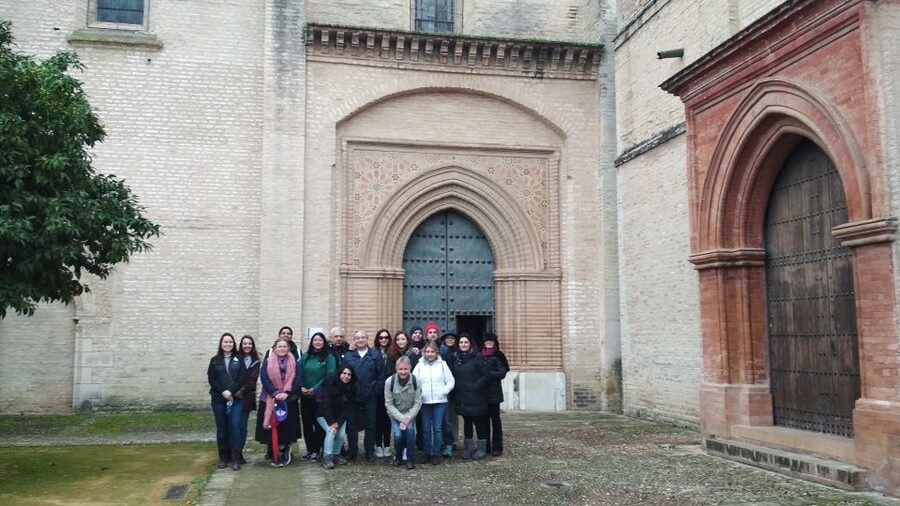
The schedule is structured around quick, efficient moves. You start with pickup, then you spend guided time at Italica, bus again to the monastery, then you head back to Seville for drop-off.
A typical pattern looks like:
- Bus time to Italica (about 20 minutes)
- Guided time at Italica (about 105 minutes)
- Bus time to the monastery area (about 10 minutes)
- Guided time at San Isidoro del Campo (about 40 minutes)
- Bus time back to Seville (about 20 minutes)
Drop-off happens at multiple points in the city, including Calle Rastro 12a, Hotel Don Paco, and Calle Trajano 6.
Here’s what I’d do with this info: plan a relaxed slot after the tour. Even if the official duration is 4 hours, real-world traffic can shift the schedule. If you’re traveling during peak hours, give yourself a cushion so you’re not rushing to fit dinner, flamenco, or a long walk.
Is it worth $46? What you get for the money
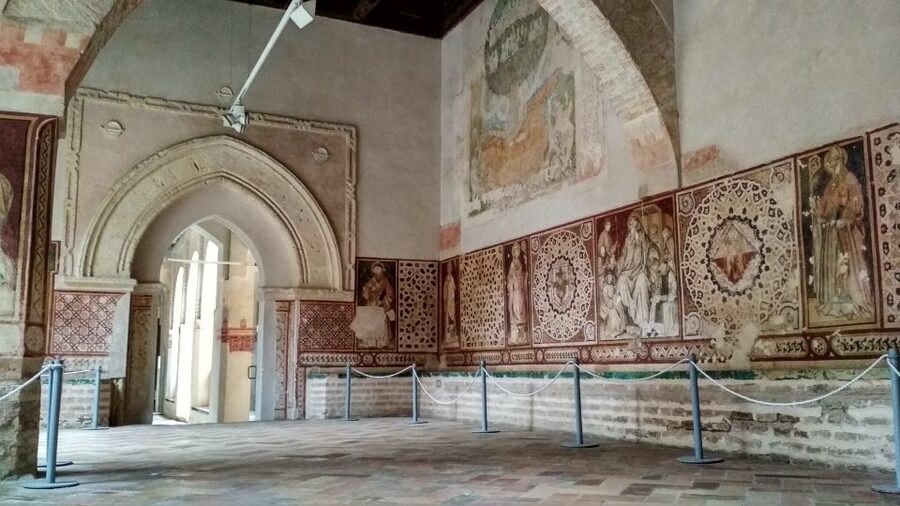
Let’s break down the value in plain terms. At $46 per person, you’re paying for:
- Transportation from Seville
- Entry tickets
- A local guide
- A half-day schedule that covers two major stops
If you tried to do this on your own, you’d still spend time arranging transit and paying admission. Guided context is the other big piece of value. Italica isn’t just “old rocks.” The tour includes the story behind the amphitheater, the mosaics, and even the underground gladiator routes.
So the price works best when you want to maximize your time, not when you’re trying to slow-travel. If you want to linger for hours inside Italica without a schedule, you might feel rushed. But if you’re happy with a focused visit and you want the history connected to what you see, the cost makes sense.
Also, because food and drinks are not included, you’re free to choose your meal plan in Seville afterward. That can be a plus if you already know where you want to eat.
Who should book this Italica and monastery tour?
Book it if you:
- Want a Roman-and-medieval combo without committing to a full day
- Like guided explanations that help you interpret ruins and architecture
- Want an easy Seville day trip that doesn’t eat your whole afternoon
- Are a Game of Thrones fan who wants the Dragonpit connection, but also wants real Roman context
You might think twice if you:
- Need long independent time for photos and wandering
- Prefer to control every minute at a site without moving on to the next stop
- Have strict timing right after the tour, since traffic can add extra minutes
This tour tends to fit couples, history-minded solo travelers, and families with teens who can handle a half-day walking pace.
Should you book this tour?
Yes, if you want one of the best-value half-day outings from Seville. Italica gives you a Roman anchor, the amphitheater is the headline, and the monastery adds a smart second act with Mudejar, Gothic, and Baroque architecture.
My final advice is simple: wear good shoes, bring a plan for a quick break since facilities are limited, and leave a little wiggle room after the tour. If you do that, you’ll get a tour that feels worth its time, not just another tick on a sightseeing checklist.
FAQ
How long is the Italica Roman City & Medieval Monastery Tour?
It lasts about 4 hours.
How much does the tour cost?
The price is $46 per person.
What’s included in the tour price?
Entry tickets, transportation from Seville, and a local guide.
Is food or drinks included?
No. Food and drinks are not included.
Can I choose between shared and private tours?
Yes. You can book either a shared group tour or a private tour.
What languages are available?
The live tour guide is available in English, French, Italian, and Spanish.
Where do I meet, and how does pickup work?
Meeting point depends on the option booked. Shared tours use one of three meeting points in Seville. For the private tour, hotel pick-up is available depending on your location in the city.
What if the tour is not in my language?
For shared tours, a minimum of 4 participants speaking the same language is required. If that isn’t met, you’ll be offered an alternative language, a different date, or a full refund.
What are the cancellation and payment options?
You can cancel up to 24 hours in advance for a full refund, and you can reserve now and pay later.
Recently added around Seville
- From Seville: Italica Roman City Tour★ 4.4 · 139 reviews
- From Seville: Jerez, Cádiz and Andalusian Horses★ 4.3 · 181 reviews
- From Seville: Half-Day Guided Bike Trip to Italica★ 4.9 · 126 reviews
- From Seville: Granada & Alhambra Tour with Optional Ticket★ 4.2 · 383 reviews
- From Seville: Full-Day Aracena & Rio Tinto Mines Tour★ 4.5 · 430 reviews
- From Seville: White Villages and Ronda Tour★ 4.4 · 201 reviews
- From Seville: Cordoba and Mosque Cathedral Guided Tour★ 4.5 · 288 reviews
- From Sevilla 3 Cities One Day:Córdoba, White Village & Ronda★ 4.6 · 172 reviews
Day Trips & Excursions from Seville, compared.


White Villages and Ronda Day Tour from Seville
Read our review →
Granada Day Trip with Alhambra and Albaicin Tour from Seville
Read our review →Browse the lists this tour appears in