Reviewed · MADRID TOURS & ACTIVITIES
Inquisition, The Executioner, Witches, Expulsion Jews and Muslims
History gets uncomfortable fast. This 2-hour, English-guided walk traces the Spanish Inquisition through Madrid’s churches and plazas, connecting Christianity with Islam and Judaism as you watch the story turn from accusation to punishment.
I love the way the guide keeps the narrative organized, with dramatic storytelling that makes tough material easier to follow. I also love the practical setup: free stops, teaching tools in-hand, and the chance to ask questions after, with guides such as Jackie or David Onion referenced in past groups for keeping everyone engaged.
One possible drawback: the tour covers investigations, confessions, and execution methods like garrote vil and burning at the stake. If you are sensitive to violent historical topics, plan your pace and wear comfortable shoes for standing and walking in central Madrid.
In This Review
- Key things you will notice on this Madrid Inquisition walk
- Two hours in the center of Madrid, with a story you can follow
- Plaza Mayor start to Plaza de la Armería finish: a day-planning win
- Iglesia de Santa Cruz: where faiths, identity, and power start to connect
- Plaza de la Provincia: executions start as an investigation process
- Casa de la Carnicería: autos de fe ideas and the art of the trial
- Basilica de San Miguel: edicts of faith and the danger of labels
- Casa Cisneros: Cisneros vs Torquemada as a human power story
- Plaza de la Cruz Verde: symbols, punishments, and the gallows logic
- Catedral de Santa María la Real de la Almudena: Vatican Archives, John Paul II, and the end
- Plaza de la Armería: today’s conflicts, legacies, and a closing reflection
- Price and value: what $3.61 per group really means
- The guide matters: Jackie and David Onion as examples of the tour’s style
- Who this tour is best for (and who should think twice)
- Should you book this Madrid Inquisition tour?
- FAQ
- How long is the tour?
- What does it cost?
- Is the tour offered in English?
- Do I need tickets to enter the sites?
- Where do I meet for the tour?
- What is included in the tour?
- Can I get a full refund if I cancel?
Key things you will notice on this Madrid Inquisition walk
- A clear story arc, not random stops, moving from faith claims to trials and punishment.
- Free access for every site stop, so you can focus on learning instead of ticket math.
- Central Madrid route that starts at Plaza Mayor and ends at Plaza de la Armería, near major transit.
- Execution methods explained in context, including gallows, beheading, garrote vil, and burning at the stake.
- Major landmarks with religion and power themes, from Santa Cruz and San Miguel to Almudena.
- Modern echo in the final plaza, with a conversation about legacies and today’s religious conflicts.
Two hours in the center of Madrid, with a story you can follow
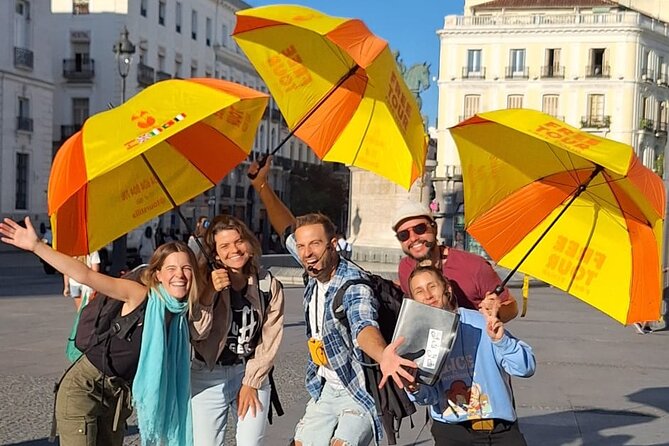
This tour is built for people who want more than a few plaques. You get a guided route that links ideas to places, so the Spanish Inquisition stops feeling like something locked in a textbook. In about 2 hours and 15 minutes, you’ll move through central squares and landmark churches while the guide explains how authorities framed belief, identity, and accusation.
The format also feels practical. You receive printed material and teaching tools along the walk, and you have a local guide who can answer questions in real time. It is also offered in English, which matters in Madrid because the best historical explanations can disappear fast if the language is shaky.
One extra value point: the price is listed as $3.61 per group (up to 15), and the tour runs with a maximum of 30 travelers. That usually translates to a more manageable group size than the big bus-style crowds, especially if your guide manages the pace well.
Other days out near Madrid
- Madrid: Tour Bernabéu Entry Ticket
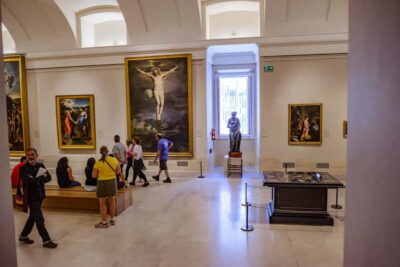
★ 4.5 · 21,573 reviews - Madrid: Prado Museum Entry Ticket
★ 4.6 · 20,699 reviews - Madrid: “Emociones” Live Flamenco Performance
★ 4.8 · 12,866 reviews
Plaza Mayor start to Plaza de la Armería finish: a day-planning win
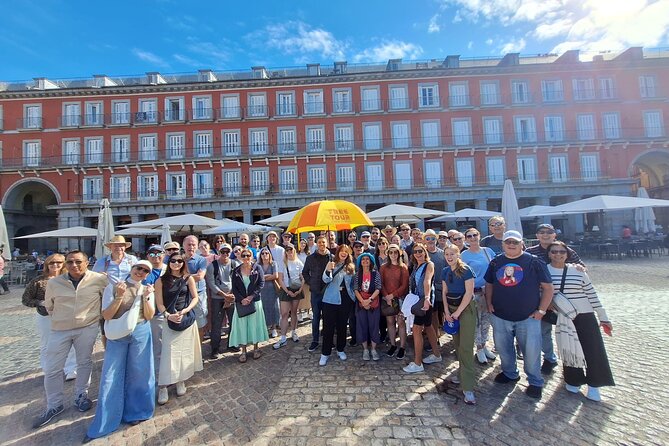
Your journey kicks off at Plaza Mayor in Centro, Madrid. The meeting point is easy to spot, and the timing is set so you are not stuck wandering before the story begins. The end point is Plaza de la Armería, with the route designed to leave you close to more sights and transit.
This matters because Inquisition history can make people want to slow down, take notes, and process. Starting near Plaza Mayor means you likely can pair this with an early lunch or a later museum visit. Ending near Plaza de la Armería helps too, since you can keep walking toward nearby viewpoints and churches without backtracking across town.
Also, the tour uses a mobile ticket, so you do not need to hunt for printed passes. If you are the type who hates last-minute stress, this kind of setup is worth it.
Iglesia de Santa Cruz: where faiths, identity, and power start to connect
The first stop is Iglesia de Santa Cruz, and the guide uses it to lay out the core thread: how the Spanish Inquisition related to the three monotheistic religions, Christianity, Islam, and Judaism.
Even if you already know the broad story of religious persecution, you might not know how deliberately authorities framed identity as something you could categorize and test. This opening stop helps you understand that the Inquisition was not just about theology in the abstract. It was about control, legitimacy, and who got to define belonging.
A helpful part here is the balance between the religious focus and the human impact. The guide sets up the logic of suspicion and investigation early, so later stops about accusations and confessions land with more clarity.
Practical note: since this stop runs about 15 minutes, you will get the key ideas without getting stuck waiting for a deep museum-style visit. You keep momentum.
Plaza de la Provincia: executions start as an investigation process
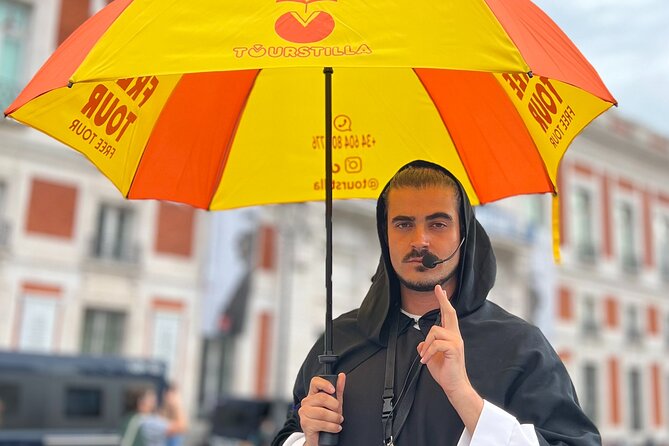
Next comes Plaza de la Provincia, where the story turns toward the executioner and the Inquisition. This is the moment where you start seeing how the system worked on paper and on the ground.
You’ll hear about the investigation process, torture, and confessions, and how the Inquisition used procedures to produce outcomes. It can be unsettling because the logic can sound cold and mechanical, even when the consequences are brutal. That said, the guided framing helps you connect the dots: the Inquisition was designed to move from suspicion to certainty, and confession was central.
What I like about starting to hear the investigation details here is that it avoids the common mistake of jumping straight to punishments. You understand the steps that came first. You also understand why accusations could snowball, especially when authorities decided they already knew what they would find.
Also within reach of Madrid:
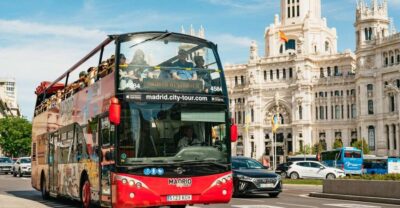
- Madrid: Panoramic Route City Tour
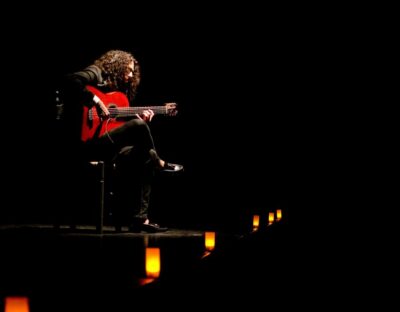
★ 4.1 · 12,259 reviews - Madrid: Live Flamenco Show with Food and Drinks Options
★ 4.5 · 9,901 reviews - Avila & Segovia Tour with Tickets to Monuments from Madrid
★ 5.0 · 9,762 reviews - Madrid: Reina Sofía Museum Entrance Ticket
★ 4.5 · 8,788 reviews
Casa de la Carnicería: autos de fe ideas and the art of the trial
At Casa de la Carnicería, you shift from the process to the cultural stage around it. The guide brings in the concept of public religious trials, described through the idea of autos de fe, and you’ll hear about the big trial and the most famous painting tied to the theme.
This stop is a reminder that history was not only enforced, it was also performed. Public ceremonies, symbols, and visual storytelling helped authorities communicate power. If you have ever wondered why old religious persecutions felt so theatrical, this kind of place-based explanation gives you the answer: spectacle helped convert fear into obedience.
One drawback to watch for: because this is a relatively short stop, you may want to take notes so you can revisit the key terms later. The tour gives you the roadmap, but you still need your own time to sink it in.
Basilica de San Miguel: edicts of faith and the danger of labels
The route then goes to Basilica de San Miguel, where the focus turns to the mechanism of classification and accusation. The guide covers how authorities tried to identify a false Jew and a false Moorish, and it connects this to proclamations like edicts of faith and the problem of false allegations.
This is one of the most important stops, because it shows you the Inquisition as a system of labeling. When a government or religious authority decides someone is guilty before evidence is examined, the process becomes about reinforcing bias. You are not just hearing about violence. You are seeing the logic that made violence possible.
The tour also frames how accusations could get traction, and how the wrong narrative could become the official narrative. If you like understanding cause and effect, this is where the tour becomes especially sharp.
Casa Cisneros: Cisneros vs Torquemada as a human power story
At Casa Cisneros, the guide introduces the historical figures connected to the Inquisition, specifically Cisneros versus Torquemada. This is the kind of stop that can change how you see the entire story.
Instead of treating the Inquisition like one faceless machine, you get a sense of competing influence and decision-making. Historical power is rarely one simple line. People argue. Institutions push. Individuals matter, even when systems are enormous.
This stop works well because it gives you a breather from the most violent details while still keeping the central theme alive. You can process what you learned in earlier stops before the tour shifts again to execution symbols.
Plaza de la Cruz Verde: symbols, punishments, and the gallows logic
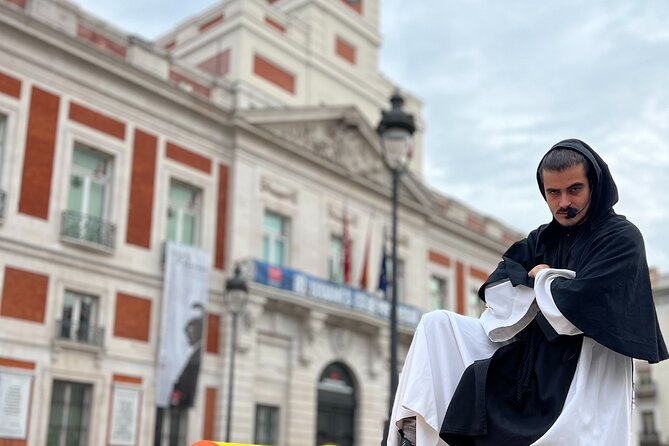
Then you arrive at Plaza de la Cruz Verde, which is the tour’s symbol-heavy turning point. Here you’ll hear about the symbol of the Inquisition and how punishment was carried out, including the gallows, beheading, garrote vil, burning at the stake, and a reference labeled Bruges as part of the tour’s material.
This is where the tour can feel hardest emotionally, because it moves from procedure and accusation into public physical consequences. The value is that you learn the vocabulary of enforcement, so when you later see these terms in other contexts, you understand what they meant.
If you are worried about handling the topic, you can still benefit from the stop by focusing on the explanatory angle: why these methods were used and how public punishment shaped behavior. The guide should help keep it contextual rather than sensational.
I also think this stop is where the printed teaching tools help most, because the methods and terms can blur if you only rely on memory.
Catedral de Santa María la Real de la Almudena: Vatican Archives, John Paul II, and the end
Next is Catedral de Sta Maria la Real de la Almudena, a major landmark that gives the story a larger, church-wide frame. The guide brings up the Vatican Archives angle, and the themes of John Paul II and a pardon from the Catholic Church.
From there, you move into the claim about the end of the Inquisition and the topic of legacies, including legacies of the Jews in Spain and legacies of Muslims in Spain.
One of the strengths of ending the “Inquisition era” portion here is that it lets you step back and ask bigger questions. What happens after institutions change? How do societies remember? What gets corrected, and what stays as social scars?
You’ll also hear a point about the last execution of the Inquisition, described as happening in 1974 with garrote vil. Even if that detail feels surprising, it is part of what the tour covers, and it pushes you to think about how long the shadow of an institution can stretch.
Plaza de la Armería: today’s conflicts, legacies, and a closing reflection
The final stretch is Plaza de la Armería, where the tour connects past to present. You’ll hear discussion about current religious conflicts, phrased as holy wars, and the idea of legacies that continue to shape identity and tension.
The goal is not to turn Madrid into a depressing lecture. It is to help you leave with perspective: you can appreciate the historical mechanisms while also recognizing that the same kinds of labeling and fear can reappear in different forms.
The closing reflection is also where you can ask your remaining questions. This is a tour where processing matters, because the theme is heavy and the details are specific.
Price and value: what $3.61 per group really means
At $3.61 per group (up to 15), the tour pricing is extremely low compared to typical guided experiences in big European cities. The real value is not just the cost. It is that you get a structured explanation across many meaningful stops without paying for site entries, since entries are not required for this route.
Add in the fact that you receive printed materials and teaching tools, and you also get a link to personalized recommendations for what to do in Madrid. That kind of post-tour help can save you time on the rest of your trip.
If you are booking last-minute, do not count on availability. The tour is commonly booked around 31 days in advance on average, so earlier planning helps if your schedule is fixed.
The guide matters: Jackie and David Onion as examples of the tour’s style
One clear theme from past experiences is that the guide makes a big difference. Names that show up in strong feedback include Jackie and David Onion, and the shared idea is that good guides use dramatic, clear explanations to keep a group following along.
That is exactly what you need for a topic like the Inquisition. The subject has jargon, multiple overlapping themes, and emotionally heavy content. A guide who can translate the logic into plain language, and who can keep the group engaged without rushing, turns the route into something you actually remember.
So when you book, lean on the description of the guide-led approach. This is not a stand-alone audio tour where you read everything at your own pace. It depends on the person in front of you.
Who this tour is best for (and who should think twice)
This is a good fit if you:
- Want a focused history walk centered on Madrid’s real locations
- Prefer an organized story with stops that connect religion, investigation, and punishment
- Like guided context and Q and A, not just wandering
- Enjoy learning how terms and symbols show up in public spaces
You might want to think twice if you:
- Avoid tours that cover torture and execution methods
- Want a purely architectural or lighthearted walking experience
- Prefer longer, inside-the-building visits rather than plaza and exterior explanations
Either way, bring comfort. You are on your feet for much of the 2 hours and 15 minutes.
Should you book this Madrid Inquisition tour?
Yes, if you want a clear, guided way to understand how the Inquisition worked, how accusations were framed, and how that legacy shows up in Madrid today. The biggest wins are the organized story, the free entry format, and the chance to learn through landmarks instead of only through reading.
Book it if you like your history with structure, and if you can handle difficult topics with sensitivity. Skip it if you want light travel or if violent content is hard for you. If you do book, bring good shoes, keep an open mind, and use the guide’s explanations to connect the dots between faith, fear, and power.
FAQ
How long is the tour?
The tour lasts about 2 hours and 15 minutes.
What does it cost?
The price is listed as $3.61 per group (up to 15).
Is the tour offered in English?
Yes. The tour is offered in English.
Do I need tickets to enter the sites?
No. Entries to the sites are not required.
Where do I meet for the tour?
You meet at Plaza Mayor in Centro, Madrid. The tour ends at Plaza de la Armería (Pl. de la Armería, Centro, 28013 Madrid, Spain).
What is included in the tour?
It includes a local guide, printed material and teaching tools during the route, and a link to personalized recommendations for what to do in Madrid, plus personalized attention after the tour.
Can I get a full refund if I cancel?
Yes. You can cancel for a full refund up to 24 hours in advance of the experience’s start time.
Recently added around Madrid
- Toledo Experience Tour from Madrid with optional Toledo Cathedral★ 4.5 · 703 reviews
- Madrid: Tapas Walking Tour with Food and Drinks Included★ 5.0 · 108 reviews
- Tasty Tapas & Drinks Tour with a Rooftop Included★ 5.0 · 82 reviews
- Tickets for the Authentic Flamenco Show at the Madrid Theater★ 4.5 · 301 reviews
- Madrid Royal Palace and Prado Museum Private Tour with Transfers★ 5.0 · 185 reviews
- Madrid Tapas Crawl ️Tour by FLT★ 5.0 · 269 reviews
- Prado Museum Madrid Guided Tour Semi-Private 6ppl Max★ 5.0 · 67 reviews
- Toledo Day Trip from Madrid: Cathedral & Monuments★ 5.0 · 368 reviews
Madrid Tours & Activities, compared.


Live Flamenco Show with Food and Drinks Options
Read our review →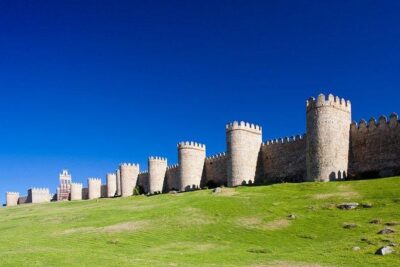
Avila & Segovia Tour with Tickets to Monuments from Madrid
Read our review →