
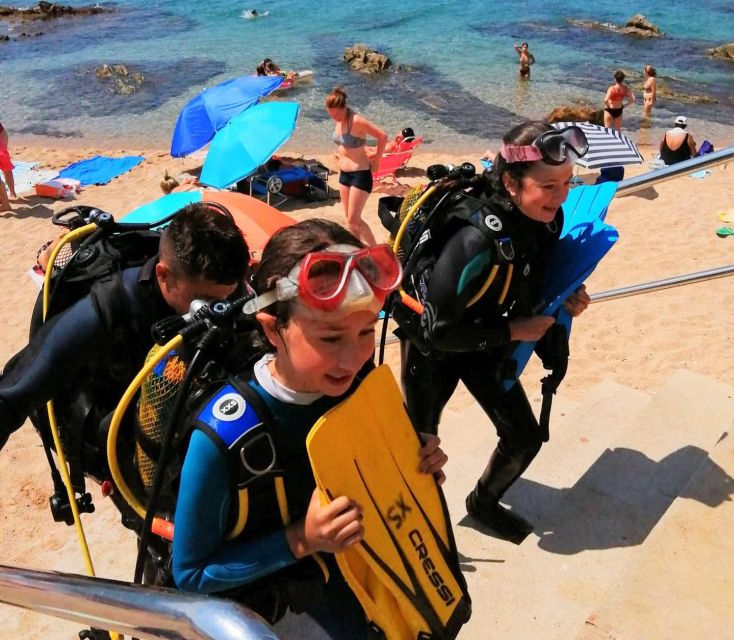
Reviewed · SCUBA DIVING
Lloret de Mar: Scuba Diving Experience no License Required
Breathing underwater feels unreal, and this Lloret de Mar scuba experience delivers that first breath feeling fast, in a small group with no license required. I love how the team runs it step-by-step, from basic theory to breathing practice, so you are not guessing what to do once you are in the water.
I also like the personal attention you get throughout, especially when it is time to move from a sheltered practice area to the open coast. One thing to weigh: photos and videos are listed as not included, so if you care about getting media, ask ahead before you go in.
In This Review
- Key things to know before you go
- Meeting Dolphins Diving Center, getting suited, and staying calm
- Theory first: the simple rules that make breathing underwater possible
- The calm bay practice: your first breaths with real support
- Swimming outside the bay along Costa Brava, up to 12 meters
- What the instructors do differently, and why it matters
- Price and value: why $118 for 2 hours can make sense
- What to bring, what is not allowed, and the rules that protect you
- Who should book this and who should skip it
- Should you book this Lloret de Mar scuba experience?
- FAQ
- Where do I meet for the experience?
- How long is the scuba experience?
- Do I need a scuba license or prior experience?
- What is the maximum depth?
- What should I bring?
- What conditions make this experience not suitable?
- Is there free cancellation?
Key things to know before you go
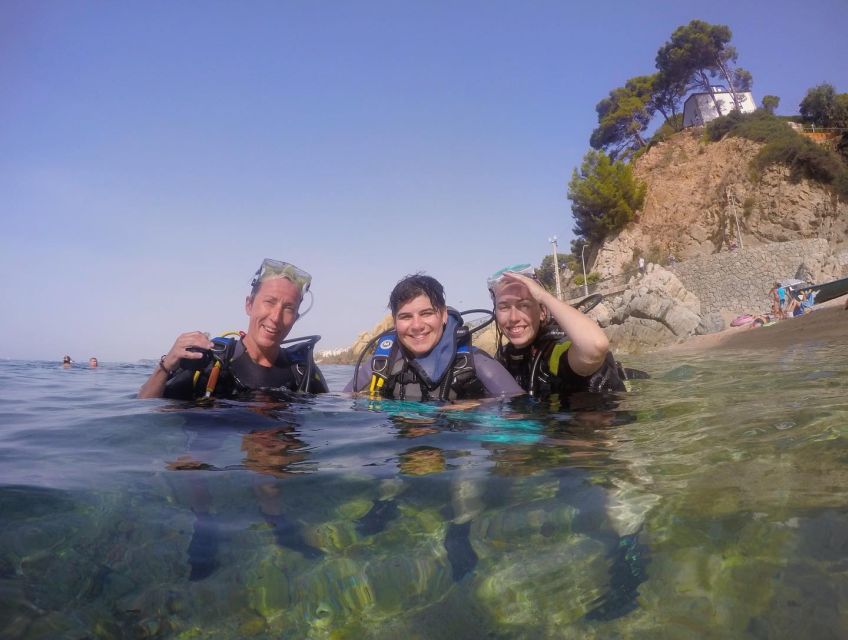
- Small groups (up to 10) mean more time with your instructor and fewer rushed moments.
- No license required and no prior experience needed, as long as you like water.
- Two-stage practice starts in a calm, pool-like bay before you swim outside it.
- Max depth is 12 meters, with marine life close by when conditions are right.
- All scuba equipment is included, so you only bring swimwear and a towel.
- Multiple instructor languages are available, including Spanish, English, French, Russian, and Dutch.
Meeting Dolphins Diving Center, getting suited, and staying calm
Your experience starts at the activity provider’s office at Dolphins Diving Center, where you meet your instructor and your group. Expect a “get oriented, then get ready” vibe. Even before you enter the water, the tone is practical, focused, and designed for first-timers.
In Lloret de Mar, the whole point is to keep things manageable. You are not trying to conquer the ocean on your first day. You are learning how scuba gear works together, how breathing feels under pressure, and how to follow simple cues. That makes the session feel less like a stunt and more like real training, just at a beginner-friendly pace.
You will be given all necessary equipment as part of the experience. That matters because a lot of first-timer stress comes from not knowing what gear does or how it should fit. Here, the setup is part of the guided program, so you are not stuck figuring out straps and hoses with nervous hands.
Other days out near Spain
- Tenerife: Your First Scuba Diving Experience in Turtle Area
★ 4.7 · 1,679 reviews - Barcelona: PADI Discover Scuba Diving
★ 4.7 · 1,016 reviews - Mallorca: Discover Scuba Diving for Beginners
★ 4.7 · 805 reviews
Theory first: the simple rules that make breathing underwater possible
Before any water time, you get a theory session and a clear equipment explanation. This is where you learn the basics you actually need, like how your breathing system works and how to use the gear correctly. The goal is not to flood you with jargon. It is to help you understand what you will feel in your mouth and on your chest so you can relax.
You also learn the plan for the session: practice in a sheltered area first, then gradual movement further out. That progression is more important than it sounds. It builds confidence because each step is connected to the last one, so you are not thrown into open water before you feel comfortable with breathing.
If you are the type who needs to know why you are doing something, this theory part is the best time to ask. If you have questions about pressure, breathing rhythm, or what to do if you feel tense, this is when you want the instructor to address it. You will still be learning in the water, but having the basics in your head makes everything else feel smoother.
The calm bay practice: your first breaths with real support
Next comes the water practice in a calm, pool-like bay. This is where you get familiar with breathing underwater while staying in a controlled environment. If you have ever worried about panic, this part is the reassurance you need. You are well looked after, and you are not being asked to handle complex conditions right away.
In the bay, you will practice the fundamentals and learn how your body behaves with scuba gear. You are also learning how to coordinate breathing and movement without rushing. This matters because the biggest challenge for many first-timers is not danger. It is unfamiliar sensations and a brain that goes, Wait, I am breathing differently.
The instruction style seems to land well with anxious beginners. One participant experience highlighted how the instructors responded quickly and safely when someone felt panic underwater, then helped them back to shore when they needed to be on land. That is a good sign you are dealing with instructors who take emotions seriously, not just technique.
Drawback to consider: the session is designed for beginners, so you should not expect a long, free-roaming underwater adventure. You are practicing and learning. The pay-off is that you leave feeling capable, not overwhelmed.
Swimming outside the bay along Costa Brava, up to 12 meters
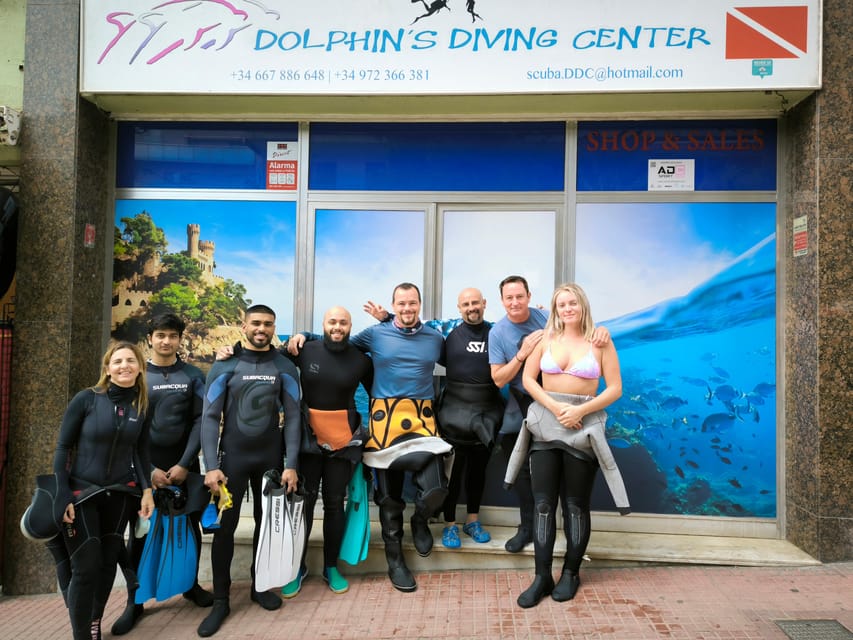
Once you have your bearings in the bay, you take a few steps further and start breathing underwater swimming outside it. This is the part most people remember, because it is where the coast shows itself. You get the chance to explore beyond the “practice bubble” and see what underwater mobility feels like.
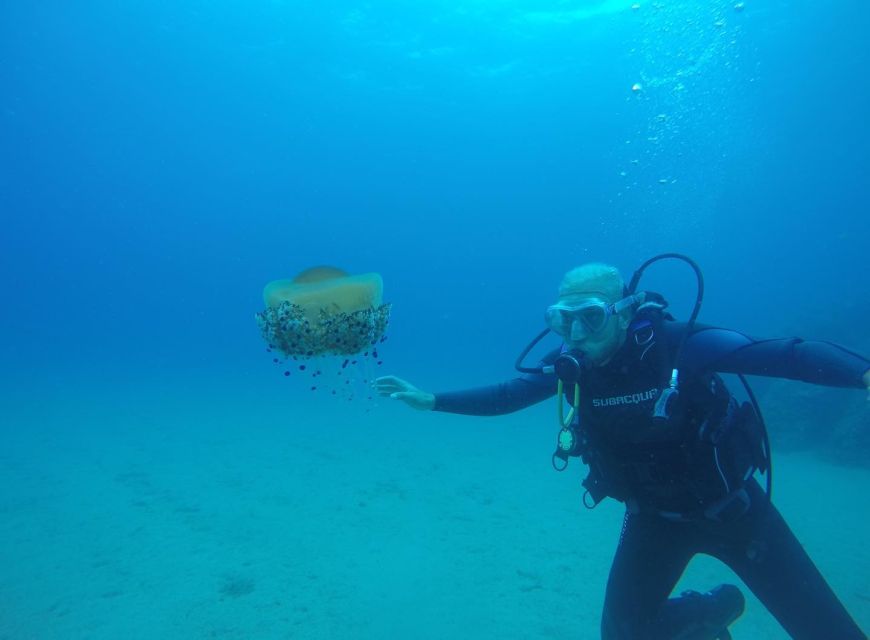
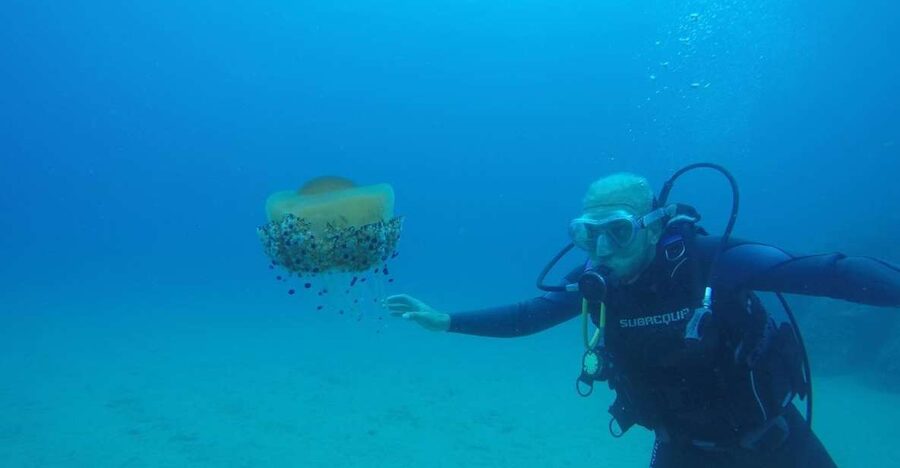
The maximum depth is 12 meters. That is a sweet spot for first experiences because it is enough to change the feel of the water, while still being approachable for a guided intro. You also get to get close to marine life, which is the heart of why people do this in Costa Brava.
What you will enjoy most is how the instructor keeps the experience structured while still letting you feel like you are part of what’s happening underwater. It is not just standing around with gear. You are moving in short, coached moments that build into actual swimming.
If you are worried about seasickness, take that seriously. This activity is in coastal waters, and it is not aimed at people who get sick on boats. It is also not suited for people prone to high blood pressure or heart problems, so your decision needs to start with your health comfort.
Also within reach of Spain:
- Barcelona: Sagrada Familia Entry Ticket with Audio Guide
★ 4.6 · 105,312 reviews - Barcelona: Park Güell Admission Ticket
★ 4.4 · 76,534 reviews - Seville: Royal Alcázar Entry Ticket
★ 4.6 · 28,378 reviews - Barcelona: Casa Batlló Entry with Self-Audioguide Tour
★ 4.7 · 25,359 reviews
What the instructors do differently, and why it matters
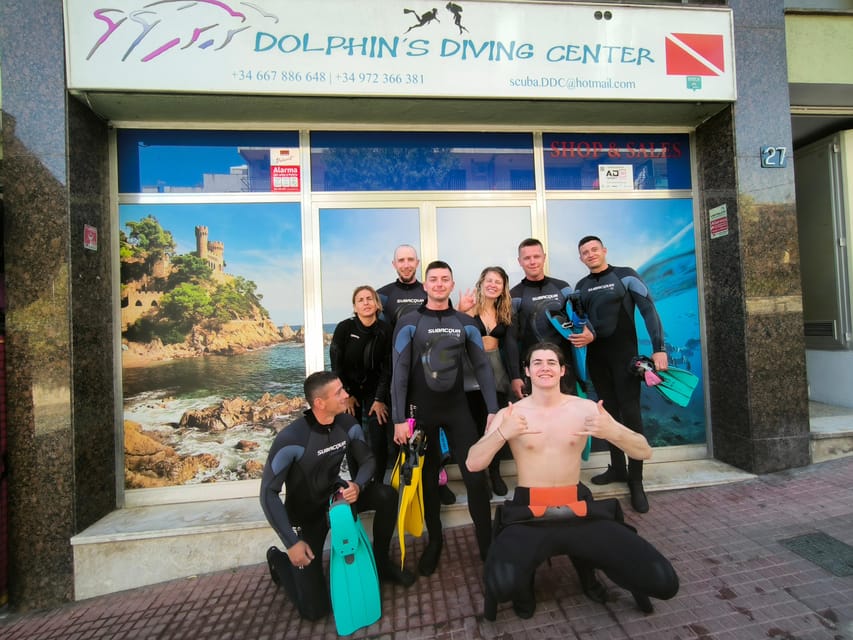
One of the strongest reasons to book this experience is how the instructors handle first-timers. You get personalized guidance, and that shows up in the way they explain equipment before you enter the water, then keep you supported during practice.
In particular, names like Valentin and Sergio came up in family bookings, with praise for professionalism, kindness, and good mood. That matters more than people expect. When you feel comfortable with the instructor’s communication, your body tends to cooperate faster. You breathe better, you relax more, and the whole session feels safer.
You will notice this in the small-group setup too. With limited participation, instructors can watch you closely. It is easier for them to spot confusion, adjust coaching, and keep you calm if you are not feeling your best.
There is also an important real-world takeaway: first experiences are rarely perfectly smooth, even with confident people. The team seems trained for that. If you need extra time to settle, or if you feel overwhelmed at a particular moment, you are not just left to work through it alone.
Price and value: why $118 for 2 hours can make sense
This runs about 2 hours and costs $118 per person. At first glance, that is not cheap. But the value becomes clearer when you compare what is included versus what you would otherwise pay for separately.
You get entrance fees, a guided tour, and all necessary scuba equipment. Those three items take away the most common hidden costs of “try this sport once” days. If you have ever rented gear for outdoor activities, you know that equipment can quietly inflate the price.
What is not included is food and drinks, photos and videos, and there is mention of a personal trainer fee of 30 GBP if you need that. So if you arrive hungry, bring water and snacks planning into your day. If you care about media, do not assume it is automatically part of your package.
Also, think about the time. Two hours is short enough to be manageable for beginners, especially if you are traveling. You can do this between sightseeing blocks without losing half a day. You also get to learn the basics safely in a structured way, which is worth more than just getting underwater once.
What to bring, what is not allowed, and the rules that protect you
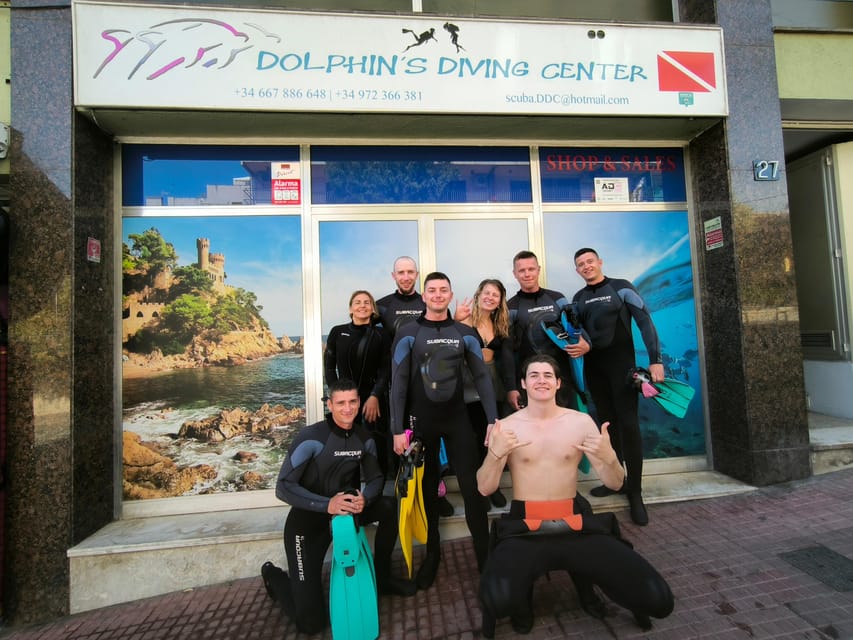
For what you bring, keep it simple: swimwear and a towel. That is all you need to plan for on your side. Everything else is handled by the activity team.
There are also clear restrictions: alcohol and drugs are not allowed, and feeding animals is not allowed. Those rules are about safety and respect for marine life. It also helps keep the experience focused on learning and observation, not attracting wildlife.
If you want to avoid last-minute discomfort, arrive ready to change into swimwear quickly. Bring your towel and use it right after the water portion. Warm up fast afterward, because even on a nice day, water and wind can make you feel colder than you expect.
Who should book this and who should skip it
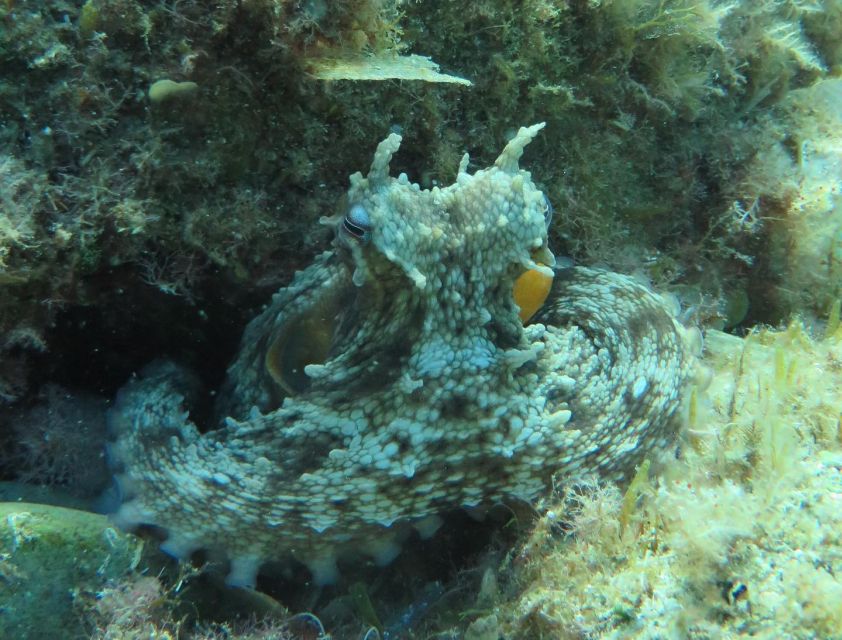
This is for people 10 years old and above, with a note that children under 8 are not suitable. If you are in a gray area around the minimum age, confirm before booking so you are not surprised.
It is not suitable for people with heart problems, people prone to seasickness, people with high blood pressure, and anyone over 331 lbs (150 kg). Those are not “try and see” categories. If any of these apply, you should choose a different activity that matches your health situation.
You also need to be comfortable being in water. The experience says you do not need previous experience, you just need to like water. That does not mean you have to be fearless. It means you should at least be willing to get in, follow instructions, and practice breathing while you learn the gear.
Wheelchair accessibility is listed, which is a positive sign if you use mobility support. If you have specific needs, you will want to confirm how the team handles equipment and transitions on the day.
This experience is a great fit if you want a first scuba taste in Costa Brava without licensing pressure. It also works well for people who want a family-friendly learning experience, as long as everyone meets the age and health guidance.
Should you book this Lloret de Mar scuba experience?
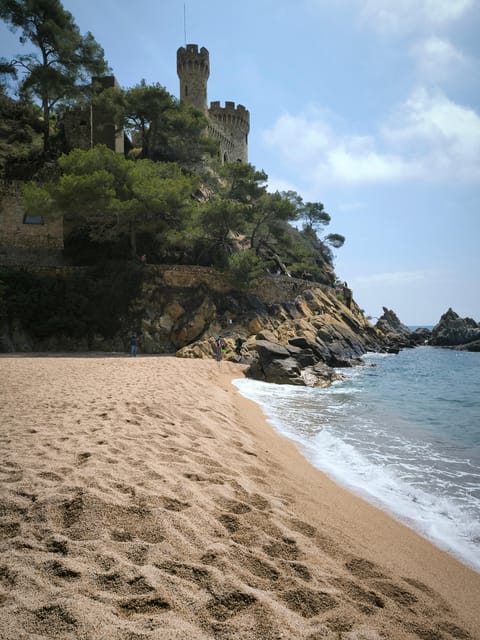
Book it if you want a structured first underwater experience with all equipment included, a small group, and a clear progression from theory to sheltered practice to open-coast swimming. If your goal is to feel what it is like to breathe underwater and leave with confidence, the 2-hour format is a strong match.
Think twice if you are sensitive to seasickness, have heart or blood pressure concerns, or care deeply about photos and videos being part of the package. In those cases, you may want to ask direct questions before you commit, especially about media and how the session pacing fits your comfort level.
If you are on the fence, the easiest decision rule is this: if you can be calm in water and you are ready to learn step-by-step, you will likely have a rewarding day.
FAQ
Where do I meet for the experience?
Meet your instructor at the activity provider’s office at Dolphins Diving Center.
How long is the scuba experience?
The duration is 2 hours.
Do I need a scuba license or prior experience?
No previous experience is required. The experience is described as suitable with no license required, as long as you like water.
What is the maximum depth?
The maximum depth is 12 meters.
What should I bring?
Bring swimwear and a towel.
What conditions make this experience not suitable?
It is not suitable for children under 8, people with heart problems, people prone to seasickness, people over 331 lbs (150 kg), and people with high blood pressure.
Is there free cancellation?
Yes. There is free cancellation, with a full refund if you cancel up to 24 hours in advance (also described as up to 1 day before the activity begins).
Recently added around Spain
- Toledo Experience Tour from Madrid with optional Toledo Cathedral★ 4.5 · 703 reviews
- Madrid: Tapas Walking Tour with Food and Drinks Included★ 5.0 · 108 reviews
- Tasty Tapas & Drinks Tour with a Rooftop Included★ 5.0 · 82 reviews
- Tickets for the Authentic Flamenco Show at the Madrid Theater★ 4.5 · 301 reviews
- Madrid Royal Palace and Prado Museum Private Tour with Transfers★ 5.0 · 185 reviews
- Madrid Tapas Crawl ️Tour by FLT★ 5.0 · 269 reviews
- Prado Museum Madrid Guided Tour Semi-Private 6ppl Max★ 5.0 · 67 reviews
- Toledo Day Trip from Madrid: Cathedral & Monuments★ 5.0 · 368 reviews
Scuba Diving, compared.
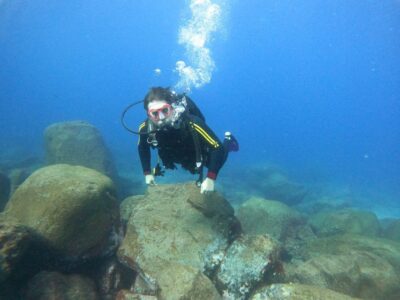
Your First Scuba Diving Experience in Turtle Area
Read our review →
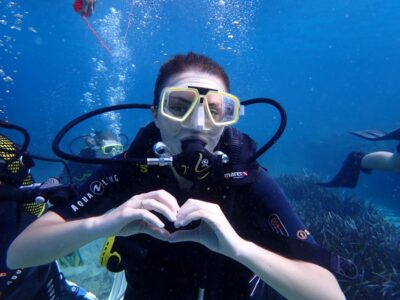
Scuba Diving Experience for Beginners in Gran Canaria
Read our review →
Tenerife First Time Scuba Dive – Turtle Habitat, Small Groups
Read our review →
Tossa de Mar: PADI Discovery Scuba Diving in Costa Brava
Read our review →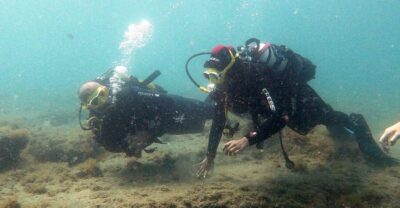
Browse the lists this tour appears in