Reviewed · BARCELONA TOURS & ACTIVITIES
Luca’s Hidden Old Barcelona: the Gothic and El Born Tour
Barcelona tells its story in narrow streets. This guided walk through Gothic Quarter and El Born turns old stone into a timeline, with stops that range from Barcelona’s political heart to Roman leftovers and real scars from the Spanish Civil War.
I love how Luca makes the city feel understandable, tying places to what happened there, like the power center around Placa de Sant Jaume and the Roman columns at MUHBA Temple d’August. I also like the small-group setup, capped at 15, which keeps the pace human and makes it easier to ask questions and get thoughtful, practical recommendations after.
One consideration: it’s a mostly outdoor walking route, and the cathedral stop is for the outside only, so you’ll want to think about sun and whether you expected an interior visit.
In This Review
- Key highlights you’ll feel right away
- A $13.27 walking tour that helps you read old Barcelona
- Meeting at Placa de Sant Jaume, then ending at Mercat del Born
- Placa de Sant Jaume: Barcelona’s power center for 2,000 years
- MUHBA Temple d’August: the Roman past in plain sight
- The Gothic Quarter shift: cathedral exterior and a key feature stop
- El Call at MUHBA: the medieval Jewish neighborhood
- Sant Felip Neri: Gaudi’s favorite church and the Spanish Civil War
- El Born and La Ribera: medieval neighborhood streets for 30 minutes
- Santa Maria del Mar: the church people talk about most
- El Fossar de les Moreres and the Madrid versus Barcelona conflict
- Passeig del Born: the medieval entertainment square moment
- Luca’s style: energy, humor, and photo references
- Timing, heat, and comfort: what to plan for a 2h15 walk
- Should you book this Gothic Quarter and El Born tour?
Key highlights you’ll feel right away
- Small group, capped at 15 for a more personal walk
- On-foot route that makes the Gothic Quarter and El Born easier to navigate
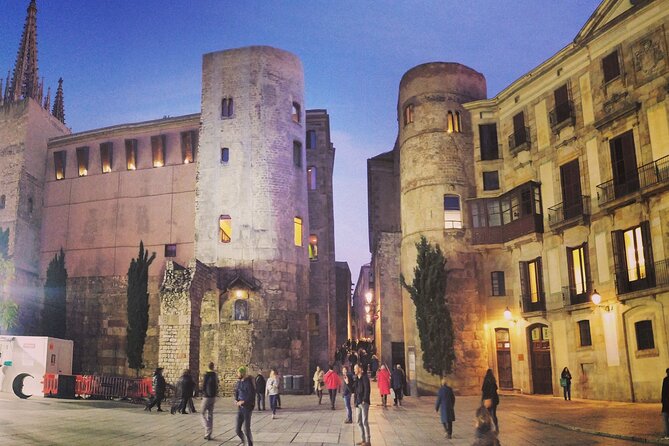
- MUHBA Temple d’August with four Roman columns from Augustus’ temple area
- El Call (MUHBA), Barcelona’s medieval Jewish neighborhood stop
- Sant Felip Neri tied to Gaudi plus the Spanish Civil War context
- El Fossar de les Moreres for a clearer look at the Madrid versus Barcelona conflict
A $13.27 walking tour that helps you read old Barcelona
For about $13.27 per person, you’re paying for interpretation, not museum time. The guide is included, and a big chunk of the route hits free stops, including MUHBA sites and several major squares and churches. For many first-timers, that is the best kind of value, because you leave with a mental map and a vocabulary for what you’re seeing.
The tour runs about 2 hours 15 minutes, and it’s offered in English. It’s also built for comfort with a cap of 15 people, which matters in Barcelona because the streets tighten and twist fast. If your plan is a short stay, this kind of guided start can save you from guessing what matters and what’s just scenery.
One more practical point: the experience is commonly booked around a month in advance, so if your dates are fixed, grab a spot early. You’ll also get a mobile ticket, so you’re not juggling paper tickets while you’re walking.
Other days out near Barcelona
- Barcelona: Sagrada Familia Entry Ticket with Audio Guide
★ 4.6 · 105,312 reviews - Barcelona: Park Güell Admission Ticket
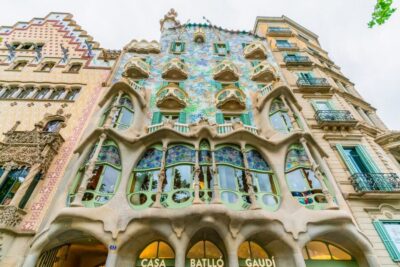
★ 4.4 · 76,534 reviews - Barcelona: Casa Batlló Entry with Self-Audioguide Tour
★ 4.7 · 25,359 reviews
Meeting at Placa de Sant Jaume, then ending at Mercat del Born
The walk starts at Pl. de Sant Jaume, 3, in Ciutat Vella, right in the historic center. It ends at El Born Centre de Cultura i Memòria, by Mercat del Born at Plaça Comercial, 12. That end point is a nice payoff, because it drops you right into the part of town where you can keep exploring on your own.
The route is designed around walking, not riding. One review notes the walk covered about three miles total, which feels about right for a 2h15 tour with multiple short stops. Since everything is on foot and close enough to connect easily, you get the best bonus: the neighborhood atmosphere. You’ll notice how the Gothic Quarter changes into El Born, and you’ll understand why people keep coming back to this part of Barcelona.
It’s also near public transportation, which helps if you want to pair it with something else the same day. And if you’re traveling with a service animal, it’s allowed.
Placa de Sant Jaume: Barcelona’s power center for 2,000 years
Your first stop is Placa de Sant Jaume, the political and social center of Barcelona for around the last 2,000 years. The square is where you’ll spot the town hall and the regional government, so even without going inside, you’re standing in the literal center of power and decisions.
You only get about 15 minutes here, so think of it as a guided setup. Luca’s job is to help you see the square not as a pretty plaza, but as a stage for governance and conflict. Once you understand that, the rest of the route clicks faster, because you’ll start noticing how power moves through streets, buildings, and neighborhoods.
This stop is free, which is great for value, and it’s also a calm beginning. If you’re jet-lagged, this early grounding can make the rest of the tour feel less overwhelming.
MUHBA Temple d’August: the Roman past in plain sight
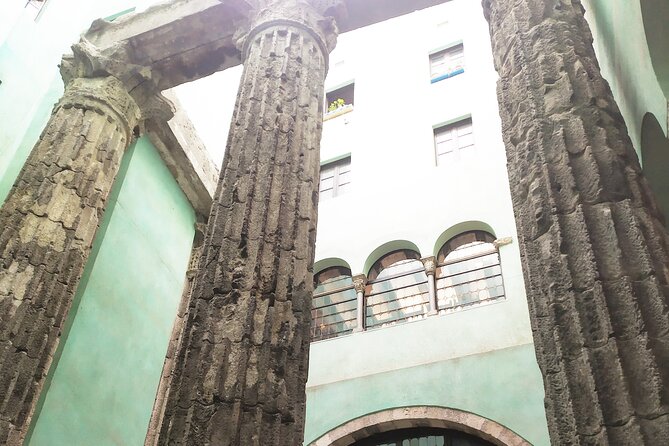
Next up is MUHBA Temple d’August, where you’ll see four columns from the huge temple of Augustus that once stood in this location. This is one of those stops where Barcelona shocks you in a good way. You’re in the Gothic Quarter, then suddenly you’re looking at Roman remains, not just medieval vibes.
The time here is about 10 minutes, and the admission is free. Don’t rush it, though. Stand close and pay attention to what you can actually see. These aren’t just “old things.” They are evidence that Barcelona keeps layering eras on top of each other.
This stop is also valuable because it explains why the city is hard to read on your own. If you walk in without context, you might assume the “old” all looks similar. With MUHBA Temple d’August, you learn to separate periods and recognize what’s Roman versus Gothic or later.
Also within reach of Barcelona:
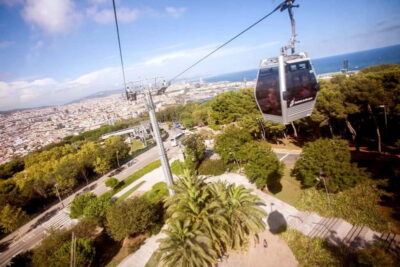
- Barcelona: Montjuïc Cable Car Roundtrip Ticket
★ 4.5 · 22,368 reviews - Barcelona: Hola Barcelona Public Transport Travel Card
★ 4.5 · 20,985 reviews - Barcelona: 24 or 48-Hour Hop-On Hop-Off Bus Tour
★ 4.4 · 20,872 reviews - Barcelona: Park Guell Guided Tour with Skip The Line Entry
★ 4.7 · 17,563 reviews
The Gothic Quarter shift: cathedral exterior and a key feature stop
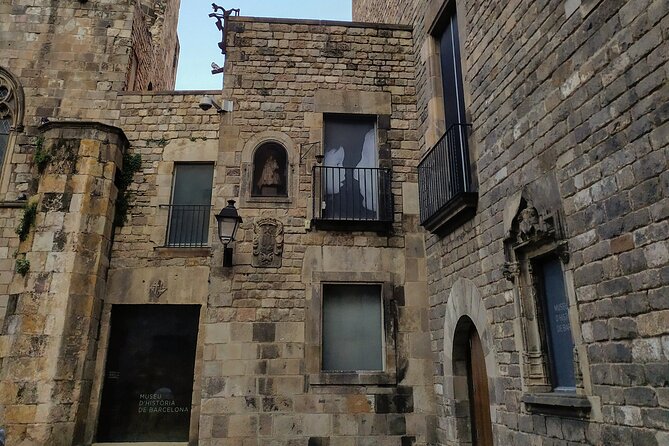
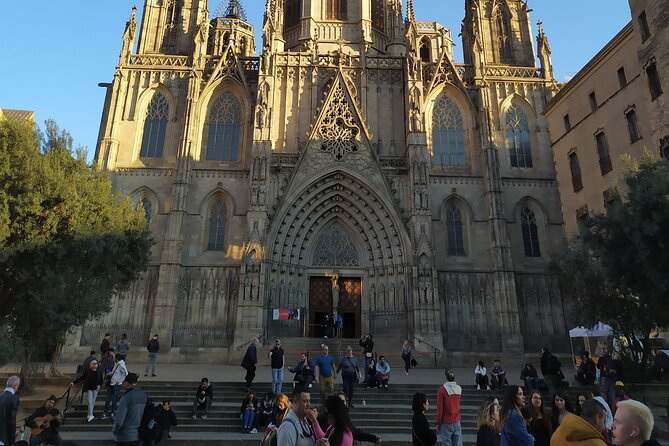
You’ll spend time at Catedral de Barcelona, but plan for outside-only. The outside exploration is about 15 minutes, and admission there is not included. You’ll still get a guide-led look at the Gothic character of the area, and you’ll get pointers on what to notice in the facade and surrounding streets.
There is also an extra quick stop tied to one of the main features of the Gothic Quarter. The tour keeps these segments short, so it stays efficient and doesn’t turn into a stop-and-stare marathon.
If you’re hoping for an interior visit, this is where expectations need adjustment. This tour is about the walk and the story around the streets, squares, and exteriors. You’ll come away with clearer eyes, but you won’t be checking off a cathedral interior ticket as part of the plan.
El Call at MUHBA: the medieval Jewish neighborhood
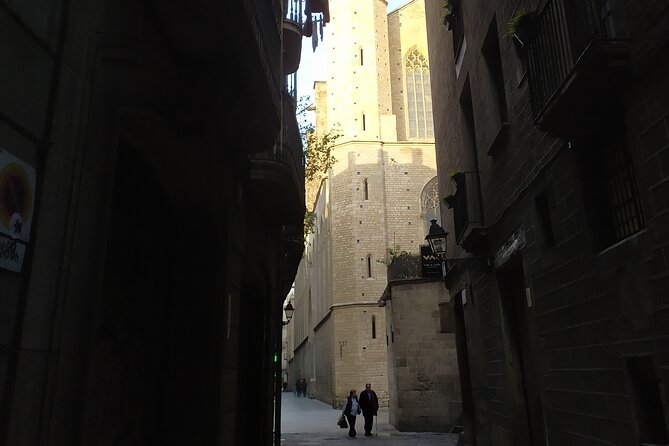
Stop 4 is MUHBA El Call, the medieval Jewish neighborhood. You’ll get about 15 minutes here, and it’s free. This is one of the more meaningful stops on the route, because it shows that Barcelona’s story wasn’t only made by rulers, churches, and wars. It was also shaped by everyday communities.
What I like about this stop is how it balances the tour. After political power and Roman leftovers, you shift into a neighborhood identity. The guide’s explanations are what make it click, because the streets won’t label themselves as El Call for you. Once you know what you’re looking at, you start connecting architecture and urban layout to lived life.
This segment works well even if you’re not a “history museum” person. You’re walking, seeing the area, and getting context tied to the place you’re standing in.
Sant Felip Neri: Gaudi’s favorite church and the Spanish Civil War
Then it’s Esglesia de Sant Felip Neri, about 15 minutes, and it’s free. The tour frames this church as Gaudi’s favorite church in his lifetime, which gives you a strong reason to care beyond the usual “pretty old church” angle.
From there, you’re also looking at one of the cutest little squares in the old city, but with a dark recent past. The guide specifically talks about the Spanish Civil War at this stop. That contrast is the point. Barcelona’s charm often lives right next to difficult chapters, and the tour helps you face that directly instead of skipping it.
If you like tours where the human story matters, this is a highlight. You’re not just learning dates. You’re learning how people experienced fear, power, and memory in ordinary urban spaces.
El Born and La Ribera: medieval neighborhood streets for 30 minutes
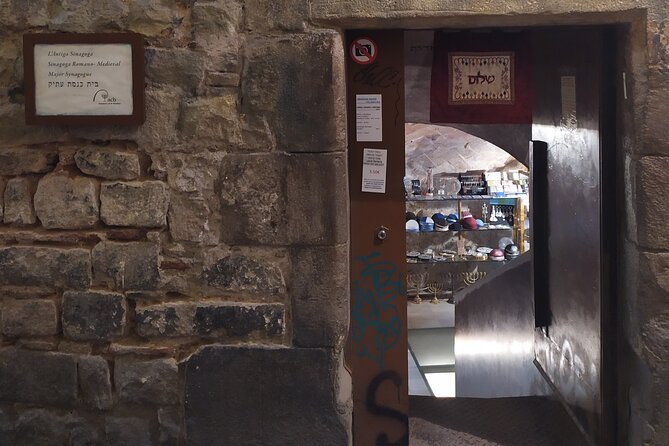
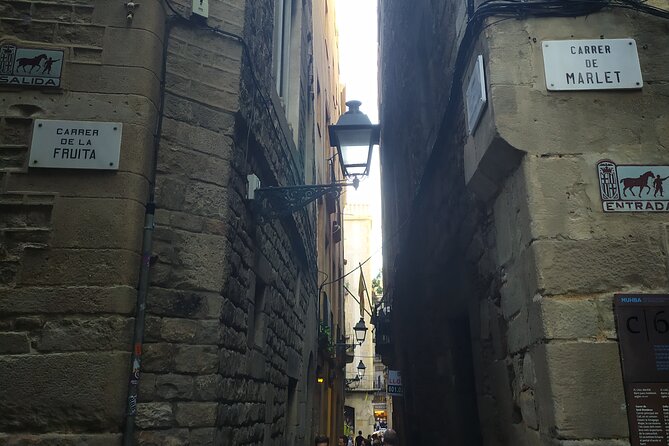
El Born and La Ribera is where the tour shifts tempo, with about 30 minutes set aside for this part of town. It’s free, and it’s one of the biggest segments on the walk. This is the stretch where you really start feeling the neighborhood layout, because El Born has a different character than the Gothic Quarter.
You’ll likely notice how the streets feel more open in places, and how the urban rhythm changes as you head toward the sea-side cultural zone. You get time here to absorb it, not just move past it quickly.
This is also a great spot for questions. In a small group, you can ask Luca to point out what you should prioritize if you’re planning to wander later. One review even mentions an energizing, photo-backed style, which helps you keep track of the story as the streets change.
Santa Maria del Mar: the church people talk about most
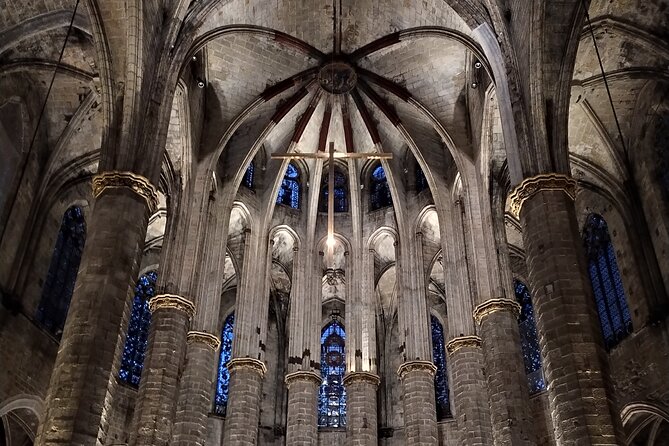
Next is Basilica de Santa Maria del Mar for about 10 minutes. It’s free, and it’s described as the most loved church in Barcelona. You’re not getting long here, but short can work when the guide gives you the “why.” Santa Maria del Mar is famous for its feel and for how it represents a certain kind of Barcelona identity.
This stop is useful because it gives the tour a spiritual and cultural anchor. You’ve been moving through political and community stories. A major church at the center of neighborhood memory helps you understand why locals value this area, not just why tourists pose for photos.
El Fossar de les Moreres and the Madrid versus Barcelona conflict
El Fossar de les Moreres is the kind of stop that changes how you see the whole city. You’ll spend about 15 minutes here, and it’s free. The tour presents it as a fundamental stop to better understand the political conflict between Madrid and Barcelona.
This is the point where the tour stops being just architectural appreciation and becomes political storytelling tied to place. If you’ve heard snippets about Catalonia and Spanish politics but never connected it to locations on a map, this helps connect the dots.
Even if you don’t love politics, you might still value this stop because it explains why certain spaces feel emotionally charged. Barcelona isn’t only old. It’s also still arguing with its own recent past.
Passeig del Born: the medieval entertainment square moment
Finally, you end this sequence at Passeig del Born, with about 5 minutes set aside. This is presented as the medieval entertainment square of Barcelona. It’s a quick closer, but it matters, because it reminds you that old neighborhoods weren’t only for prayer and politics. People lived, gathered, and played here too.
This stop can also help you reset your brain before you walk off on your own toward the Born market area. You’ll end near Mercat del Born, so you’re right where the post-tour wandering payoff starts.
Luca’s style: energy, humor, and photo references
Luca is consistently described as energetic and passionate about Barcelona. He brings a lot of momentum, and one review notes he even had a binder with tons of photos as references. That kind of visual support helps when you’re moving fast and your brain is juggling multiple centuries in one afternoon.
The humor and personal editorial edge also show up in the feedback. One review praises his cynicism about historical figures and the way he adds depth even to details that might seem familiar. That keeps the tour from feeling like a textbook read aloud.
Two practical bonuses appear in the reviews. First, he gives a big list of food and sightseeing recommendations afterward, including places for ice cream and tapas. Second, he gives insider recommendations like a fish spot he suggested, plus a pizza place mentioned in feedback. If you want your first day to lead directly into a good meal, this tour can do that.
One more note for your expectations: a review mentions Luca talks fast, so you’ll want decent English listening skills to catch everything. If you feel you need slower pacing, still ask questions, because the small group setup helps.
Timing, heat, and comfort: what to plan for a 2h15 walk
The tour is short enough to fit into many schedules, but it still covers multiple key points across the old city. Several stops are outside, and one review specifically mentions the sunny side of the street, in very hot and humid conditions. That’s your clue to plan like a local: bring water, wear a hat, and be ready to take short shade breaks when you can.
The guide chooses the route side, but you can still position yourself. If the sun is intense, step toward shade where possible. This is also where timing matters. If you’re traveling in summer, earlier starts can help, and Barcelona in peak heat can feel like a different city.
For most people, the walk is doable, but the tour is not suitable for people with reduced mobility. The good part is that the operator says they can adapt the tour to your own pace, or a private experience can be arranged. If that applies to you, ask before you book so you don’t end up unhappy with the pacing.
Should you book this Gothic Quarter and El Born tour?
Book it if you want a guided first pass that makes the old streets easier to understand. The route hits the major identity blocks: political power at Placa de Sant Jaume, Roman remains at MUHBA Temple d’August, the medieval Jewish quarter at MUHBA El Call, the Spanish Civil War context near Sant Felip Neri, and the Catalan political conflict through El Fossar de les Moreres. Add in Santa Maria del Mar and the Born neighborhood, and you get a full picture of this part of Barcelona, not just one “pretty” area.
Skip it or choose a different format if you expect long interior visits, especially at the cathedral. This plan is built around walking and exterior viewing. Also make sure you’re comfortable with outdoor walking in heat, since the route can be exposed.
If you’re booking soon, remember that it’s commonly reserved about a month out. The price is low for what you get, and with free cancellation up to 24 hours before start time, you can take the risk off your shoulders a bit.
Recently added around Barcelona
- E-Bike tour in Barcelona with English Guide★ 5.0 · 128 reviews
- Barcelona: Wine Tasting and 5 Course Tapas Pairing Dinner★ 4.5 · 129 reviews
- Wine Tasting Experience in Barcelona★ 5.0 · 172 reviews
- 2 Wineries Small Group Tour with Free Hotel PickUp from Sitges★ 5.0 · 83 reviews
- Barcelona: Guided Rooftop Wine Tasting – Enjoy 6 Spanish Wines★ 4.5 · 61 reviews
- Barcelona Luxury Yacht Cruise – Day or Sunset, Open Bar & Snacks★ 5.0 · 154 reviews
- Entrance to the Mirador Torre Glories Barcelona★ 4.5 · 193 reviews
- Barcelona Wax Museum Admission Ticket★ 4.5 · 237 reviews
Barcelona Tours & Activities, compared.
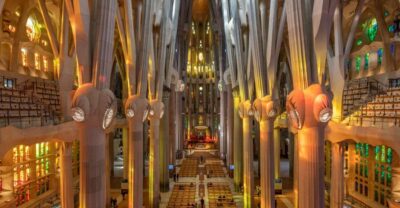
Sagrada Familia Entry Ticket with Audio Guide
Read our review →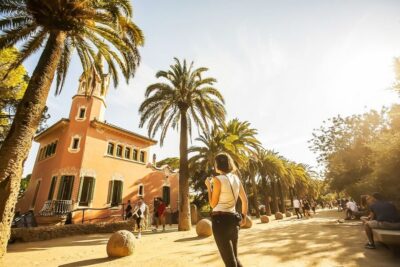

Park Guell Guided Tour with Skip The Line Entry
Read our review →