Reviewed · TICKETS
Madrid: Faunia Entry Ticket
Faunia in Madrid is wildlife right next to the city. With a prebooked entry ticket, you can skip the ticket line and spend a day walking through ecosystems that feel like you traveled far. It is a fun, family-friendly setup built for one long loop of discovery across lush grounds.
Two things I really like here. First, the sheer variety: 15 themed areas wrapped into 16 hectares, with over 1,200 animals from 152 species. Second, the mix of habitats in a single visit, including a polar setup with more than 100 penguins and multiple African and temperate zones. That makes it easy to keep kids interested without rushing.
One drawback to keep in mind: one sour note in the feedback is that parts of the park may not feel as well maintained as you would expect. If you come with museum-level expectations for every exhibit, you might notice this more than others.
In This Review
- Key Things That Make Faunia Worth Your Time
- Faunia at a Glance, and Where It Fits in Your Madrid Day
- Entry Ticket Value: What Your Money Actually Buys
- A One-Day Walkthrough Route: From Jungle Storms to Polar Races
- The Jungle: Manatees, Macaws, Toucans, and Tropical Storm Mood
- The Poles Ecosystem: More Than 100 Penguins and Underwater Races
- African Forest and Temperate Forest: Lemurs, Madagascar Energy, and Forest Neighbors
- Nocturnal Zone Under Full-Moon Lighting: Ocelots, Sloths, and Aardvarks
- Mysteries Under the Earth: Karst Cave Creatures and Oddities
- Australian Meadow, Mangroves, and Venom Zones With Snakes, Spiders, and Jellyfish
- Talks, Educational Moments, and Up-Close Interactive Sessions
- Conservation Partnerships: Why Faunia’s Theme Feels More Than Decorative
- Practical Tips for Getting More Out of Your Visit
- Who This One-Day Faunia Ticket Is Best For
- Should You Book Faunia in Madrid?
- FAQ
- How long is the Faunia entry ticket valid?
- Does this ticket let me skip the ticket line?
- What kinds of animals and ecosystems will I see?
- Are there wheelchair-accessible areas?
- Are pets allowed at Faunia?
- Can I bring a bike?
- Are unaccompanied minors allowed?
- How are ticket prices handled by height?
- Is the ticket refundable if I cancel?
Key Things That Make Faunia Worth Your Time
- Jungle-to-Poles variety: Tropical storm vibes, then a polar ecosystem built for penguins.
- 15 themed areas across 4 ecosystems: You can compare habitats back to back instead of choosing just one.
- Polar Ecosystem with penguin underwater action: Watch penguins race underwater in Europe’s largest polar setup.
- Conservation and education focus: Talks and interactive sessions are built around marine mammals, birds of prey, and more.
- Nighttime-style viewing zone: A nocturnal area is lit to feel like a full moon.
Faunia at a Glance, and Where It Fits in Your Madrid Day

Faunia is one of those Madrid day ideas that works whether you are traveling with kids or you just want something different from churches and street corners. The park is designed as a big thematic route, not a small zoo you can casually skim in an hour.
It is also the kind of place where the geography is the attraction. You will move through habitats that are clearly themed, including environments based on the tropics, polar regions, and forests inspired by Madagascar. With 1,200-plus animals spread across 16 hectares, the visit feels like a full day activity, not a quick stop.
The best part for planning is how self-contained it is. You do not have to coordinate with multiple locations. You can build a smooth day around it, then return to central Madrid afterward.
Other days out near Spain
- Barcelona: Sagrada Familia Entry Ticket with Audio Guide
★ 4.6 · 105,312 reviews - Barcelona: Park Güell Admission Ticket
★ 4.4 · 76,534 reviews - Seville: Royal Alcázar Entry Ticket
★ 4.6 · 28,378 reviews
Entry Ticket Value: What Your Money Actually Buys
This is a one-day entry ticket, sold for different ticket types by height, and it is explicitly meant to save time when you arrive. The headline here is convenience: you can skip the ticket line, which is huge when you are traveling with children or you are trying to avoid Madrid time-wasting.
The price you are paying is listed as about $27 per person. What makes it feel like value is the density of experiences included. Over the course of a single day, you get access to multiple ecosystems, educational talks, and interactive sessions with several kinds of animals.
One more practical note: the ticket is non-refundable. That matters if your plans are fragile. If rain or schedule changes are likely, think carefully before you buy.
A One-Day Walkthrough Route: From Jungle Storms to Polar Races

Faunia is structured around themed zones, so you will naturally see a lot just by following the flow. The park’s own concept is simple: start in the jungle, then move through other ecosystems, and finish with smaller themed experiences like caves, nocturnal viewing, and venom-related areas.
Here is a helpful way to think about the day:
- You start with dramatic, high-energy habitat zones like The Jungle.
- You transition to the polar area where the penguin experience becomes the big show.
- You continue through forest and temperate exhibits, which shift the pace.
- You end with smaller, more niche themed areas like nocturnal lighting, cave mysteries, and animal zones with special themes.
You can pace yourself. The park is large enough that a rushed visit can feel incomplete, but it is also designed so you do not need to be an expert on animals to enjoy it.
The Jungle: Manatees, Macaws, Toucans, and Tropical Storm Mood

The day often kicks off with The Jungle, a themed environment designed around tropical heat and stormy drama. This is not just décor. It is set up so you can see animals associated with warm habitats, including manatees and a range of birds.
What makes this part especially enjoyable is the variety inside the same broad theme. You are not only looking at one animal category. You might spot macaws, toucans, and smaller primates like titis, all while the zone gives you that humid, storm-in-the-air feeling.
If you are traveling with kids, this zone can work as an attention anchor. It has big visuals and a lot going on. If you are visiting as an adult, it is a good way to start because it sets a playful tone and helps you focus on habitats, not just individual species.
Also within reach of Spain:
- Barcelona: Casa Batlló Entry with Self-Audioguide Tour
★ 4.7 · 25,359 reviews - Seville: Cathedral and La Giralda Entry Ticket
★ 4.5 · 24,592 reviews - Barcelona: Montjuïc Cable Car Roundtrip Ticket
★ 4.5 · 22,368 reviews - Madrid: Tour Bernabéu Entry Ticket
★ 4.5 · 21,573 reviews
The Poles Ecosystem: More Than 100 Penguins and Underwater Races

Then comes the polar shift. Faunia’s The Poles Ecosystem is home to over 100 penguins across six species, and the polar area includes underwater racing. That underwater element is key because it turns penguin viewing from a static moment into actual animal behavior you can watch.
You also get the sense that the park wants you to see the ecosystem as a system, not a single exhibit. Polar environments look and feel different from tropical ones, and Faunia uses that contrast to make your day feel like a series of real-world habitat changes.
This is also the section where I would plan to slow down. Even if you do not catch every moment, it is one of those zones where time tends to pass quickly because the animals are active and visible.
African Forest and Temperate Forest: Lemurs, Madagascar Energy, and Forest Neighbors
After the poles, Faunia shifts gears with forest-themed areas.
One highlight is the African Forest, inspired by Madagascar. You can meet lemurs here, including three species of lemurs, plus many brightly colored birds. It is a nice change from the big animal moments of the polar zone because it feels more like walking through a habitat with smaller points of interest.
Next is the Temperate Forest, focused on temperate-region animals. Here you may see creatures like a muntjac, mazama, and a demoiselle crane. This zone helps your brain connect what you saw earlier. Tropical feels hot and dense. Polar feels icy and open. Temperate is a different mood, and Faunia uses the setting to help you notice that.
If you like animal variety, this middle stretch is where you can enjoy the less obvious species. It is also a good time to take a breath, especially in the heat.
Nocturnal Zone Under Full-Moon Lighting: Ocelots, Sloths, and Aardvarks
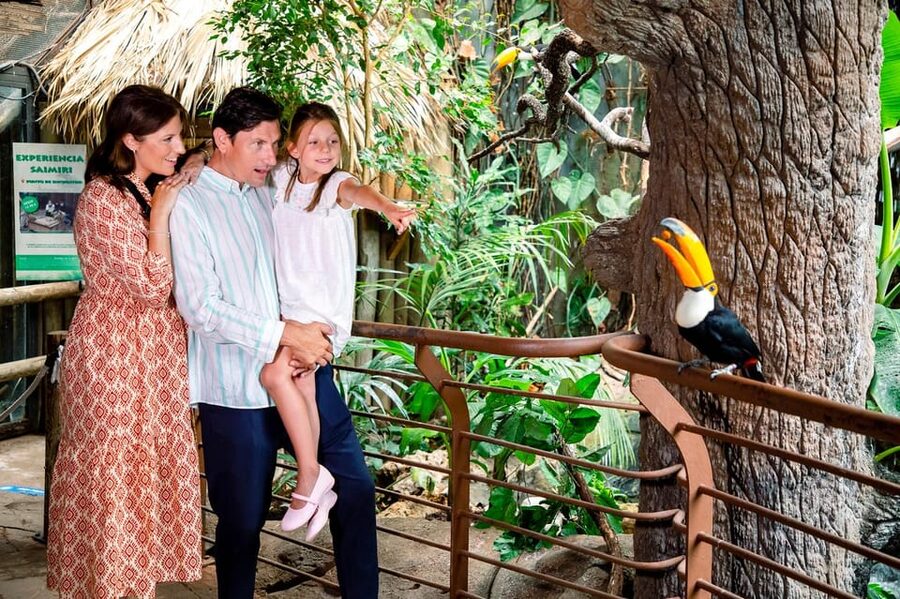
One of the more imaginative parts of Faunia is the nighttime-themed zone. It is illuminated to feel like a full moon, designed for nocturnal viewing.
In this area, you may encounter animals such as ocelots, two-toed sloths, and aardvarks. The point is not that you will see every animal clearly in the dark. The point is the theme and the change in atmosphere. Night lighting can make animals feel more mysterious and active, even when your view is limited by how the enclosure is set up.
For families, it is also a fun moment because it adds a sense of adventure. For adults, it is a reminder that animals are not just on display, they live in specific daily rhythms.
Mysteries Under the Earth: Karst Cave Creatures and Oddities
Faunia also includes an underground-themed experience called Mysteries Under the Earth. You cross a karstic cave environment to meet animals suited to that hidden, cave-like theme.
Creatures you might see include naked mole-rats and frilled lizards. This zone is a good reminder that Faunia’s focus is not only on the easy-to-recognize animals. It also aims at the unusual ones, the ones that do not always get the spotlight.
If you get bored easily by repetitive animal displays, this cave area can bring your attention back. It feels different underfoot and visually. Even if you do not spot every creature right away, the themed approach makes the experience feel purposeful.
Australian Meadow, Mangroves, and Venom Zones With Snakes, Spiders, and Jellyfish
Faunia keeps adding small thematic stops that broaden the day beyond a simple zoo checklist.
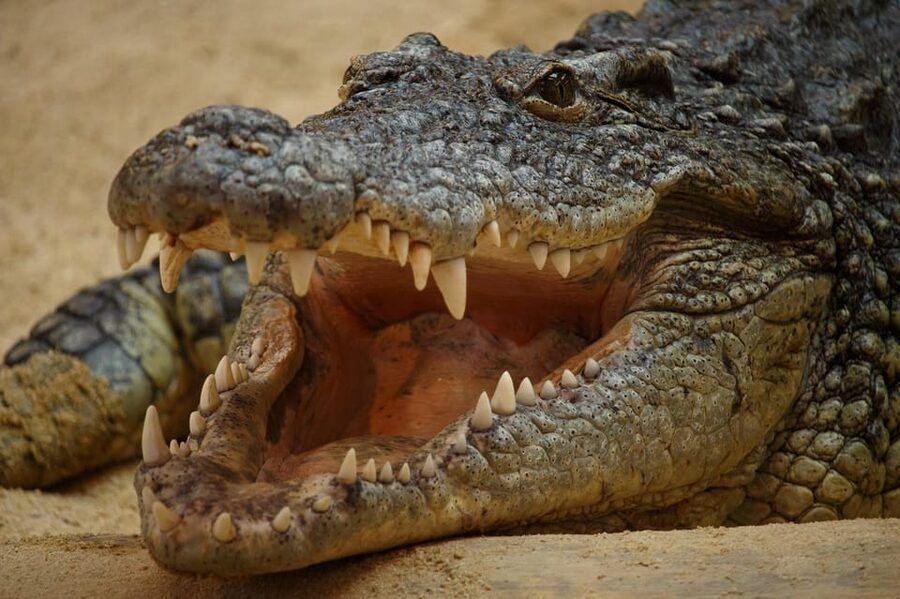
You can walk through an Australian meadow area to meet Bennett’s wallabies. There is also a mangrove zone with Nile crocodiles. These are strong habitat links because they connect animals to very specific ecosystems.
Then there are zones featuring venomous animals, including snakes, spiders, and jellyfish. Since the details of how often you will see each animal are not listed, I treat this section as theme-led. You are going for the chance to experience how Faunia frames these animals, not for guaranteed sightings of every individual creature at every minute.
This is also a good part of the day to slow down and read interpretive info. Even when you are not a biology person, you can pick up basic habitat and conservation ideas just by staying curious.
Talks, Educational Moments, and Up-Close Interactive Sessions
Faunia is not only about walking. It also includes educational activities and talks about representative species, including marine mammals and birds of prey. That matters because it turns your time into more than just photos.
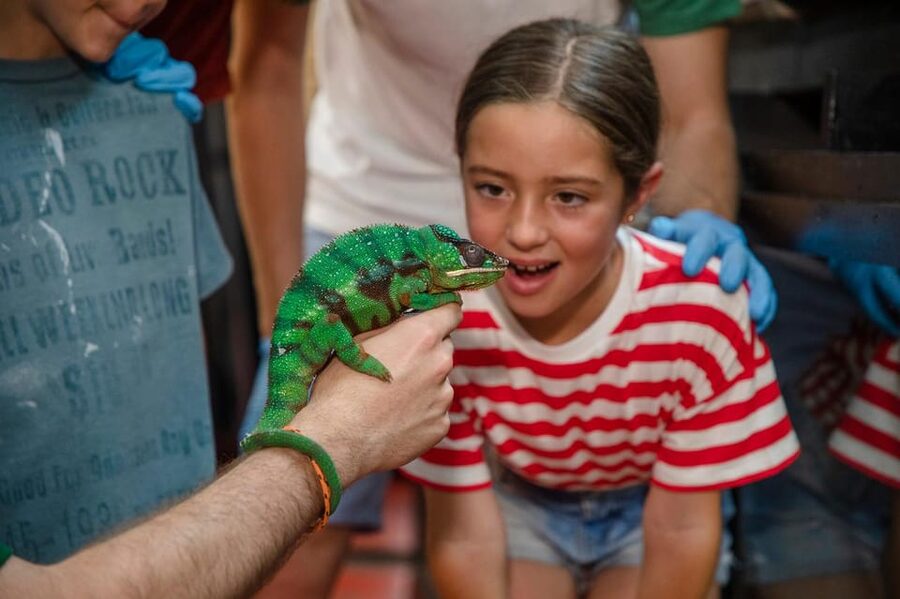
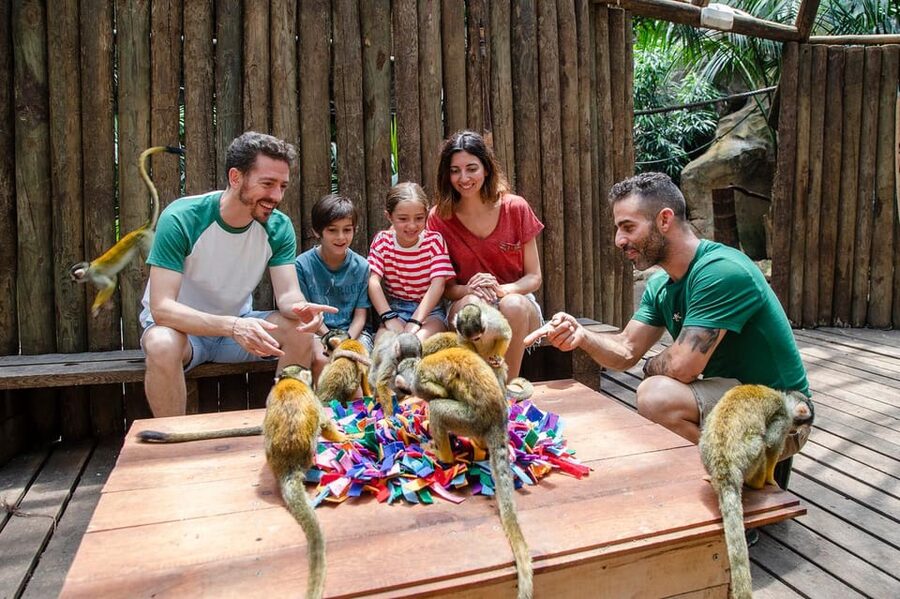
You can also get up close to animals through interactive sessions, including sea lions, manatees, penguins, pelicans, and crocodiles. The benefit of these experiences is simple: you get to see animals from closer range and usually in a more structured setting than random viewing.
If you are visiting with kids, these interactive moments are often what makes the day feel special. For adults, it is the best way to learn something quick without needing a full guided tour.
Conservation Partnerships: Why Faunia’s Theme Feels More Than Decorative
One reason Faunia works as a day trip is that conservation is part of the messaging. The park collaborates with groups such as the Parques Reunidos Foundation and EAZA to promote environmental care and respect for animals.
You do not need to be a serious activist to appreciate this. It adds a layer of meaning to the exhibits. The themes are fun, but the conservation focus helps explain why the park is built the way it is and why animal care matters behind the scenes.
Practical Tips for Getting More Out of Your Visit
You will enjoy Faunia more if you treat it like a route, not a checklist. Here are practical ways to make the day smoother:
- Wear comfortable shoes. You are covering a lot of ground across 16 hectares.
- Plan for a full day. With 15 themed areas and multiple ecosystems, you will not see it all by skimming.
- Start with the zones that match your priorities. If penguins are your main reason for going, focus on the Poles area early or at your best-energy time.
- If you want the educational and interactive parts, build in time to pause rather than sprint between exhibits.
- Bring a simple plan for food and breaks. Take short resets so you can enjoy more than one type of environment.
Also, check your ticket type based on height. Adult tickets apply at 140 cm and above, child tickets from 100 cm to 140 cm, and children under 100 cm do not need a ticket. That is worth sorting out before you arrive so your entry is painless.
Who This One-Day Faunia Ticket Is Best For
Faunia is a strong match for:
- Families who want one destination with lots of variety without switching locations.
- People who like animal behavior and habitats, not just single-species exhibits.
- Visitors who want an educational day that still feels like play.
It might be less ideal if:
- You only have a short time in Madrid and need a quick half-hour fix.
- You want a very quiet, minimal-exhibit experience.
- You have extremely high expectations for uniform exhibit condition everywhere.
Should You Book Faunia in Madrid?
Yes, I would book it if you want a single, well-rounded wildlife day in Madrid with a lot of variety packed into one route. The ticket’s biggest win is practical: you can skip the ticket line, and the park gives you a structured path through themed ecosystems, education, and interactive animal moments.
I would hesitate only if your plans are highly changeable, since the ticket is non-refundable, or if you are the type who notices maintenance details immediately. If that is you, mentally prepare for a park that may feel a bit uneven in upkeep in places.
FAQ
How long is the Faunia entry ticket valid?
Your ticket is valid for one day. You should check availability to see starting times.
Does this ticket let me skip the ticket line?
Yes. The entry ticket includes skip-the-ticket-line access.
What kinds of animals and ecosystems will I see?
Faunia is home to over 1,200 animals from 152 species across four ecosystems and 15 themed areas, including The Jungle, The Poles, African Forest, and Temperate Forest, plus other themed zones like nocturnal, cave, meadow, and venom areas.
Are there wheelchair-accessible areas?
Yes, Faunia is wheelchair accessible.
Are pets allowed at Faunia?
Pets are not allowed. Assistance dogs are allowed.
Can I bring a bike?
No, bikes are not allowed.
Are unaccompanied minors allowed?
No, unaccompanied minors are not allowed.
How are ticket prices handled by height?
Adult tickets are for 140 cm and above. Child tickets are for 100 cm to 140 cm. Children under 100 cm do not need to purchase a ticket.
Is the ticket refundable if I cancel?
No. The activity is non-refundable.
Recently added around Spain
- Toledo Experience Tour from Madrid with optional Toledo Cathedral★ 4.5 · 703 reviews
- Madrid: Tapas Walking Tour with Food and Drinks Included★ 5.0 · 108 reviews
- Tasty Tapas & Drinks Tour with a Rooftop Included★ 5.0 · 82 reviews
- Tickets for the Authentic Flamenco Show at the Madrid Theater★ 4.5 · 301 reviews
- Madrid Royal Palace and Prado Museum Private Tour with Transfers★ 5.0 · 185 reviews
- Madrid Tapas Crawl ️Tour by FLT★ 5.0 · 269 reviews
- Prado Museum Madrid Guided Tour Semi-Private 6ppl Max★ 5.0 · 67 reviews
- Toledo Day Trip from Madrid: Cathedral & Monuments★ 5.0 · 368 reviews
Tickets, compared.

Sagrada Familia Entry Ticket with Audio Guide
Read our review →