
Reviewed · WALKING TOURS
Madrid: Guided Walking Tour of Monasterio de las Descalzas
Quiet spaces, big art, and good stories. The Descalzas Reales Monastery is one of Madrid’s most surprising stops, because it mixes cloister calm with serious masterpieces, including works by famous painters and ornate architectural details. The cloister is the emotional anchor of the visit, especially with its connection to the Good Friday Procession of the Holy Burial, and the main staircase feels like the monument’s true “wow” moment. One thing to plan around: no photography is allowed inside, and the site also has no public restrooms, so you’ll want to be ready before you enter.
I also like how this tour keeps moving through the key spaces instead of lingering only in the highlights. In 75 minutes, you cover the facade and exterior first, then step into the cloister, main staircase, Hall of Tapestries, and Choir Room, with a guide who explains the legends and the layers of art you’re seeing. The main consideration is simply comfort and expectations: it runs rain or shine, and it’s a guided, group-style experience with a live guide.
In This Review
- Key things I’d mark on your mental map
- Descalzas Reales feels like Madrid with the volume turned down
- Meeting at Pl. de las Descalzas, 3, and how to spot your group fast
- Skip-the-line entry, then the facade story sets the mood
- The cloister and the Good Friday Procession of the Holy Burial
- The main staircase, mural layers, and a ceiling attributed to Claudio Coello
- Hall of Tapestries and the Choir Room: two very different kinds of attention
- Plateresque doors and paintings by big names you can actually recognize
- What you can do, and what you can’t, inside the monastery
- Price and value: is $28 worth it for 75 minutes?
- Language and group size: how “private” might feel
- Who this tour suits best in Madrid
- Should you book this guided walking tour of Monasterio de las Descalzas Reales?
- FAQ
- How long is the Guided Walking Tour of Monasterio de las Descalzas Reales?
- Where do I meet the guide?
- Are skip-the-line tickets included?
- Can I take photos inside the monastery?
- Does the tour run in bad weather?
- Is food or drinks included?
- What languages are available for the live guide?
Key things I’d mark on your mental map
- Cloister focus, plus the Good Friday Procession of the Holy Burial connection
- Main staircase as a centerpiece, often treated as the monument’s jewel
- Art you can name, with painters such as Zurbarán, Antonio Moro, and Luca Giordano
- Hall of Tapestries and the Choir Room, two distinct vibes inside the same visit
- No photos inside, so the experience is about seeing, not posting
- Skip-the-line tickets included, so you spend time inside, not waiting outside
Descalzas Reales feels like Madrid with the volume turned down
Most Madrid church stops hit you with scale and noise. Descalzas Reales is different. It’s a monastery of cloistered nuns, so the building has a quieter rhythm, and that changes how you experience the art. You are walking through spaces that were designed for daily life under strict rules, while at the same time you’re looking at major collections.
The tour centers this contrast. You’re not just being shown pretty corners. You’re learning how this place became what it is: it was once described as the richest convent in Europe, and the legends attached to that status give extra bite to what you see in rooms and corridors. When you understand that money, power, and devotion shaped the collection, the paintings, doors, and staircases feel less random and more intentional.
Other days out near Spain
- Barcelona Tapas and Wine Experience Small-Group Walking Tour
★ 5.0 · 5,804 reviews - Barcelona: Tapas Walking Tour with Food, Wine, and History
★ 4.8 · 4,261 reviews - Madrid Tapas & Wine Tasting Walking Tour – Small Group Local Bars
★ 5.0 · 3,644 reviews
Meeting at Pl. de las Descalzas, 3, and how to spot your group fast
You start at Pl. de las Descalzas, 3, right in front of the monastery entrance. The meeting point is next to benches and statues, and your best bet is to look for an IBE TOURS sign or an IBE TOURS umbrella.
This matters more than you’d think. The tour is only 75 minutes, so you don’t want to burn time hunting down the right group. If you arrive a few minutes early, you can settle your pace and get ready for a tour that stays tightly scheduled once you’re inside.
Skip-the-line entry, then the facade story sets the mood
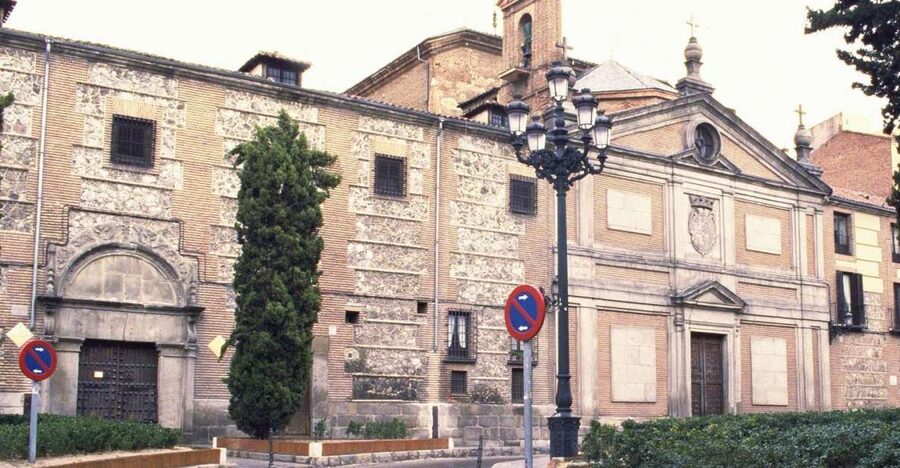
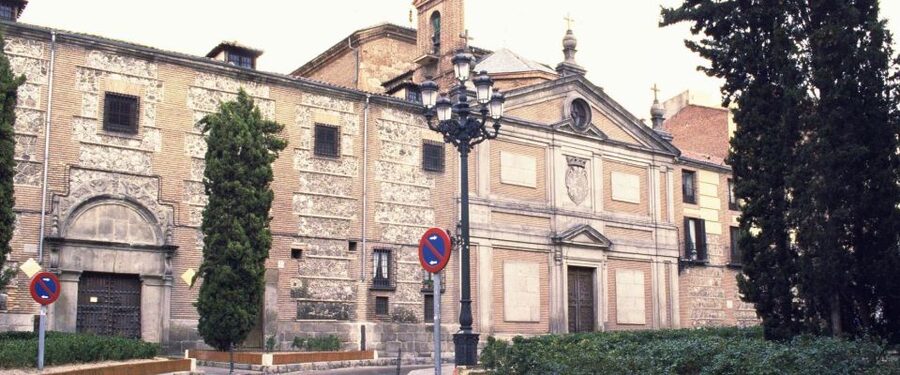
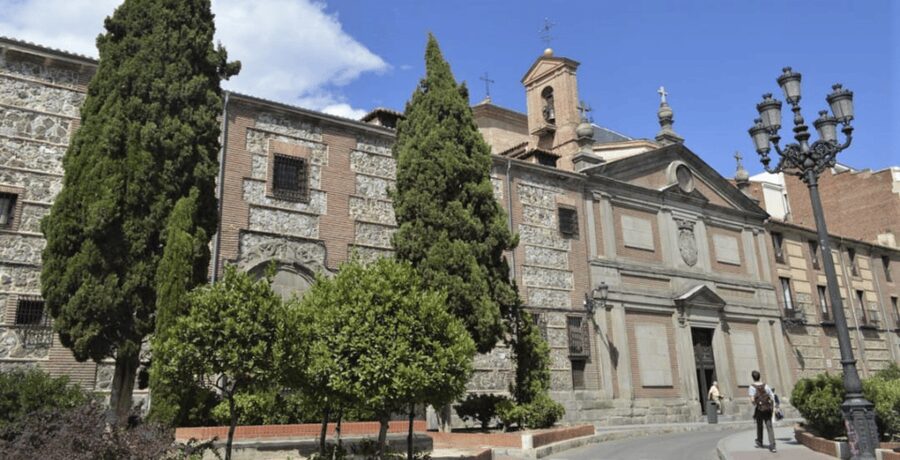
The experience includes skip-the-line tickets, so you’re not stuck in a queue before the real moments start. Once you’re at the entrance, your guide typically starts with the facade and exterior explanation. Even if you’re mostly here for the interior, don’t treat this part as filler.
Exterior context is what helps you read the building as a whole. Cloisters and convents can look like “just another historic building” until someone connects the architecture to what the nuns needed and valued. You learn the kind of background that makes the inside stops feel like chapters, not separate rooms.
And yes, it’s a walking tour, so once you start moving, you’ll keep a steady flow through the key areas rather than wandering on your own.
The cloister and the Good Friday Procession of the Holy Burial
The cloister is one of the most meaningful parts of the whole visit. It’s not only scenic, it’s functional history: it’s the kind of space built for circulation, prayer, and daily routines inside the convent.
What makes the cloister stop especially memorable on this tour is the mention of the Procession of the Holy Burial that takes place every year on Good Friday. Even if you’re not visiting on that holiday, the information changes how you look at the routes and the layout. You start imagining how movement inside the monastery might have been planned and performed, and that’s a different way to connect with architecture than simply admiring decoration.
If you like religious art and ritual details, this is where the tour earns its storytelling. If you want pure art appreciation only, you’ll still benefit, because the cloister gives you the emotional framework for everything else.
Also within reach of Spain:
- Barcelona: Sagrada Familia Entry Ticket with Audio Guide
★ 4.6 · 105,312 reviews - Barcelona: Park Güell Admission Ticket
★ 4.4 · 76,534 reviews - Seville: Royal Alcázar Entry Ticket
★ 4.6 · 28,378 reviews - Barcelona: Casa Batlló Entry with Self-Audioguide Tour
★ 4.7 · 25,359 reviews
The main staircase, mural layers, and a ceiling attributed to Claudio Coello
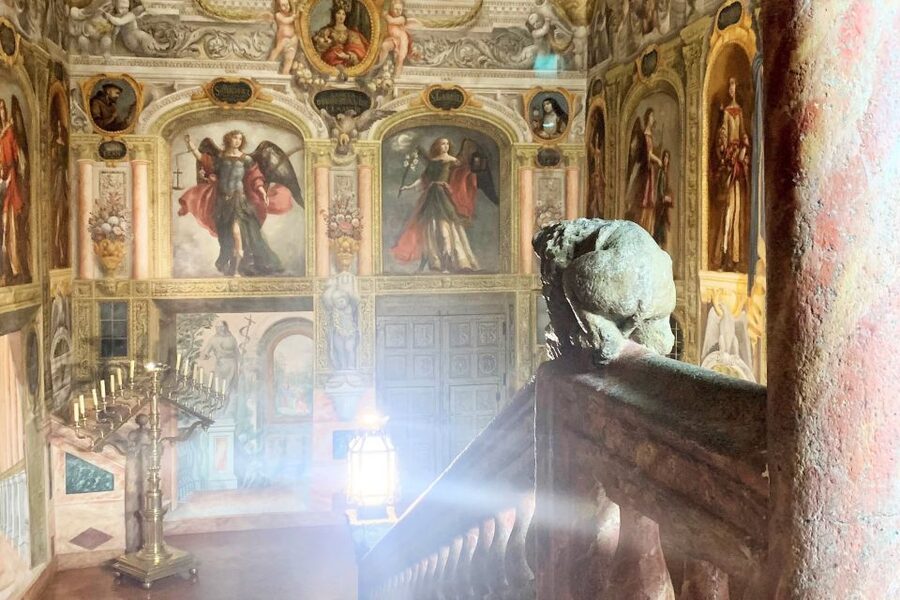
Then comes the stop many people think of as the true jewel of the monument: the main staircase. Even if you’ve visited plenty of historic staircases in Europe, this one gets special attention because it’s treated as a central statement of the building.
After you take in the staircase, the tour shifts to the walls and ceilings. You’re guided through mural paintings that were created during different periods, so you’ll likely notice that the decoration doesn’t all feel like one single era. That’s important. It means the monastery’s visual story was updated over time, not frozen in time.
And if you look up, you’re directed to an impressive ceiling painting attributed to Claudio Coello. Knowing the name helps. It turns a ceiling image into something you can compare to the wider art world, rather than it being just a beautiful ceiling you pass by.
This is also a good reminder that the monastery’s art isn’t only about famous names. It’s also about how those works were displayed and experienced in a lived-in religious setting.
Hall of Tapestries and the Choir Room: two very different kinds of attention
After the staircase, you’ll reach the Hall of Tapestries. Tapestries often get overlooked in favor of paintings, but here they matter because they connect art to texture, sound, and temperature in a way flat surfaces cannot. Even if you’re not a textiles expert, you can appreciate how tapestries create atmosphere and frame space.
Next is the Choir Room. This is where the monastery’s purpose becomes more tangible. A choir room isn’t just decorative, it’s built for voices, daily schedules, and a particular form of prayer. The guide helps you connect the art and architecture to the role of the nuns, so the space feels purposeful rather than museum-like.
If you’re someone who enjoys practical context, this portion tends to land well. You’ll understand what the rooms were for, so the aesthetics make sense. If you only want the “top three masterpieces,” you might feel this is a bit broader than expected, but it’s still tightly managed within the 75-minute timeline.
Plateresque doors and paintings by big names you can actually recognize
One of the strengths of this tour is that it doesn’t stay generic. You’re led through places with high detail, including Plateresque doors. Those doors are a clue that the monastery absorbed artistic trends over time, and that the convent’s wealth translated into real craft work.
On top of that, you’re guided toward countless works of art by famous painters. The names you’ll hear include Zurbarán, Antonio Moro, and Luca Giordano. Even if you don’t know every piece, the guide’s job is to connect the artists to what you’re seeing, so you can make mental links instead of just scanning.
This is the part of the tour that rewards curiosity. If you’ve ever stared at a museum wall and wondered why a painting’s style feels so specific, the talk helps you notice those cues while you’re still standing there.
What you can do, and what you can’t, inside the monastery
There’s an important rule here: photography inside is not allowed. So plan for a low-tech visit. If you like documenting, switch your approach. Instead of photos, take mental notes. Look closely at the staircase, wall murals, and doors because that’s what you’re going to remember later.
Also keep in mind there are no public restrooms in the monument. This is a real planning issue, especially with a 75-minute tour. If you need a restroom, do it before you arrive at the entrance.
Finally, the tour happens rain or shine. If the forecast is iffy, bring a compact umbrella or a rain layer. You’ll be outside at the start and likely around the exterior areas at least briefly.
Price and value: is $28 worth it for 75 minutes?
At $28 per person, this tour isn’t trying to be the cheapest option in Madrid. It is asking you to pay for two things: access management and interpretation.
First, you get skip-the-line tickets, which helps you avoid wasted time. Second, you get a live guide, and that’s the bigger value. Descalzas Reales is visually impressive, but a monastery like this can feel confusing if you wander without context. The guide provides the framework: legends, the meaning of rooms, and the reason certain features like the staircase and cloister connection to Good Friday matter.
So the value comes down to how you like to travel. If you enjoy reading signs and moving quickly on your own, you might feel you can do it independently. But if you want the stories and the art explained in the exact rooms where you’re standing, $28 for 75 minutes is a fair trade.
Language and group size: how “private” might feel
The tour has live guide options in French, English, and Spanish. In many cases, a guide can make or break a short experience, so it’s good to see the language flexibility listed.
There’s also a minimum group operation of 7 passengers. That means you should expect it to be a real group tour rather than a guaranteed one-on-one. Still, your experience may feel more intimate depending on your date, and if fewer people join, the pacing often becomes easier to follow.
Who this tour suits best in Madrid
This is a smart choice for you if:
- You like art inside historic religious spaces, not just freestanding museums
- You enjoy narrative tours that explain legends and context, not just dates
- You want to see multiple highlight areas in a short visit window
- You’re curious about Madrid beyond the biggest headline sights
It may not be your best match if:
- You strongly prefer self-guided visits where you can take unlimited photos
- You need on-site restrooms during the visit
- You dislike being outside when weather shifts, since it runs rain or shine
Should you book this guided walking tour of Monasterio de las Descalzas Reales?
If you want one focused, well-timed way to understand Monasterio de las Descalzas Reales, I’d book it. The combination of skip-the-line access, a tight route through the cloister, main staircase, Hall of Tapestries, and Choir Room, plus the names and legends attached to what you see, makes this tour feel efficient and purposeful.
Just go in with the right expectations. No photos inside. No public restrooms in the monument. And you’ll be under a guide’s plan for the full 75 minutes. If that sounds like your style, you’ll leave with more than memories of pretty rooms. You’ll walk out knowing why the place mattered when it was described as Europe’s richest convent, and how that wealth showed up in art, architecture, and ritual.
FAQ
How long is the Guided Walking Tour of Monasterio de las Descalzas Reales?
It lasts 75 minutes.
Where do I meet the guide?
Meet at Pl. de las Descalzas, 3, just in front of the monastery entrance door, near benches and statues. Look for a guide with an IBE TOURS sign or umbrella.
Are skip-the-line tickets included?
Yes. Skip-the-line tickets to the Descalzas Reales Monastery are included.
Can I take photos inside the monastery?
No. Photography inside is not allowed.
Does the tour run in bad weather?
Yes. The tour operates rain or shine.
Is food or drinks included?
No. Food and drinks are not included.
What languages are available for the live guide?
The live tour guide is available in French, English, and Spanish.
Recently added around Spain
- Toledo Experience Tour from Madrid with optional Toledo Cathedral★ 4.5 · 703 reviews
- Madrid: Tapas Walking Tour with Food and Drinks Included★ 5.0 · 108 reviews
- Tasty Tapas & Drinks Tour with a Rooftop Included★ 5.0 · 82 reviews
- Tickets for the Authentic Flamenco Show at the Madrid Theater★ 4.5 · 301 reviews
- Madrid Royal Palace and Prado Museum Private Tour with Transfers★ 5.0 · 185 reviews
- Madrid Tapas Crawl ️Tour by FLT★ 5.0 · 269 reviews
- Prado Museum Madrid Guided Tour Semi-Private 6ppl Max★ 5.0 · 67 reviews
- Toledo Day Trip from Madrid: Cathedral & Monuments★ 5.0 · 368 reviews
Walking Tours, compared.
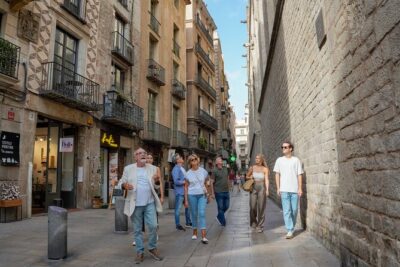
Barcelona Tapas and Wine Experience Small-Group Walking Tour
Read our review →
Tapas Walking Tour with Food, Wine, and History
Read our review →
Madrid Tapas & Wine Tasting Walking Tour – Small Group Local Bars
Read our review →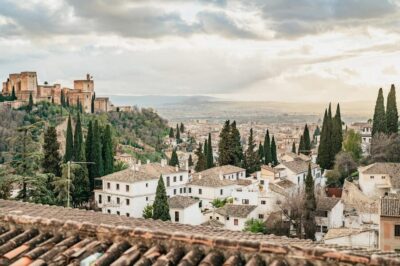
Albaicín and Sacromonte Guided Sunset Walking Tour
Read our review →
Toledo Tour & Vineyard Walk with Wine Tasting from Madrid
Read our review →
Madrid Walking Tour from Puerta del Sol to Retiro Park
Read our review →

Barcelona Tapas Walking Tour: Food, Wine & History
Read our review →Browse the lists this tour appears in