
Reviewed · MUSEUMS
Madrid: Nomad Immersive Museum – De Monet a Kandisky
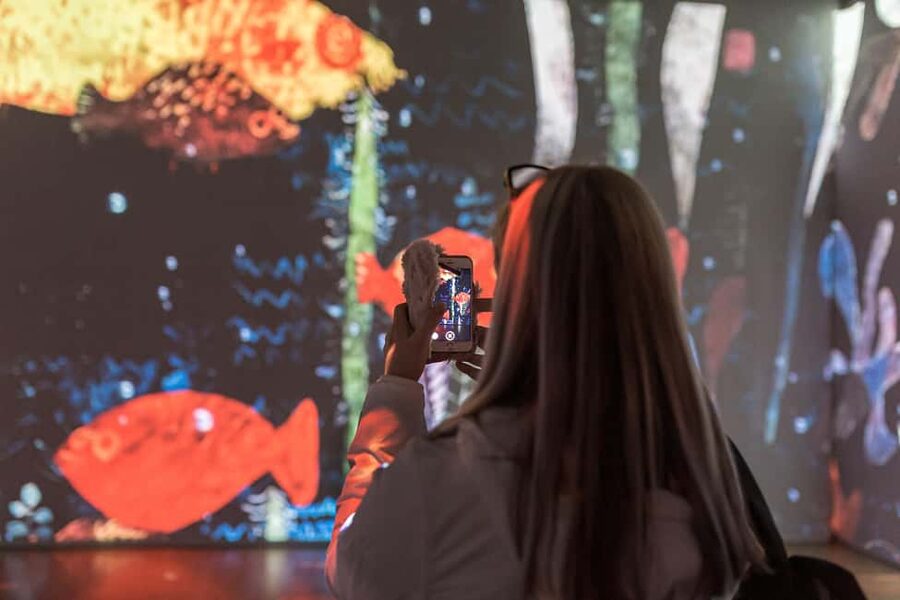
You walk in expecting paintings, then the room starts changing your sense of reality. The Nomad Museo Inmersivo in Madrid strings together Impressionism to Expressionism with HD projections, digital animation, and an audio track built to make the images feel alive.
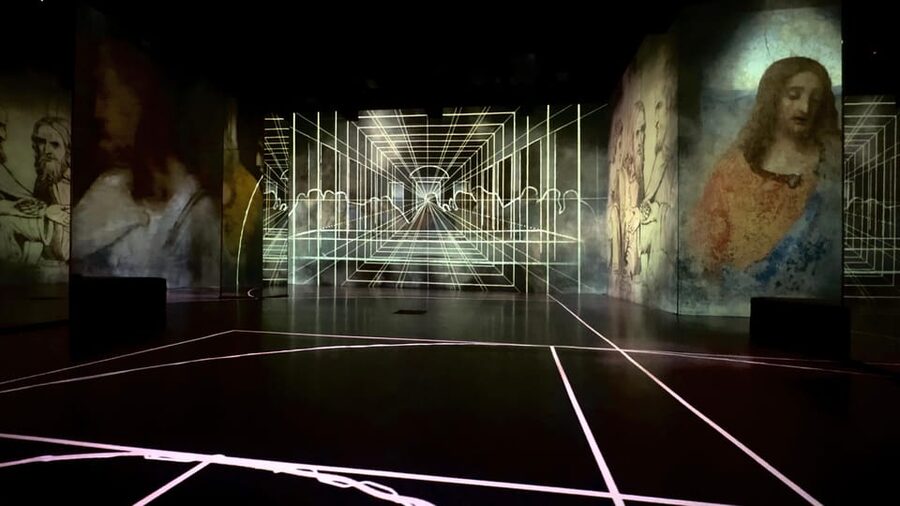
I especially like the VR moments, like the infinite corridor that plays tricks on how space works. I also like the mix of famous names and art styles, from Monet and Van Gogh to Munch and Kandinsky, all tied to one clear story about how artists moved from light and emotion to abstraction.
One drawback to plan for: the experience asks for quiet focus, so if you are sensitive to voices or people walking in front of screens, it can feel a bit distracting.
In This Review
- Key points worth knowing before you go
- The big idea: how art in Madrid moves from light to abstraction
- The set pieces that make this show feel different
- VR glasses: more than a gimmick
- The infinite corridor: a perception prank
- The iris photograph: intimate, but quick
- Giant brushes and painting a winter scene
- The 40-minute heart of the show: projections that move and breathe
- How the chapters feel, not just what they cover
- Sound and crowd behavior: the difference between wow and distracted
- Hands-on time: giant brushes and the winter scene break
- Price and value in Madrid: is 22 dollars fair?
- Where it fits in your day (and how to time it)
- Who will love this museum, and who may want to rethink it
- Should you book the Monet to Kandinsky show in Madrid?
- FAQ
- How long is the experience?
- How much does it cost?
- What is included in the ticket?
- Where do I meet the staff?
- What languages are offered?
- Is it wheelchair accessible?
Key points worth knowing before you go
- VR glasses and the infinite corridor make the art feel physical instead of flat.
- HD projections with sound design drive a 40-minute central show that pulses to the music.
- Your iris photo turns a gallery moment into something personal.
- Big, hands-on brush play adds a fun break from staring at walls.
- Expect a spread across many artists, so Monet fans may want to manage expectations about screen time.
The big idea: how art in Madrid moves from light to abstraction
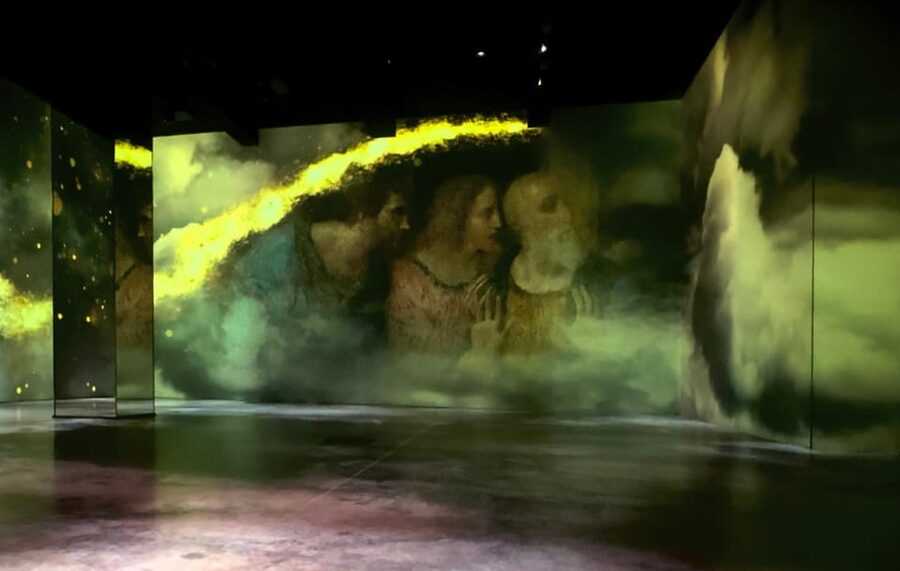
This is not a standard museum stop where you read placards and move on. The whole point is the transformation of Western art from the late 1800s into the early 1900s, using a timeline you can feel in your body.
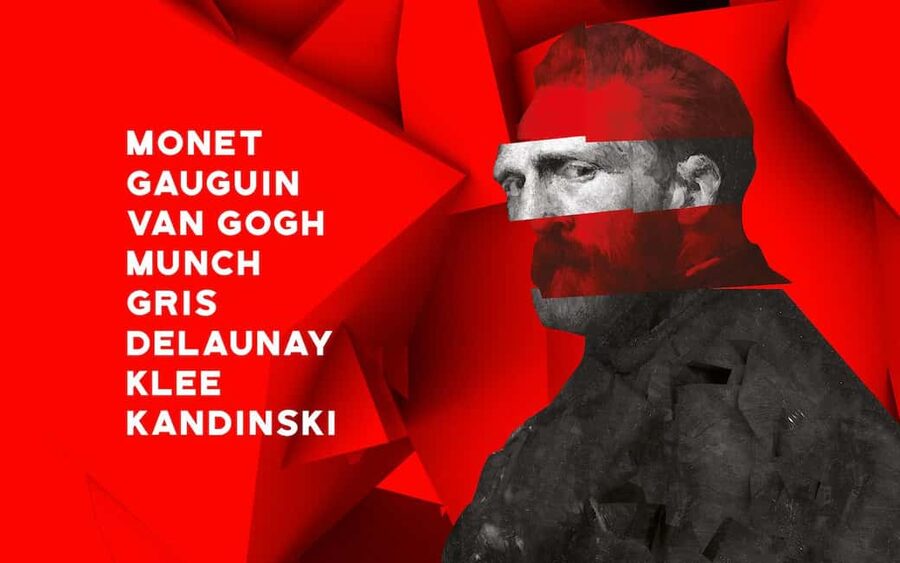
You get chapters built around the artistic jumps that changed everyday life too: Impressionism with its focus on light and fleeting moments, Pointillism and its dot-driven look, Post-Impressionism with more emotion and structure, then Cubism and Expressionism where representation starts breaking apart. The names behind those shifts are all there, including Monet, Gauguin, Van Gogh, Munch, Gris, Delaunay, Klee, and Kandinsky.
Why this matters for you as a visitor: you are not just learning terms. You are seeing the logic of the change. The show leans hard on one idea, artists stopped trying to copy reality and started making worlds of their own.
Other days out near Madrid
- Madrid: Prado Museum Entry Ticket
★ 4.6 · 20,699 reviews - Madrid: Reina Sofía Museum Entrance Ticket
★ 4.5 · 8,788 reviews - Madrid: Small Group of Prado Museum Tour & Optional Tapas
★ 4.6 · 2,437 reviews
The set pieces that make this show feel different
This is a VR and projection experience, so your attention has to follow what the room is doing. The most memorable moments are the ones that pull you into the artwork’s mood instead of asking you to observe from a distance.
VR glasses: more than a gimmick
The experience uses virtual reality glasses to drop you into brand new visual environments. It is not just a quick clip. It is part of the flow of the art history story, so the VR sequences help explain why these painters kept changing their tools and their goals.
The infinite corridor: a perception prank
Then comes the infinite corridor, a space designed to challenge your sense of where you are and how far things go. When it works, it makes the art history theme click: artists were willing to break traditional rules of seeing.
Also within reach of Madrid:
- Madrid: Tour Bernabéu Entry Ticket
★ 4.5 · 21,573 reviews - Madrid: “Emociones” Live Flamenco Performance
★ 4.8 · 12,866 reviews - Madrid: Panoramic Route City Tour
★ 4.1 · 12,259 reviews - Madrid: Live Flamenco Show with Food and Drinks Options
★ 4.5 · 9,901 reviews
The iris photograph: intimate, but quick
One standout interactive moment is taking a photograph of your iris. It sounds strange until you realize it fits the show’s theme, art shifting from external reality to personal perception. It is a fun souvenir feeling moment, and it also breaks up the mostly visual theater format.
Giant brushes and painting a winter scene
You also get play time with giant brushes. The goal is not mastery, it is the feeling of getting involved. The winter wonder scenery activity gives you a hands-on contrast to the big projection moments, so your brain gets a reset instead of another nonstop wall of images.
The 40-minute heart of the show: projections that move and breathe
The center of the experience is a 40-minute sequence where masterpieces move, glow, expand, and pulse to the rhythm of music. HD projections and digital animation do the heavy lifting, but the real secret sauce is how sound design and timing lock together.
If you like art but struggle to sit through long museum explanations, this is designed for your attention span. You are not memorizing dates. You are watching light, emotion, and form change in real time.
The story connects the dots from one artistic breakthrough to the next. You can expect the theme to follow the broad path from the real world toward abstraction, and it is done through shifting visual styles rather than through long narration.
Practical tip for you: treat this portion like a small theater. Keep your focus on the screens and the visuals in front of you. If you walk in front of the projection area or talk during the key moments, you will feel it in the room.
How the chapters feel, not just what they cover
You are going to see many schools and many artists, but the experience is structured like a journey, with chapters that guide the evolution of ideas and sensations.
Here is the useful way to think about what you will experience:
- Early on, you get the vibe of light and immediate perception, tied to Impressionism and related experiments.
- Then the visuals lean into technique, where forms start building from patterns rather than smooth, realistic surfaces.
- Next, the show moves toward emotional intensity and distortion, connecting the dots to Post-Impressionism and Expressionism.
- Finally, you see how abstraction becomes its own language, with Cubism and the path toward Kandinsky’s world of ideas.
Because it is projection-based, the show can quickly shift scale and style. That is fun, but it also means you might not get the kind of slow, reverent looking you get in a traditional gallery. If you want a long, quiet time with one painting, plan for the fact that this museum is about momentum.
Sound and crowd behavior: the difference between wow and distracted
One of the most practical lessons from the feedback is that this experience asks for concentration. The room is part gallery and part show, so your comfort level depends on the atmosphere.
Some people found the voices of other visitors distracting. Others noticed that passing in front of the screen can interrupt the effect. That makes sense because projections and audio are built around a shared viewing zone.
So, do this:
- Go in ready to be quiet during the main sequence.
- Stand where you can see without blocking anyone else.
- If you get easily distracted, pick a time slot when you expect a calmer crowd, like earlier in the day.
If you treat it like a theater show, the design tends to make sense fast.
Hands-on time: giant brushes and the winter scene break
After you have been watching art transform into environments, the hands-on brush activity gives you something physical to do. The big brush moment is a light reset, and it also helps you remember the theme of artists changing the rules.
In some feedback, the hands-on section came off as more like a simple activity than a deep art lesson. That is not necessarily bad. It is just a different goal. This part is here for fun and participation, not for another long projection chapter.
If you are going with kids, this tends to land better. If you are going only for adult art immersion, keep your expectations flexible for this segment.
Price and value in Madrid: is 22 dollars fair?

The ticket price is $22 per person for a 1-day valid pass, and it includes entry to the Nomad Immersivo museum. Transportation is not included.
Here is my value angle for you:
- You are paying for technology and production, not for paper maps and a couple of screens.
- The biggest value point is the 40-minute moving projection show, with music and sound design, plus VR and at least one interactive moment.
- The experience is shorter than a full museum day, so it makes more sense as a focused block rather than filling every hour of your itinerary.
Could it feel pricey if you expected a long gallery visit with lots of static works? Yes, because the show format is time-based and technology-heavy. But if you are excited by VR and projection art, and you like art history told through mood and style changes, it can feel like a good use of one hour block.
Practical planning tip: since transportation is not included, fold it into your day like a planned stop with a clear time window, then move on. Do not schedule it as a vague afternoon wander.
Where it fits in your day (and how to time it)

This is valid for 1 day, but you need to check availability for starting times. That matters because you will want to match it with when you feel alert enough to concentrate during the main show.
The meeting point is simple: show your ticket at reception at Nomad Museo Inmersivo in Madrid. The host or greeter is available in Spanish and English, so you can get assistance if you have questions about where to go next once you arrive.
If you are the type who likes structure, this helps. You can put it on your schedule, arrive, and follow the flow. If you hate waiting, pick a start time that gives you buffer space.
Who will love this museum, and who may want to rethink it
This works best when you enjoy visual storytelling and you like art history as a fast-moving, style-changing experience.
You will likely love it if:
- You are curious about how styles changed from Monet-era light to Kandinsky-era abstraction.
- You want VR plus a projection show, not a quiet gallery walk.
- You enjoy interactive moments, especially the iris photo and brush play.
You might want to rethink it if:
- You expect a traditional museum with lots of time for looking at original works.
- You need a silent, lecture-style experience with minimal distractions. The experience can be sensitive to crowd noise and people blocking the projection.
Also, if you are a devoted Monet fan, keep in mind that the show shares attention across many artists and styles. One part of the experience may not satisfy every Monet craving, especially if you specifically want a long, deep look at water lilies.
Should you book the Monet to Kandinsky show in Madrid?
I think you should book it if you want one focused, creative art history experience in Madrid that mixes VR, HD projection, and sound into a timed show. The biggest selling point is that you get the story of modern art style shifts in a way that feels immediate, not just academic.
I would hesitate only if you are mainly looking for a slow-paced museum experience with lots of detailed viewing time, or if you know you hate noise and crowd interruptions. For everyone else, this is a smart use of time, and it is an easy way to connect the names you already know with how those ideas actually changed what art could be.
FAQ
How long is the experience?
The central projection experience lasts 40 minutes, and the ticket is valid for 1 day. Check availability to see starting times.
How much does it cost?
It costs $22 per person.
What is included in the ticket?
Your ticket includes entry to the Nomad Immersivo Museum.
Where do I meet the staff?
Show your ticket at the reception to Nomad Museo Inmersivo in Madrid.
What languages are offered?
The host or greeter is available in Spanish and English.
Is it wheelchair accessible?
Yes, it is wheelchair accessible.
Recently added around Madrid
- Toledo Experience Tour from Madrid with optional Toledo Cathedral★ 4.5 · 703 reviews
- Madrid: Tapas Walking Tour with Food and Drinks Included★ 5.0 · 108 reviews
- Madrid Royal Palace and Prado Museum Private Tour with Transfers★ 5.0 · 185 reviews
- Tasty Tapas & Drinks Tour with a Rooftop Included★ 5.0 · 82 reviews
- Tickets for the Authentic Flamenco Show at the Madrid Theater★ 4.5 · 301 reviews
- Madrid Tapas Crawl ️Tour by FLT★ 5.0 · 269 reviews
- Prado Museum Madrid Guided Tour Semi-Private 6ppl Max★ 5.0 · 67 reviews
- Toledo Day Trip from Madrid: Cathedral & Monuments★ 5.0 · 368 reviews
Museums, compared.

FC Barcelona Museum “Barça Immersive Tour” Ticket
Read our review →

Park Güell and Gaudí House Museum Entry Ticket
Read our review →
Puro Flamenco Show with Optional Museum Ticket
Read our review →
Moco Museum Barcelona: Modern & Contemporary Art
Read our review →
Girona & Dali Museum Small Group Tour with Pick-up from Barcelona
Read our review →Browse the lists this tour appears in