
Reviewed · HISTORICAL TOURS
Madrid: Tour of the Historic City Center
Madrid’s old streets have a way of sticking. This 3.5-hour guided walk strings together the city’s key landmarks and the quieter side streets you would miss on your own, starting at the bear statue in Puerta del Sol. I like that you get both the big wow sights and the human details, from taverns on Cava Baja to architecture that explains why this city grew the way it did. One thing to consider, the tour runs in German, so it is best if that is comfortable for you.
What I really like about this experience is how practical it feels, not just scenic. You get restaurant suggestions plus a clear warning about tourist traps, and the guide tailors recommendations to different interests in the group, which makes the information useful the same day. The route is designed to show off architectural value, so even when you are standing still, you are learning something you can look for again later.
A possible drawback is simple: entrance fees are not included, so if you want to go inside any of the major stops, you will need to plan extra time (and money) beyond the guided walk. And yes, it is rain or shine, so wear shoes that handle wet stone.
In This Review
- Key highlights worth your attention
- The best part is the order: Puerta del Sol to the Habsburg core
- Plaza Mayor and the big landmark trio: a photo stop with context
- Church of San Ginés to Las Descalzas Reales, where Madrid slows down
- Royal Palace area, Palace of the Councils, and Plaza de la Villa
- Monastery of Corpus Christi las Carboneras and Plaza de la Paja
- Cava Baja and the tapas street angle you can actually use later
- San Miguel Market and Plaza Mayor: where the tour earns its time
- Literary Quarter and Golden Age stories that add texture
- Optional viewing terrace, plus the smart way to use your map afterward
- Price, value, and what this tour is best at
- Who should book, and who should consider another style of tour
- Should you book this Madrid historic center tour?
Key highlights worth your attention
- Puerta del Sol start point at the bear statue, so it is easy to find
- Habsburg-era city center focus, with context that makes the streets feel logical
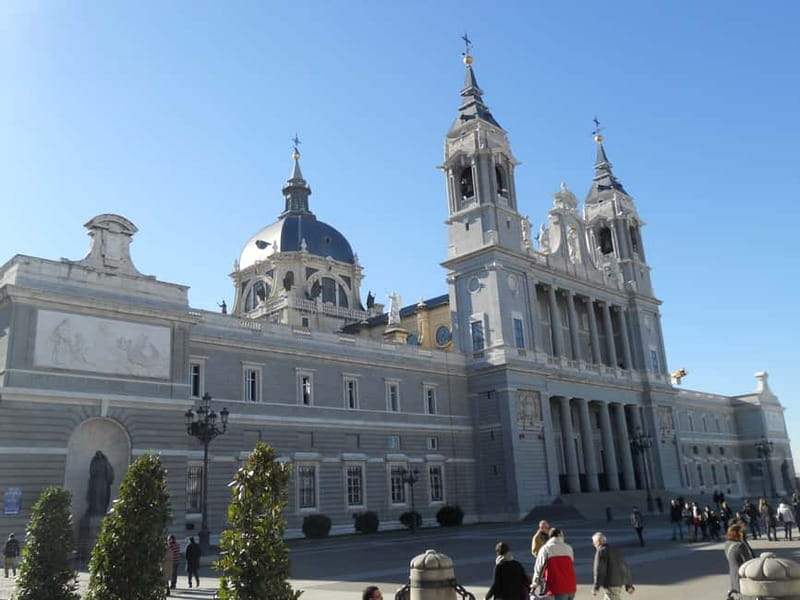
- Plaza Mayor, Royal Palace, and Almudena Cathedral in one efficient route
- San Miguel Market plus Plaza Mayor, good spots to pause and refocus
- Cava Baja tavern street and the story behind Madrid tapas culture
- Optional viewing terrace at the end if you request it
The best part is the order: Puerta del Sol to the Habsburg core
The tour’s structure makes a big difference. You start in Puerta del Sol, right by the bear statue, then you gradually move from Madrid’s most central, public energy into the older historic blocks where the city’s rules and rhythms were shaped long ago. You will see how the old center was built during the Habsburg Dynasty, and the guide explains the why behind the layout, not just the what.
This “walk outward, understand the city inward” approach is great if you like to orient yourself fast. Madrid can feel wide and spread out, but this route gives you a spine. Once you understand the major plazas and the connective streets, the rest of the map starts to make sense. You also get narrow streets off the main roads, which is where Madrid often feels most real.
Also, the pace matters. The tour is long enough to feel substantial, 211 minutes, but the group isn’t treated like a sprint. If you tend to get overwhelmed by big crowds or nonstop facts, you will probably appreciate the calmer flow described in the experience feedback.
Other days out near Madrid
- Madrid Essential: Historic Center, Plaza Mayor & Royal Palace
★ 5.0 · 6,416 reviews - Madrid Tapas & Taverns Small Group Food & History Tour
★ 5.0 · 2,664 reviews - Madrid Historic Centre Food Tour with Authentic Tapas & Wines
★ 5.0 · 814 reviews
Plaza Mayor and the big landmark trio: a photo stop with context
Plaza Mayor is the kind of place that begs for a photo. It is also the kind of place that can feel empty if you do not know what you are looking at. This tour gives you that missing layer. You do not just arrive, take a picture, and move on. You learn how the space functioned in the old city, and why this plaza became a stage for public life.
From there, you’ll work your way toward the Royal Palace of Madrid and Almudena Cathedral. Even if you have seen pictures before, seeing them in sequence helps. The guide ties the monuments to Madrid’s development, so each building becomes part of a story instead of isolated sights. You get to notice the scale shifts, where the street space suddenly expands, and you understand how architecture directs movement.
One practical benefit: these stops are also good reference points for the rest of your day. After your guided portion, you can use what you learned to pick a direction with confidence, rather than wandering in circles around the center.
Church of San Ginés to Las Descalzas Reales, where Madrid slows down
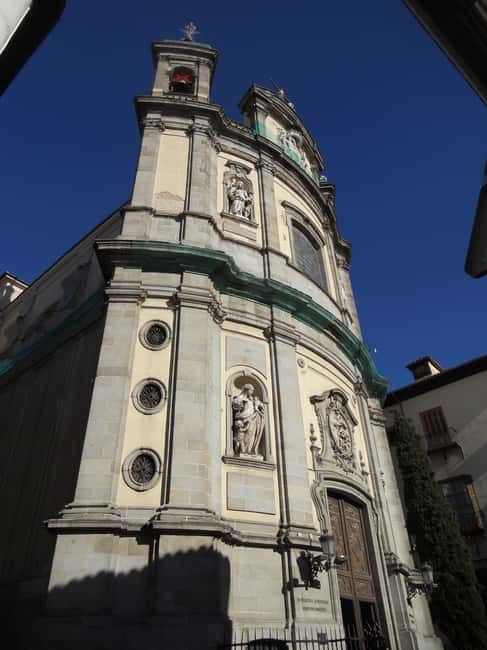
Not every highlight is a giant monument. Some of the best moments come from religious buildings and quieter institutions that show another side of Madrid. On this route, you walk past the Church of San Ginés and the Convent of Las Descalzas Reales, and the guide uses their architecture and history to explain how the city held religious and political power side by side.
This is a smart pairing. San Ginés gives you an entry point into the everyday spiritual landscape of the old center. Las Descalzas Reales then broadens the picture, helping you see how a convent could be more than a background presence. If you like architecture, you will enjoy how the guide points out details you might otherwise miss, like structural features and the visual language that makes these places feel distinct even from the street.
Also, these stops help break up the walk. When the route includes a cathedral-level moment and then moves into smaller, more focused spaces, your eyes get a rest. That matters on a 3.5-hour city walk, especially in weather that changes.
Royal Palace area, Palace of the Councils, and Plaza de la Villa
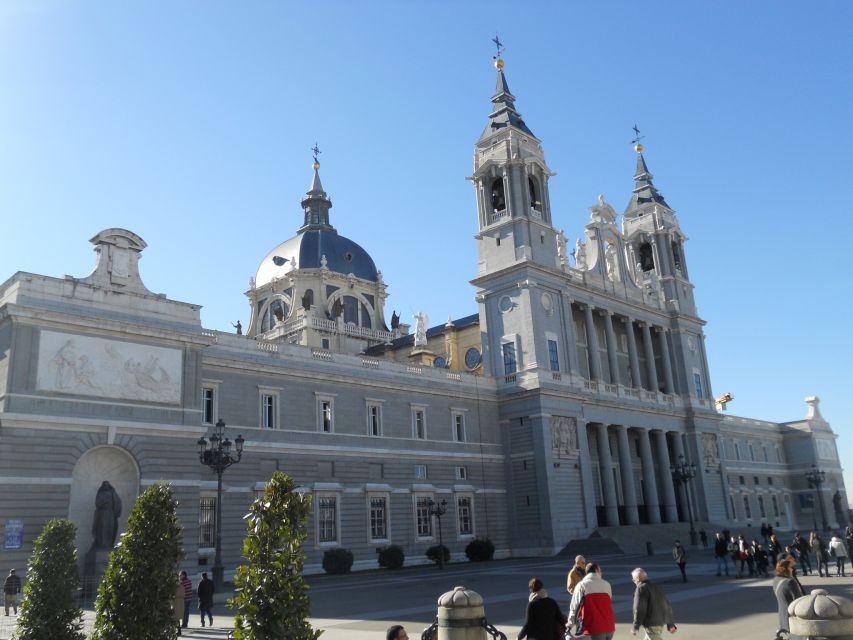
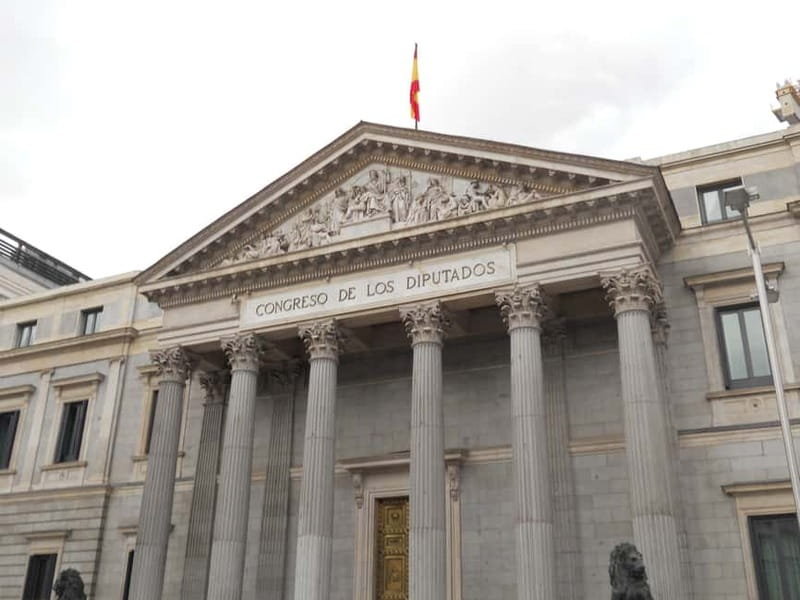
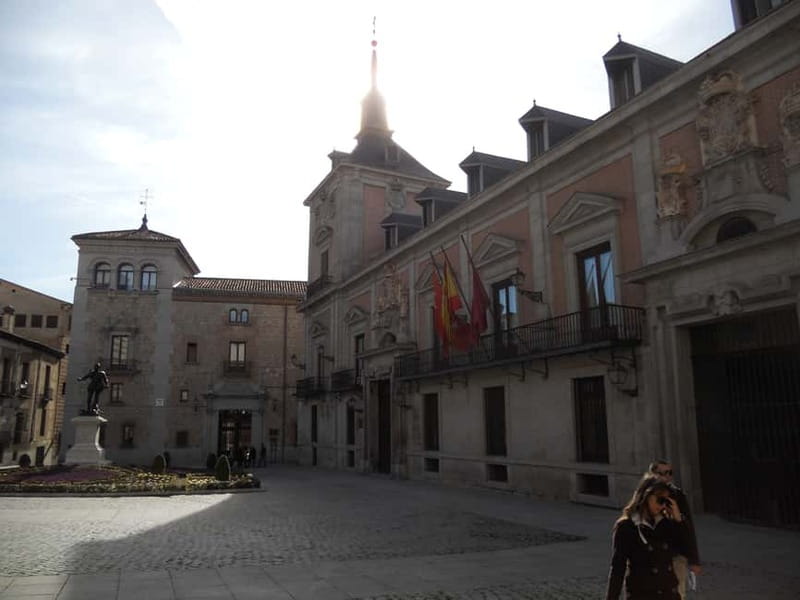
If the Royal Palace is the headline, the mid-sized civic stops are the footnotes that make everything click. You also see the Palace of the Councils and Plaza de la Villa, and the guide brings in the political story that shaped Madrid’s identity.
This part of the walk is where you start seeing Madrid as more than landmarks. The explanations help you connect the architecture to governance and public life, which is why these buildings feel important even when you are not going inside them. You are learning to read the city through its spaces: where people gathered, where authority was displayed, and how those choices influenced daily movement.
There is also a specific “look up” moment that tends to land well: the Torre de los Lujanes. Even if you do not know its story beforehand, the guide’s anecdotes make you slow down and notice the tower’s presence in the urban skyline. That tiny habit, stopping to look up, is one of the easiest ways to get more out of Madrid without paying another fee.
Also within reach of Madrid:
- Madrid: Tour Bernabéu Entry Ticket
★ 4.5 · 21,573 reviews - Madrid: Prado Museum Entry Ticket
★ 4.6 · 20,699 reviews - Madrid: “Emociones” Live Flamenco Performance
★ 4.8 · 12,866 reviews - Madrid: Panoramic Route City Tour
★ 4.1 · 12,259 reviews
Monastery of Corpus Christi las Carboneras and Plaza de la Paja
One reason I like walking city-center tours is that they keep you honest. You cannot fake your way through a place like Madrid by only looking at postcards. This route includes the Monastery of Corpus Christi las Carboneras and Plaza de la Paja, which shift the tone.
Here, the city feels more intimate. The streets are narrower, and the conversation with the guide has room to breathe. You’ll likely notice you are not just absorbing facts, you are building a mental map of neighborhoods, not just monuments. When a guide gives architectural value alongside history, you also start looking for material, form, and placement, not just names.
This is a good section for anyone who wants a city walk that feels like it has a pulse, not a checklist. And if you are the type who enjoys quiet pauses, these stops give you them.
Cava Baja and the tapas street angle you can actually use later
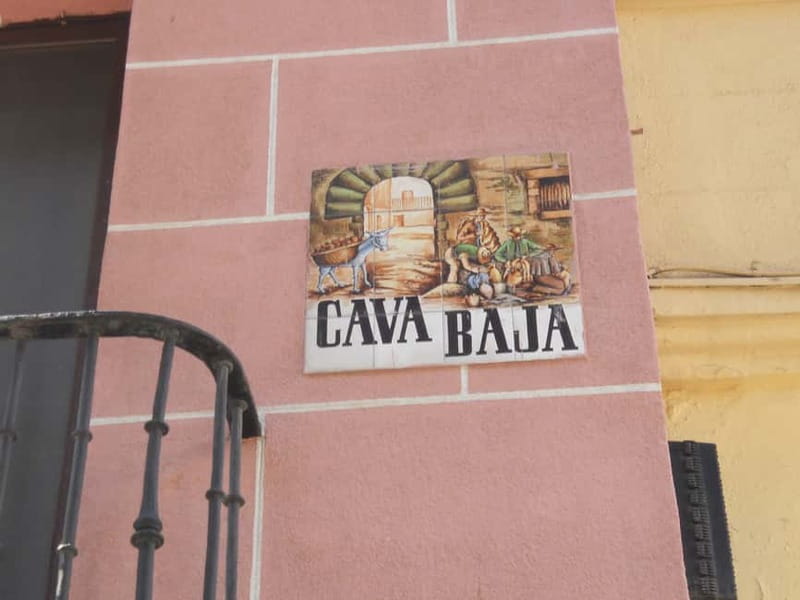
Now for the part that turns knowledge into a plan: Cava Baja. This street is famous for taverns and tapas bars, and the guide uses it to explain how food culture fits into the city’s everyday life. You get a sense of why certain areas became associated with certain types of social energy.
More importantly, you are not left with vague advice. The tour includes restaurant suggestions, and the experience feedback points out that the guide also makes individualized recommendations based on what people in the group like. That is the difference between generic tips and tips you can use immediately when you start hunting for dinner.
If you are trying to avoid tourist traps, this is also where the warning helps. The guide flags patterns that tend to drag visitors into overpriced, low-quality traps. Even if you only remember one or two of those red flags, it can save you a lot of frustration later.
San Miguel Market and Plaza Mayor: where the tour earns its time
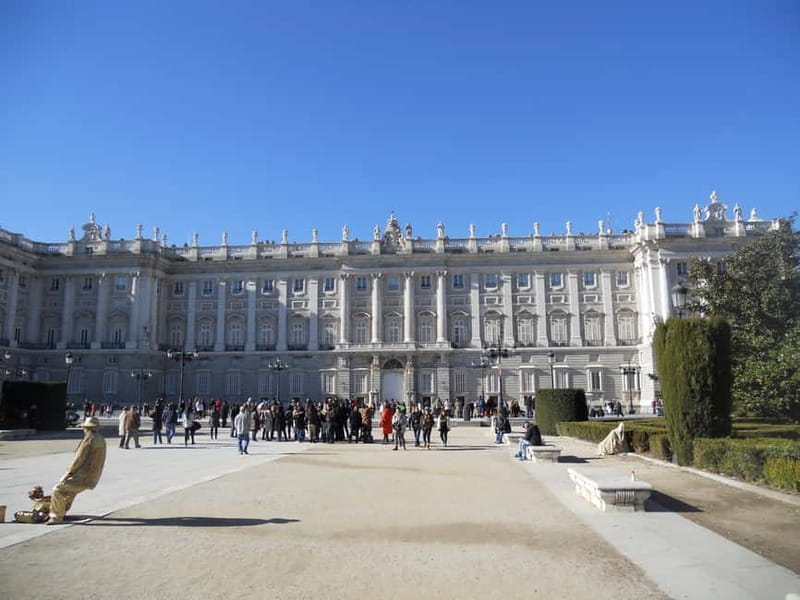
Market stops can go either way on tours. Sometimes they are just quick photo opportunities. Here, the covered Market of San Miguel feels like a real experience inside the route plan.
You get to connect the history and architecture with how Madrid actually eats. Markets like this are not just shopping, they are social hubs, and the guide’s framing helps you understand what you are seeing. Even if you do not buy anything, walking through gives you a more grounded sense of the city than monuments alone.
Then, returning to Plaza Mayor reinforces the feeling that the big squares were designed for public life. It is one thing to see the plaza from the outside and another to understand how markets and squares supported the flow of people, trade, and conversation.
If you like taking time to browse, this is one of the most useful parts of the route. It also sets you up to return later with more confidence.
Literary Quarter and Golden Age stories that add texture
The Literary Quarter is where the tour taps into Madrid’s cultural identity. You hear stories of the Golden Age, and the guide connects writers, ideas, and the city’s atmosphere to what you can see in the street layout and institutions around you.
This section is especially good if you enjoy history as something human. Instead of treating Madrid as a museum, you get a sense of how the city felt when creativity, politics, and daily life were intertwined. If you are the kind of traveler who likes to visit a place with a little context before reading more later, this is a strong add-on.
It also helps you make future choices. When you know which neighborhood carries the literary vibe, you can plan your own evening walk or decide what to read before your next stop.
Optional viewing terrace, plus the smart way to use your map afterward
By the end of the tour, you can request a view from a viewing terrace. Not everyone takes this option, but if you do, it is a good way to reset your head after hours of walking and looking up close.
You also get to mark further attractions and quaint taverns on your map to explore later. That sounds small, but it is a practical advantage. Madrid is full of interesting streets, and after the guided portion you want a shortlist, not endless options.
One pattern from the experience feedback is that the guide shares information that goes beyond the headline facts. In one example, a guide named Anne, who is also the author of a Madrid guidebook titled Glücksorte in Madrid, reportedly added insider insights that did not stop at the standard script. Another guide, Silvia B., is described as friendly and capable of holding attention while still keeping the pace comfortable. When your guide has that mix of competence and warmth, the whole tour becomes easier to remember because you can connect it to real next-step recommendations.
Price, value, and what this tour is best at
The price is $47 per person for 211 minutes of guided walking. That is not a bargain price in the abstract, but it is reasonable when you consider what you get: a live German guide, multiple major landmarks, smaller historic stops, market time, and the kind of practical guidance that helps you eat and explore better.
This tour is best at three things:
- Orientation with context: you do not just see where things are, you understand why they are there.
- City-life details: taverns, tapas streets, and market atmosphere come with explanation.
- Practical decision-making: the restaurant suggestions and tourist-trap warnings can protect your time and your budget.
It is not the right choice if you want a deep, ticket-based museum day. Entrance fees are not included, so if you need interiors to feel satisfied, you might end up planning extra visits later anyway. Also, because the guide language is German, you will get the most out of the experience if you are comfortable following a live narrative in that language.
Who should book, and who should consider another style of tour
I think this tour fits best if you want a guided walk that feels like a guided conversation with a plan. It is a solid match for first-timers to Madrid, and also for people who have been before but want a better storyline and better local recommendations.
Book this if:
- you like walking and want a structured route through the historic center
- you care about architecture and how spaces connect
- you want help choosing where to eat, not just what to photograph
- you are okay with a German-language guide
Consider another option if:
- you do not want guided storytelling, you prefer only independent sightseeing
- you need frequent stops to sit down (the tour is still a walk, even if the pace is not rushed)
- you are hoping entrance fees to major interiors are included
Should you book this Madrid historic center tour?
Yes, if you want the “fast but not shallow” Madrid experience. The route covers the must-see landmarks like Plaza Mayor, the Royal Palace area, and Almudena Cathedral, then adds quieter institutions and a market stop so the city feels rounded. The big value is not only what you see, it is what you learn to do next, especially with restaurant suggestions and the help avoiding common tourist traps.
If you are comfortable with German, this is a very good use of a half-day. You will come away with a clearer map, a stronger understanding of the historic center’s logic, and a practical plan for the hours after the tour.
Recently added around Madrid
- Toledo Experience Tour from Madrid with optional Toledo Cathedral★ 4.5 · 703 reviews
- Madrid: Tapas Walking Tour with Food and Drinks Included★ 5.0 · 108 reviews
- Tickets for the Authentic Flamenco Show at the Madrid Theater★ 4.5 · 301 reviews
- Madrid Royal Palace and Prado Museum Private Tour with Transfers★ 5.0 · 185 reviews
- Tasty Tapas & Drinks Tour with a Rooftop Included★ 5.0 · 82 reviews
- Madrid Tapas Crawl ️Tour by FLT★ 5.0 · 269 reviews
- Prado Museum Madrid Guided Tour Semi-Private 6ppl Max★ 5.0 · 67 reviews
- Toledo Day Trip from Madrid: Cathedral & Monuments★ 5.0 · 368 reviews
Historical Tours, compared.
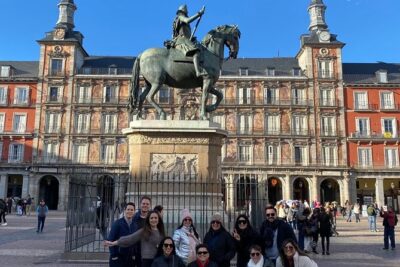
Madrid Essential: Historic Center, Plaza Mayor & Royal Palace
Read our review →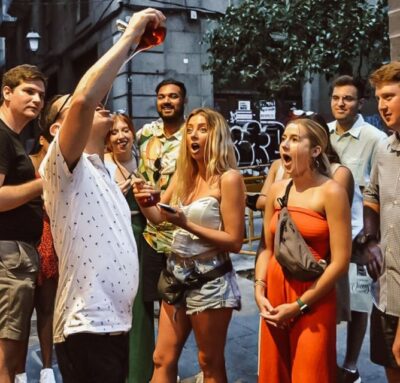
Tapas Walking Tour with Food, Wine, and History
Read our review →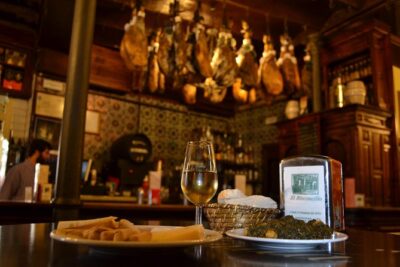
Sevilla Food Tour: Tapas, Wine, History & Traditions
Read our review →
Valencia Old Town Tour with Wine & Tapas in 11th Century Historic Monument
Read our review →
Madrid Tapas & Taverns Small Group Food & History Tour
Read our review →
Barcelona Tapas Walking Tour: Food, Wine & History
Read our review →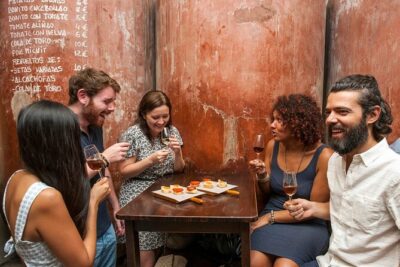
Ultimate Seville Tapas, Wine & History Small Group Tour
Read our review →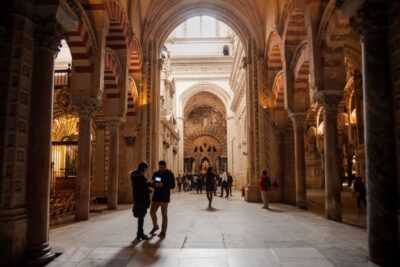
Skip-the-Line Great Mosque-Cathedral History Tour
Read our review →Browse the lists this tour appears in