
Reviewed · MUSEUMS
Malaga: Picasso’s Birthplace Museum Entrance Ticket
Picasso was born in this very house. The Museo Casa Natal de Picasso turns that idea into a practical, self-paced walk through the rooms, the objects, and the themes that shaped his early years. You get the house experience plus an audio guide that keeps you oriented.
I especially like two things: the early-life objects that make Picasso feel human (yes, including baby-era items like a shirt and early shoes), and the chronological, easy-to-follow layout across the museum’s 9 rooms. It is also small enough that you do not feel like you are rushing to survive a giant collection.
One consideration: because the museum is compact, you will likely finish in about an hour or less. Also, for the last stretch of your visit, note that last entry is 30 minutes before closing, so plan your timing so you do not get cut off mid-route.
In This Review
- Key things to know before you go
- Picasso’s Birthplace Museum Ticket, and why it feels like a bargain
- Entering the house where Picasso first lived
- How the museum’s audio guide shapes your visit
- Picasso’s story in 9 rooms: Malaga’s impact, explained
- The temporary exhibition: Picasso reframed through other creators
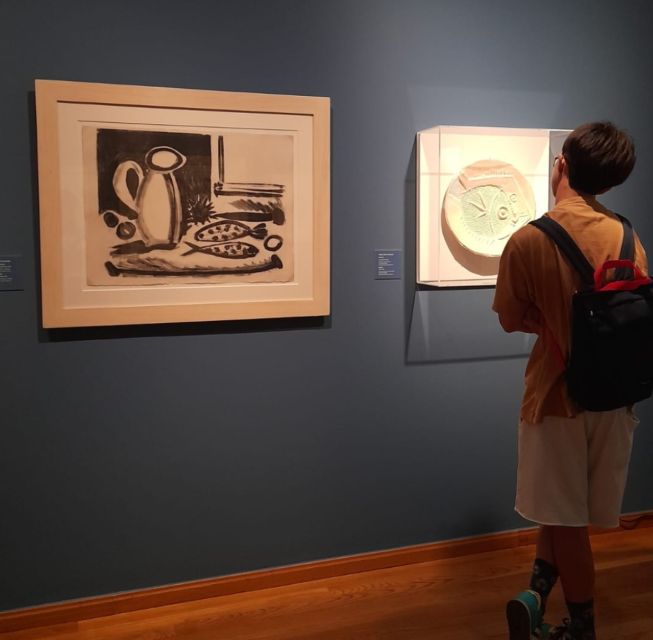
- More art than you expect: the contemporary collection in the same ticket
- Timing it in Malaga: how long to plan and when to go
- Practical tips to make your visit smooth
- Should you book this Picasso birthplace museum ticket?
- FAQ
- Is the Picasso birthplace museum ticket good for one day?
- Does the ticket include the audio guide?
- What languages are available for the audio guide?
- What can I see besides the permanent exhibition?
- How many rooms are in the museum?
- Is the museum ever free?
- What time should I plan my last visit?
Key things to know before you go
- It is self-paced with an included audio guide, so you control the pace.
- 9 rooms connect Picasso’s childhood, family life, and early training to symbols in his art.
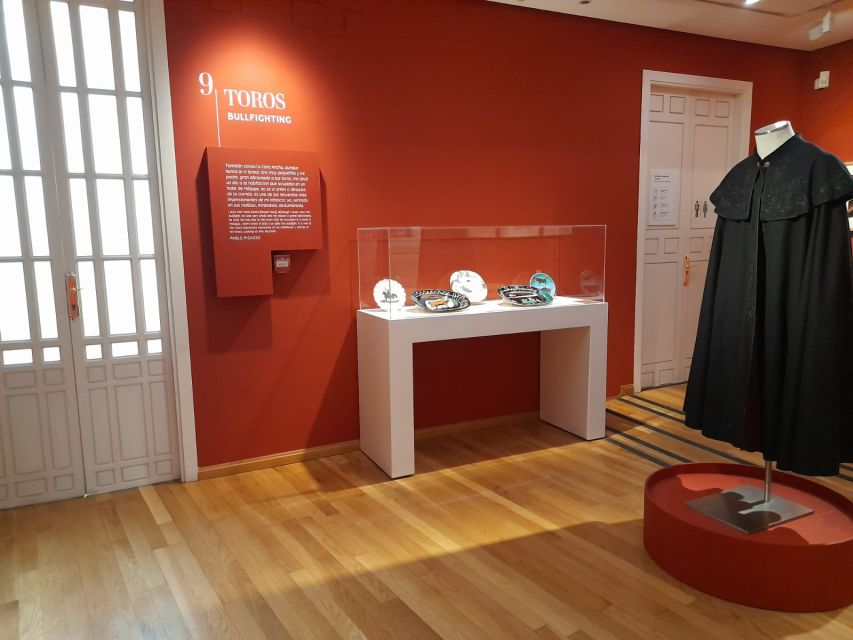
- Malaga is the through-line, with motifs like bullfighting, doves, nudes, and the Mediterranean.
- You also get contemporary art: over 3,500 works by 200-plus artists, including graphic works by Miró, Bacon, Ernst, and Matta.
- Bring headphones so you can use the audio guide properly.
- Temporary exhibition included alongside the permanent collection.
Picasso’s Birthplace Museum Ticket, and why it feels like a bargain
At around $4.71 per person, this ticket is a rare kind of value in a city full of museums. You are not just buying entry to paintings, you are buying a full context experience: the house, early objects, family photos, and an explanation of recurring motifs in Picasso’s art.
What makes the price make sense for me is the combination of formats. You get the permanent exhibition plus access to a temporary show, and you also receive an audio guide in multiple languages. If you want a museum that fits into a day without gobbling it up, this one works. Realistically, many people plan for roughly an hour, sometimes a bit more if they linger with the details and artwork.
You also benefit from skipping the ticket line, which matters in busy tourist areas. The museum sits at Plaza de la Merced 15, a handy location when you are walking Malaga anyway.
Other days out near Spain
- Madrid: Prado Museum Entry Ticket
★ 4.6 · 20,699 reviews - Barcelona: FC Barcelona Museum “Barça Immersive Tour” Ticket
★ 4.4 · 10,944 reviews - Madrid: Reina Sofía Museum Entrance Ticket
★ 4.5 · 8,788 reviews
Entering the house where Picasso first lived
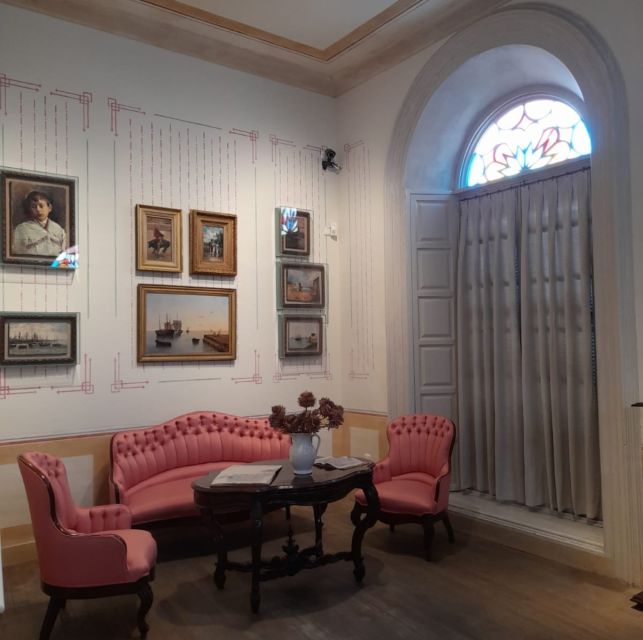
The address is your first clue that this is not a typical museum building. The visit starts right at the Museo Casa Natal de Picasso, on Plaza de la Merced, and it feels like you are stepping into a neighborhood story rather than traveling to a distant gallery.
As you move through the rooms, you are not only seeing Picasso’s later achievements. You are seeing clues to his beginnings:
- early personal objects connected to childhood
- items tied to his family life
- photographs and portraits that help you understand the people around him
It is a particularly good experience if you find Picasso’s art intimidating. In a birthplace setting, the symbols become less random. You start to see the same themes (Mediterranean life, bullfighting culture, and recurring imagery) as parts of a long-running influence, not just a visual style.
The museum is designed with 9 rooms, so the storytelling stays focused. You get a sense of progression without getting trapped in endless corridors.
How the museum’s audio guide shapes your visit
The included audio guide is one of the biggest reasons to book this ticket instead of just wandering in without context. It is available in English, Spanish, French, German, Italian, and Chinese, which is great if you are traveling with mixed-language friends.
Practical note: bring headphones. The museum specifically asks visitors to bring them so you can listen comfortably as you move from room to room. I also recommend setting the audio guide rolling right away at the start, so you learn how the museum wants you to read the themes.
What the audio guide helps you do is connect objects to ideas. You will hear how Picasso’s early life and training connect to what later appears in his work. You also get help noticing motifs such as:
- bullfighting and related cultural images
- doves (a symbol that comes up repeatedly)
- nudes and how that theme shows up across different stages
- the Mediterranean as both a setting and an influence
If you are sensitive to how voices sound, be aware that some visitors have mentioned the English audio can feel a bit unusual. It is not a deal breaker, but if you are picky about audio narration, you might skim faster or use the guide in short bursts.
Picasso’s story in 9 rooms: Malaga’s impact, explained
The permanent exhibition is built around the idea that where you grow up leaves fingerprints on your art. As you work through the 9 rooms, the museum keeps returning to Malaga’s importance to Picasso’s development.
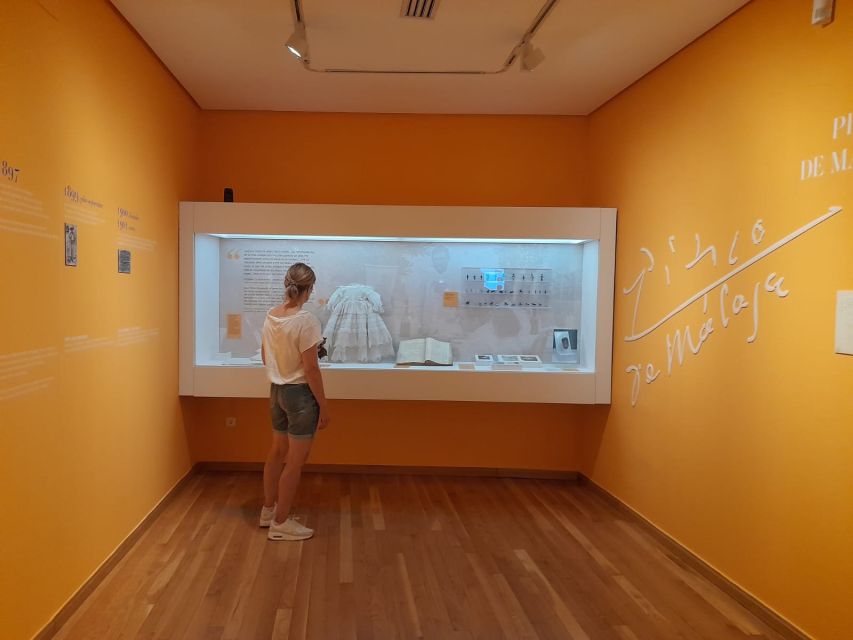
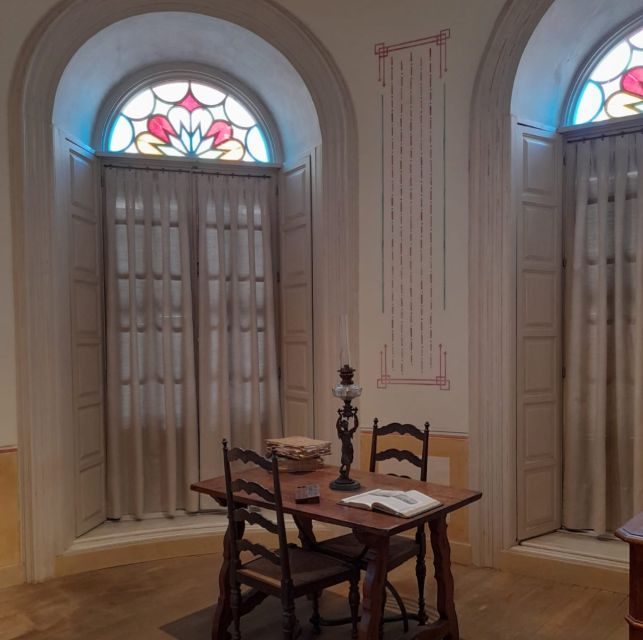
On the first floor, you will see works by Picasso and by his father, Jose Ruiz Blasco. That detail matters because it adds a real family component. Picasso is not presented as a lone genius who appeared from nowhere. You get a sense of training, early influences, and the environment that surrounded him.
As you continue, you will also encounter objects tied to his earliest years. One of the more memorable points is how physical these details feel, like:
- a baby shirt
- early shoes he learned to walk in
Small items can do big work in a biography museum. They remind you the art started as lived experience, not as a distant myth.
Thematic rooms are where the museum really earns its keep. Instead of simply listing works, it organizes the story around recurring symbols and life influences. When you walk out of the museum, you are more likely to remember themes like bullfighting imagery or the Mediterranean than you are to remember every single painting title. For many visitors, that is exactly the point.
Also within reach of Spain:
- Barcelona: Sagrada Familia Entry Ticket with Audio Guide
★ 4.6 · 105,312 reviews - Barcelona: Park Güell Admission Ticket
★ 4.4 · 76,534 reviews - Seville: Royal Alcázar Entry Ticket
★ 4.6 · 28,378 reviews - Barcelona: Casa Batlló Entry with Self-Audioguide Tour
★ 4.7 · 25,359 reviews
The temporary exhibition: Picasso reframed through other creators
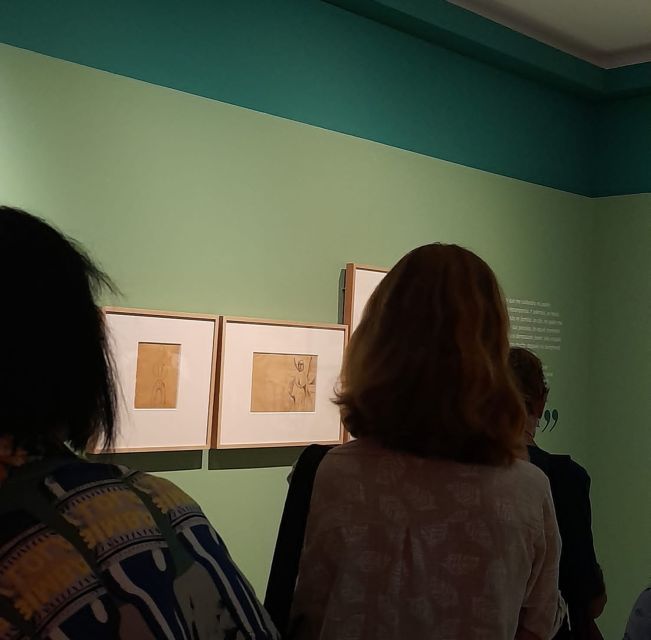
You also get access to a temporary exhibition included with your ticket. The current highlighted theme (noted as running until 28 April 2024) is designed to show Picasso as more than just the paintings people already know.
This temporary show looks at Picasso through how he appears in other media and other creators’ work, including:
- books and the press
- social networks and advertising
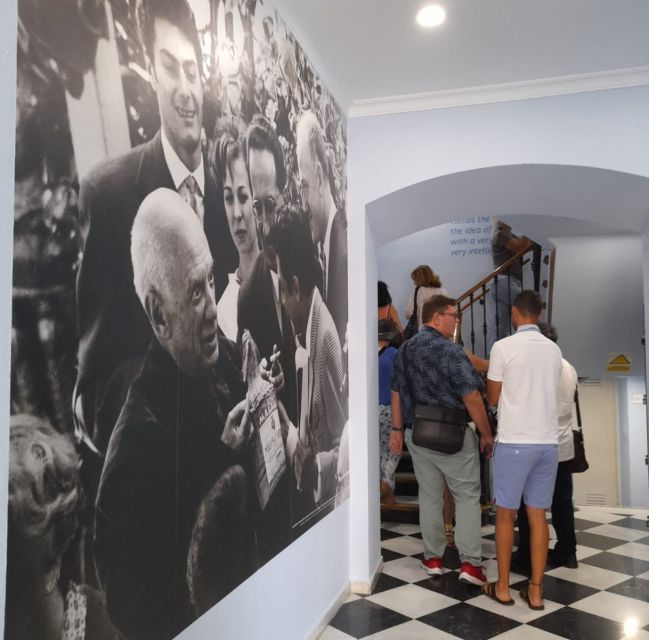
- photography
- comics
- cinema, television, and popular music
If you like Picasso as a cultural force, not only a fine-art figure, this section is a smart add-on. It turns the museum into a bridge between art history and modern media, and it helps you see how Picasso’s image and ideas keep traveling.
You will also see a Picasso-related photo component in the temporary section. Even if you do not spend ages here, it adds contrast to the birthplace portion. The house answers the question where did he start, while the temporary show asks why he still matters across modern culture.
More art than you expect: the contemporary collection in the same ticket
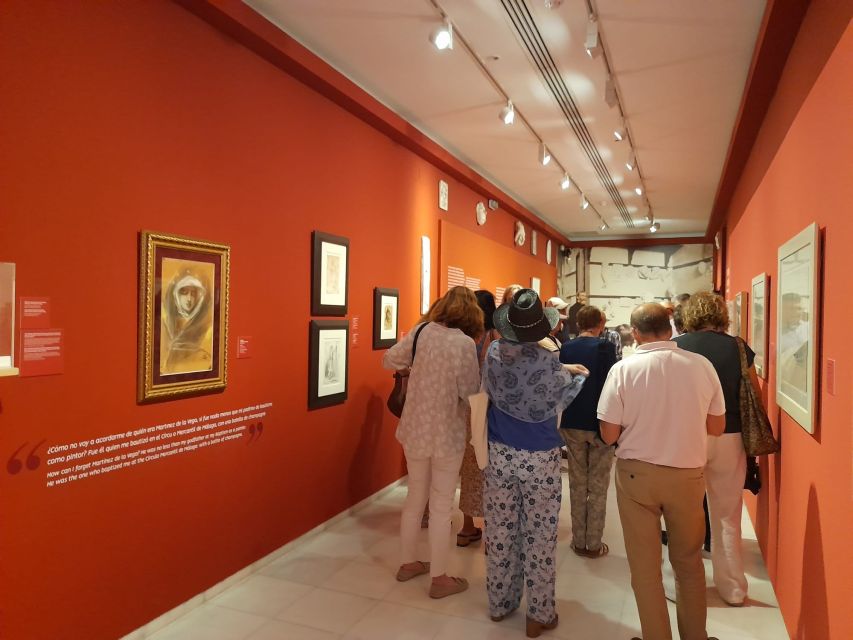
One of the most surprising parts of this museum is the contemporary layer. Alongside the Picasso-focused exhibition, the museum includes over 3,500 works of contemporary art by more than 200 artists.
You will see contemporary artists from the 1950s to the present, with an especially strong selection of graphic art. Notable names included are Miró, Bacon, Ernst, and Matta, among others.
Here is why that matters for your experience: it stops the museum from feeling like a one-note biography. In a compact visit, you still get a range of styles and approaches, which makes the museum feel less like a lecture and more like a living art space.
Think of it like this. The birthplace rooms give you the origin story. The contemporary section shows the afterlife. For many people, that combination is what makes a short museum visit feel satisfying.
Timing it in Malaga: how long to plan and when to go
The ticket is valid for 1 day from first activation. Practically, you should plan for a visit that fits into an afternoon. Because the museum is small, you will likely finish in about an hour or less, especially if you are moving efficiently through the rooms and using the audio guide only where you want more detail.
Do not wait until the last second. The museum notes that last entry is 30 minutes before closing. If you arrive late, you may have to cut your walk short.
If you want a quieter vibe, consider timing around evening. One review noted that the museum felt busy in the afternoon, but after 7 it was far more comfortable. I cannot promise that will be true every day, but it is a reasonable strategy if you hate queues.
Also keep Sunday in mind. The museum is free every Sunday from 4:00 PM until closure. That is a useful way to stretch your budget, especially if you are also visiting other Malaga highlights that day.
Practical tips to make your visit smooth
This is a straightforward museum, but a few details can make it feel easier.
First, headphones. The audio guide is included, but the museum asks you to bring your own headphones, so do not forget them.
Second, watch the motif labels. Picasso’s themes are not random, and the museum guides you toward symbols like doves and bullfighting imagery. You may also notice that some symbol translations can be tricky across languages. For example, one visitor found a label for Paloma translated as pigeon rather than dove. That small moment can actually help you understand how symbolism changes meaning when it crosses languages.
Third, use the museum’s pacing. Because it is only 9 rooms, it is easy to slow down without losing the whole day. I like to do it in two passes:
- first pass for story flow and basic context
- second pass for the motifs that grabbed me, like bullfighting scenes or dove symbolism
Lastly, it is wheelchair accessible, so you can plan a comfortable visit regardless of mobility needs.
Should you book this Picasso birthplace museum ticket?
I think you should book if you want a short, high-signal museum visit that focuses on Picasso’s origins and the Malaga influences behind the work. The birthplace house setting plus the early-life objects makes it feel personal, not academic. Add the included audio guide and the temporary exhibition, and you get a complete package for the price.
Skip booking if you only care about Picasso’s most famous large-scale works and you are looking for a massive collection. This museum is built to be compact and story-driven, and that is exactly why many people love it.
If your schedule is tight, or you already saw Picasso in bigger museums and want a different angle, this ticket is an excellent next step. You finish with a clearer sense of where the symbols came from, and you leave Malaga with Picasso grounded in place, not just in art history.
FAQ
Is the Picasso birthplace museum ticket good for one day?
Yes. The ticket is valid 1 day from the first activation.
Does the ticket include the audio guide?
Yes, the audio guide is included. The museum also asks you to bring headphones.
What languages are available for the audio guide?
The audio guide languages listed are English, Spanish, French, German, Italian, and Chinese.
What can I see besides the permanent exhibition?
Your ticket includes access to a temporary exhibition in addition to the permanent exhibition.
How many rooms are in the museum?
The permanent exhibition is presented across 9 rooms.
Is the museum ever free?
Yes. It is free every Sunday from 4:00 PM until closure. It is also free for unemployed and disabled persons.
What time should I plan my last visit?
Last entry is 30 minutes before closing.
Recently added around Spain
- Toledo Experience Tour from Madrid with optional Toledo Cathedral★ 4.5 · 703 reviews
- Madrid: Tapas Walking Tour with Food and Drinks Included★ 5.0 · 108 reviews
- Tickets for the Authentic Flamenco Show at the Madrid Theater★ 4.5 · 301 reviews
- Madrid Royal Palace and Prado Museum Private Tour with Transfers★ 5.0 · 185 reviews
- Tasty Tapas & Drinks Tour with a Rooftop Included★ 5.0 · 82 reviews
- Madrid Tapas Crawl ️Tour by FLT★ 5.0 · 269 reviews
- Prado Museum Madrid Guided Tour Semi-Private 6ppl Max★ 5.0 · 67 reviews
- Toledo Day Trip from Madrid: Cathedral & Monuments★ 5.0 · 368 reviews
Museums, compared.
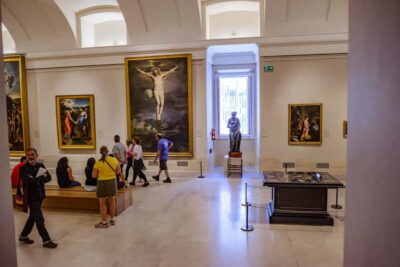

FC Barcelona Museum “Barça Immersive Tour” Ticket
Read our review →
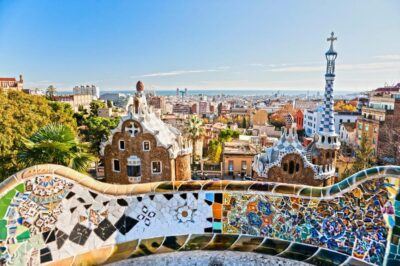
Park Güell and Gaudí House Museum Entry Ticket
Read our review →
Puro Flamenco Show with Optional Museum Ticket
Read our review →
Moco Museum Barcelona: Modern & Contemporary Art
Read our review →
Girona & Dali Museum Small Group Tour with Pick-up from Barcelona
Read our review →Browse the lists this tour appears in