Reviewed · GUIDED
Merida: Roman Theater and Amphitheater Guided Tour
Gladiators echo in Mérida’s stones. This guided walk turns the Roman Theater and amphitheater into a clear, human story, not just old walls. I like how the tour shows how spectators were seated by social rank, and I also love the practical payoff of seeing the amphitheater arena where gladiator shows happened. One thing to consider: it’s only one hour, so if you want extra time to linger on details, you’ll feel slightly rushed.
You meet at the tour office, then head straight to the buildings. Guides work in Spanish, and some are known for friendly, detail-heavy explanations, including Ana González and Luis. If you need mobility support, double-check suitability first, since the activity notes both wheelchair access and limits for people with mobility impairments.
In This Review
- Key highlights you should care about
- Where the tour starts, and why Mérida’s Roman core feels so focused
- Entering the Roman Theater through the vomitorium
- Finding the orchestra and stage, and seeing the performance layout
- How the International Classical Theater Festival fits into the same walls
- From theater music to amphitheater spectacle: moving to the gladiator ruins
- How gladiator fights were staged, and why beasts mattered
- What makes the guided approach feel worth it
- Pacing, timing, and how to make the most of the one-hour format
- Price and what you get for $23
- Language and who this tour fits best
- Should you book the Mérida Roman Theater and Amphitheater guided tour?
- FAQ
- How long is the Merida Roman Theater and Amphitheater guided tour?
- What will I visit during the tour?
- Is the tour guided, and what language is it in?
- How much does the tour cost?
- Is food or drinks included?
- Where do I meet for the tour?
- Is there an option to skip waiting in security?
- What should I bring with me?
- Is the tour wheelchair accessible?
Key highlights you should care about
- Vomitorium to cavea: you learn how seating mapped social status
- Orchestra, stage, scenic front: you connect layout to what audiences actually saw
- Gladiators in the amphitheater arena: you get the show layout, not just the ruins
- Beasts added to fights: the guide explains how spectacle escalated
- Current classical theater setting: the tour ties in the International Classical Theater Festival
- Skip-the-line via express security: you start the visit with less friction
Where the tour starts, and why Mérida’s Roman core feels so focused
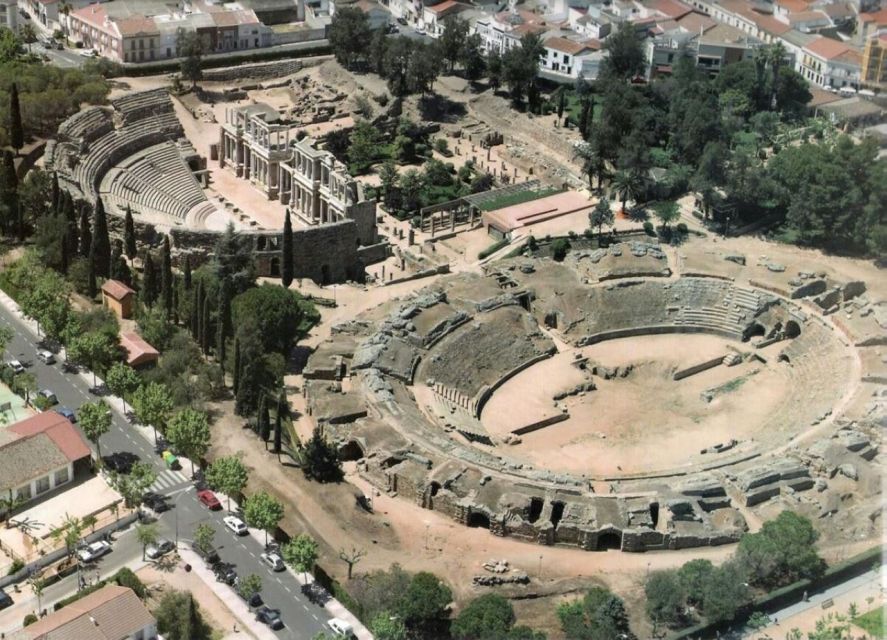
Mérida’s Roman remains are compact in a way that makes a one-hour tour feel doable. The action centers around the Roman Theater and amphitheater area, linked to Margarita Xirgu square. Instead of bouncing around town, you stay near the key sites, which means more time understanding what you’re looking at.
I also like that your guide begins with the buildings themselves, not a long lecture. You move from the modern approach into the Roman spaces, and the shift helps your brain connect “ruins” to “the place where people lived, watched, and argued over entertainment.”
The tour is priced at $23 per person for a 1-hour visit, with entry included for the theater and Roman amphitheatre. That matters because you’re paying for a guide plus access to areas you would otherwise only glance at on your own.
Other days out near Spain
- Barcelona: Sagrada Familia Entry Ticket with Audio Guide
★ 4.6 · 105,312 reviews - Barcelona: Park Guell Guided Tour with Skip The Line Entry
★ 4.7 · 17,563 reviews - Caminito del Rey Guided Tour & Welcome Pack from Málaga
★ 4.9 · 16,032 reviews
Entering the Roman Theater through the vomitorium
The first big moment is stepping inside the Roman Theater and using the same type of access point Romans used. Your guide takes you in through the vomitorium. That word can sound dramatic, but the idea is simple: it is a passage that helps people enter and move quickly toward their seats.
Once you’re in, the guide points you toward the cavea, the seating area. Here’s one of the best parts of this tour: you don’t just look at tiers. You learn how spectators were distributed according to social rank. It turns the theater from a generic “big room” into a social map.
If you’ve ever wondered why ancient venues were built to look grand, this stop answers it. Roman buildings weren’t only for entertainment. They were also for order, status, and public belonging. You can practically feel the logic of who sat where, and why the design mattered.
Practical note: bring comfortable shoes. Even though it’s not a hike, you’re walking and standing on uneven surfaces and moving through interior pathways.
Finding the orchestra and stage, and seeing the performance layout
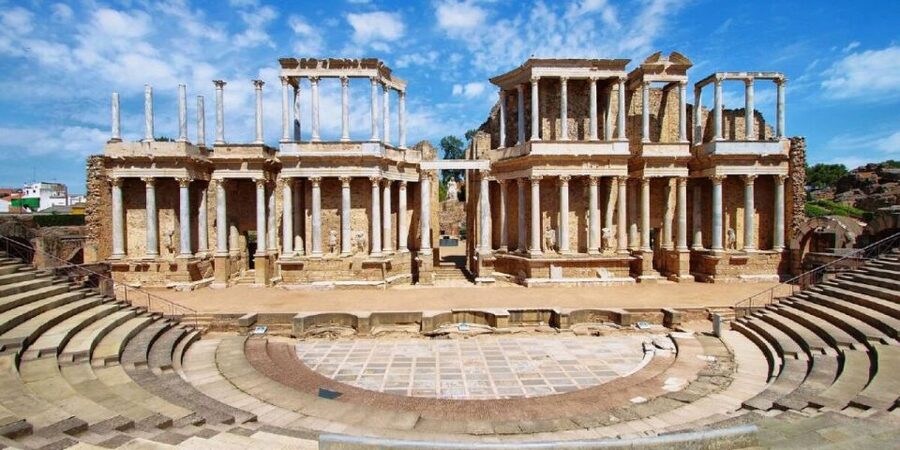
In the Roman Theater, the guide helps you understand the space in terms of sightlines and roles. You’ll hear about the orchestra, where a choir would be placed, plus the stage area where performances took place.
This is where the tour stops being visual and becomes interpretive. The orchestra is not just a “front area.” It is the working zone that connects the performers and the audience. When your guide explains how those parts relate, you start seeing the theater like a stage manager would, with everything positioned to keep attention on the action.
Then you look behind the stage at the scenic front. This is one of the most recognizable symbols of Mérida’s theater. Your guide frames it as more than decoration. It was part of the show machinery, shaping how audiences experienced performances.
If you like architecture that tells a story, this stop is for you. And if you’re less into history, it still works because it answers the question, what did it feel like to be there?
How the International Classical Theater Festival fits into the same walls
You also connect what you see to the present. Your guide mentions the International Classical Theater Festival currently taking place in the building, and explains how it came about and to whom it is due.
This is useful in a practical way. When you know a venue is still used, you stop treating it like a museum exhibit. You start to notice performance-friendly design, like how the spaces guide sound and focus.
It’s also a good reality check: a theater that still hosts classical work is not just historically important. It is functional. That makes the Roman layout feel less like a lost world and more like a reused idea.
I’d still set expectations realistically. The tour is 1 hour total, so the festival context is a piece of the story, not a full cultural deep dive. But it gives you a smart lens for the time you spend in the theater.
Also within reach of Spain:
- Barcelona: Park Güell Admission Ticket
★ 4.4 · 76,534 reviews - Seville: Royal Alcázar Entry Ticket
★ 4.6 · 28,378 reviews - Barcelona: Casa Batlló Entry with Self-Audioguide Tour
★ 4.7 · 25,359 reviews - Seville: Cathedral and La Giralda Entry Ticket
★ 4.5 · 24,592 reviews
From theater music to amphitheater spectacle: moving to the gladiator ruins
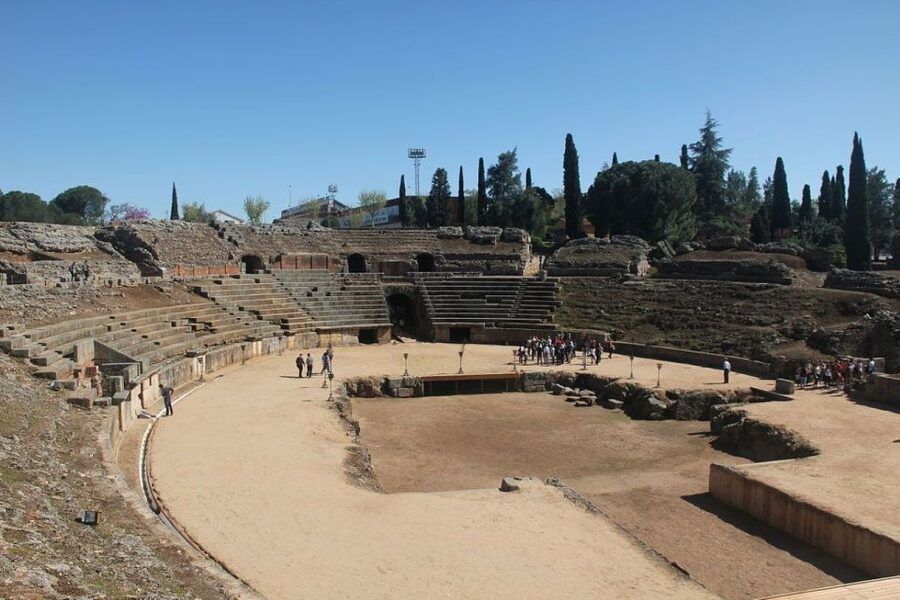
Next door, you shift from performances that rely on performers and crowds watching together, to a different kind of Roman show. You visit the remains of the Roman amphitheatre, which is smaller than Rome’s big names, but your guide makes the comparison in a grounded way.
You get the key point: you can’t judge impact by size alone. The amphitheater’s design supported the shows people came for, especially gladiator fights. This is also where the tour’s energy changes. You’re no longer imagining a staged story. You’re imagining a crowd reacting to real danger.
Your guide brings you to the amphitheater arena so you can picture how the fights were staged. That access helps a lot, because amphitheater layouts are hard to grasp from the edges. Being in the arena area gives you the “where would I be” perspective.
How gladiator fights were staged, and why beasts mattered
One of the tour’s most memorable explanations is about the gladiator fights being acclaimed by the colony’s citizens. The guide then adds another layer: fights gained even more popularity when wild beasts were brought into the show.
That detail does two things for me. First, it explains why the amphitheater needed to be designed for more than one type of spectacle. Second, it helps you understand Roman entertainment as a spectrum of escalating thrills, not just a single sport.
When your guide describes the arena experience, you start noticing how the space would control movement and attention. You can almost map where the crowd would look, where the action would happen, and how the show could intensify.
If you come to Mérida expecting “Roman ruins,” this stop often flips your expectations. It turns the site into a venue, with a rhythm and a crowd psychology your brain can follow.
What makes the guided approach feel worth it
At $23 for a 1-hour guided tour with entry included, the value comes from what a guide can translate. A guide points out features like the vomitorium, orchestra, stage, and scenic front, and then connects them to social order and performance function.
On my end, the best indicator is how the guides communicate. The tour experience is strongly tied to clear, friendly explanations. People also mention that some guides actively involve you, not just talk at you. That matters because it keeps the hour from turning into passive listening in a sunlit monument.
You should still plan for a condensed pace. One hour is enough to learn the core layout and story, but it won’t satisfy a “slow traveler” who wants to sit for a while and sketch every detail.
Pacing, timing, and how to make the most of the one-hour format
This is a quick tour, so I recommend treating it like a strong orientation. You’ll see the theater inside, learn the layout, then move to the amphitheatre remains and arena. The order makes sense because the theater teaches the logic of Roman public entertainment, then the amphitheater shows the extreme end of that logic.
Plan to arrive with a calm mindset. The tour moves from space to space, and you’ll likely want to stop and look when your guide points something out. If you’re the type who reads every plaque, you may wish you had more time, because the focus is on spoken explanation and spatial understanding.
Also, wear comfortable clothes you can stand in. You’re indoors for parts of the theater, but you’re still moving around enough that restrictive outfits become annoying fast. Comfortable shoes are the real MVP here.
Price and what you get for $23
Let’s talk value honestly. $23 per person is not a bargain you can dismiss, but it is also not sky-high for a guided experience that includes entry to both the theater and Roman amphitheatre.
The strongest value points are:
- a live Spanish guide
- access inside the theater areas you’d otherwise miss
- entrance to the Roman amphitheatre remains
- skip-the-line through an express security check
The skip-the-line piece is underrated. Ancient sites can have unpredictable bottlenecks, and saving time helps you keep the hour focused on the explanation, not the wait.
What you should bring yourself is simple: food and drinks are not included. If you’re hungry, plan a snack before or after, or you’ll spend the tour thinking about your stomach instead of the vomitorium.
Language and who this tour fits best
The tour guide speaks Spanish. If you’re comfortable with Spanish, you’ll probably enjoy it more, because the explanation style is part of what makes the sites click.
This tour is a good match for:
- First-timers who want the Roman Theater and amphitheatre story in a single hour
- People who like architecture and layout, not just dates
- Anyone curious about how Romans organized public entertainment and social hierarchy
It can be a weaker match if you need lots of independent time. Since it’s a guided circuit, you’ll follow along rather than wander at your own pace.
And there’s a note to take seriously. The activity says wheelchair accessible, but it also lists that it is not suitable for people with mobility impairments. That contradiction means you should contact Activa Tours ahead of time and ask what the route looks like on the ground. Don’t assume one line cancels the other.
Should you book the Mérida Roman Theater and Amphitheater guided tour?
I’d book it if you want your one-hour time in Mérida to count. This tour gives you the spatial logic you need to understand what you’re seeing, from the vomitorium and cavea seating by rank to the orchestra, stage, scenic front, and then the gladiator-focused arena.
Skip it if you already know the seating layout and amphitheater basics, and you just want photos. For everyone else, a guide turns the experience from scenery into story, and the $23 price feels fair for what is included, especially with express security handling.
If you’re even slightly curious about how public entertainment worked in Augusta Emerita, this is a smart way to spend an hour, you’ll leave with clear mental pictures that make future monuments easier to read.
FAQ
How long is the Merida Roman Theater and Amphitheater guided tour?
The tour lasts 1 hour.
What will I visit during the tour?
You’ll visit the Roman Theater (inside) and the remains of the Roman amphitheatre, including access to the amphitheatre arena.
Is the tour guided, and what language is it in?
Yes, it includes a live tour guide who speaks Spanish.
How much does the tour cost?
The price is $23 per person.
Is food or drinks included?
No, food and drinks are not included.
Where do I meet for the tour?
The meeting point is the Activa Tours office.
Is there an option to skip waiting in security?
Yes, the tour includes express security check to help you skip the line.
What should I bring with me?
Bring comfortable shoes and comfortable clothes.
Is the tour wheelchair accessible?
The activity lists wheelchair accessibility, but it also states it is not suitable for people with mobility impairments. It’s worth checking with Activa Tours directly before you go.
Recently added around Spain
- Atletico de Madrid Stadium & Interactive Museum Admission Ticket★ 4.5 · 183 reviews
- Photographic tour of Madrid with a professional photographer★ 5.0 · 104 reviews
- Madrid Old Town Donation-Based Walking Tour★ 5.0 · 109 reviews
- Royal Palace of Madrid Small Group Skip the Line Ticket★ 4.5 · 662 reviews
- Wine Tasting near Plaza Mayor in Madrid★ 5.0 · 210 reviews
- Audio Guided Tour of the Bullring of Las Ventas in Madrid★ 4.5 · 290 reviews
- Prado Museum with Reina Sofia Museum Guided Tour★ 4.0 · 311 reviews
- Historic Madrid Virtual Reality Experience with an Official Guide★ 5.0 · 214 reviews
Guided, compared.
Sagrada Familia Entry Ticket with Audio Guide
Read our review →
Park Guell Guided Tour with Skip The Line Entry
Read our review →
Caminito del Rey Guided Tour & Welcome Pack from Málaga
Read our review →
Caminito del Rey: Guided Tour and Entry Ticket
Read our review →
Skip-the-Ticket-Line Mosque-Cathedral Guided Tour
Read our review →

Cathedral, Giralda & Alcazar Entry With Guided Tour
Read our review →