
Reviewed · MUSEUMS
Reina Sofia Museum Guided Tour in Madrid
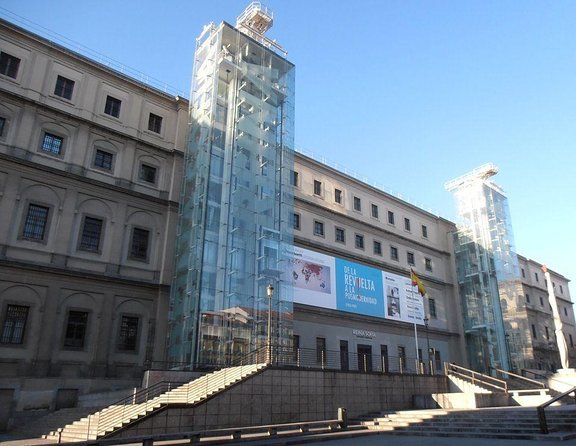
Guernica hits harder with a guide. This Reina Sofía tour is interesting because it links the museum’s former hospital setting to the stories behind major works like Picasso’s and Dalí’s, with special attention to Cubism and Surrealism, then lands on Guernica. I like that the group is capped at 15 people, and that the art historian-style explanations can be very clear, with guides such as Flor and Gabriela highlighted for making the movements make sense, but the main drawback is simple: the 1 hour 15 minutes format means you will see only a selection, not the whole museum.
You meet at C. de Sta. Isabel, 52, Centro 28012 Madrid, by the statue outside the main entrance, then head inside to follow a guided path through the modern galleries. The tour runs about 1 hour 15 minutes, includes your entrance ticket, and it ends back at the meeting point, with the option to stay longer in the museum after the guided portion.
In This Review
- Key points to know before you go
- Reina Sofía in an old hospital: why the building matters
- The 1 hour 15 route: what you realistically see
- Guernica and the Spanish modern masters, explained in plain language
- Cubism, Surrealism, and modernism: when art movements click
- Meeting point, statue confusion, and how to avoid missing the tour
- Inside rules: no photos, lockers, and where to listen
- Price and value: is $34.99 a smart buy?
- Who should book this tour, and how to plan your day
- Should you book this Reina Sofía guided tour?
- FAQ
- How long is the Reina Sofía guided tour?
- What is the price of the tour?
- Is the museum admission included?
- How many people are in a group?
- Is the tour available in English or Spanish?
- Can I take photos inside the museum?
Key points to know before you go
- Small group size (max 15) helps you follow the guide without losing the thread.
- Guernica is the centerpiece, and you get context for why it matters.
- The museum is in an old hospital building, so the route through halls feels part history, part maze.
- Focus is on Cubism, abstractionism, Surrealism, and modernism, not a random walk.
- No photos inside means you will rely on what you learn and what you can sketch in your head.
- Some visits rely on audio headsets, so if sound seems off, act fast and tell the guide right away.
Reina Sofía in an old hospital: why the building matters
The Reina Sofía is not just another art box. It sits in a former hospital complex, which gives the visit a slightly hushed, architectural feel even when you are surrounded by famous works. That matters because the museum’s layout can feel non-linear. With a guide, you are not just looking at art, you are learning how to move through the spaces the way the museum expects you to.
I like this setup because modern art can feel slippery when you are doing it solo. A good guide gives you hooks, like how abstractionism and Cubism changed how artists pictured reality, and how Surrealism pushed the idea even further. When you are standing in front of Guernica, that framing makes the painting hit more clearly. You still need to sit with it, but you are not starting from zero.
Your tour also takes in the museum’s identity as a Spanish modern-art hub. You will see major Spanish names like Pablo Picasso, Salvadori Dalí, and Joan Miró. International artists are not the main focus, but the guide may point out standouts like the Mexican painter Diego Rivera, plus temporary exhibitions that are running during your visit. In other words, it is not just a greatest-hits loop. It is a story about how Spanish modernism connects to broader currents.
Other days out near Madrid
- Madrid: Prado Museum Entry Ticket
★ 4.6 · 20,699 reviews - Madrid: Reina Sofía Museum Entrance Ticket
★ 4.5 · 8,788 reviews - Madrid: Small Group of Prado Museum Tour & Optional Tapas
★ 4.6 · 2,437 reviews
The 1 hour 15 route: what you realistically see
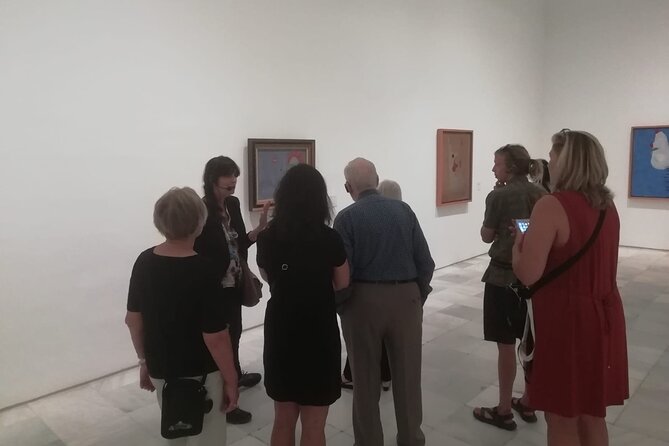
This tour is short by design. At about 1 hour 15 minutes, it is built for getting oriented and understanding the key works, especially the ones people come for first. That means you should expect to see less than a full circuit of the museum galleries. Some guests felt the tour covered only a small number of pieces, which can be true if you love one artist and want to compare everything they did.
The upside is that the guide is able to slow down on fewer works. You do not just get a label and a shrug. You get explanation of styles and how to read what you are looking at, including how artists organize shapes, perspective, and emotion. That is why even people who love the museum sometimes still prefer a guided hit-and-learn format at the start, then use the rest of the day to wander at your own pace.
My advice: treat the guided portion like a starter kit. If Guernica and the big Spanish names are your priority, this length can be perfect. If you are the type who wants to spend 20 minutes per room and build your own track through the collection, plan to come back after the tour ends, or add independent time the same day. The good news is the tour ends with you back at the museum area, and you can stay longer if you want.
Guernica and the Spanish modern masters, explained in plain language
The main reason this tour exists is Guernica. The painting is powerful on its own, but it becomes more meaningful when you learn the art history and context behind it. On this guided visit, the route is structured so you do not just see it, you understand why it has mattered far beyond Spain.
You can also expect time and attention given to major figures in Spanish modern art. Picasso is part of the core plan, and you will see related works by artists like Salvador Dalí and Joan Miró. The guide typically uses these names to explain shifts in style, not just to drop titles. That approach is especially helpful if modern art feels intimidating. Instead of thinking you need to decode everything yourself, you get a set of tools to interpret what you are seeing.
One more useful point: the museum includes temporary exhibitions alongside the permanent collection. Your guide can help you notice what is special during your dates, instead of you spending precious minutes trying to figure out what changed and what is always there.
Cubism, Surrealism, and modernism: when art movements click
This is a museum tour that actually explains movements. You will hear about abstractionism and Cubism, plus Surrealism and modernism, with an art-expert guide guiding you through the ideas as you walk.
Here is what I think makes that valuable for you: modern art movements can sound like school terms until you stand in front of the work and see how those ideas behave. A guide can point out how shapes fracture in Cubism, how logic slips in Surrealism, and how abstractionism changes the artist’s goal from copying the world to interpreting it. When the guide does that well, the museum stops being random.
Some guides named in customer feedback have been especially praised for this part. Flor is mentioned for history and context around Spanish painters. Gabriela is highlighted for helping people understand Cubism and Surrealism, then tying it to Guernica. Helena is credited with breaking down complex pieces in a way that felt approachable. You are not guaranteed a specific guide, but the overall format is clearly designed for explanation, not just proximity to famous paintings.
Two practical considerations though. First, the tour uses audio headsets according to guest notes, so try to get your headset sorted early. Second, if your guide’s English or audio is hard to follow, speak up. A couple of people reported audio clarity issues, so it is not crazy to ask for a quick adjustment on the spot.
Also within reach of Madrid:
- Madrid: Tour Bernabéu Entry Ticket
★ 4.5 · 21,573 reviews - Madrid: “Emociones” Live Flamenco Performance
★ 4.8 · 12,866 reviews - Madrid: Panoramic Route City Tour
★ 4.1 · 12,259 reviews - Madrid: Live Flamenco Show with Food and Drinks Options
★ 4.5 · 9,901 reviews
Meeting point, statue confusion, and how to avoid missing the tour
Meet at C. de Sta. Isabel, 52, Centro, and your guide is supposed to meet you by the statue outside the main entrance. That sounds simple, but the museum area has multiple ways you can approach, and some people reported map directions sending them to the wrong side of the complex.
So here is your best move: arrive early and use the address plus the statue landmark, not just a phone map route. Stay by the tall statue outside the main entrance until you confirm your guide is there. If you are early, do not wander into side entrances just because the map looks convenient.
Also, start time is listed as 12:45 pm. If you are coming from another museum or a lunch stop, leave buffer time for getting oriented. The museum entrances can be confusing even when you are close. One thing you can control is your own timing and where you stand when the group assembles.
Finally, note the tour ends back at the meeting point, which helps once you know where that is. But for the first-time visit, the key is still the same: find the statue meeting spot and do not let the museum’s multiple doors pull you away.
Inside rules: no photos, lockers, and where to listen
Reina Sofía has clear rules that affect your comfort. Photography is not allowed inside the museum. That means you should rely on the guide’s explanations and your own memory more than your camera roll.
Storage is another big factor. Notes from past visits say large bags and drinks are not allowed inside, and you will need to use lockers. If you are traveling with a backpack or shopping bags, pack light where you can, or plan time at lockers. This can easily steal minutes from your tour if you show up overloaded.
Seating is also limited while listening. One guest mentioned there is nowhere to sit inside galleries while the headset narration is happening. That is not a deal-breaker, but it does affect people who want a slower pace. If you prefer to rest while learning, consider planning a short break on your own after the guided portion ends.
And again, because headsets are mentioned in feedback, treat the audio setup like a mini check-in. Get volume set, keep the headset on, and if anything sounds wrong, tell the guide immediately so you are not missing half the story.
Price and value: is $34.99 a smart buy?
At $34.99 per person, this is not the cheapest way into a museum, but it is also not trying to be. Your price includes the Reina Sofía entrance ticket and a professional guide who is an art historian type. You are also paying for time-saving navigation inside a museum that can be hard to read on your own.
For value, ask yourself what you want most. If you want to understand Guernica, Picasso, Dalí, and Miró in a way that connects Cubism and Surrealism to what you see, a guided hour can be worth it. Many people leave feeling that the art became more legible, not just more famous.
If you want to see everything, this price is less compelling because the tour focuses on highlights and key works, and the time is fixed at about 1 hour 15 minutes. In that case, you might pair the guided tour with additional independent museum time, so you are not forced to choose between learning and exploring.
One more angle: the tour cap is 15 people. Smaller groups often lead to better Q and a and less standing around waiting for someone to catch up. If you hate feeling lost in big crowds, that matters.
Who should book this tour, and how to plan your day
This tour fits best when you want structure. It is a strong choice if you are combining museums in Madrid and you want the Reina Sofía story told in a tight window. It is also a good match if modern art is new to you and you want an expert to translate the why behind the style.
It is also practical for language needs. The tour is guided in English or Spanish, and it is described as bilingual, with explanations in both English and Spanish simultaneously. If you are bilingual or you are traveling with mixed language preferences, that can be useful.
Family-wise, children must be accompanied by an adult. Service animals are allowed. The museum is near public transportation, so you should have an easier time getting there without relying on a car.
The biggest planning tip is time. If you only have a morning or a short afternoon window, this guided format helps you hit the museum’s core themes fast. If you have more time, you will likely enjoy using the tour to get oriented, then returning for slower looking after the tour ends.
Should you book this Reina Sofía guided tour?
Book it if Guernica is on your Madrid must-see list and you want modern art movements explained in a way that helps you stand in front of the work and understand what you are seeing. The small group size and inclusion of the entrance ticket make the price feel more grounded, and the best part is how the guide connects style to meaning.
Skip it or add extra time if you are the type who wants to cover lots of rooms and spend long stretches on many individual paintings. This tour is about focus, not coverage. If you plan to come back after the guided portion, you will get the best of both worlds: an expert start, then your own wandering at your pace.
FAQ
How long is the Reina Sofía guided tour?
It runs for about 1 hour 15 minutes.
What is the price of the tour?
The price is $34.99 per person.
Is the museum admission included?
Yes. Entrance to the Reina Sofía is included.
How many people are in a group?
The tour has a maximum of 15 travelers.
Is the tour available in English or Spanish?
Yes. It is offered in English, and the tour is described as bilingual in English and Spanish.
Can I take photos inside the museum?
No. Photography is not allowed inside the museum.
Recently added around Madrid
- Toledo Experience Tour from Madrid with optional Toledo Cathedral★ 4.5 · 703 reviews
- Madrid: Tapas Walking Tour with Food and Drinks Included★ 5.0 · 108 reviews
- Tasty Tapas & Drinks Tour with a Rooftop Included★ 5.0 · 82 reviews
- Tickets for the Authentic Flamenco Show at the Madrid Theater★ 4.5 · 301 reviews
- Madrid Royal Palace and Prado Museum Private Tour with Transfers★ 5.0 · 185 reviews
- Madrid Tapas Crawl ️Tour by FLT★ 5.0 · 269 reviews
- Prado Museum Madrid Guided Tour Semi-Private 6ppl Max★ 5.0 · 67 reviews
- Toledo Day Trip from Madrid: Cathedral & Monuments★ 5.0 · 368 reviews
Museums, compared.

FC Barcelona Museum “Barça Immersive Tour” Ticket
Read our review →
Park Güell and Gaudí House Museum Entry Ticket
Read our review →
Puro Flamenco Show with Optional Museum Ticket
Read our review →
Moco Museum Barcelona: Modern & Contemporary Art
Read our review →
Girona & Dali Museum Small Group Tour with Pick-up from Barcelona
Read our review →Browse the lists this tour appears in