
Reviewed · AUDIO TOURS
Salamanca: Cathedral of Salamanca Ticket with Audio Guide
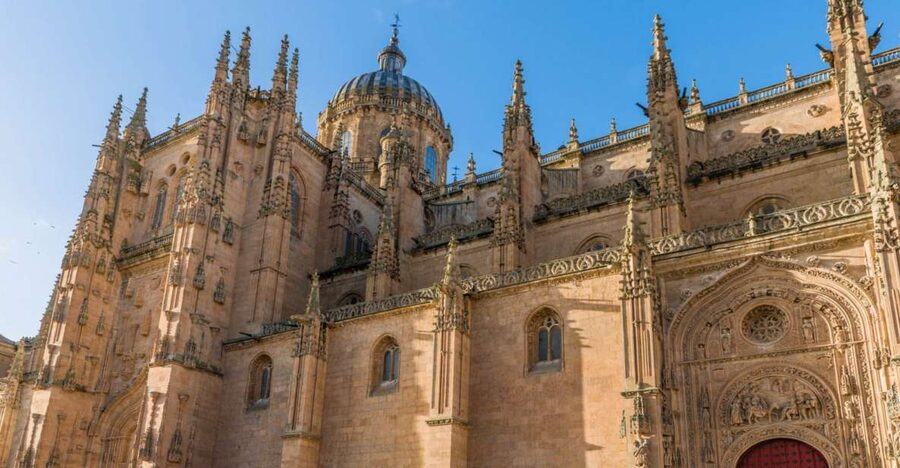
A cathedral that rewards slow walking. This ticket gets you inside the Cathedral of Salamanca with an audio guide so you can make sense of the details as you go. I love the chance to see both the New and Old Cathedral spaces, and I love that the audio guide is available in multiple languages. One heads-up, some visitors say the cathedral does not provide phones or audio hardware on site, so plan accordingly.
The best part is control. You follow a suggested route when you want a hand, then you stop when something grabs you. You can linger under the high vaults, study carvings up close, and take in stained glass the way it is meant to be seen, with time.
The cathedral complex is big, though. If you only have a short attention span, you might feel rushed trying to fit everything in one day.
In This Review
- Key highlights worth your attention
- Your ticket gives more than one room
- Audio guide: how to actually use it in a cathedral
- Inside the cathedral: what you will notice right away
- New Cathedral spaces: vaulted scale, stone details, and light
- The altarpiece moment: Retablo Mayor and the 53 panels
- Transept and choir stalls: where you can feel the building think
- Chapels and side spaces: why the cathedral feels personal
- Cloister and chapter halls: a calmer pace inside the same complex
- Episcopal Palace exhibitions and the VR add-on
- Timing for a 1-day visit, without feeling trapped
- Value check: is $11 a smart use of time?
- Who this is best for
- Final call: should you book this cathedral ticket with audio guide?
- FAQ
- What does the ticket include for Salamanca Cathedral?
- How long is the experience?
- Is there a live guide included?
- Where do I show my ticket?
- Which languages are available for the audio guide?
- Does the ticket include transportation to the cathedral?
- Is the cathedral visit self-paced?
- Is the audio guide included in the ticket price?
- Can I cancel and get a full refund?
- Can I reserve without paying right away?
Key highlights worth your attention
- Audio guide in 6 languages lets you pick the version that matches your comfort level
- Access across multiple areas includes New Cathedral, Old Cathedral, cloister, and chapter halls
- Retablo Mayor focus with the famous 53-panel altarpiece you can look at calmly
- Cathedral art and craftsmanship stops including choir stalls and transept highlights
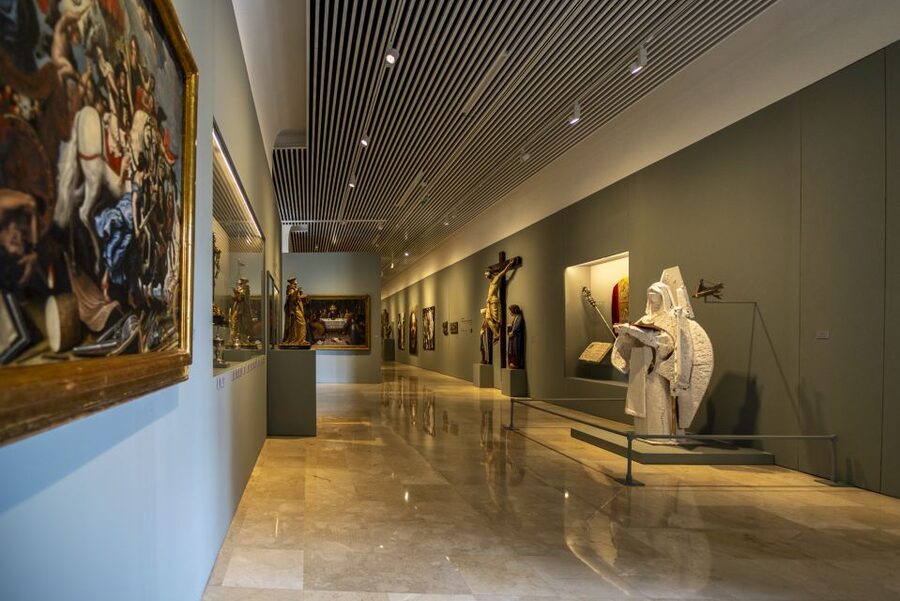
- Episcopal Palace exhibitions plus VR add context without needing a live guide
Your ticket gives more than one room
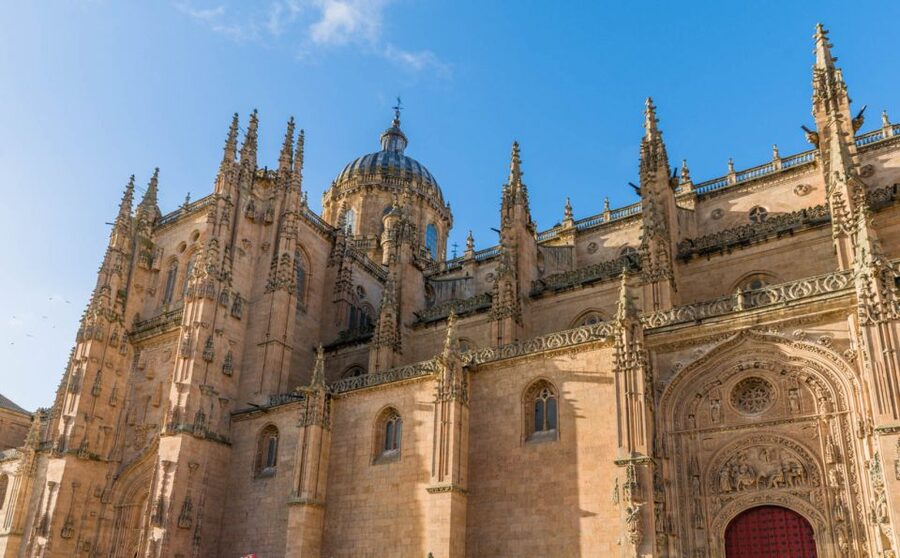
This is not just a quick look at one nave. Your entrance covers a whole slice of the cathedral complex, including the New Cathedral, Old Cathedral, the cloister, and the chapter halls. That matters because Salamanca Cathedral is easier to understand when you can bounce between spaces, styles, and viewpoints instead of being funnelled through a single route.
You also get access to exhibitions connected with the Episcopal Palace of Salamanca. Even if you are not a museum person, the exhibitions help connect what you see in stone and glass to the people and institutions tied to the cathedral over time.
And then there is the VR experience. It is included with the ticket, so it is a bonus if you like a little tech on a historical visit. It also helps if you want a reset after you have been staring upward for a while.
Other days out near Spain
- Barcelona: Sagrada Familia Entry Ticket with Audio Guide
★ 4.6 · 105,312 reviews - Barcelona: Park Güell Admission Ticket
★ 4.4 · 76,534 reviews - Seville: Royal Alcázar Entry Ticket
★ 4.6 · 28,378 reviews
Audio guide: how to actually use it in a cathedral
The audio guide is one of the main reasons this works well. It is available in Spanish, English, French, German, Italian, and Portuguese, and you are free to explore at your own pace. The guide gives you a suggested route, so you do not spend your first few minutes wondering where to go next.
Here is how I think about using an audio guide in a cathedral:
- Pick your language, then start early enough that you can follow the route for the big features.
- When you hear a section that points to something specific, pause and look up at that exact spot.
- If you zone out or fall behind, do not panic. Cathedrals are full of repeated patterns. You can still enjoy the artwork and architecture even when you miss one story beat.
One practical caution: there is a real possibility that the site may not hand out audio phones or headphones. I would not count on equipment being provided for you. If you have your own headphones, bring them. If you use your phone, make sure you can access your audio playback easily before you arrive. That small prep can save your visit from unnecessary frustration.
Inside the cathedral: what you will notice right away
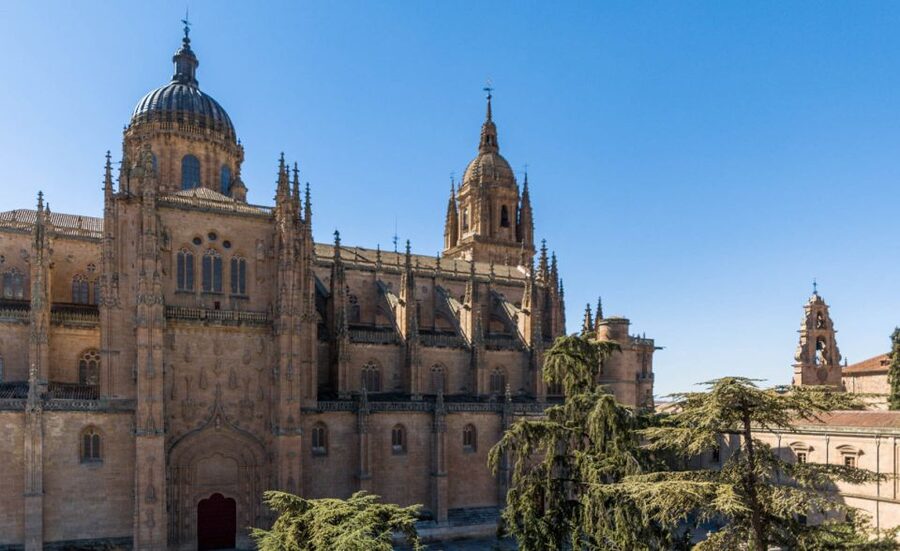
Expect a serious wow factor the moment you enter. You will see soaring vaulted ceilings, intricate stone carvings, and stained glass that changes the feel of the room depending on where the light is landing. This is the kind of building where details reward closer inspection. From a distance it is grand. Up close it is busy, thoughtful, and full of small work that took time.
The audio guide is useful here because it helps you connect what you are seeing to why it exists. Instead of treating carvings as decoration, you start noticing themes and craftsmanship choices.
Also, do not rush past the stonework. When you slow down, carvings stop looking like random ornament and start looking like intentional storytelling. That is where the cathedral clicks.
New Cathedral spaces: vaulted scale, stone details, and light
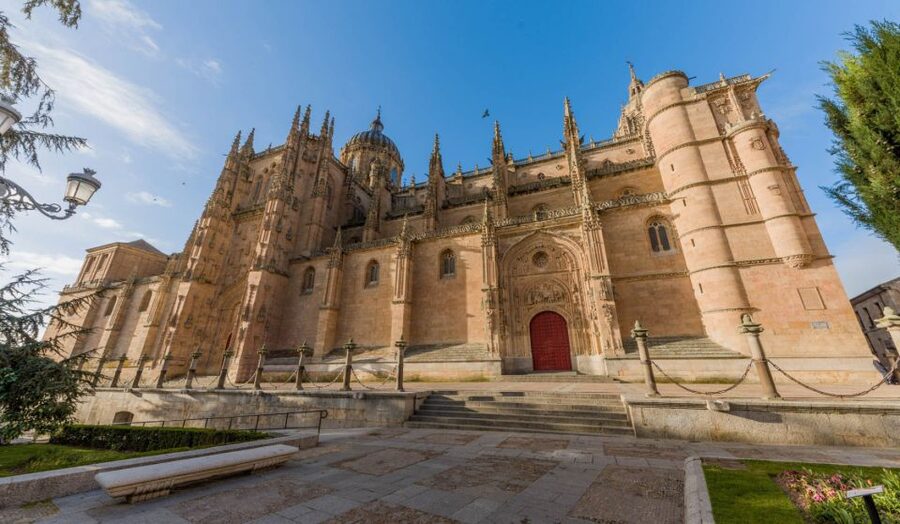
The New Cathedral area is where you will likely spend time absorbing the vertical drama. This is also where the architecture tends to do most of the explaining. The vaults pull your eyes upward, and the stone carvings give you something to do while you are looking around.
As you walk, use the audio guide as a timing tool. When it highlights a feature, pause. When it moves on, keep moving. That way you avoid the classic problem of cathedrals, staring for 30 minutes at something that was meant to take 2.
Stained glass is another reason not to rush. It can be hard to appreciate the color and the effect if you are only glancing. Spend a few minutes letting your eyes adjust, then look at the glass from different spots in the room. Even without a technical explanation, the difference in light angle makes the experience feel more alive.
Also within reach of Spain:
- Barcelona: Casa Batlló Entry with Self-Audioguide Tour
★ 4.7 · 25,359 reviews - Seville: Cathedral and La Giralda Entry Ticket
★ 4.5 · 24,592 reviews - Barcelona: Montjuïc Cable Car Roundtrip Ticket
★ 4.5 · 22,368 reviews - Madrid: Tour Bernabéu Entry Ticket
★ 4.5 · 21,573 reviews
The altarpiece moment: Retablo Mayor and the 53 panels
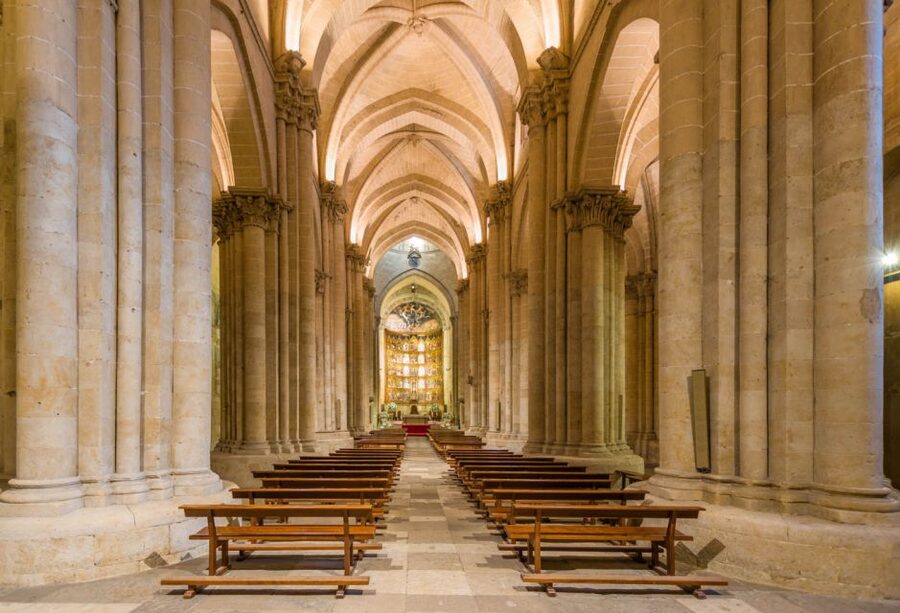
If you want one focal stop that anchors your visit, make it the retablo Mayor. It is described as an impressive 53-panel altarpiece. Standing in front of it is like hitting the pause button in a moving story.
Do not try to read every panel at once. Instead, pick a few that catch your eye, then use the audio guide to guide your attention. Start with broad shapes, then step closer to see the craftsmanship. The point of an altarpiece is not speed viewing. It is contemplation.
This is also where art history lovers benefit most. Even if you are not an expert, you can still appreciate what it took to coordinate design across so many panels. The result feels complete, like a whole work built to be seen over time.
Transept and choir stalls: where you can feel the building think
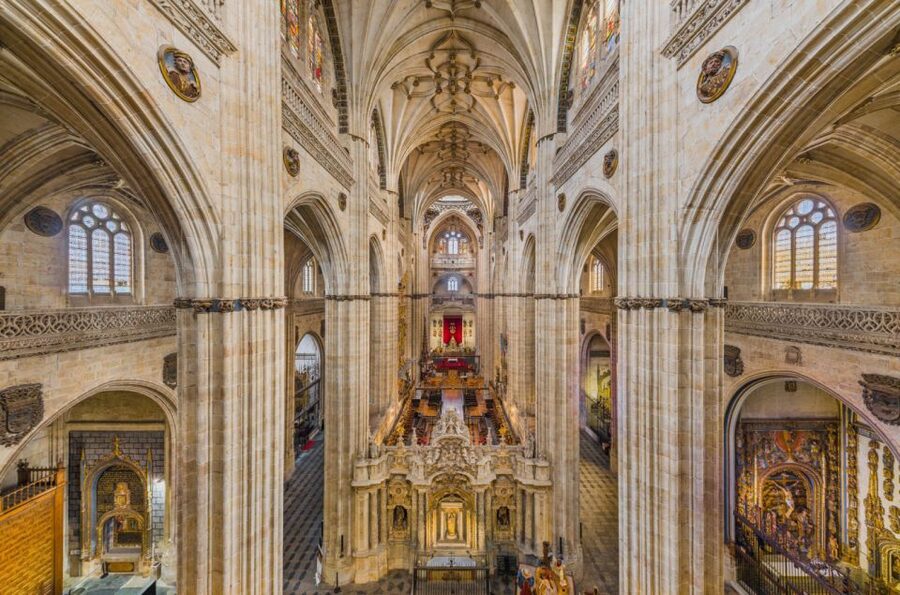
The cathedral experience is not only about big, open views. The transept and the choir stalls are important because they show how the space supports the human side of worship, and how that connects to design choices.
The transept often gives you a different angle on the main structure. That shift matters because it helps you understand how the cathedral is laid out. You get a better sense of where you are standing relative to the central areas.
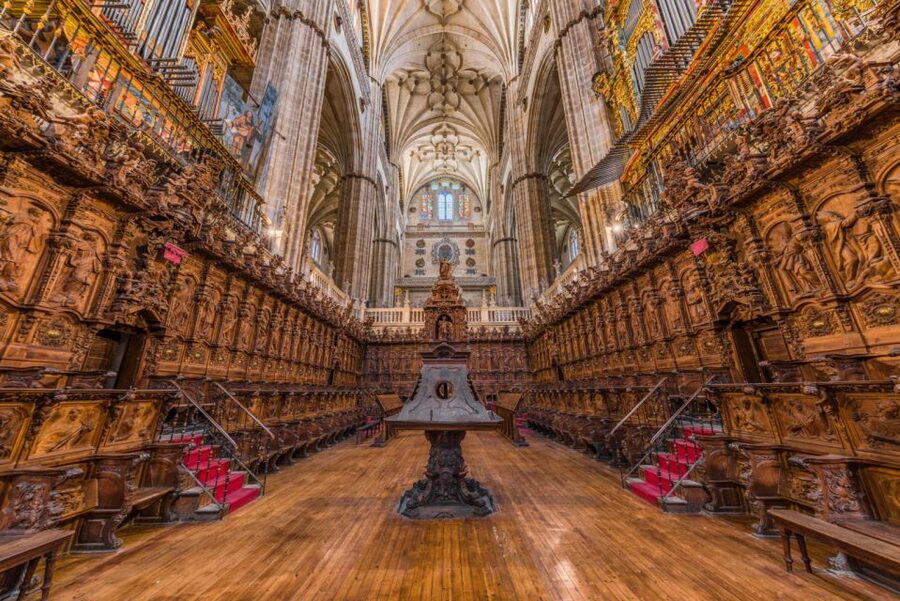
The choir stalls reward careful looking too. They are the kind of detail you can miss if you keep your head in the clouds. Slow down here, look at the craftsmanship, and then use the audio guide to tie it back to function and design.
If you like art, this is the part of the visit where you start seeing the building as a crafted environment, not just a big room.
Chapels and side spaces: why the cathedral feels personal
As you move through the chapels, you will see that each space has its own personality. That is the beauty of cathedral complexes like this one. Even when the overall style feels consistent, the decoration and architectural choices shift from room to room.
This is also where the audio guide can help you understand devotion expressed through design. You do not have to be religious to appreciate what people were trying to create. You can read it as a visual language, a way of building meaning into stone.
Take your time in these areas. Chapels are easier to enjoy when you give yourself permission to stop. If you feel your brain racing, follow the audio guide until it points out a detail, then give it 60 to 90 seconds of quiet attention. You will be surprised how much better the visit feels when you stop treating side spaces as checkpoints.
Cloister and chapter halls: a calmer pace inside the same complex
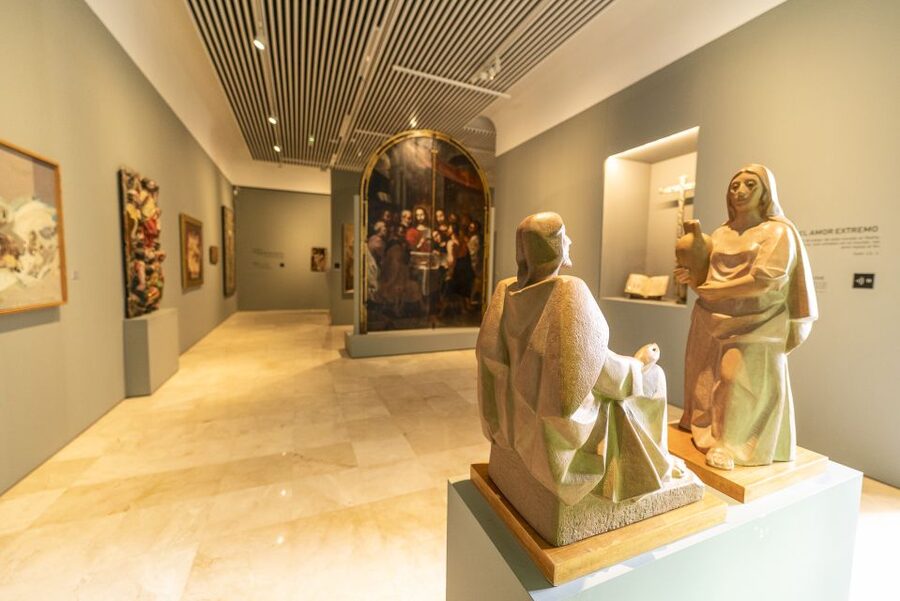
The cloister and chapter halls are often the recovery zone between the main cathedral drama. They help you reset your senses because the architecture and atmosphere usually feel more grounded and less focused on soaring height.
This is a good place to think about the cathedral not just as a church, but as a working center. The included areas make that idea easier to grasp. You can feel the flow between public space and the quieter corners where community life played out.
If you tend to get museum fatigue, this is where you might naturally slow down. Use that time to appreciate transitions, not just highlights.
Episcopal Palace exhibitions and the VR add-on
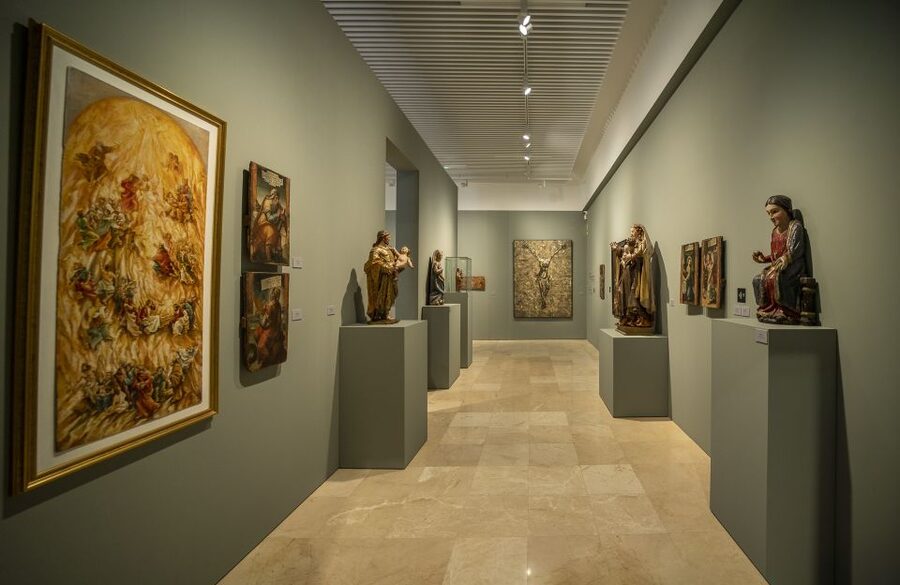
The Episcopal Palace of Salamanca exhibitions add context. You are not only looking at the cathedral as a standalone artwork. You get a chance to connect the building to the broader setting around it.
Then there is the VR experience, included with your ticket. I like a VR add-on when it helps explain something you cannot easily experience in person. Even if you treat it as optional, it can be a fun change of pace after hours of stone, glass, and artwork.
If you are planning your day, think about the sequence:
- Do the cathedral areas while your eyes are fresh for architecture and stained glass.
- Then use the exhibitions and VR as a way to refresh your brain.
- If you prefer quiet at the end, keep the slow spaces like the cloister for later.
Timing for a 1-day visit, without feeling trapped
Your ticket is valid for 1 day, and you are asked to check availability for starting times. That usually means you should plan your arrival so you are not scrambling right when you want to start.
For a cathedral visit, I suggest treating the day like a series of short missions, not one long endurance test:
- Mission 1: Get oriented and see the big interior features.
- Mission 2: Find your altarpiece focus at the retablo Mayor.
- Mission 3: Work through transept and choir stalls for the crafted details.
- Mission 4: Slow down through chapels, cloister, and chapter halls.
- Mission 5: Finish with exhibitions and VR if you still feel curious.
Do not worry if your route is not perfectly linear. These spaces interlock in a way that lets you return to what caught your attention.
Value check: is $11 a smart use of time?
At about $11 per person, the value looks strong on paper, especially because your ticket includes a lot of components. You are not paying only for entry into one room. You are paying for access to multiple cathedral sections plus the audio guide and the VR experience.
Here is what makes the price feel fair:
- You get more than one architectural zone: New Cathedral, Old Cathedral, cloister, chapter halls.
- You get interpretive help through the audio guide in several languages.
- You get extra content beyond the cathedral itself via the Episcopal Palace exhibitions.
- You can explore at your own pace, which is a big deal when you want time to actually look.
The only value risk is the audio hardware issue. If the site does not provide phones or headphones and you show up unprepared, you might spend time figuring things out instead of enjoying the art. That is avoidable, and it is exactly why I recommend bringing your own headphones if you have them.
Who this is best for
This experience fits best if you:
- Want to explore at your own pace with guidance rather than a fixed group schedule.
- Like cathedrals for their art details, not only for big photo angles.
- Appreciate a clear highlight structure, especially around the retablo Mayor and major interiors.
- Enjoy having multiple languages available for interpretation.
It might be less ideal if you:
- Want a live guide to answer questions on the spot, because a live guide is not included.
- Hate audio and prefer face-to-face storytelling.
- Are extremely short on time and need a very fast, one-stop visit.
Final call: should you book this cathedral ticket with audio guide?
I would book it if you want a flexible, self-paced cathedral visit with enough included extras to make one day feel full. The audio guide is the heart of the experience, and the included access to multiple areas plus exhibitions and VR makes the ticket feel like more than a simple entry pass.
If you do not want to bring headphones or you know you will struggle with audio setup on site, consider that drawback before you commit. A little prep goes a long way here.
If you want my simplest advice: bring headphones, start early in your time window, and give yourself time at the retablo Mayor. That is where the cathedral earns your full attention.
FAQ
What does the ticket include for Salamanca Cathedral?
The ticket includes access to the New Cathedral, Old Cathedral, cloister, and chapter halls. It also includes access to exhibitions of the Episcopal Palace of Salamanca, an audio guide, and a VR experience.
How long is the experience?
It is listed as 1 day.
Is there a live guide included?
No. A live guide is not included.
Where do I show my ticket?
You show your ticket at the entrance to the Cathedral of Salamanca.
Which languages are available for the audio guide?
The audio guide is available in Spanish, English, French, German, Italian, and Portuguese.
Does the ticket include transportation to the cathedral?
No. Transportation is not included.
Is the cathedral visit self-paced?
Yes. You explore at your own pace, following a suggested route outlined by the audio guide.
Is the audio guide included in the ticket price?
Yes. The audio guide is included.
Can I cancel and get a full refund?
Yes. Free cancellation is available up to 24 hours in advance for a full refund.
Can I reserve without paying right away?
Yes. Reserve now and pay later is available, so you can book your spot without paying today.
Recently added around Spain
- Toledo Experience Tour from Madrid with optional Toledo Cathedral★ 4.5 · 703 reviews
- Madrid: Tapas Walking Tour with Food and Drinks Included★ 5.0 · 108 reviews
- Tasty Tapas & Drinks Tour with a Rooftop Included★ 5.0 · 82 reviews
- Tickets for the Authentic Flamenco Show at the Madrid Theater★ 4.5 · 301 reviews
- Madrid Royal Palace and Prado Museum Private Tour with Transfers★ 5.0 · 185 reviews
- Madrid Tapas Crawl ️Tour by FLT★ 5.0 · 269 reviews
- Prado Museum Madrid Guided Tour Semi-Private 6ppl Max★ 5.0 · 67 reviews
- Toledo Day Trip from Madrid: Cathedral & Monuments★ 5.0 · 368 reviews
Audio Tours, compared.
Sagrada Familia Entry Ticket with Audio Guide
Read our review →
Casa Batllo Admission Ticket with Intelligent Audio Guide
Read our review →
Nerja: Caves of Nerja Entry Ticket with Audio Guide
Read our review →
Browse the lists this tour appears in