Reviewed · TICKETS
Sant Pau Recinte Modernista Entrance Ticket in Barcelona
Sant Pau is Barcelona on quiet mode. This Modernist hospital complex lets you roam at your own pace through stained glass, domes, mosaics, and underground tunnels, all tied to the story of healthcare from the 1400s to today. I especially like the self-guided flow that helps you avoid feeling herded, and the way the site mixes architecture with a real purpose (medicine, care, and history). One thing to plan for: the complex is big, and self-guided directions can feel confusing at times, so give yourself enough time to not miss sections.
You can start whenever you want during opening hours, beginning at the Administration Pavilion. Inside, there are interactive elements like a touch table and a video, plus a contemporary installation that nods to Lluís Domènech i Montaner. The outdoor parts are calm, and the indoor air feels like a break when Barcelona runs hot. The main drawback is simple: since there is no guide included, you need to rely on signage and the onsite materials, and some areas may be temporarily blocked off.
In This Review
- Key things to notice before you go
- First stop: arriving at Sant Pau and getting your bearings
- The Administration Pavilion: your orientation, interactive intro, and mini time machine
- Sant Salvador Pavilion: the hospital timeline and a contemporary nod
- The restored pavilions and the route logic of a hospital city
- Underground tunnels: the patient route you can actually imagine
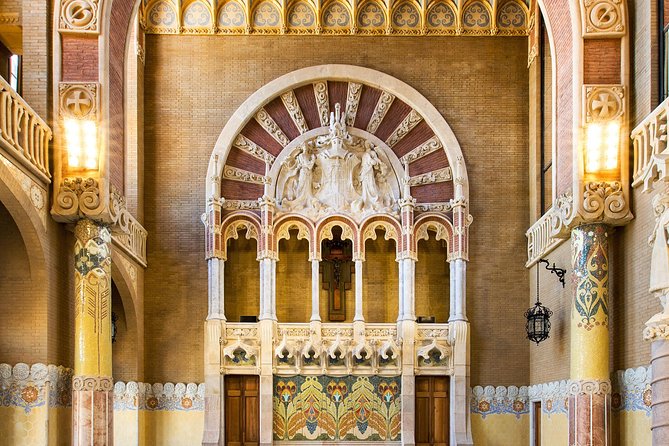
- Exterior architecture and gardens: stained glass, domes, and mosaic everywhere
- Sant Jordi Pavilion: rotating exhibits and what to do when you finish early
- How long should you plan, and how to pace it without rushing
- Price and value: is the ticket worth $21.78?
- English materials, audio options, and what you can expect from the experience flow
- Who should book Sant Pau, and who might want a different plan
- Should you book this Sant Pau Recinte Modernista ticket?
- FAQ
- How long does the Sant Pau ticket experience take?
- Is a guide included?
- What language is available for this experience?
- What ticket format do I get?
- Where is Sant Pau Recinte Modernista located?
- Can I start the visit at any time?
- Is there anything interactive inside?
- Is there an audio guide option?
- Is free cancellation available?
Key things to notice before you go
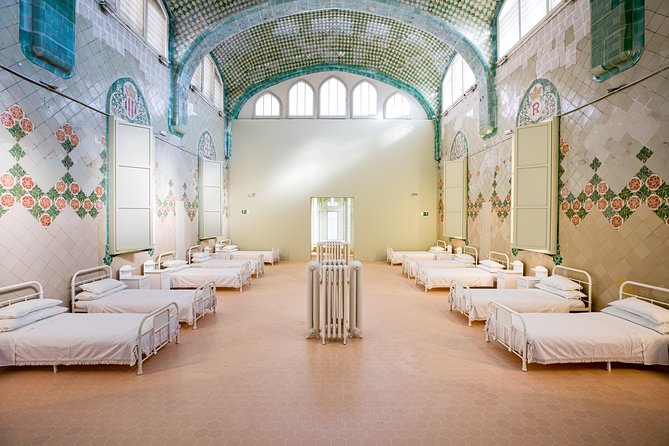
- This is a huge complex: think pavilions plus gardens plus tunnels, not one building.
- Start at the Administration Pavilion and use it as your orientation point.
- Interactive intro materials (touch table and video) set up the hospital story fast.
- Underground tunnels connect the pavilions, which makes the route feel like a small labyrinth.
- Extra audio is optional: you might rent narration devices at the entrance for an additional fee.
- Temporary exhibitions happen in the Sant Jordi Pavilion, so what you see can vary.
First stop: arriving at Sant Pau and getting your bearings
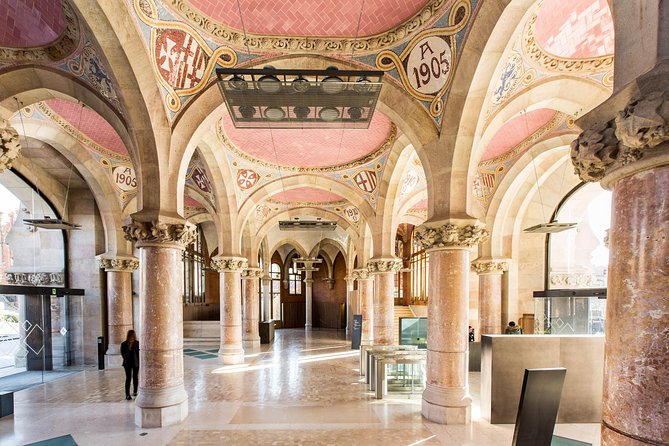
Sant Pau sits on Sant Antoni Maria Claret, in central Barcelona, and it is near public transportation. The biggest practical win of booking a ticket ahead is that you can walk in with less stress. This site is popular, and entry can be slower during busy periods, so having your pre-arranged admission helps you get into the buildings and start walking sooner.
When you reach the entrance area, your visit becomes simple: you are there for a self-guided circuit. Your ticket is mobile, and the voucher approach keeps it low fuss. I like self-guided setups like this because you control the pace. Some people rush. You do not have to.
Before you go inside, take a quick moment to look around. Sant Pau feels calm, but it is not small. If you treat it like a quick photo stop, you will miss the best parts. If you treat it like a slow stroll through architecture with a purpose, it clicks.
Other days out near Barcelona
- Barcelona: Sagrada Familia Entry Ticket with Audio Guide
★ 4.6 · 105,312 reviews - Barcelona: Park Güell Admission Ticket
★ 4.4 · 76,534 reviews - Barcelona: Casa Batlló Entry with Self-Audioguide Tour
★ 4.7 · 25,359 reviews
The Administration Pavilion: your orientation, interactive intro, and mini time machine
Plan to begin at the Administration Pavilion. You can go in anytime during opening hours, so you are not locked to a strict start time. This matters because Sant Pau is the kind of place where you want to choose your rhythm. You might be arriving from Sagrada Família, or from a morning walk through town. Either way, the ability to start on your schedule makes the visit easier to fit into a day.
Inside, the Administration Pavilion gives you a fast and readable overview of the complex and its connection to medicine and artistic heritage. There is an interactive touch table and a video presentation. These help you understand what you are looking at without needing someone to narrate every room.
If you like history but hate long speeches, this is your sweet spot. The interactive elements tend to make the material feel less like a lecture and more like a guided explanation you can control. You can skim, pause, or go back.
A small but real consideration: some self-guided circuits can feel confusing if signage is not clear in a given spot. To avoid that, keep checking where the route is meant to take you next. Think of this first stop as your map training session.
Sant Salvador Pavilion: the hospital timeline and a contemporary nod
Next, head to the Sant Salvador Pavilion. This space summarizes the history of the Hospital de la Santa Creu i Sant Pau from its founding in 1401 up through the 21st century. That span is part of what makes Sant Pau special. You are not just seeing a pretty building. You are seeing how a healthcare institution evolved over centuries, then moved into modern times.
On the upper floor, there is a contemporary installation that symbolizes a dragon. It is described as a tribute linked to Lluís Domènech i Montaner, who played a key role in Modernisme and the design of the complex. I love moments like this because they connect the old and the new. You get a historic site that does not feel trapped in the past.
If you enjoy architectural symbolism, this is worth your time. If you are only there for photos, you might rush it. I would not. Even with a tight schedule, this pavilion helps you understand what the rest of the pavilions mean.
The restored pavilions and the route logic of a hospital city
Sant Pau is built like a small city of specialized buildings, not a single attraction. That design becomes clearer once you start moving through the different pavilions.
You will reach the restored Sant Rafael Pavilion and the old Surgery Room. These spaces help you connect daily hospital life with the Modernist design choices that supported care. The goal is not just beauty. The architecture is part of how the complex functioned.
From there, you will likely continue into rooms that spotlight key parts of the design and the people behind it, including:
- Lluís Domènech i Montaner Room
- Pau Gil Room
- Main Hall
Each room gives you another angle on the story. I like the way these stops break up the visit so you do not get architectural fatigue. You are looking at details, but you are also learning why the details mattered.
One practical tip: expect to spend extra time where you can slow down and read. Sant Pau is packed with visual texture: stained glass, sculptures, and domes. The tile work and mosaic details are a major reason people fall in love with the site. If you speed past them, you lose the payoff.
Also within reach of Barcelona:
- Barcelona: Montjuïc Cable Car Roundtrip Ticket
★ 4.5 · 22,368 reviews - Barcelona: Hola Barcelona Public Transport Travel Card
★ 4.5 · 20,985 reviews - Barcelona: 24 or 48-Hour Hop-On Hop-Off Bus Tour
★ 4.4 · 20,872 reviews - Barcelona: Park Guell Guided Tour with Skip The Line Entry
★ 4.7 · 17,563 reviews
Underground tunnels: the patient route you can actually imagine
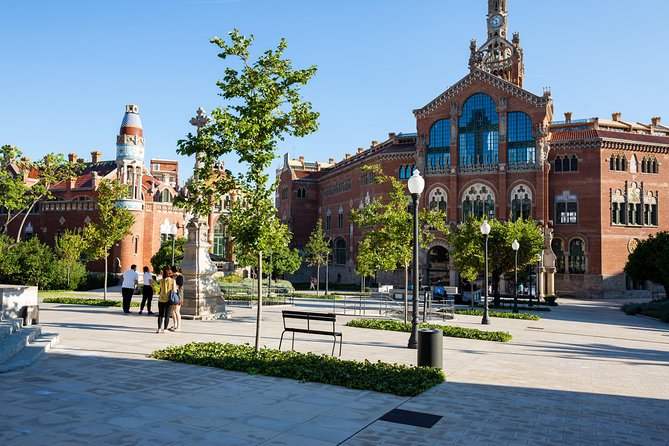
One of the most memorable parts of Sant Pau is the network of underground tunnels. They wind through the complex, connecting buildings and leading out into the gardens. This is the kind of detail that makes a “museum visit” feel different from most museums.
The tunnels also give you a concrete sense of how the complex was designed for moving people safely and efficiently. You are not just hearing a concept. You are walking through the physical connection.
These sections can also help you escape heat when Barcelona is doing its usual summer thing. Even when the outdoors feels hot, the indoor paths and tunnel spaces offer a break. In the reviews, people often mention the value of air-conditioning inside, so plan to take advantage of that when you need it.
If you are someone who likes engineering, logistics, and architecture that serves a real workflow, this is where you feel the site’s intelligence.
Exterior architecture and gardens: stained glass, domes, and mosaic everywhere
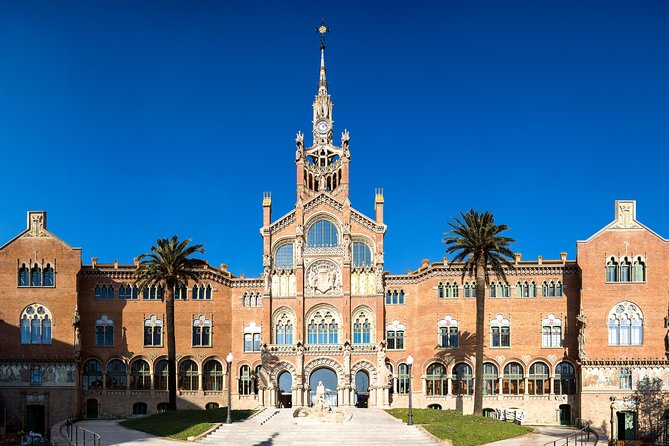
Between interiors, give yourself time for the outdoor parts. Sant Pau has gardens and landscaped spaces that help the complex feel less like a crowded attraction and more like a peaceful walk through design.
Outside, look for:
- stained glass
- sculptures
- domes
- and the signature mosaic tile details people rave about
The gardens are also part of why the pace can feel relaxing. You can step aside, take photos, and let your eyes reset before heading back inside.
If you are pairing this with other Barcelona highlights, Sant Pau is a good counterweight. Instead of racing from one must-see to the next, you get a calmer place where it is easy to take breaks without losing the thread of the visit.
Sant Jordi Pavilion: rotating exhibits and what to do when you finish early
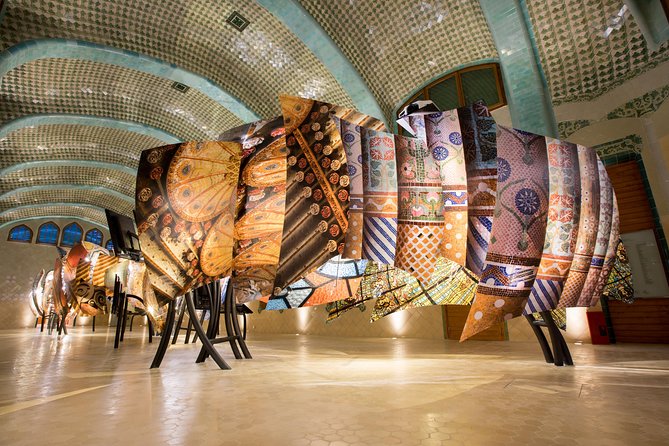
The visit often ends at the Sant Jordi Pavilion, which hosts rotating temporary exhibitions. That means your experience can vary depending on what is on display during your dates.
This pavilion is useful even if your favorite part was the main architecture. It gives you a “final chapter,” and the rotating element keeps the site from feeling like the same sequence every day. If you arrive later in the day and you want to see something different without committing to a long detour, this stop can be a satisfying wrap-up.
If you still have energy when you reach this area, linger. Temporary exhibitions can be short, but the pavilion itself is part of the overall architectural experience.
How long should you plan, and how to pace it without rushing
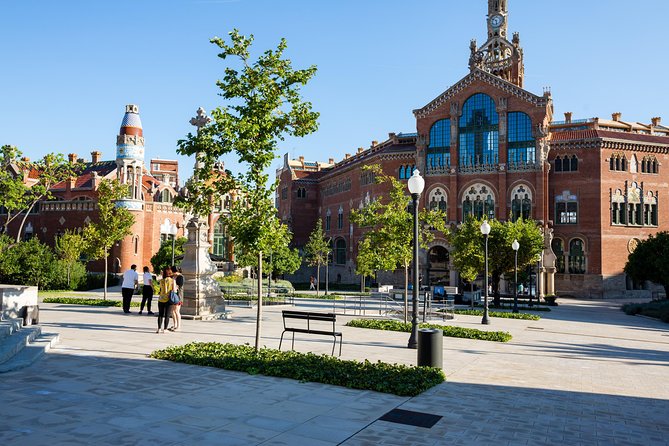
Most visits run about 1 to 2 hours. In practice, I think you should choose your time based on how you like to see places.
- If you mostly want architecture and photos, plan closer to 1 to 1.5 hours.
- If you want to read the room explanations, pause for details, and see tunnels properly, plan closer to 1.5 to 2 hours.
There is a lot to cover. Sant Pau feels big once you start moving between pavilions and routes. One of the most common disappointments with self-guided sites is that people do not realize how long they need until they are half done. Give yourself slack.
Also, expect that some sections can change. One review notes that an influencer event blocked off areas. Another mentions that some parts were closed. So if you spot barriers, do not assume you have failed. Just adapt your route and still see as much as you can in the open sections.
Price and value: is the ticket worth $21.78?
At about $21.78 per person, this ticket is not a bargain, but it also does not feel overpriced for the amount of space you get to explore. You are paying for access to one of Europe’s largest Art Nouveau complexes, plus a structured self-guided route that covers multiple key buildings, tunnels, and the gardens.
The value is strongest in two ways:
- Prebooking saves time waiting. If you arrive during a busy window, having confirmed entry matters.
- Self-guided time is flexible. You can start anytime during opening hours and go at your pace, which reduces the stress of coordinating with a group.
If you find that you want more explanation than the signage provides, you can add an audio layer. One review notes narration devices rented for EUR 4 each at the entrance. That is optional, but it can help you make more sense of what you are seeing.
Bottom line: for a first-time visitor who wants a memorable architectural and historical site without a guided tour, this is good value. If you only like quick stops and hate walking through multiple buildings, you might find the price heavy for a short visit. Build in time, and it feels fair.
English materials, audio options, and what you can expect from the experience flow
The ticket experience is offered in English. Inside, the interactive touch table and video help set the context. The self-guided nature means you control when you read, when you watch, and when you pause.
A key detail: a guide is not included. You are not getting a person to lead you room to room. If you like a live narrative, you may miss that. If you like to explore independently, this setup fits.
Also, you should know about audio. You might see the option to rent narration devices at the entrance for EUR 4 each. If you want the extra layer, it is worth considering. If you do not, you can still have a strong visit using maps and onsite information.
One caution from experience with self-guided routes: signposting can be inconsistent. If you are the type who hates feeling unsure, watch for route cues often. Stop for a minute to orient yourself instead of walking fast with uncertainty. You will save time and enjoy more.
Who should book Sant Pau, and who might want a different plan
This ticket works best if you:
- love Art Nouveau architecture, especially mosaics, stained glass, and domes
- enjoy history with a real-world angle, in this case healthcare
- like walking at your own pace instead of following a group
- want a quieter alternative to the biggest crowds in Barcelona
You might want a different plan if you:
- want a guided narrative and do not like self-guided exploration
- dislike wandering through a large complex with lots of rooms and routes
- have mobility concerns that make stairs difficult, since some visitors mention lift access can feel limited and stairs might be challenging in parts of the route
The good news is that Sant Pau is popular for a reason. Even when self-guidance takes a little effort, the buildings themselves do a lot of the work for you.
Should you book this Sant Pau Recinte Modernista ticket?
Yes, I think you should book this ticket if you want a high-quality Barcelona experience that is more architectural than touristy. The combination of pre-arranged entry, a self-guided route, and highlights like the tunnels and restored pavilions makes it an easy win for couples, solo travelers, and anyone who likes thoughtful sightseeing.
If your style is very “in, out, next,” consider setting expectations. This is not a one-building stop. Plan for at least an hour, ideally closer to 1.5 to 2 hours, and you will get your money’s worth.
FAQ
How long does the Sant Pau ticket experience take?
The visit typically lasts about 1 to 2 hours.
Is a guide included?
No. This is an admission ticket for a self-guided visit, and a guide is not included.
What language is available for this experience?
It is offered in English.
What ticket format do I get?
You receive a mobile ticket.
Where is Sant Pau Recinte Modernista located?
It is located on Sant Antoni Maria Claret in central Barcelona, and it is near public transportation.
Can I start the visit at any time?
You can begin your self-guided tour at the Administration Pavilion anytime during the facility’s opening hours.
Is there anything interactive inside?
Yes. There is an interactive touch table and a video presentation.
Is there an audio guide option?
An audio option is not included in the ticket details you provided, but you might be able to rent narration devices at the entrance for an additional fee.
Is free cancellation available?
Yes. You can cancel up to 24 hours in advance for a full refund.
Recently added around Barcelona
- E-Bike tour in Barcelona with English Guide★ 5.0 · 128 reviews
- Barcelona: Wine Tasting and 5 Course Tapas Pairing Dinner★ 4.5 · 129 reviews
- Wine Tasting Experience in Barcelona★ 5.0 · 172 reviews
- 2 Wineries Small Group Tour with Free Hotel PickUp from Sitges★ 5.0 · 83 reviews
- Barcelona Luxury Yacht Cruise – Day or Sunset, Open Bar & Snacks★ 5.0 · 154 reviews
- Barcelona: Guided Rooftop Wine Tasting – Enjoy 6 Spanish Wines★ 4.5 · 61 reviews
- Entrance to the Mirador Torre Glories Barcelona★ 4.5 · 193 reviews
- Barcelona Wax Museum Admission Ticket★ 4.5 · 237 reviews
Tickets, compared.
Sagrada Familia Entry Ticket with Audio Guide
Read our review →