Reviewed · MADRID TOURS & ACTIVITIES
Spanish Civil War start of 2 World War, Guernica Franco
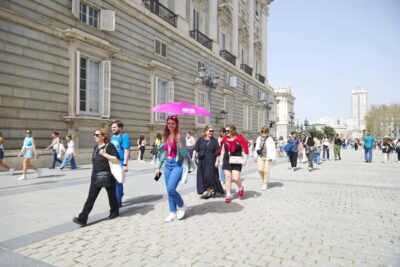
Walk Madrid’s wartime spine. I love how this Spanish Civil War tour turns real street corners into a story you can follow, and I also like the maps, images, audio, and videos you keep for later. The one drawback: the themes are heavy, so it can feel intense if you want carefree sightseeing.
You spend about 2.5 hours on foot in central Madrid with a maximum of 30 people, which keeps the pace human. It runs in English with a mobile ticket, and it finishes near Metro Moncloa, so you are not stuck far from transit.
I like that the local guide gives you a link to personalized recommendations for what to do in Madrid, plus follow-up after the walk. Meeting point is C. del Postigo de San Martín, 26, Centro, 28013 Madrid, Spain.
In This Review
- Key things to love about this Spanish Civil War tour
- Why Madrid’s central streets feel different after this walk
- Meet, move, and keep it to 2.5 hours
- Plaza del Callao: bombings, scars, and daily life under pressure
- Palacio del Senado to Plaza de España: two divided Spains and Franco’s timeline
- Templo de Debod: money, propaganda, and memorial meaning
- Paseo del Pintor Rosales: Picasso, Guernica, and art under fire
- Cuartel General del Ejercito del Aire: war, tech stories, and surviving the unspeakable
- Arco de la Victoria: destroy or preserve, and reflections of war
- Local guides who can handle heavy topics with care
- Value and price: what $3.62 per group really means
- Who should book this Madrid Spanish Civil War walk
- Should you book this Spanish Civil War tour in Madrid?
- FAQ
- How long is the Spanish Civil War walking tour in Madrid?
- Is the tour offered in English, and do I get a mobile ticket?
- Do I need to buy entry tickets for the places you visit?
- Where do I meet the guide, and where does the tour end?
- How big are the groups?
- What is the cancellation policy?
Key things to love about this Spanish Civil War tour
- Seven stops with themes, from Plaza del Callao bombings to the debate around the Victory Arch
- The 900-day siege story at Plaza de España, tied to Franco, Madrid under pumps, and wartime sayings
- Guernica and civilian bombing through art, including how Picasso and the Prado Museum relate to conflict
- Templo de Debod tackles money and propaganda, with ideas about who paid for the war
- Cuartel General del Ejercito del Aire covers war beyond fighting, including a remote blood transfusion topic
- Digital takeaways you can reuse, maps, images, audio, and video plus a personalized Madrid plan link
Why Madrid’s central streets feel different after this walk
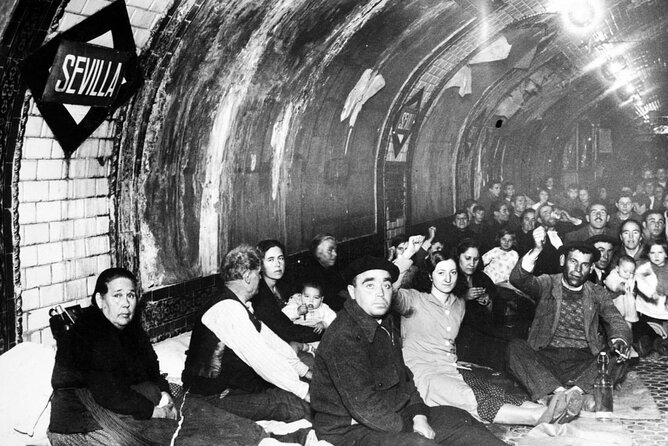
Madrid looks solid, normal, even charming. Then you start hearing how the Spanish Civil War shaped daily life, and suddenly you notice scars, symbols, and the way ideas competed in public space.
This tour’s big strength is the way it connects events to places you can actually stand on. You are not just memorizing dates. You are learning how the conflict showed up in the capital, from bombed central streets to propaganda and memorials.
You also get a wider frame than a simple civil-war timeline. The tour explicitly links the conflict to the lead-in toward World War II and the later dictatorship, so the story lands with meaning beyond Spain.
Other days out near Madrid
- Madrid: Tour Bernabéu Entry Ticket
★ 4.5 · 21,573 reviews - Madrid: Prado Museum Entry Ticket
★ 4.6 · 20,699 reviews - Madrid: “Emociones” Live Flamenco Performance
★ 4.8 · 12,866 reviews
Meet, move, and keep it to 2.5 hours
The whole experience runs about 2 hours 30 minutes. That time matters, because it is long enough to make connections between stops, but not so long that you lose focus or your feet revolt.
You start at C. del Postigo de San Martín, 26, Centro (28013 Madrid). The walk ends at Arco de Moncloa, Av. de la Memoria, 32 (Moncloa – Aravaca, 28040). Metro Moncloa is nearby, so you can get back into your day fast.
Groups max out at 30, and the tour is offered in English with a mobile ticket. If you like asking questions, this size is usually comfortable, and you are not competing with a crowd for the guide’s attention.
If you want a smoother day, plan for city walking on uneven sidewalks and a bit of standing while the guide explains the theme. Bring water, and wear shoes you trust.
Plaza del Callao: bombings, scars, and daily life under pressure
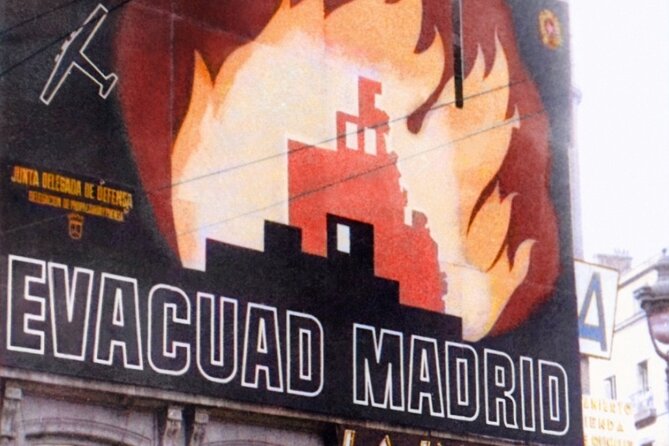
Stop 1 is Plaza del Callao. The focus here is the bombing of central Madrid and the idea of buildings with scars. You are basically learning to read the city like evidence.
The tour also asks a pointed question at this stop, about the life of a Spaniard at war, and whether you would go to the movies during that kind of reality. That is a smart way to get you thinking about morale, distraction, and how normal routines get squeezed.
This is not meant to be a quick photo stop. You spend about 15 minutes, and the point is to connect “what happened” with “what it felt like in the middle of it.”
A possible downside at the first stop is that the subject is already intense. If you are visiting Madrid mostly for light history, you will need a mental gear shift right away.
Palacio del Senado to Plaza de España: two divided Spains and Franco’s timeline
Stop 2 is Palacio del Senado, with the theme centered on how the Spanish Civil War starts. The framing is clear: two divided Spains, and the start of a broader conflict.
This stop also includes a link to the idea of Spain as a test range in the context of World War II. The tour does not ask you to study like a historian. It just sets the thread: this war does not stay contained.
Then you move to Stop 3, Plaza de España, for the Franco chapter. Here you get a story about the defense of the capital, 900 days of siege, plus details like Madrid under pumps and wartime sayings. Even if you know nothing going in, those cues give you anchors to remember.
What I like about this pairing, Senado then Spain, is that it mirrors how conflict escalates. You move from “how the war begins” to “who controls the capital and how people survive inside it.”
Note: both stops are short, around 20 minutes and 15 minutes, respectively. That is good for momentum, but it means you will want to jot notes if you are the type who forgets details the moment you step into the next street.
Also within reach of Madrid:
- Madrid: Panoramic Route City Tour
★ 4.1 · 12,259 reviews - Madrid: Live Flamenco Show with Food and Drinks Options
★ 4.5 · 9,901 reviews - Avila & Segovia Tour with Tickets to Monuments from Madrid
★ 5.0 · 9,762 reviews - Madrid: Reina Sofía Museum Entrance Ticket
★ 4.5 · 8,788 reviews
Templo de Debod: money, propaganda, and memorial meaning
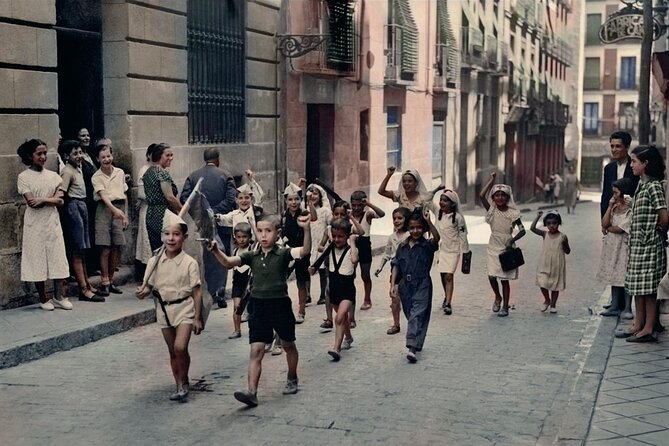
Stop 4 is Templo de Debod. The themes shift from battlefield scenes to the forces behind the war.
You get three big ideas here: money, who paid for the war, propaganda as a war of ideas, and the presence of a sculpture to the fallen of the civil war. This mix is important. It reminds you that wars are financed and sold, not just fought.
The temple setting also helps you slow down. You are still in Madrid, but you are no longer just counting scars on buildings. You are stepping into symbolism, remembrance, and the way public art carries political memory.
If you are someone who likes to understand why people believed things, this is one of the most useful stops. You can leave with a clearer sense of how persuasion functioned alongside violence.
Paseo del Pintor Rosales: Picasso, Guernica, and art under fire
Stop 5 is along Paseo del Pintor Rosales, and the guide ties together art and conflict in a way that feels practical, not academic.
The tour explicitly connects Picasso and Guernica, using the bombing of civilians as the bridge between painting and reality. It also mentions the Prado Museum and the idea of art under fire, plus a lighter pause called Christmas in Tregua, described as a breather.
I like this stop because it teaches you how culture becomes a witness. You are not just learning about what soldiers did. You are seeing how civilians, propaganda, and even art shaped public understanding.
One more reason it works: if you are visiting museums anyway, this stop gives you a mental lens. You might find yourself looking at exhibitions later and thinking about the war pressure behind them.
Time here is about 20 minutes, so expect a focused arc rather than a full museum lesson. If you want a museum deep dive, this is a strong warm-up.
Cuartel General del Ejercito del Aire: war, tech stories, and surviving the unspeakable
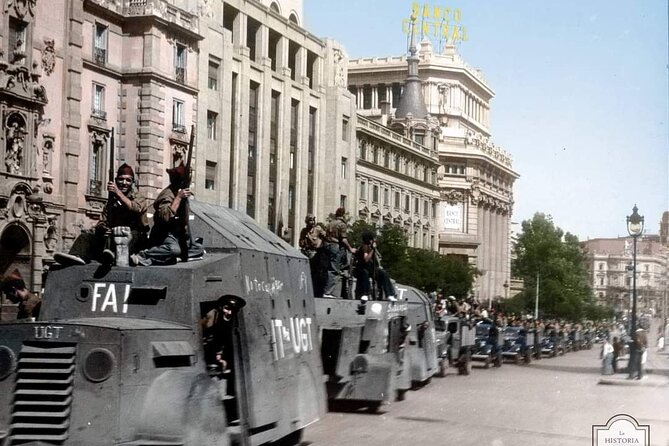
Stop 6 is Cuartel General del Ejercito del Aire. This is where the tour zooms in on the middle-of-life details, the topics that feel like the war reached everywhere.
The themes listed for this stop include music with the idea of they won’t happen, Sun Face, and a segment about the 1st remote blood transfusion. The tour frames it as life in the middle of death, then moves toward the end of the war, linking it to World War II and dictatorship.
That mix might sound like a strange grab bag, but it serves a purpose. It shows how war changes technology, rumor, media, and medical care. It is not only about battles. It is about humans coping under extreme conditions.
At 15 minutes, it is brisk, but the emotional weight can hit hard. If you have a low tolerance for heavy topics, consider pacing yourself with breaks for water and air.
Arco de la Victoria: destroy or preserve, and reflections of war
Stop 7 is the Victory Arch, the Arco de la Victoria. The theme is built around a real question: destroy or preserve it, followed by reflections of wars.
This is the “memory and aftermath” stop. The tour pushes you to think about how societies handle hard monuments, and what it means when a structure becomes part of the political argument long after the fighting ends.
You finish the overall tour at Arco de Moncloa near Metro Moncloa, which is a helpful practical detail. You are not left stranded. You can get back into the city quickly.
If you are a visitor who likes to compare how places memorialize conflict, this last stop can stick with you for days.
Local guides who can handle heavy topics with care
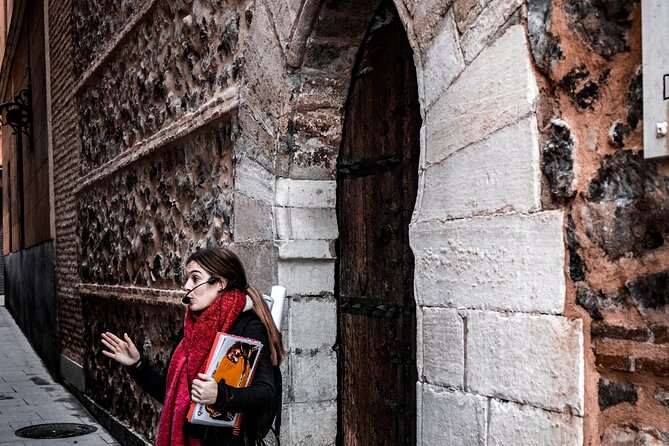
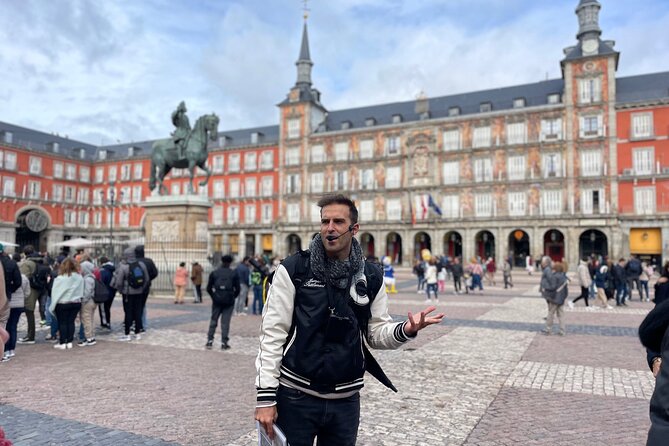
The biggest praise for this experience is the guide. People consistently describe the tour as welcoming, friendly, and emotionally timed, with a storytelling style that stays clear and sensitive.
Guides named in past departures include Victor, Maikel, Guillermo, Adria, and Chato. Across those names, the common thread is presentation that feels close and human, not distant.
That matters, because a civil-war tour can turn into a list of dates. Here, the guide uses maps and visuals, plus audio and video material, to help you keep the connections straight. The tour also includes link access to personalized Madrid recommendations, so you get practical follow-through, not just an ending at the arch.
If you are the type who likes your history tours to feel like conversation, this is where the value lives.
Value and price: what $3.62 per group really means
The listed price is $3.62 per group (up to 15). That number is so low that I would treat it as a “confirm at checkout” moment, because platforms sometimes show pricing differently.
But even if you ignore the headline, the bundle still looks solid for the time you get. You are paying for a local guide, a structured walk of about 2.5 hours, and included exclusive material like maps, images, audio, and videos. You also get a link for personalized recommendations after the tour.
The stops themselves do not require you to enter sites for the tour to work. In other words, you are not burning time hunting tickets while the group waits. That can be a big value when you are trying to fit Madrid into a packed schedule.
Add in the practical touches, mobile ticket and a small cap of 30, and this feels like an efficient way to add real context to a city that is otherwise easy to see superficially.
Who should book this Madrid Spanish Civil War walk
Book this if you want a Madrid tour that explains how the Spanish Civil War landed in ordinary life. This is the right fit if you care about the divide between different political visions and how those ideas shaped daily decisions, not just public slogans.
It is also a good choice if you like connecting history to art and public space. The mix of Picasso and Guernica, links to the Prado Museum, propaganda themes, and memorial questions gives you multiple angles to remember.
You might want to skip it if you prefer light, purely scenic walking. This tour leans into civilian bombing, siege reality, propaganda, and dictatorship aftermath. It is also short stops, so you will not get long emotional breaks.
Should you book this Spanish Civil War tour in Madrid?
Yes, you should book it if you want an English guided walk that helps you “read” Madrid with new eyes. The structure is tight, the guide attention feels personal, and the combination of street stops plus digital materials makes it easier to carry the story home.
I would especially book if you are planning to see Picasso or museum art while you are in Madrid. This tour gives you a lens for what you are likely to notice, and it frames art under pressure as part of the war narrative, not a side topic.
If you are sensitive to intense topics, take it at a slower pace, bring water, and be ready for an emotional tone. Otherwise, this is a smart, cost-effective way to understand why Madrid’s history still shows up in stone, paint, and public debate.
FAQ
How long is the Spanish Civil War walking tour in Madrid?
It lasts about 2 hours 30 minutes.
Is the tour offered in English, and do I get a mobile ticket?
Yes, it is offered in English and you receive a mobile ticket.
Do I need to buy entry tickets for the places you visit?
No. Entries to the sites are not included because they are not necessary for this tour.
Where do I meet the guide, and where does the tour end?
You meet at C. del Postigo de San Martín, 26, Centro, 28013 Madrid, Spain. The tour ends at Arco de Moncloa, Av. de la Memoria, 32, Moncloa – Aravaca, 28040 Madrid, Spain, near Metro Moncloa.
How big are the groups?
The tour has a maximum of 30 travelers.
What is the cancellation policy?
You can cancel for free up to 24 hours in advance for a full refund. If you cancel less than 24 hours before the start time, the amount paid is not refunded.
Recently added around Madrid
- Toledo Experience Tour from Madrid with optional Toledo Cathedral★ 4.5 · 703 reviews
- Madrid: Tapas Walking Tour with Food and Drinks Included★ 5.0 · 108 reviews
- Tasty Tapas & Drinks Tour with a Rooftop Included★ 5.0 · 82 reviews
- Tickets for the Authentic Flamenco Show at the Madrid Theater★ 4.5 · 301 reviews
- Madrid Royal Palace and Prado Museum Private Tour with Transfers★ 5.0 · 185 reviews
- Madrid Tapas Crawl ️Tour by FLT★ 5.0 · 269 reviews
- Prado Museum Madrid Guided Tour Semi-Private 6ppl Max★ 5.0 · 67 reviews
- Toledo Day Trip from Madrid: Cathedral & Monuments★ 5.0 · 368 reviews
Madrid Tours & Activities, compared.



Live Flamenco Show with Food and Drinks Options
Read our review →
Avila & Segovia Tour with Tickets to Monuments from Madrid
Read our review →