
Reviewed · WINE TASTINGS & BODEGA TOURS
Visit a winery of the 19th century and its draft
Hidden wine caves beat expectations fast. This restored 19th-century winery in the La Rioja countryside has been brought back after a long closure, and your visit drops you into the working cellar life behind the scenes.
I love two things most: the small-group feel and the fact that the tasting comes with real context, not just a quick pour. You get a guided walk through restored spaces, plus a focused tasting of two wines paired with snacks.
One consideration: this visit includes stairs. Plan for a few flights down into the cellar areas, so if you prefer flat ground, ask ahead about how much walking and stair time to expect.
In This Review
- Key highlights worth marking on your map
- Finding La Bodega del Tesoro: a winery that looks quiet, then isn’t
- Price and time: where the value actually comes from
- La Bodega del Tesoro: the restored spaces, barrel room cool, and the 1881 story
- The tasting that teaches: 2 wines, small productions, and why method matters
- Snacks, vinoteca stop, and that homemade food moment on the patio
- Group size, guiding style, and how to get the most out of your hour
- Who this winery tour is best for
- Booking decision: should you pick La Bodega del Tesoro?
- FAQ
- What is the duration of the wine tour?
- How much does it cost, and what’s included?
- Is the tour offered in English?
- How large is the group?
- Where do I meet for the tour?
- Is this experience refundable if I cancel?
Key highlights worth marking on your map
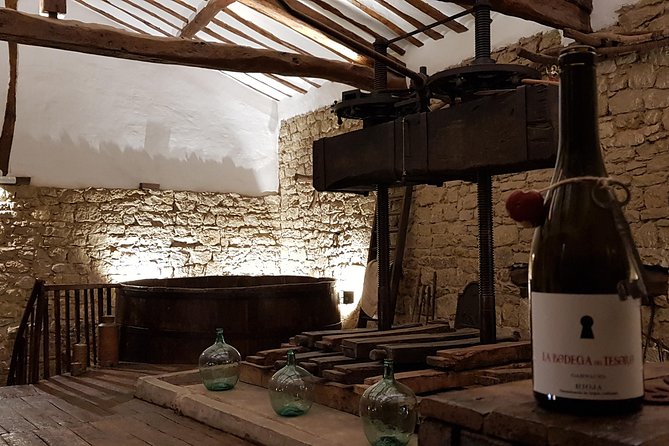
- A restored 1881 winery you visit for the barrel rooms and caves
- Small-group pace, with a maximum of 10 people
- A guided, English-speaking visit that explains how wine is made
- A tasting of 2 wines, with snacks included
- Local food on a patio during the visit
- Jose’s on-site storytelling ties terroir and wine business together
Finding La Bodega del Tesoro: a winery that looks quiet, then isn’t
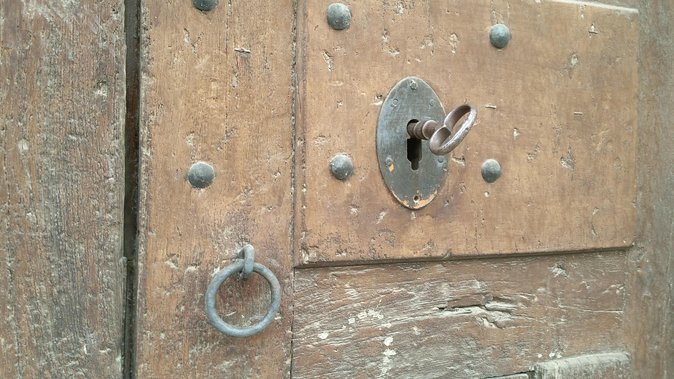
This is one of those places where you might expect a quick stop and a showroom-style explanation. Instead, you show up to a small cluster of buildings and it feels understated, almost modest. Then you step inside and the whole vibe shifts, because the real action is underground and in the restored cellar spaces.
The meeting point is C. Cuevas, 45, 26214 Cuzcurrita de Río Tirón, La Rioja, Spain. The pace stays relaxed and village-sized. There is no big-tour machinery here. That matters, because it makes the experience easier to enjoy even if your Spanish is basic and your wine vocabulary is still forming.
A practical note from the on-the-ground feel of the visit: parking is close but not front-and-center, with a small cinder lot a few steps from the property. If you have mobility concerns, it’s smart to plan extra time to park, then settle in before you start down toward the cellar areas.
More bodega visits in Spain:
- Montserrat & Cogwheel Train, Gourmet Wine Tasting & Tapas/Lunch
★ 5.0 · 6,290 reviews - Barcelona: Montserrat, Cogwheel, Black Madonna & Winery Tour
★ 4.8 · 5,633 reviews - Montserrat with Black Madonna & Medieval Winery with Tapas/Lunch
★ 5.0 · 5,209 reviews
Price and time: where the value actually comes from
At $65.17 per person for about 1 hour 30 minutes, you’re not paying for a long day. You’re paying for access, attention, and taste time in a working-style cellar setting. The math works best if you like compact tours where you learn something and don’t feel rushed.
You’re also getting a few things that add up quickly if you tried to recreate them on your own: admission included, two wine tastings, and snacks. The tour is also capped at 10 travelers, so you’re more likely to get questions answered and a conversation rather than a monologue.
English is available, and you receive a mobile ticket. If you book close to your travel date, confirmation is handled as soon as possible subject to availability. That’s typical, but it’s still worth keeping an eye on your email or messages right before you go.
La Bodega del Tesoro: the restored spaces, barrel room cool, and the 1881 story
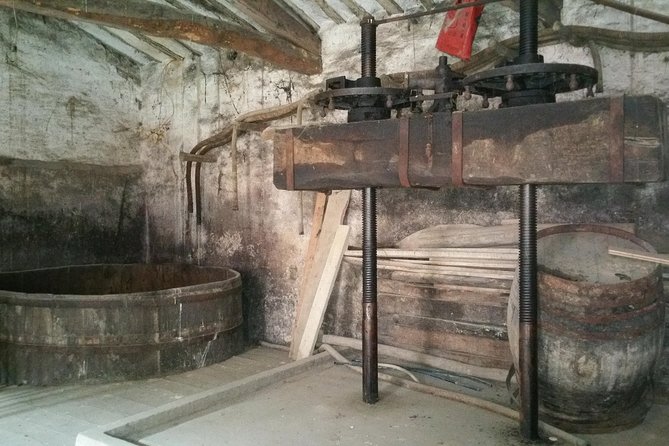
The heart of this visit is La Bodega del Tesoro, a 19th-century winery with its identity tied to a major clue: it reopened after 30 years closed. The restoration is what lets you see what the winery has been holding back, with the charm of old-world structure and the comfort of careful upkeep.
The winery’s story points to its original opening in 1881, and once you step down into the cellar spaces, that age shows in the physical layout. You head down a few flights of stairs and reach the barrel room, where the atmosphere is cool and focused. This is not a dry lecture hall. It’s the room where wine life happens.
One of the most interesting parts is how the tour connects the building to how wine was traditionally made, including carbonic maceration. In plain terms, carbonic maceration is a fermentation approach often associated with fruit-forward wines. In this setting, that isn’t just a buzzword. It’s part of the reason the visit feels specific to this place, not generic wine talk.
There are also caves carved into the hillside, and the route gives you the sense that the property was designed for the practical realities of making and storing wine long before modern tech.
The tasting that teaches: 2 wines, small productions, and why method matters
The tasting portion is not a random assortment. You taste 2 wines, and the experience is framed around what makes the wines from this region distinct, including both the winemaking approach and the business realities around it.
A key detail I appreciate is the emphasis on small production. When quantities are limited, it changes how you taste. You are not thinking about stock or repeat batches. You’re paying attention to the character in the glass, and you’re hearing why that character exists.
The tour also includes short narrated movies. Those aren’t just filler. They give you quick mental anchors before you walk through the spaces, so the rest of what you see and smell connects faster. Once you’re in the barrel room and caves, the method behind the wine feels less abstract.
If you’re the kind of person who likes to understand what you’re drinking, this is a strong fit. Jose, the on-site guide mentioned in the experience, shares a lot of context about the regional wine world. His explanations connect things like terroir, changing habits, and the competition and business side of wine. Even if you only catch pieces of the details, you’ll leave with a better idea of how a wine region thinks, not just how a winery pours.
Other days out near Spain
- Montserrat Half-Day Tour with Tapas and Gourmet Wines
★ 5.0 · 7,359 reviews - Barcelona Tapas and Wine Experience Small-Group Walking Tour
★ 5.0 · 5,804 reviews - Barcelona: Tapas Walking Tour with Food, Wine, and History
★ 4.8 · 4,261 reviews - Madrid Tapas & Wine Tasting Walking Tour – Small Group Local Bars
★ 5.0 · 3,644 reviews
Snacks, vinoteca stop, and that homemade food moment on the patio
Between cellar time and tasting time, you get food. Not a heavy meal, but enough to make the whole hour and a half feel human and relaxed.
You’ll find a vinoteca stop as part of the flow, where you sample additional small productions alongside nibbles. Homemade bites come into play too, including homemade appetizers. On top of that, there’s mention of hot and cold food served on a patio during the visit.
That patio moment is more than a break. It’s where you can slow down and process. Wine tasting done properly is partly sensory and partly mental. Food resets your palate, and it also gives you a more comfortable rhythm while you listen to explanations.
If you have food preferences, it’s wise to mention them when you book or right at check-in, since snacks are included but the exact mix isn’t listed in detail here. Still, the fact that snacks are part of the structure means you can plan to eat something light before you go rather than arriving on an empty stomach.
Group size, guiding style, and how to get the most out of your hour
With a max of 10 travelers, you’ll likely experience the tour as more personal than big-bus winery outings. The best way to benefit from that is to ask questions. If something catches your attention, say it out loud: carbonic maceration, the restoration, what wine-making means here, or how small production affects choices.
The best part of the guiding style is the balance between place and wine. The tour doesn’t just show you rooms. It tells you what those rooms meant, and how the winemaking approach links to the final glass.
Jose’s presence is a good example of the tone. He isn’t only talking about wine as a romantic product. He also covers the regional side, the way habits are changing, and how wineries compete. That makes the visit feel practical, like you’re learning how the wine industry functions at the ground level.
You also benefit from the pacing. At about 1 hour 30 minutes, you get meaningful cellar access and tasting without getting stuck in an all-day schedule. It’s a solid stand-alone activity in the region, especially if you’re mixing it with other sightseeing stops.
Who this winery tour is best for
This works especially well if:
- You want hands-on wine learning without a huge time commitment
- You enjoy small wineries and local spaces over polished, mass-market tastings
- You like understanding how wine is made, not just what it tastes like
- You appreciate a guide who connects wine, terroir, and the real-world industry
It may be less ideal if you strongly prefer level ground. The visit includes stairs to reach cellar areas. Most travelers can participate, and service animals are allowed, but you should still plan for stair time.
Also note the focus on tasting and explanation. If your main goal is scenery photos and you’re not interested in wine-making context, you might find it less satisfying than a purely panoramic tour. But if you want the story behind the bottle, you’ll likely feel your interest click.
Booking decision: should you pick La Bodega del Tesoro?
I’d book this tour if you want a compact, high-attention wine experience in a restored cellar setting where the details matter. The value is strongest when you care about what you’re tasting and you appreciate small production wines paired with snacks.
Skip it only if stairs are a hard no for you, or if you want a longer wine day with multiple stops and larger-scale tastings. For most people who want a thoughtful, not-overlong visit, this is an easy yes.
If you book, show up ready to slow down. This is the kind of winery where the best moments happen in the barrel room, in the caves, and during the patio snack pause, when you can connect the wine-making method to the flavor in your glass.
FAQ
What is the duration of the wine tour?
It lasts about 1 hour 30 minutes.
How much does it cost, and what’s included?
The price is $65.17 per person. Admission is included, and the tour includes snacks plus a tasting of 2 wines.
Is the tour offered in English?
Yes, the activity is offered in English.
How large is the group?
The tour has a maximum of 10 travelers.
Where do I meet for the tour?
The meeting point is C. Cuevas, 45, 26214 Cuzcurrita de Río Tirón, La Rioja, Spain.
Is this experience refundable if I cancel?
No. The experience is non-refundable and cannot be changed for any reason. If it’s canceled because the minimum number of travelers isn’t met, you’ll be offered a different date or a full refund.
Recently added around Spain
- Madrid: Tapas Walking Tour with Food and Drinks Included★ 5.0 · 108 reviews
- Toledo Experience Tour from Madrid with optional Toledo Cathedral★ 4.5 · 703 reviews
- Tasty Tapas & Drinks Tour with a Rooftop Included★ 5.0 · 82 reviews
- Tickets for the Authentic Flamenco Show at the Madrid Theater★ 4.5 · 301 reviews
- Madrid Royal Palace and Prado Museum Private Tour with Transfers★ 5.0 · 185 reviews
- Madrid Tapas Crawl ️Tour by FLT★ 5.0 · 269 reviews
- Prado Museum Madrid Guided Tour Semi-Private 6ppl Max★ 5.0 · 67 reviews
- Toledo Day Trip from Madrid: Cathedral & Monuments★ 5.0 · 368 reviews
Wine Tastings & Bodega Tours, compared.
Montserrat & Cogwheel Train, Gourmet Wine Tasting & Tapas/Lunch
Read our review →
Montserrat, Cogwheel, Black Madonna & Winery Tour
Read our review →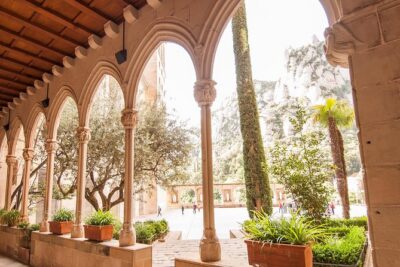
Montserrat with Black Madonna & Medieval Winery with Tapas/Lunch
Read our review →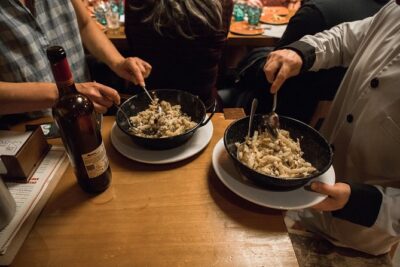
Madrid Tapas & Wine Tasting Walking Tour – Small Group Local Bars
Read our review →
Toledo Tour & Vineyard Walk with Wine Tasting from Madrid
Read our review →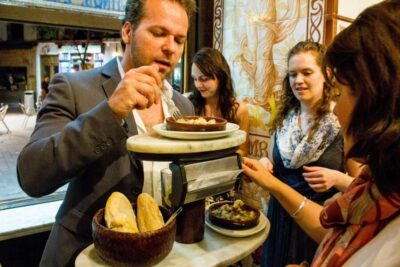

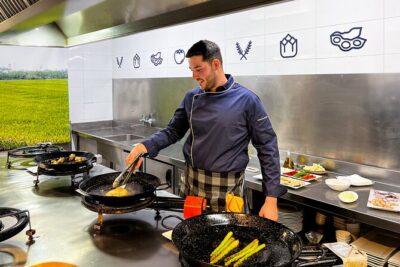
Paella Cooking Class, Wine Tasting & Central Market in Valencia
Read our review →Browse the lists this tour appears in