
Reviewed · WALKING TOURS
Barcelona Historical Walking Tour: Gothic Quarter and El Born
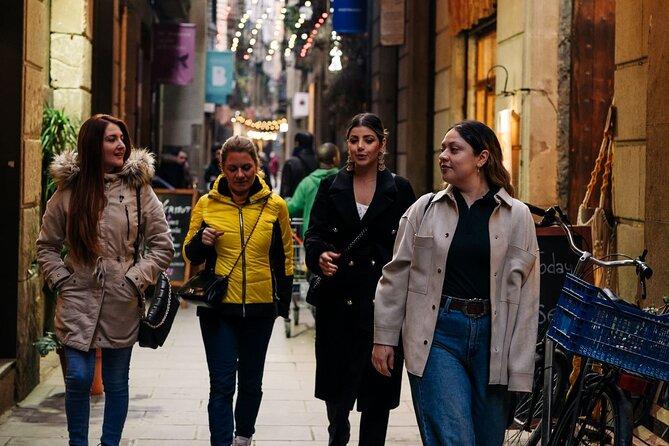
The streets of the Gothic Quarter have a pulse. This walking tour strings together Barcelona’s most story-heavy corners, from artist hangouts to Roman wall surprises, on a 2-hour route that lets you reach lanes bus tours often miss.
I especially like how the guide turns landmarks into context, so each turn feels tied to the city’s bigger story. I also love the pacing and small group size (max 20), which makes it easier to ask questions and actually hear the details.
One thing to consider: two major churches have optional paid entry, so if you want to go in everywhere, budget a bit extra for Catedral de Barcelona and Santa Maria del Mar.
In This Review
- Key things to know before you go
- Gothic Quarter to El Born, the walk that helps the city click
- Timing, pace, and who this walk suits best
- Value check: is $30.25 worth it?
- Where you’ll start, where you’ll end
- The stop-by-stop route, what each place is really showing
- Stop 1: Els 4 Gats, the artist café with Art Nouveau style
- Stop 2: El Mon Neix En Cada Besada, Catalan identity in a photomosaic
- Stop 3: Catedral de Barcelona, where devotion meets the Gothic core
- Stop 4: Casa de l’Ardiaca, Gothic and Renaissance mix with Roman wall clues
- Stop 5: Pont del Bisbe, a bridge that comes with a legend
- Stop 6: Plaça Sant Felip Neri, Spanish Civil War scars you can still see
- Stop 7: MUHBA – El Call, the medieval Jewish quarter
- Stop 8: Placa de Sant Jaume, civic Barcelona in the open air
- Stop 9: Placa Del Rei, royal power plus a darker shadow
- Stop 10: Plaça de l’Àngel, the wheat square and the heavenly legend
- Stop 11: Basilica de Santa Maria del Mar, Catalan Gothic with a maritime backdrop
- Guide quality, the part that makes or breaks it
- When to go, and what to bring
- Quick reality check: possible drawbacks
- Should you book this Gothic Quarter and El Born walking tour?
Key things to know before you go
- Artists and myths, not just monuments, starting at Els 4 Gats, tied to Pablo Picasso and Antoni Gaudi
- Catalan symbols made visible, including the 2014 photomosaic referencing September 11, 1714 and La Diada
- Roman Barcelona still shows up, with features like the vertical Roman wall face and aqueducts at Casa de l’Ardiaca
- Gothic and maritime Barcelona in the flesh, with the stunning Catalan Gothic church of Santa Maria del Mar at the finish
- Guide stories that stick, with several guides mentioned by name across experiences, like Juan, David, Thami, Jorge, Lidia, and Darren
- A route designed for walking, not just photo stops, so you get a sense of how these neighborhoods actually function
Gothic Quarter to El Born, the walk that helps the city click
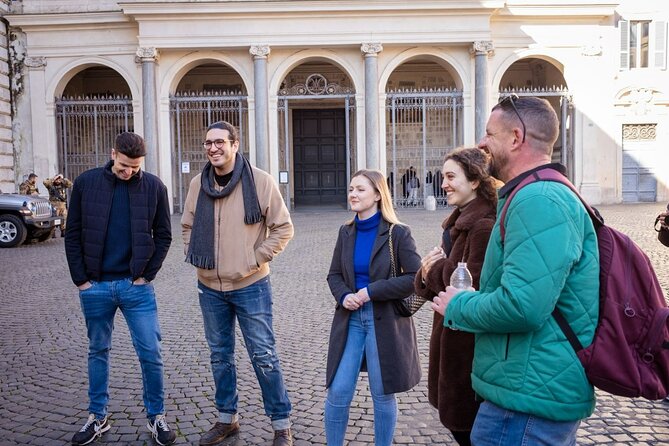
Barcelona can feel like a choose-your-own-adventure city. This tour helps you pick a thread and follow it quickly, through the oldest streets where power, faith, and culture have left layers you can still spot today. You get the standard icons, but also the smaller details that make the Gothic Quarter feel like a living museum rather than a postcard set.
You’ll also get a tour style that fits first-time visitors. The group stays together, the route makes sense on foot, and the guide’s stories do the heavy lifting. In multiple experiences, guides used tools like an iPad to explain what you were seeing, and they also answered questions on the spot, from how Roman Barcino worked to how Catalan identity shows up in public art.
This is also a practical way to start your visit. One common theme in the experiences I read is that people felt it was a strong first morning plan because it helps you navigate later, when you go back for extra museums, coffee, or photos.
More walking tours in Barcelona:
- Barcelona Tapas and Wine Experience Small-Group Walking Tour
★ 5.0 · 5,804 reviews - Barcelona: Tapas Walking Tour with Food, Wine, and History
★ 4.8 · 4,261 reviews - Barcelona: Food Walking Tour with Tapas and Wine
★ 4.9 · 2,180 reviews
Timing, pace, and who this walk suits best
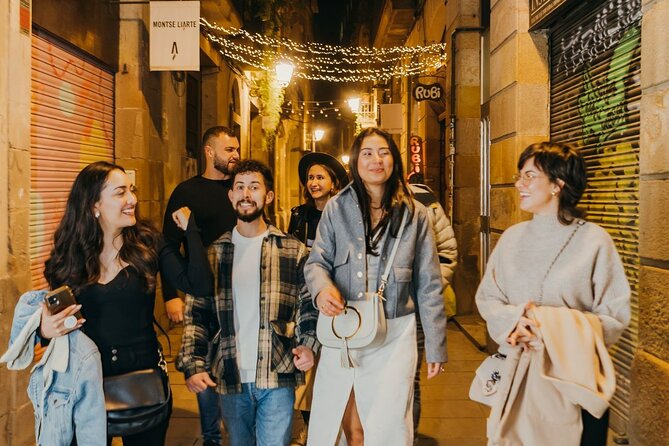
This is an about 2-hour walking tour, and the pace is built for sightseeing, not speed. It’s long enough to feel like you did something meaningful, but short enough that you do not need the kind of stamina a full-day neighborhood crawl demands.
Group size stays small, with a maximum of 20. That matters more than it sounds. In tight, winding areas like the Gothic Quarter, large groups often turn into a conga line of half-seen buildings. Here, you get enough space to stop, look up, and hear the explanation.
It’s best for:
- First-timers who want context fast
- People who enjoy stories, including political history and local legends
- Visitors who prefer walking lanes over sitting on a bus
- Families, since multiple guides were described as good at keeping kids engaged (one mention was specifically about being great with children)
If you have mobility limits, you might still be able to do it, since the tour is described as suitable for most travelers. Still, the Gothic Quarter includes uneven streets and lots of turning, so wear shoes that can handle cobblestones and plan for a few steady climbs and dips.
Value check: is $30.25 worth it?
At $30.25 per person for an English-language guided walk, you’re paying for three things: a local guide, a route that strings together the best stops in a short time, and the storytelling that helps you understand what you’re looking at.
What makes it feel like value is that you’re not just walking past landmarks. You get explanations tied to each site, including artist hangouts like Els 4 Gats, Catalan memorial symbolism, Roman remnants, and war-era traces. You also get a format that is easy to manage: a mobile ticket and a route that stays in the historic core.
Also, this tour is offered by Carpe Diem Tours, and multiple guides were praised by name, including Juan, David, Thami, Petra, Sonia, Jorge, Lidia, Vanesa, Jordan, Craig, Justin, Mariah, Sara, Darren, and Tammy. When a tour consistently hits a high satisfaction level (a very strong rating and recommendation rate), it usually means the guide quality and route planning are solid.
Where you’ll start, where you’ll end
You meet in Plaça del Vuit de Març, Ciutat Vella, then you finish at Basilica de Santa Maria del Mar area in Ciutat Vella.
That finish is a smart design. You end at a church many visitors want to see anyway, so you get a satisfying wrap-up and a clear starting point for whatever comes next, whether that’s a meal nearby or continuing your walk into El Born.
If you like an easier start, go when the city is cooler and less crowded. One tip from a past experience was that a morning tour can be more comfortable and helps you enjoy photos without fighting crowds.
Other days out near Barcelona
- Barcelona Tapas Walking Tour: Food, Wine & History
★ 4.5 · 1,928 reviews - Barcelona Helicopter, Sailboat & Old Town Private Walking Tour
★ 5.0 · 1,395 reviews - Barcelona: Old Town and Gothic Quarter Walking Tour
★ 4.8 · 1,393 reviews - Barcelona: City Walking Tour with a Local Guide
★ 4.9 · 1,384 reviews
The stop-by-stop route, what each place is really showing

Here’s how the tour unfolds, and what you should pay attention to at each stop.
Stop 1: Els 4 Gats, the artist café with Art Nouveau style
You begin at Els 4 Gats, a historic café and restaurant that was a favorite meeting place for artists, intellectuals, and modernists. The big names tied to the place include Pablo Picasso and Antoni Gaudi.
What I like about starting here is that it gives you an immediate Barcelona vibe. Before you hit churches and Roman layers, you get the sense that this city has long been a magnet for creative minds. Look at the Art Nouveau design details and treat the building like a time capsule.
Admission here is free for this stop.
Stop 2: El Mon Neix En Cada Besada, Catalan identity in a photomosaic
Next comes El Mon Neix En Cada Besada, a photomosaic installed in 2014. It connects to the Catalan defeat on September 11, 1714, tied to the War of Spanish Succession. This is part of what fuels the celebration known as La Diada, Catalonia Day.
This stop is a good reminder that Barcelona history is not only medieval stone. It also lives in modern memorial art. If you tend to skip public artwork, slow down here. The guide’s explanation makes it easier to understand why locals treat this date and this symbolism so seriously.
Admission is free.
Stop 3: Catedral de Barcelona, where devotion meets the Gothic core
Then you reach Catedral de Barcelona, a Gothic-style church honoring the life and death of Saint Eulalia, who was tortured to death by the Romans.
Why it matters on this walk: the Gothic Quarter is full of dramatic architecture, but you need a reason behind it. This cathedral stop gives you a central faith story that helps you interpret other religious buildings you’ll see later around town.
Important note: admission for this stop is not included, so you’ll need to decide whether you want to pay to go in.
Stop 4: Casa de l’Ardiaca, Gothic and Renaissance mix with Roman wall clues
At Casa de l’Ardiaca, you’ll see a strange, fascinating blend of styles: Gothic and Renaissance architecture. The standout feature is that it houses the vertical face of the Roman wall and associated aqueducts.
This is one of those stops that makes Barcelona feel layered rather than frozen. A lot of cities have Roman traces, but in Barcelona you can often connect those traces to later building eras without leaving the neighborhood.
Admission is free.
Stop 5: Pont del Bisbe, a bridge that comes with a legend
Next is Pont del Bisbe, on Carrer de Bisbe, also known as Bishop Street. This was described as one of the main thoroughfares in Roman-occupied Barcino. The bridge is Neo-Gothic, and it’s also the source of a superstition legend.
You do not need to be a legend believer to enjoy this stop. The point is the story itself and what it says about how people used to explain danger, luck, and survival in older cities.
Admission is free.
Stop 6: Plaça Sant Felip Neri, Spanish Civil War scars you can still see
Then you get to Placa Sant Felip Neri, a square tucked away in the Gothic Quarter. Its history is tied to the Spanish Civil War, and the square’s scars are still visible.
This is a heavier stop. It can shift the tone from architectural admiration to real-world memory. If you’re not in the mood for somber history, you might want a quick moment to reset after this stop, then keep moving. If you do engage, it makes the neighborhood feel honest.
Admission is free.
Stop 7: MUHBA – El Call, the medieval Jewish quarter
Next is MUHBA – El Call, the Jewish quarter with narrow streets and mediaeval architecture. You’ll learn about Jewish history in the city, including references to the synagogue and local legends.
This stop helps balance the tour. The Gothic Quarter gets framed as Christian and Roman in many typical routes, but El Call reminds you Barcelona’s story includes many communities, over many centuries.
Admission is free for this stop.
Stop 8: Placa de Sant Jaume, civic Barcelona in the open air
At Placa de Sant Jaume, you step into a busy civic hub of government activity, surrounded by historical buildings.
This is where you start to feel how these old streets still function today. Even when the city is modern, public squares keep pulling people back, because they’re useful. Listen to the guide’s framing, and try to look at the square as a stage where decisions were made.
Admission is free.
Stop 9: Placa Del Rei, royal power plus a darker shadow
Then you reach Placa Del Rei, a square that can look charming at first glance, but includes the presence of the Royal Palace and a dark past.
The value here is the contrast. Barcelona’s old squares often combine beauty with reminders of control and conflict. The guide’s explanation helps you see past the surface and notice what the stone is hinting at.
Admission is free.
Stop 10: Plaça de l’Àngel, the wheat square and the heavenly legend
Next is Plaça de l’Àngel, formerly known as the Wheat Square, a major hub for grain trading. It also connects to a legend tied to the idea of an angel, which is how it got its name.
This is a fun stop because it ties the economics of old Barcelona to religion and folklore. Even if you do not buy into legends, you can still appreciate how stories helped communities make sense of everyday life like food supply, trade, and survival.
Admission is free.
Stop 11: Basilica de Santa Maria del Mar, Catalan Gothic with a maritime backdrop
The walk ends at Basilica de Santa Maria del Mar, described as a breathtaking Catalan Gothic church and a reminder of Barcelona’s maritime roots.
This is a strong finish because it’s visually satisfying and historically grounded. If you’re into architecture, look for the light, the stone details, and the way the building feels made for the community that used it.
Admission for this stop is not included, so you’ll want to plan whether you’ll pay to go inside or simply admire it from outside before moving on.
Guide quality, the part that makes or breaks it

This is where the experiences I read really agree. Guides like Juan, David, Thami, Jorge, Lidia, and Darren were repeatedly praised for turning the walk into an active storytelling session, not a lecture.
A few concrete examples from guide behavior that matter to you:
- Juan was mentioned using an iPad to show historical context.
- Tammy was noted for sending an extensive text after the tour with food and drink suggestions.
- Some guides were described as energetic and funny, keeping the group engaged even when rain showed up.
- There were also comments about guides being inclusive, handling questions well, and making sure children stayed interested.
So if you care about hearing the why behind the what, this tour format tends to deliver.
When to go, and what to bring
Since you’re walking through stone streets and narrow corners, you’ll want:
- Comfortable shoes for cobblestones
- A light layer, because temperatures can shift
- An umbrella if the forecast looks iffy, since one past experience mentioned the guide adjusting and spending extra time explaining while avoiding downpours
If you can choose timing, mornings can be calmer. One person specifically said morning makes it cooler and less busy, and the walking felt easy and doable.
Quick reality check: possible drawbacks
A few practical considerations:
- Two church stops do not include admission, so you may spend extra if you want to enter both.
- The route is in older streets, so plan on some uneven ground.
- The tour is short, so you’ll see highlights rather than taking a deep museum-style look at each site.
Those are not deal breakers. They just help you set expectations: this is a smart overview with enough detail to guide your next steps.
Should you book this Gothic Quarter and El Born walking tour?
If you want a high-value introduction to Barcelona’s oldest neighborhoods, I think this is an excellent pick. The route covers artist-era links, Roman traces, civic squares, and Catalan memorial symbolism in just about two hours. You’ll leave with a mental map that makes it easier to explore El Born on your own after the tour.
Book it if:
- You like guided storytelling and local legends
- You want to hit a lot of meaningful places without long bus rides
- You prefer small groups and a relaxed pace
Skip it, or consider a different format, if:
- You want a museum-heavy day with lots of paid entry time inside multiple sites
- You dislike walking on uneven historic streets
If you’re trying to decide what to do on your first visit, this walk is a strong starting point. It helps you understand what you’re seeing, and it points you toward what to chase next in Barcelona.
More Historical Tours in Barcelona
- Barcelona: 2.5-Hour Bike or E-Bike Historical Tour
★ 4.5 · 1,262 reviews - Barcelona Erotic Museum – Explore Art, History & Fun
★ 4.4 · 450 reviews - Private Jewish Heritage Journey by Barcelona Dreaming
★ 4.8 · 383 reviews - Andorra Original History and Sightseeing Tour (Private, Pickup)
★ 5.0 · 350 reviews
Recently added around Barcelona
- E-Bike tour in Barcelona with English Guide★ 5.0 · 128 reviews
- Barcelona: Wine Tasting and 5 Course Tapas Pairing Dinner★ 4.5 · 129 reviews
- Wine Tasting Experience in Barcelona★ 5.0 · 172 reviews
- 2 Wineries Small Group Tour with Free Hotel PickUp from Sitges★ 5.0 · 83 reviews
- Barcelona: Guided Rooftop Wine Tasting – Enjoy 6 Spanish Wines★ 4.5 · 61 reviews
- Barcelona Luxury Yacht Cruise – Day or Sunset, Open Bar & Snacks★ 5.0 · 154 reviews
- Entrance to the Mirador Torre Glories Barcelona★ 4.5 · 193 reviews
- Barcelona Wax Museum Admission Ticket★ 4.5 · 237 reviews
Walking Tours, compared.
Barcelona Tapas and Wine Experience Small-Group Walking Tour
Read our review →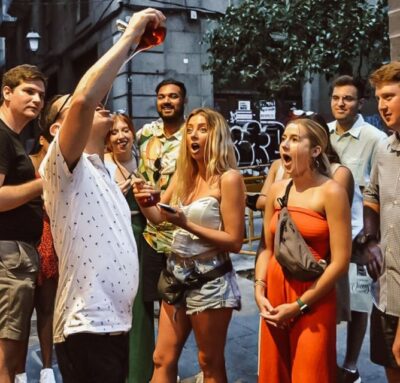
Tapas Walking Tour with Food, Wine, and History
Read our review →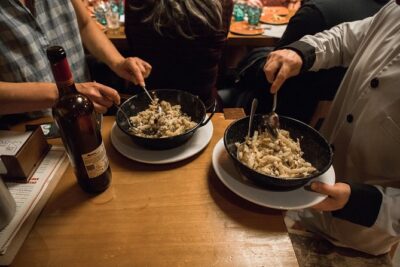
Madrid Tapas & Wine Tasting Walking Tour – Small Group Local Bars
Read our review →
Albaicín and Sacromonte Guided Sunset Walking Tour
Read our review →
Toledo Tour & Vineyard Walk with Wine Tasting from Madrid
Read our review →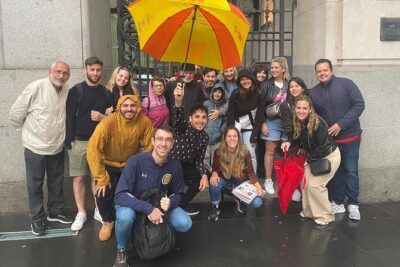
Madrid Walking Tour from Puerta del Sol to Retiro Park
Read our review →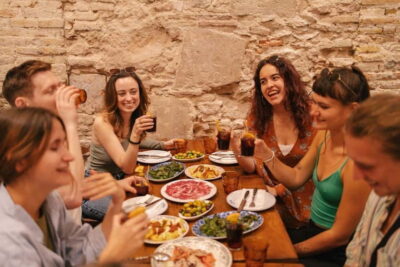

Barcelona Tapas Walking Tour: Food, Wine & History
Read our review →Browse the lists this tour appears in