
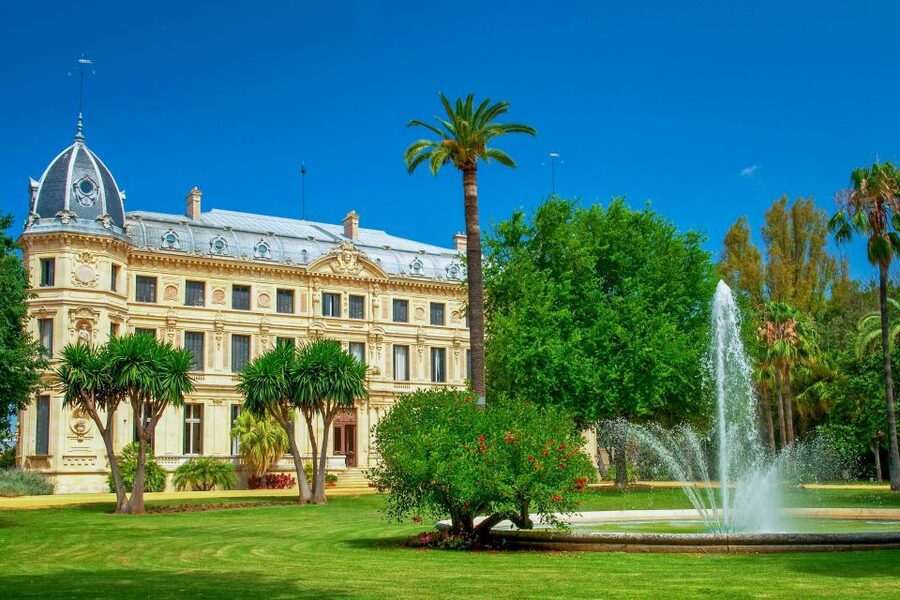
Reviewed · HORSES
Jerez de la Frontera: How the Andalusian Horses Dance
Andalusian horses turn discipline into ballet. You sit in Jerez and watch Andalusian horses and riders perform a high-skill show at the Fundacion Real Escuela Andaluza Del Arte Ecuestre, with 18th-century costumes and music that feels unmistakably Spanish. I love how the choreography stays connected to real riding traditions, not just tricks. I also love that the show gives you variety in one sitting. One thing to keep in mind is the schedule and program may change on the day, so treat it as a live performance, not a guaranteed minute-by-minute script.
What makes this worth your time is the range of styles you’ll see in one arena, from Doma Vaquera and classical dressage to work in hand and carriage driving. Expect a program built from 6 to 8 separate choreographies, usually lasting 90 minutes to 2 hours, with advanced horsework like pirouettes, arreones, levades, caprioles, and a unison carrousel finale. If you’re in western Andalusia and you want one event that feels elegant, very “Jerez,” and still grounded in horsemanship, this is an easy call.
In This Review
- Key things to notice before you go
- Jerez, horses, and the Royal Andalusian School setting
- The show format: 6 to 8 choreographies, not just one routine
- Doma Vaquera: one-hand riding, rhythm changes, and pirouettes
- Classical dressage highlights: airs, passage, piaffer, and Pas de Deux
- Work in Hand: the rider off the saddle
- Carriage driving: harness skills and coachmen control
- The closing carrousel: horses in unison
- Costumes and Spanish music: the atmosphere is part of the performance
- Price and value: what $31 buys in a 90 minute to 2 hour show
- Tickets, seating, and what can affect your day
- Rules to keep it smooth (and avoid the awkward stuff)
- Special dates: the Four Equestrian European Schools 50th Anniversary Galas
- Who should book this show, and who might skip it
- Should you book How the Andalusian Horses Dance?
- FAQ
- Where does the show take place?
- What is the meeting point?
- How long is the show?
- How much does it cost?
- What should I bring?
- Do I need to print my voucher?
- Can I take photos or record audio?
- Are pets allowed?
- Are tickets assigned by seat number or category?
- Is there free cancellation?
Key things to notice before you go
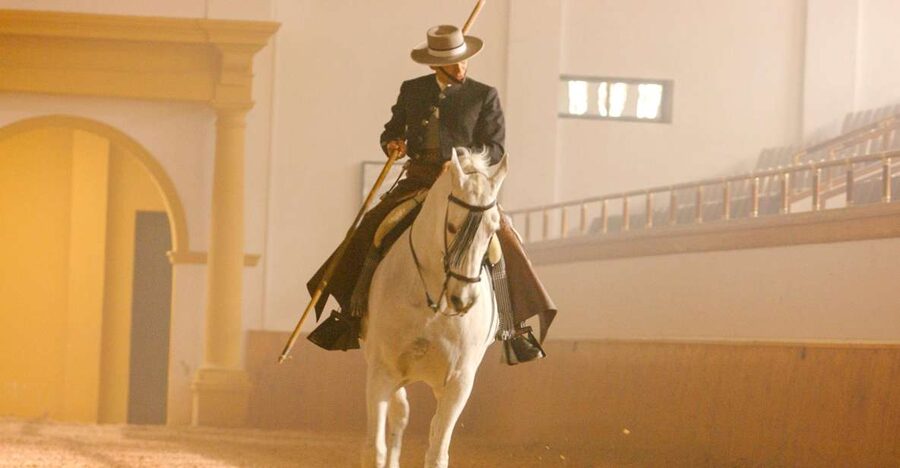
- A show built from 6 to 8 choreographies mixing Doma Vaquera, Classical Dressage, Carriage Driving, Work in Hand, and a group carrousel finale
- Real Haute École style moves you can actually watch closely, including levades, caprioles, piaffe, and the Spanish walk
- Costumes and music that set the tone with an 18th-century look and quintessential Spanish music throughout
- Carriages return as sport and exhibition so you get both riding and harness skills in the same evening
- Seating is category-based and your exact row or seat is assigned by order of booking
- Flash and recording are off-limits so the audience stays focused on the performance
Jerez, horses, and the Royal Andalusian School setting
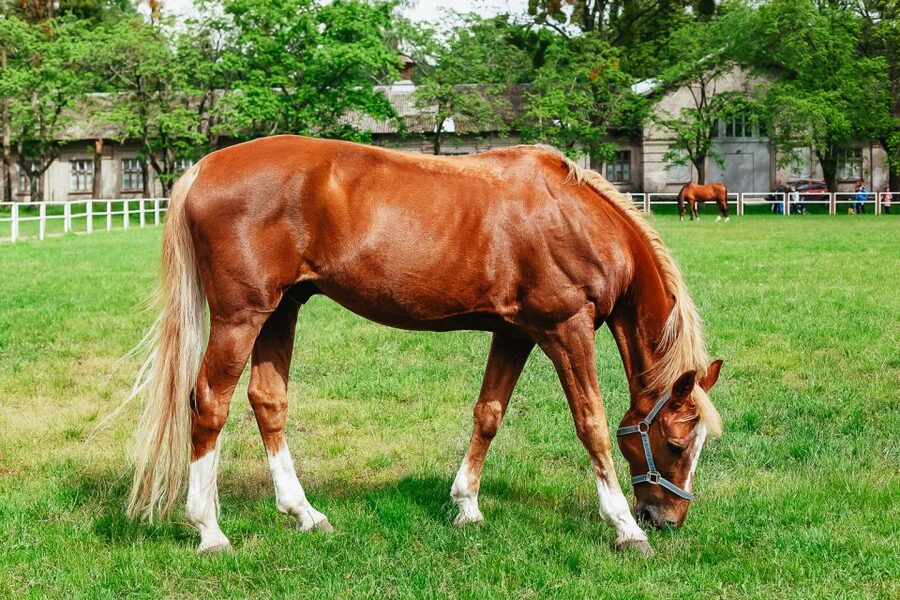
The show takes place at the Fundacion Real Escuela Andaluza Del Arte Ecuestre in Jerez de la Frontera, which matters because this is not a one-off traveling act. It feels like you’re stepping into a working equestrian school with a controlled arena and a formal stage setup. That authenticity is part of the appeal. Instead of just watching from a distance, you get the sense that the performers train these movements as craft.
Before the performance, I like arriving with enough time to get oriented. The grounds around the Royal Andalusian School setting are meant for visitors too, and you may have a chance to see riders or trainers in action before and after the show. Even if you only catch brief moments, it helps you connect what you’ll see under lights to what happens outside the spotlight.
Practical note: the meeting point is the Reservation Box Office at the Royal Andalusian School Foundation. Plan to bring a passport or ID card, since it’s listed as required.
Other days out near Spain
- El Salobre: Horse Riding Adventure with Transfer Options
★ 4.5 · 2,034 reviews - Jerez de la Frontera: Andalusian Horse Dance and Museums
★ 4.7 · 1,289 reviews - Jerez: Yeguada de la Cartuja Carthusian Horses Tour
★ 4.8 · 970 reviews
The show format: 6 to 8 choreographies, not just one routine
The performance is built around a full repertoire, typically 6 to 8 different choreographies chosen by the school. You’ll notice the show doesn’t rely on one style for the entire session. It shifts between disciplines, so the pace stays interesting and the skills stay varied.
Think of it like a playlist, except the tracks are sections of horsemanship:
- Doma Vaquera sequences that highlight country-style control
- Classical Dressage numbers set to classical music, with advanced exercises
- A Carriage Driving segment showing harness work and drawing ability
- Work in Hand, where the rider is not in the saddle
- A closing Carrousel where multiple horses and riders perform in unison
This variety is one of the big reasons people love the show. Even if you know very little about dressage, you still recognize the difference between trotting and galloping rhythm changes, handheld obedience, carriage harness response, and synchronized group movement.
Doma Vaquera: one-hand riding, rhythm changes, and pirouettes
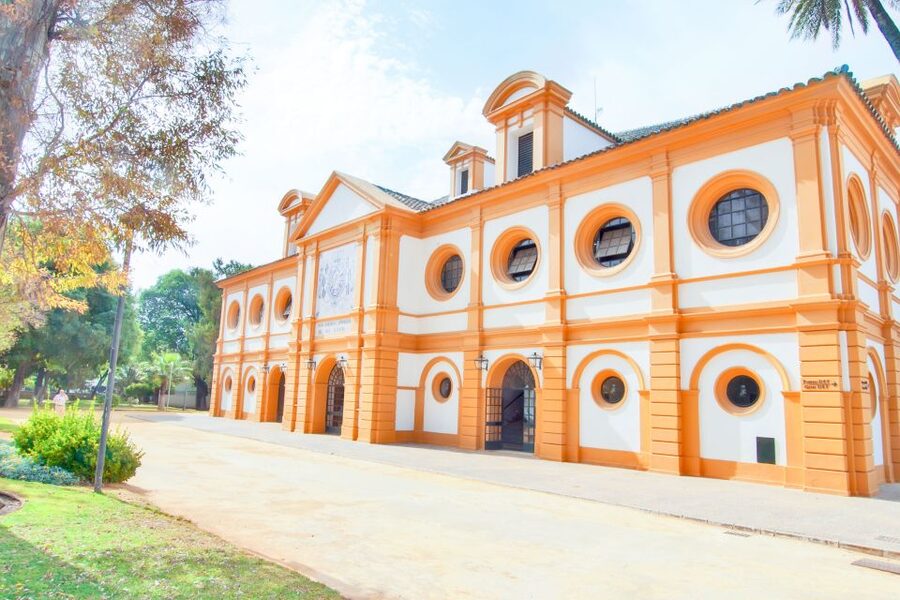
One of the standout segments is Doma Vaquera, described as Spanish riding based on traditional cattle herding. In the arena, the horseman rides using only one hand and moves the horse around, starting with trotting and later moving into galloping.
What you should watch for is the transitions. The description calls out changing the rhythm and performing pirouettes and arreones, which are described as breaking into a gallop. That means you’re not only looking at speed. You’re watching precision. The horse has to understand when the movement should shift, and the rider has to shape that transition with minimal visible interference.
If you like moments where the horse looks both powerful and controlled, this section tends to deliver. It’s also a good “entry point” for first-timers because the riding feels grounded and purposeful rather than purely abstract.
Classical dressage highlights: airs, passage, piaffer, and Pas de Deux
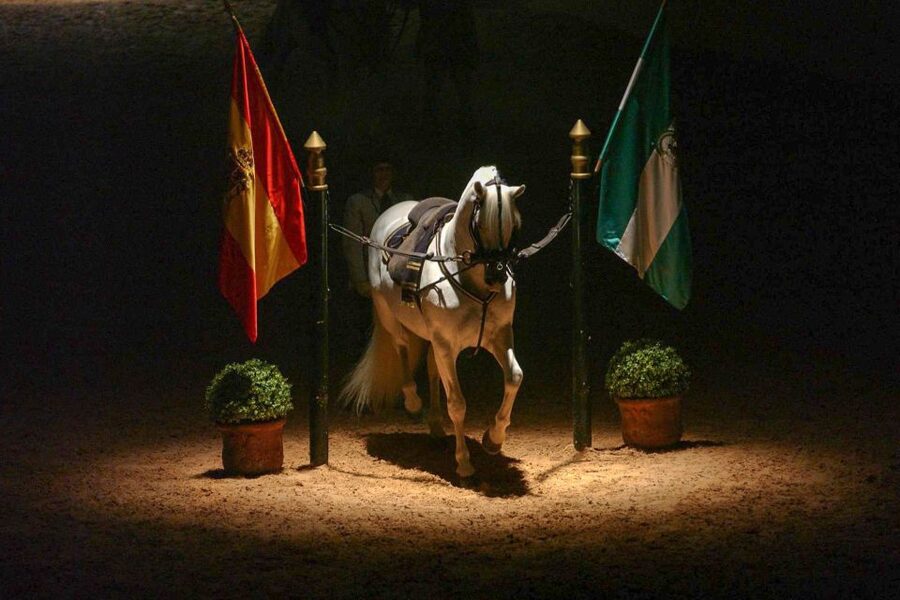
Then the show moves into Classical Dressage, with choreographies performed to classical music and featuring advanced exercises. The program includes names like The Colts, Airs on Horseback, Pas de Deux, Passage and Piaffer, Domino on Horseback, Airs Above the Ground, and Fantasy.
Even if those titles sound fancy, you can track what matters by watching the exercises listed in the show notes for advanced movements. In particular, the show includes Haute École style skills such as levades, caprioles, courbettes, piaffe (between pillars), and the Spanish walk.
Here’s why that matters for your experience: these are the kinds of horse movements that look effortless when done well, but require exact coordination between rider balance, horse muscle control, and timing. Watching the same animal do multiple levels of work, without it breaking into chaos, is where the “wow” lives.
The Pas de Deux part also helps. You get a clearer sense of how riders can pair movement and timing. It adds a human dance element while still staying in the horse world.
Also within reach of Spain:
- Barcelona: Sagrada Familia Entry Ticket with Audio Guide
★ 4.6 · 105,312 reviews - Barcelona: Park Güell Admission Ticket
★ 4.4 · 76,534 reviews - Seville: Royal Alcázar Entry Ticket
★ 4.6 · 28,378 reviews - Barcelona: Casa Batlló Entry with Self-Audioguide Tour
★ 4.7 · 25,359 reviews
Work in Hand: the rider off the saddle
One of the most memorable parts in the show lineup is Work in Hand, where the horse obeys even when the horseman is not in the saddle. The show notes call out Haute École dressage exercises again here, including levades, caprioles, courbettes, piaffe between pillars, and the Spanish walk.
If you’ve only ever seen horses with riders on their backs, this is the section that tests your assumptions fast. You’re watching control communicated through cues from the ground and the horse’s training responding in real time.
It also creates an easy moment for you to focus. Since you’re not splitting your attention between seat position and reins, it becomes clearer how much of the performance is training and communication.
Carriage driving: harness skills and coachmen control
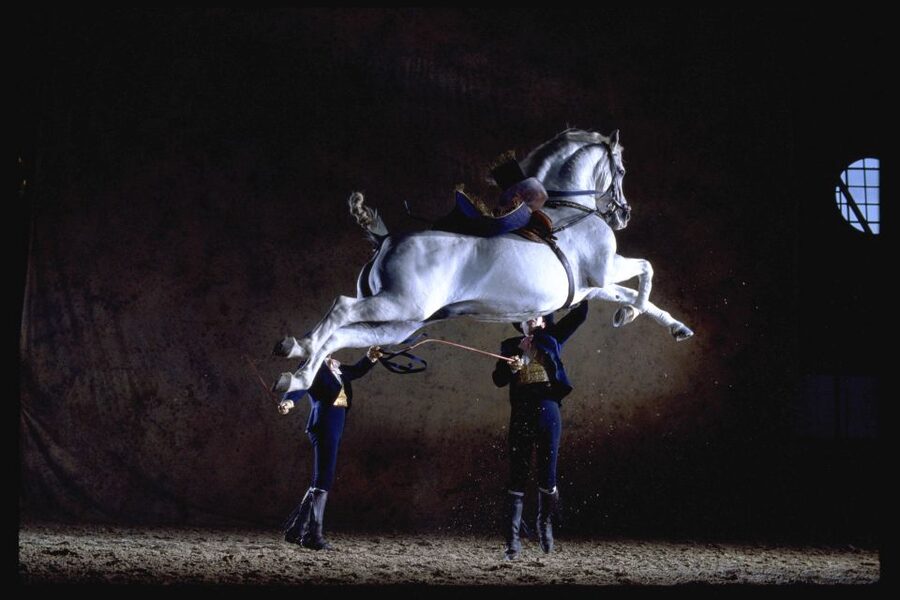
The show also includes Carriage Driving, where horses demonstrate their ability to draw carriages. The notes explain these carriages were originally for transport, but now they’re used for sport and exhibitions, with classical harnesses and driven by coachmen.
What you should watch is how the harness and the horse coordination change the feel of the performance. You’re moving from under-saddle riding to a driving format, which requires different control, different rhythm, and a different kind of precision. The carriage segment is short compared to a full driving event in the outside world, but it gives you a solid sense of how versatile these horses can be.
Also, the coachmen are described as dexterous in their demonstrations. That detail matters because it hints the skill is not only the horse pulling. It’s also the person reading the horse’s movement and keeping everything aligned.
The closing carrousel: horses in unison
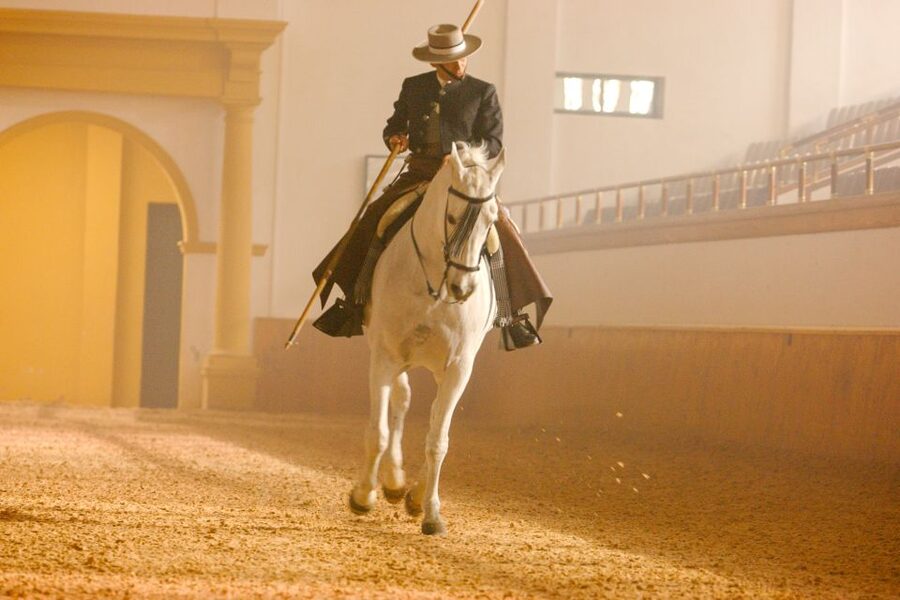
The final act is the Carrousel, a group performance where horses and riders perform advanced equestrian exercises in unison. This is a satisfying ending because it rewards you for paying attention.
In earlier segments, you can focus on a single pair or discipline. In the carrousel, the question becomes: does everyone match? If the horses and riders hit the same rhythm and shape together, the finale feels like the whole school working as one unit.
It’s the kind of ending that makes it easier to remember the show as a coherent experience, not a set of disconnected tricks.
Costumes and Spanish music: the atmosphere is part of the performance
This is not just an athletic demonstration. The show is built with visual and audio storytelling.
You’ll see traditional 18th-century style costumes and hear quintessential Spanish music. Those details do something practical: they help you understand why people treat equestrian art as performance, not sport. The music and costumes support the movements and give the entire program a consistent mood.
If you care about travel moments that feel like a cultural snapshot, not a generic event, this is one of the stronger parts. It’s easy to forget that dressage routines can be staged with intention, and this show leans into that.
Price and value: what $31 buys in a 90 minute to 2 hour show
The listed price is $31 per person, and the show runs 90 minutes to 2 hours. For many visitors, that’s good value because you’re paying for a full evening of multiple disciplines performed by the same school, not one short segment.
Two other value drivers:
- You’re seeing a mix of riding disciplines in one sitting, including work in hand and carriage driving.
- The show context feels formal and organized, with the seating and arena set up for viewing the same way every time.
Do note: tickets are sold by category, and you do not choose a specific row or seat number. Seating is allocated by order of purchase or booking. So if you’re picky about closeness, book early.
Tickets, seating, and what can affect your day
A few logistics points matter because they affect how smoothly your evening goes.
First, you’re expected to present a printed voucher at the ticket office. If you booked through a platform, print it or follow the guidance you receive, because it’s listed as essential.
Second, you should arrive with time to get checked in before your start time. The management reserves the right to alter or change the program, so don’t build your entire night around a strict timetable for dinner afterward.
Third, photography rules are strict. You can’t take flash photos or record audio, and the grounds have clear restrictions on bottles and other items that management considers unsuitable. If you like to take pictures, this is still possible without flash, but plan for a lot of low-light indoor-style photography problems, because that’s why many venues go flash-free.
Rules to keep it smooth (and avoid the awkward stuff)
You do not want a last-minute confrontation at the gate. The show lists these important restrictions:
- No pets
- No flash photography
- No glass objects
- No audio recording
- No weapons or sharp objects
- No bottles, cans, animals, or other items management considers unsuitable
Bring your passport or ID card. That’s one of those details that can ruin an evening if you forget. Also remember: tickets for performances are exclusively by category, and your seat assignment comes from booking order.
If you’re someone who always brings a bottle, food, or camera gear, adapt your pack. You’ll enjoy the show more when you’re not thinking about what you might have to store or discard.
Special dates: the Four Equestrian European Schools 50th Anniversary Galas
There’s also a special event on June 30 and July 1 at 9 p.m. called the 50th Anniversary Galas, featuring the Four Equestrian European Schools for the first time together: Austria, France, Spain, and Portugal. The notes also say a brand-new Abu Dhabi International Riding School will join this event under the supervision and training of the Royal Andalusian School of Equestrian Art.
If you’re traveling around those dates, this can be a big reason to pick Jerez. The notes say 4,000 seats can be enabled in outdoor stands near the Alvaro Domecq riding arena, plus space for leisure and catering. Tickets can be bought by selecting the corresponding option on those dates.
I’d treat this as a separate decision from the standard show. If those dates match your trip, it’s worth checking because your experience may feel larger and more festival-like.
Who should book this show, and who might skip it
This is a strong fit if:
- You like Andalusian culture and want a Jerez experience that feels tied to the region
- You enjoy watching skilled animals and riders perform coordinated training movements
- You want one event that mixes multiple disciplines in a short time
You might skip it if:
- You need a lot of explanations and guides, because the show is primarily performance-based and the notes emphasize what you’ll see more than talk-through content
- You’re extremely sensitive to live changes, since the management can alter the program
For families, it tends to work because the show is visual, dramatic, and based on clear disciplines. For couples, it’s a romantic-styled arena night with traditional costumes and music. For solo travelers, it’s a straightforward outing with a clear start time and a contained setting.
Should you book How the Andalusian Horses Dance?
If you’re in Andalusia and you can spare 90 minutes to 2 hours, I think you should book. This is one of those experiences where the price feels fair for the level of training and the number of different show segments packed into one evening. The best part is that you’re not watching the same movement repeatedly. You’re seeing a full repertoire, including work in hand and a synchronized carrousel ending, which makes the whole show feel complete.
Before you commit, do two quick checks: plan for printed voucher entry, and decide whether you’re comfortable with category seating that you do not choose. If that’s fine, you’ll likely walk out feeling like you saw something genuinely Andalusian, not just another ticketed show.
FAQ
Where does the show take place?
It takes place at the Fundacion Real Escuela Andaluza Del Arte Ecuestre in Jerez de la Frontera.
What is the meeting point?
Go to the Reservation Box Office at the Royal Andalusian School of Equestrian Art Foundation.
How long is the show?
The duration is listed as 90 minutes to 2 hours.
How much does it cost?
The price is listed as $31 per person.
What should I bring?
Bring your passport or ID card.
Do I need to print my voucher?
Yes, it is essential to present your printed voucher at the ticket office.
Can I take photos or record audio?
Flash photography is not allowed, and audio recording is not allowed. Glass objects are also not allowed.
Are pets allowed?
No, pets are not allowed.
Are tickets assigned by seat number or category?
Tickets are sold by category, and you do not get to select a specific row or seat number. Seats are allocated according to order of purchase or booking.
Is there free cancellation?
Yes, there is free cancellation, with cancellation allowed up to 24 hours in advance for a full refund.
Recently added around Spain
- Granada: Traditional Flamenco Show in a Cave Entry Ticket★ 4.6 · 93 reviews
- Granbazán Winery: Guided Tour and Wine Tasting★ 4.9 · 88 reviews
- Guggenheim: Art explained by artists★ 5.0 · 69 reviews
- Granada: Traditional Bath in the Nasrid Palace Hammam★ 4.6 · 624 reviews
- Granada: Traditional Flamenco Show at Tablao Casa Ana★ 4.8 · 390 reviews
- Granada: Historic Center and Lower Albaicin Walking Tour★ 4.7 · 136 reviews
- Granada: Tapas Crawl★ 5.0 · 86 reviews
- Granada: Alhambra Palace Guided Tour★ 4.3 · 224 reviews
Horses, compared.
El Salobre: Horse Riding Adventure with Transfer Options
Read our review →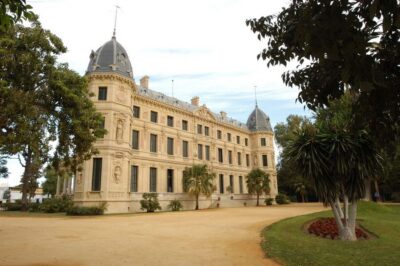
Jerez de la Frontera: Andalusian Horse Dance and Museums
Read our review →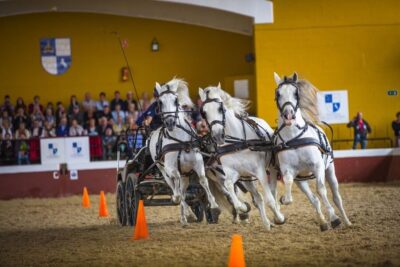
Jerez: Yeguada de la Cartuja Carthusian Horses Tour
Read our review →
Fuengirola: Spanish Horse Show with Optional Dinner/Flamenco
Read our review →
Cadiz: Andalusian Horses and Bulls Country Show
Read our review →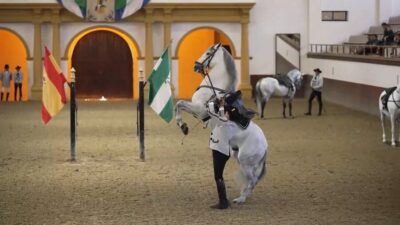
Browse the lists this tour appears in