
Reviewed · JEREZ DE LA FRONTERA TOURS
Jerez de la Frontera: Andalusian Horse Dance and Museums
Jerez is where Andalusian horsemanship becomes art. At the Royal Andalusian School of Equestrian Art, you get a 90-minute horse ballet with classical dressage moves, plus museum time inside a palace complex. I love the sheer precision of the riders and horses, and I also love that you can connect the choreography to the Art Equestrian Museum and Carriage Museum. One practical catch: the museum and stables areas follow strict rules, and the seating in the arena can be uncomfortable for some people.
The show, titled How the Andalusian Horses Dance, runs from 12:00 to 1:30, and it is paced like a performance piece, not a random lineup of tricks. You’ll see exercises built on classical dressage and Andalusian traditions, plus moments like a Pas de Deux and advanced moves such as piaffe between pillars. If you hate heat, plan smart, because the venue can be warm during summer show days.
Beyond the arena, the site gives you context. You enter through the visitor reception area for a short audio-visual presentation on the history of equestrian art in Andalusia, then work your way through gardens, a 19th-century palace, and the museums below. It is a lot packed into about 3.5 hours, which is great if you like efficiency, but you may want to linger if you’re a real horse person.
In This Review
- Key things to know before you go
- Entering the Royal Andalusian School complex, gardens, and the short history film
- The 12:00 to 1:30 show: How the Andalusian Horses Dance in classical style
- Best part for horse lovers: watching horses warm up and train around the show
- The Art Equestrian Museum: 11 rooms that explain what you’re seeing
- Saddlery and the Palace: what you might miss on Saturdays or public holidays
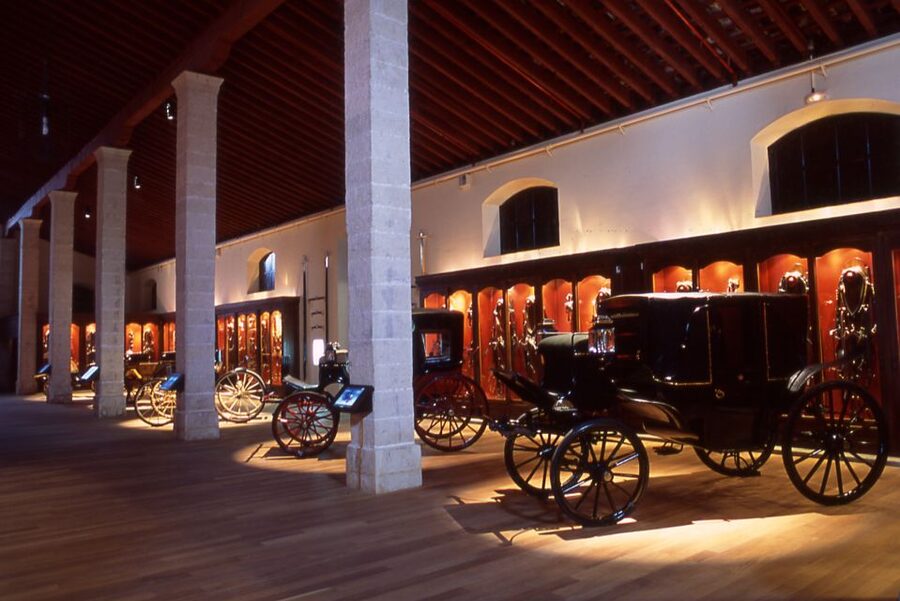
- The Carriage Museum: harnesses and costumes with strong “how it works” energy
- Price and value: does $38 feel fair for 3.5 hours?
- Practical notes that can make or break your day
- Who should book this show and museum combo
- Should you book How the Andalusian Horses Dance and the Jerez museums?
- FAQ
- What is the duration of the experience?
- What time is the How the Andalusian Horses Dance show?
- What museums are included and when are they open?
- Is the palace always open?
- Is there an audio-visual presentation before the show?
- Where do I exchange my ticket when I arrive?
- What should I bring, and what items are not allowed?
Key things to know before you go
- A real equestrian school, not just a staged show, with horses doing schooling routines before performance time
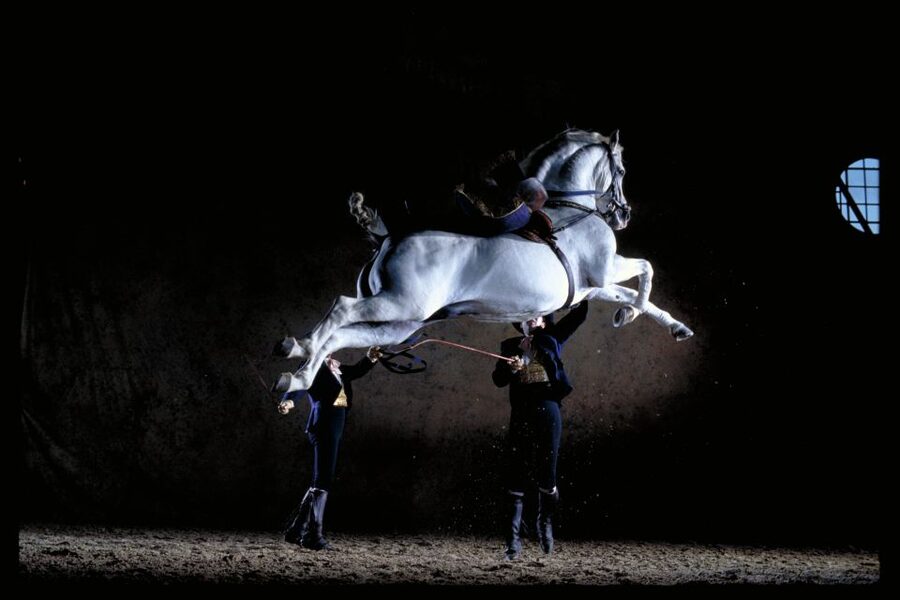
- 6 to 8 choreographies in each show, including Pas de Deux and Airs on Horseback style movements
- Museum context that matches the performance, with 11 rooms in the Art Equestrian Museum plus saddlery details
- The Carriage Museum focuses on vehicles, harnesses, and equestrian costumes, not generic souvenirs
- Strict photo rules in some areas, so plan on enjoying the moment, not filming it
- Time management matters, because some palace areas and saddlery access change on Saturdays and public holidays
Entering the Royal Andalusian School complex, gardens, and the short history film
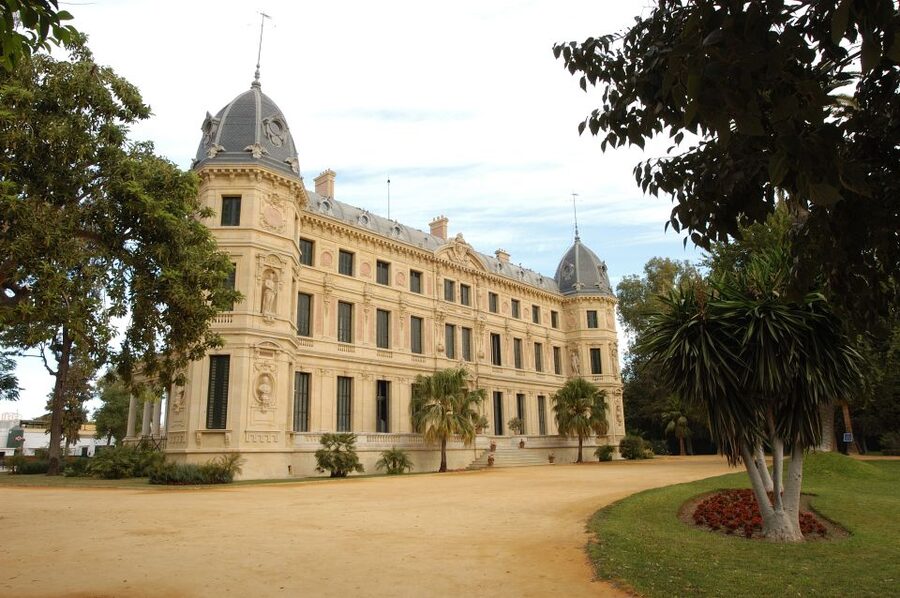
Your visit starts at the Royal Andalusian School of Equestrian Art. When you arrive, go to the ticket office to exchange your booking for the correct entry ticket. From there, the flow is pretty clear: you head into the visitor reception area, then toward the gardens and the main palace.
The visitor reception center includes a digital cinema with an audio-visual presentation on the history of equestrian art in Andalusia. That presentation runs until 11:00 AM, so if your timing is tight, I’d treat it as optional but worthwhile. It helps the show make more sense, because you’re not only watching movements, you’re seeing how equestrian traditions shaped the art.
Then you move into the gardens. Expect a quiet pause before the action, with a great variety of plants that make the whole site feel calmer than a typical “show and leave” attraction. The palace itself rises above the gardens, and it’s a beautiful example of 19th-century architecture. Even if you are there for the horses first, it adds an elegant, old-world backdrop.
Where this visit gets especially smart is what’s inside. The palace is the home base for the museum circuit, including the Art Equestrian Museum in the basement. That layout means you’re not hopping between random buildings. You can settle into the day and let the performance connect to what you see next.
Other days out near Jerez de la Frontera
- Jerez: Yeguada de la Cartuja Carthusian Horses Tour
★ 4.8 · 970 reviews - Jerez de la Frontera: How the Andalusian Horses Dance
★ 4.6 · 6,168 reviews - El Salobre: Horse Riding Adventure with Transfer Options
★ 4.5 · 2,034 reviews
The 12:00 to 1:30 show: How the Andalusian Horses Dance in classical style
The headline is the horse ballet at the Royal Andalusian School. The show entrance runs from 12:00 PM to 1:30 PM, and each performance is built from 6 to 8 different choreographies. Think of it as a program with distinct sections, not one continuous routine.
If you love the look of classical dressage, this is made for you. The choreography uses movements based on classical dressage, Doma Vaquera, and traditional equestrian chores. Riders wear 18th-century style costumes, and the entire piece is set to quintessential Spanish music. That combination matters. Music changes your sense of timing, and the costume styling makes the whole thing feel like heritage theatre, not just a sports demonstration.
What you’ll notice right away is how advanced the exercises are. The horses perform advanced movements to classical music, with moments that can include pirouettes and a Pas de Deux. You can also see how the horses move with controlled precision in sections titled things like The Colts, Airs on Horseback, Pas de Deux, Passage and Piaffer, Domino on Horseback, Airs Above the Ground, and Fantasy.
And yes, there is a carriage element. The horses can demonstrate their ability to draw carriages, originally used for transport but now used for sport and exhibitions. The show uses classical harnesses, with coachmen who demonstrate their skills as the horses handle the work in a controlled, choreographed way.
The performance also highlights haute ecole exercises. Based on the program, you may see levades, caprioles, courbettes, piaffe between pillars, and the Spanish walk. Seeing those names is one thing. Watching them land in real time, with rider control that looks effortless, is another.
Important practical note: photography rules can be strict depending on where you are. The official rules you’ll see list cameras as not allowed and also mention no video recording. However, one past visitor reported that you can take photos during the show in the arena as long as flash is off. So, my advice is simple: assume restrictions are real, check on arrival, and keep flash off if any photo option is permitted.
Best part for horse lovers: watching horses warm up and train around the show
One of the most consistent reasons people love this experience is the chance to see schooling and preparation on site. You can wander around the grounds and get glimpses of horses training prior to the show. When horses are doing the basics in a focused way, it changes how you interpret the “wow” moments.
You’ll often see young equestrians and staff working with horses in training areas, and some visitors specifically mention the ability to get close to horses and stables. That matters because it turns the show from a one-time spectacle into a living craft. If you’ve ever wondered how a horse gets to that level of collection and balance, this context helps you see the work behind the performance.
It also helps that the venue feels organized. Multiple reviews point out clear signage on arrival and staff who are mostly multilingual and helpful. I’d still give yourself buffer time when you arrive, because the site has several parts (cinema, gardens, palace, museums, arena) and you do not want to sprint between them.
If you like to plan, try this sequence: museum first, then settle into the arena for the show, then return to gardens briefly or shop if it’s open. That keeps you from feeling like you missed the “training feel” before the performance starts.
The Art Equestrian Museum: 11 rooms that explain what you’re seeing
After the grounds and the short film, the main indoor reward is the Art Equestrian Museum. It sits in the palace basement and consists of 11 rooms. The museum’s focus is origins and history of equestrian art in Andalusia, plus the horse’s role in that evolution.
You’ll find sections related to saddlery, as well as exhibitions that connect training, equipment, and style. The museum is not just decorative. It is designed to give you a mental map before you sit for the choreography, so when you see a movement like piaffe between pillars, you understand that it’s part of a broader educational tradition, not a single trick.
The museum entrance is listed from 10:00 AM to 2:00 PM. That time window works well with the 12:00 show. If you arrive near the opening, you can do a slow museum pass and still be comfortable before the arena.
A big plus for non-Spanish speakers is that the museum is set up to be understandable. Past visitors note that the museum information is available in English as well as Spanish, and that the museum tour feels factual and well presented. Even if you skim, those cues keep you from wandering through rooms that feel like random displays.
One more practical note: if your interest is mostly visual, you may want to prioritize the areas that show equipment and costume connections. If your interest is conceptual, prioritize the history sections, because they give you the “why” behind the performance style.
Also within reach of Jerez de la Frontera:
- Jerez: Royal Andalusian School of Equestrian Art Admission
★ 4.6 · 882 reviews - Jerez: Bodegas Fundador Guided Tour with Tasting Session
★ 4.8 · 714 reviews
Saddlery and the Palace: what you might miss on Saturdays or public holidays
Inside the palace complex, there’s also access to the saddlery, which is the place where harnesses are made and repaired. It’s a great stop because harnesses are not background props. They are part of how dressage and carriage driving work. Seeing the craft side gives you extra respect for the precision of what you’ll watch in the show.
However, you should know that the palace and the saddlery have schedule exceptions. The palace is closed on Saturdays and public holidays, and the entrance to the saddlery is also closed those days. That doesn’t mean you lose the whole experience, but it does mean your best-case museum route changes depending on the calendar.
If you’re traveling and your one-day plan lands on a Saturday, I’d adjust expectations early. Still plan to do the Art Equestrian Museum and the Carriage Museum, because those are the core value drivers. But if saddlery access is a must for you, confirm your day’s openings when you book.
The Carriage Museum: harnesses and costumes with strong “how it works” energy
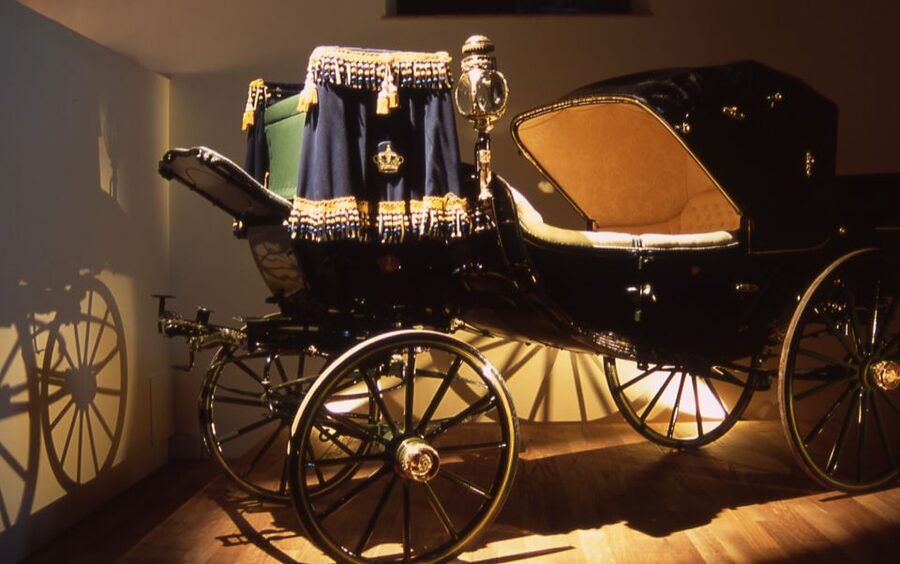
The visit ends with the Carriage Museum. It’s listed as open from 10:00 AM to 3:00 PM, which gives you a bit more wiggle room after the 12:00 show.
This is not a junkyard of old vehicles. You’re looking at how transport tools evolved into sport and exhibition gear. That continuity is exactly why this museum clicks. Harnesses and equipment show you the same design principles you see in the arena, just in a more historical format.
The museum also displays equestrian costumes, and you can see how styling fits the era and the presentation. When you connect that with the show’s 18th-century clothing look, it all ties together. You finish the experience feeling like you saw the whole system, from tack and harnesses, to training movements, to carriage work.
One small disappointment you might want to prepare for: the museum environment has strict rules about photography and video recording in parts of the site. If you care about capturing details, you may have limited ability to do it, especially inside museum spaces.
Price and value: does $38 feel fair for 3.5 hours?
At about $38 per person for roughly 3.5 hours, the value comes from bundling several things that are usually separate ticket events.
You get:
- A 90-minute equestrian ballet show in a specialized arena
- The short audio-visual history presentation
- Museum time in the palace complex, including the Art Equestrian Museum
- The Carriage Museum
- Plus access to parts like saddlery and palace, depending on the day
If you were to pick only one element, you’d still be paying for the show. What makes the price feel fair is that you’re not leaving immediately afterward. You’re also learning why these movements exist and how equestrian equipment and tradition evolved.
Also, the high rating suggests this isn’t a low-effort stop. Past visitors consistently call it an experience on the level of a big cultural spectacle, with the show as the main event and the museums as strong support.
My balanced take: if you hate horses, dressage, or historical equipment, you may feel the museum time is extra. But if you like seeing the full “horse craft” story, the cost per hour feels reasonable.
Practical notes that can make or break your day
This is one of those experiences where small comfort issues can matter.
Seating: Some visitors found the seating extremely uncomfortable. That’s not universal, but it is common enough that you should plan around it. If you have back trouble or you simply know you sit poorly, arrive with a plan. Hydrate and take breaks when you’re in the gardens.
Heat: Expect warm conditions during summer. One past visitor noted temperatures around 37C and also mentioned a snack bar with drinks and snacks during that heat. If you’re sensitive to warm weather, treat the day like an outdoor activity even if the show itself is inside.
Souvenir shop timing: A couple of visitors noted the souvenir shop closed by the time they left after the stables. If you want gifts, aim to check earlier rather than assuming you’ll do it at the very end.
Getting there and leaving: People arrive by train to Jerez and then use taxis, or they walk from central areas if they’re comfortable with the distance. The caution is the after-show exit. One review described taxis becoming hard to find once the crowd thinned. My advice is to plan your return transport early, and if you’re using trains, don’t assume you can grab the next option last minute.
Parking: If you drive, be ready for parking difficulty and possible fines on nearby streets, based on visitor feedback. For most people, train plus short taxi, or taxi only, tends to be simpler.
Who should book this show and museum combo
Book it if:
- You’re a horse person, even if you’re not an expert in dressage
- You want cultural context, not just a performance
- You like museums that explain how craft and tradition connect
- You enjoy watching animals and riders work as a trained partnership
You might reconsider if:
- You mostly want a generic sightseeing stop and don’t care about equestrian arts
- You need lots of time in a museum with slow pacing, because this is designed as a concentrated half-day
- You are sensitive to discomfort from seated theatre-style viewing
Overall, this is a strong choice for a Jerez day that balances spectacle and learning in the same place.
Should you book How the Andalusian Horses Dance and the Jerez museums?
Yes, I’d book it if you’re even moderately curious about Andalusian horses, classical dressage, or the equipment and tradition behind what you see. The show is the main event, but the Art Equestrian Museum and Carriage Museum make the ticket feel complete, not like a one-hour detour.
Do keep expectations realistic. The experience is packed into about 3.5 hours, the show timing is fixed (12:00 to 1:30), and museum access can vary on Saturdays and public holidays. If your day lines up with open palace and saddlery access, you’ll get even more value.
If you want a single half-day “wow” in Jerez that also teaches you something, this is one of the best ways to do it.
FAQ
What is the duration of the experience?
The total experience is listed as about 3.5 hours.
What time is the How the Andalusian Horses Dance show?
The show entrance is scheduled for 12:00 PM to 1:30 PM.
What museums are included and when are they open?
You’ll visit the Art Equestrian Museum (10:00 AM to 2:00 PM) and the Carriage Museum (10:00 AM to 3:00 PM).
Is the palace always open?
No. The palace is closed on Saturdays and public holidays.
Is there an audio-visual presentation before the show?
Yes. There is an entrance to the audio-visual presentation until 11:00 AM.
Where do I exchange my ticket when I arrive?
Go to the ticket office at the Royal Andalusian School to exchange your ticket.
What should I bring, and what items are not allowed?
Bring a passport or ID card. The rules list pets, cameras, smoking, glass objects, video recording, and weapons or sharp objects as not allowed.
More Museums in Jerez de la Frontera
- Madrid: Prado Museum Entry Ticket
★ 4.6 · 20,699 reviews - Barcelona: FC Barcelona Museum “Barça Immersive Tour” Ticket
★ 4.4 · 10,944 reviews - Madrid: Reina Sofía Museum Entrance Ticket
★ 4.5 · 8,788 reviews - Barcelona: Park Güell and Gaudí House Museum Entry Ticket
★ 4.5 · 6,326 reviews
Recently added around Jerez de la Frontera
- Flamenco Show at La Guarida del Angel with Drink★ 4.7 · 72 reviews
- Jerez de la Frontera: Sherry Winery Tour with Tasting★ 4.6 · 309 reviews
- Jerez: Bodegas Fundador Guided Tour with Tasting Session★ 4.8 · 714 reviews
- Jerez: Yeguada de la Cartuja Carthusian Horses Tour★ 4.8 · 970 reviews
- Jerez: Royal Andalusian School of Equestrian Art Admission★ 4.6 · 882 reviews
Jerez de la Frontera Tours, compared.
Jerez: Yeguada de la Cartuja Carthusian Horses Tour
Read our review →
Jerez: Royal Andalusian School of Equestrian Art Admission
Read our review →
Jerez: Bodegas Fundador Guided Tour with Tasting Session
Read our review →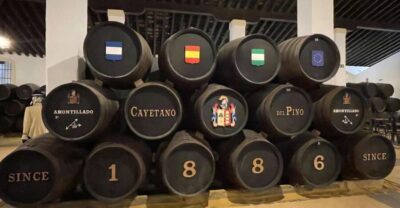
Jerez de la Frontera: Sherry Winery Tour with Tasting
Read our review →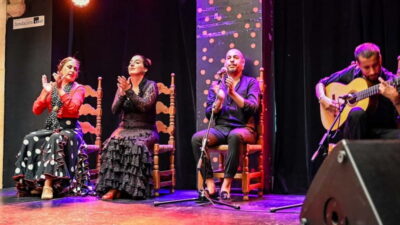
Flamenco Show at La Guarida del Angel with Drink
Read our review →Browse the lists this tour appears in