
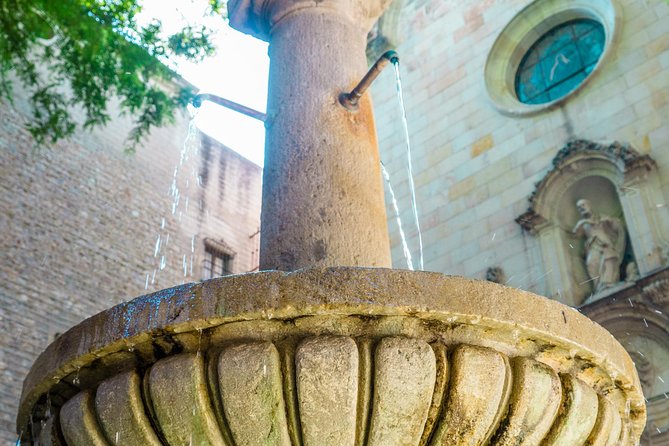
Reviewed · WALKING TOURS
Jewish Walking Tour Barcelona by Expert Jewish Guide 2h
Some cities tell stories in museums. Barcelona tells them in streets. This walk through the ancient Jewish Quarter is a focused, human-scale way to connect buildings to real history. I love how the route stays tight on key sites, so you are not zigzagging all day. You will also like that the guides bring the area to life with architecture talk and lots of context.
I also like the guide quality, and the pattern in the named guides is strong: Ella, Dina, Lilac, Leilah, Alan, and Eyal all show up in the kind of feedback that usually means clear explanations and great follow-up questions. Plus, the tour leans into the mix of Jewish life, conflict, and change, not just postcard details. That helps you understand why places like the Call matter.
One consideration: entrance fees are not included, and a €5 per person donation is requested onsite at the synagogue. Plan for that extra step, and wear shoes you trust. Two hours of walking in the older lanes adds up.
In This Review
- Key highlights before you go
- Why this Jewish Quarter walk works so well in Barcelona
- Placa de Sant Jaume: the political heart that frames the Jewish story
- Major Synagogue stop: why the building matters even before you go inside
- MUHBA – El Call: the alleys that carry both life and tragedy
- Placa del Rei: where Jewish leaders intersected with royal power
- What you really learn in 2 hours, and why it adds up
- Price and value: is $96.79 worth it?
- Getting there and making the most of the walk
- Should you book this Jewish Quarter walk?
- FAQ
- How long is the Jewish Walking Tour Barcelona?
- What are the tour start and end points?
- Is the tour offered in English, and is it private?
- What is included in the price?
- Are entrance fees included?
- What is the cancellation policy?
Key highlights before you go
- Ancient Jewish Quarter focus with a tight 2-hour route
- Major Synagogue stop tied to one of the oldest synagogue stories in Europe
- MUHBA – El Call for the winding alleys and the harder parts of the past
- Placa del Rei where Jewish leaders and royal history intersect
- Local guide in English with strong emphasis on answering questions
- Onsite €5 donation request at the synagogue, since entrance tickets are not included
Why this Jewish Quarter walk works so well in Barcelona
Barcelona can feel like it moves in layers. One block looks medieval, the next looks modernist, and somehow it all holds together. This tour keeps you in one concentrated slice of the city’s Jewish past, so the connections are easier to see.
The big win is pacing. You are not trying to sprint through dozens of stops. You get a couple of short, strategic plazas, then you shift into the lanes where the story gets more personal. The result is that you actually remember what you saw, not just the photos.
And you are going with a professional local guide. The strongest comments consistently point to guides who know how to explain architecture, history, and the political background without turning it into a lecture you tune out. That matters in a place like Barcelona’s Gothic Quarter, where tiny details can be easy to miss on your own.
More walking tours in Barcelona:
- Barcelona Tapas and Wine Experience Small-Group Walking Tour
★ 5.0 · 5,804 reviews - Barcelona: Tapas Walking Tour with Food, Wine, and History
★ 4.8 · 4,261 reviews - Barcelona: Food Walking Tour with Tapas and Wine
★ 4.9 · 2,180 reviews
Placa de Sant Jaume: the political heart that frames the Jewish story
You start at Conesa Entrepans on Carrer de la Llibreteria in Ciutat Vella. It is a practical meeting point in the Gothic area, and the walk begins at Placa de Sant Jaume, Barcelona’s political heart.
This stop is short, about 15 minutes. The value is framing. Your guide uses the plaza as a symbolic gateway to Jewish Barcelona, which means you are not just learning names of streets. You are learning how power, governance, and public life shape what communities can do and what they risk.
What I like about starting here is that it gives you orientation fast. You can look around and mentally map where you are, then the tour transitions into the older lanes with less confusion. If you have ever gotten lost in the Gothic Quarter, you will appreciate that calm start.
Major Synagogue stop: why the building matters even before you go inside
Next comes the Major Synagogue stop, scheduled for about 30 minutes. The ancient synagogue at the center of this stop is described as one of the oldest synagogue stories in Europe, and the tour focuses on what makes that place significant in Barcelona’s older fabric.
Here is the practical angle: if you care about history, buildings do more work than plaques. A synagogue is not only a religious structure, it is a community anchor. Even if you are not a specialist, your guide should help you notice architectural cues and understand why this kind of site would have mattered in everyday life.
Also remember the logistics built into this experience: admission ticket details are not included, and the synagogue requests a €5 donation per person onsite. That means you should arrive ready to follow the payment and donation flow so you are not scrambling at the last minute. It is a small amount, but it is part of the experience, not a surprise fee.
If you are the type who likes your history tied to real places, this is one of the stops you will feel most afterward. It is where the past becomes physical.
MUHBA – El Call: the alleys that carry both life and tragedy
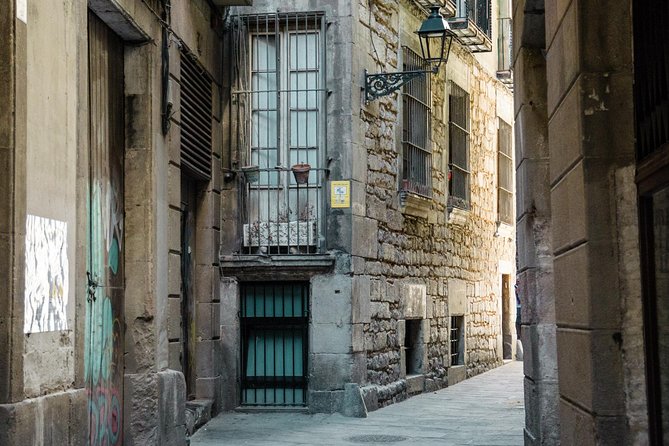
Then you move into MUHBA – El Call, about 30 minutes. The name itself points you toward one of the most recognizable settings for Jewish Barcelona, the Call. This is where you leave open squares and walk into the tighter, winding lanes.
The tour’s focus here is not just atmosphere. Your guide is meant to connect what you see in the streets with centuries of Jewish life and tragedy. In other words, you are walking through a space that has held both routine community moments and major historical rupture.
This is also where your guide’s style can make or break the stop. The feedback you have about guides like Dina, Lilach, and Lilac repeatedly mentions guides pointing out things you would not notice on your own. That is exactly what you want in a maze of narrow streets. Without guidance, you might see pretty corners. With guidance, you start to understand why those corners mattered.
One thing to keep in mind: this portion is walking in older lanes, so plan for cobbles and turns. If you are coming from a long museum day, this is the moment to slow your pace and let the guide talk. It will help you connect the spoken history to what your eyes are seeing.
Other days out near Barcelona
- Barcelona Tapas Walking Tour: Food, Wine & History
★ 4.5 · 1,928 reviews - Barcelona Helicopter, Sailboat & Old Town Private Walking Tour
★ 5.0 · 1,395 reviews - Barcelona: Old Town and Gothic Quarter Walking Tour
★ 4.8 · 1,393 reviews - Barcelona: City Walking Tour with a Local Guide
★ 4.9 · 1,384 reviews
Placa del Rei: where Jewish leaders intersected with royal power
The final listed stop is Placa del Rei, around 30 minutes. This is another plaza moment, but the emphasis shifts. Instead of framing the setting, your guide explains how Jewish leaders served kings and how history changed in ways that affected the community.
This is a good ending point because it ties together the two themes you have been hearing during the walk: community life in everyday spaces, and the political forces that shaped what happened next. You should leave with a clearer sense of how Jewish history in Barcelona was not separate from the rest of society. It ran through it.
Also, plazas like this help your brain settle. Walking the lanes is active and absorbing. Finishing with a wider public space makes it easier to review what you learned and take photos without feeling like you are hunting for the next tiny clue.
What you really learn in 2 hours, and why it adds up
A 2-hour walking tour can sound short, but the structure is designed for retention. You get multiple scene changes: political plaza, synagogue focus, Call lanes, then royal-history plaza. That rhythm helps you keep the story straight.
Here is what you are likely to walk away with:
- An understanding of how Barcelona’s Jewish presence developed in the city’s older core
- A sense for why architecture is a form of historical evidence, not decoration
- Context for the long arc of change, including references to later events up to the inquisition era mentioned in guide anecdotes
- Practical local insights, like what to notice in the Call that you would miss if you just wandered
One detail that keeps showing up in the feedback for this tour: guides often answer questions patiently and adjust explanations on the fly. You are not stuck with one script. If you care about specific parts of the story, you have a chance to get your curiosity addressed while you are standing in the right place.
If you like history but hate the long, slow version, this format fits you. If you are a “stand in front of the building and understand it” traveler, this fits even better.
Price and value: is $96.79 worth it?
At $96.79 per person, you are paying for a focused guided experience with a professional local guide and a route timed to about 2 hours of walking. That price also makes sense given what is included: you are not just getting a general sightseeing chat, you are getting a route centered on Jewish monuments and the older urban setting around them.
What is not included is equally important. Entrance tickets are not included. And at the synagogue, there is that €5 per person donation requested onsite. So your total day cost depends on how the synagogue handles entry and donation logistics during your visit.
Still, I see real value in the structure. The cost is mostly for interpretation. You could read about the Jewish Quarter, but you would miss the “why” that makes the buildings and lanes click. This tour is built to help you do exactly that in a small time block.
If you are traveling with friends or family, check if group discounts apply. The tour listing mentions group discounts, so it might stretch your budget better for a small party.
Getting there and making the most of the walk
You meet at Conesa Entrepans, Carrer de la Llibreteria, 1, Ciutat Vella, 08002 Barcelona. The tour ends back at the meeting point, so you are not stuck figuring out how to get yourself across the city at the end.
The route is near public transportation, which is a relief in Barcelona, where the metro and walking layers can feel like a puzzle. You should be able to connect easily, and the meeting point is in a walkable area you can likely reach from central stops.
Also: it is offered in English and is designed so most travelers can participate. The tour is described as private for your group, which typically means you will not be competing with strangers for guide attention.
If you want this to feel smooth, do two small things:
- Arrive a few minutes early so you start with zero stress.
- Wear comfortable shoes. The Call is not made for stiff heels.
Should you book this Jewish Quarter walk?
Yes, if you want a guided path through Barcelona’s Jewish Quarter that focuses on actual sites, not vague “in this neighborhood, people lived” storytelling. I would book it if you care about history tied to buildings and street plans, and especially if you like your guide to point out details you would not spot on your own.
I would think twice if you hate paying small extra onsite costs, since entrance fees are not included and the synagogue requests a €5 donation per person. I would still see it as reasonable, but it is part of the deal.
One last practical note: this tour is marked as popular, with bookings averaging about 48 days in advance. If you are traveling at a busy time, it makes sense to lock it in earlier rather than gambling on last-minute availability.
FAQ
How long is the Jewish Walking Tour Barcelona?
The tour is approximately 2 hours.
What are the tour start and end points?
It starts at Conesa Entrepans, Carrer de la Llibreteria, 1, Ciutat Vella, 08002 Barcelona, Spain, and ends back at the same meeting point.
Is the tour offered in English, and is it private?
The tour is offered in English, and it is a private tour/activity where only your group participates.
What is included in the price?
Included items are a professional local guide and a 2-hour walking tour of Jewish monuments.
Are entrance fees included?
No. Entrance fees are not included. The synagogue requests a €5 per person donation onsite.
What is the cancellation policy?
You can cancel for free up to 24 hours in advance for a full refund. If you cancel less than 24 hours before the experience starts, the amount you paid will not be refunded.
Recently added around Barcelona
- E-Bike tour in Barcelona with English Guide★ 5.0 · 128 reviews
- 2 Wineries Small Group Tour with Free Hotel PickUp from Sitges★ 5.0 · 83 reviews
- Barcelona: Wine Tasting and 5 Course Tapas Pairing Dinner★ 4.5 · 129 reviews
- Wine Tasting Experience in Barcelona★ 5.0 · 172 reviews
- Barcelona: Guided Rooftop Wine Tasting – Enjoy 6 Spanish Wines★ 4.5 · 61 reviews
- Barcelona Luxury Yacht Cruise – Day or Sunset, Open Bar & Snacks★ 5.0 · 154 reviews
- Entrance to the Mirador Torre Glories Barcelona★ 4.5 · 193 reviews
- Barcelona Wax Museum Admission Ticket★ 4.5 · 237 reviews
Walking Tours, compared.
Barcelona Tapas and Wine Experience Small-Group Walking Tour
Read our review →
Tapas Walking Tour with Food, Wine, and History
Read our review →
Madrid Tapas & Wine Tasting Walking Tour – Small Group Local Bars
Read our review →
Albaicín and Sacromonte Guided Sunset Walking Tour
Read our review →
Toledo Tour & Vineyard Walk with Wine Tasting from Madrid
Read our review →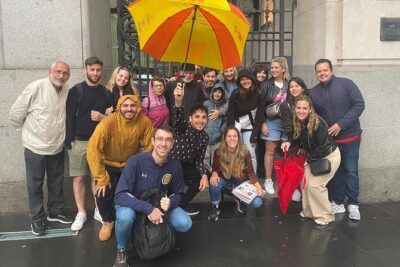
Madrid Walking Tour from Puerta del Sol to Retiro Park
Read our review →

Barcelona Tapas Walking Tour: Food, Wine & History
Read our review →Browse the lists this tour appears in