
Reviewed · STREET ART
Madrid: Street Art Tour with Local Graffiti Hunter
Street art makes Madrid feel personal. This 2-hour guided walk through Lavapiés, Embajadores, and La Latina shows you how graffiti, stencils, and stickers became part of everyday life in the city. I particularly love the hands-on street-level context, and I like that you get insider routes like the former tobacco factory at La Tabacalera. One thing to consider: you will be on foot for the full time, and you may want to plan around limited seating spots along busy streets.
What really makes this tour worth your time is the guide. You are not just pointed at walls, you are taught how to read them, including the difference between older styles and newer work, plus what makes places like Plaza del Sombrerete special. Guides such as Ester and Julian (and others in the same local network) tend to keep the pace friendly and question-based, so even if you are new to graffiti, you can follow along. If you expect museum explanations, this is more street-smart than lecture-heavy.
In This Review
- Key things to know before you go
- Why these Madrid neighborhoods are the real street art classroom
- Meeting at Teatro Valle Inclán, and how to start seeing like a graffiti hunter
- Lavapiés streets: graffiti walls, stencils, and sticker culture in motion
- Calle Argumosa and Calle de Embajadores, where the route starts to feel curated by the walls
- La Tabacalera: the former tobacco factory walls and why industrial space changes the art
- Workshops at La Tabacalera: street art as a community activity, not just graffiti on walls
- Esta es una Plaza at Plaza del Sombrerete, and what veteran plus new talent looks like
- Calle Sombrete and the biggest mural in Madrid’s Center District
- How the local graffiti hunter makes the difference (Ester, Julian, Hector, and more)
- Price and value for a $29, 2-hour street art walk
- Who this tour fits best, and who might want a different option
- Practical tips for comfortable shoes and better photos
- FAQ
- FAQ
- How long is the Madrid street art tour?
- Where is the meeting point?
- Is the tour guided in English?
- What is included in the price?
- Are beverages included?
- What should I bring?
- Is the tour wheelchair accessible?
- Is cancellation free if my plans change?
- Should you book this Lavapiés street art tour?
Key things to know before you go
- Lavapiés first, then Embajadores and La Latina, so you see how the art shifts across neighborhoods
- La Tabacalera stop, inside the former tobacco factory walls where large-scale work appears
- Plaza del Sombrerete and Esta es una Plaza, a focused look at how veteran artists and newer talent share the space
- Calle Argumosa and Calle de Embajadores, two street corridors that make the visuals click
- A chance to see the biggest mural in Madrid’s Center District (timing matters, but the tour aims for it)
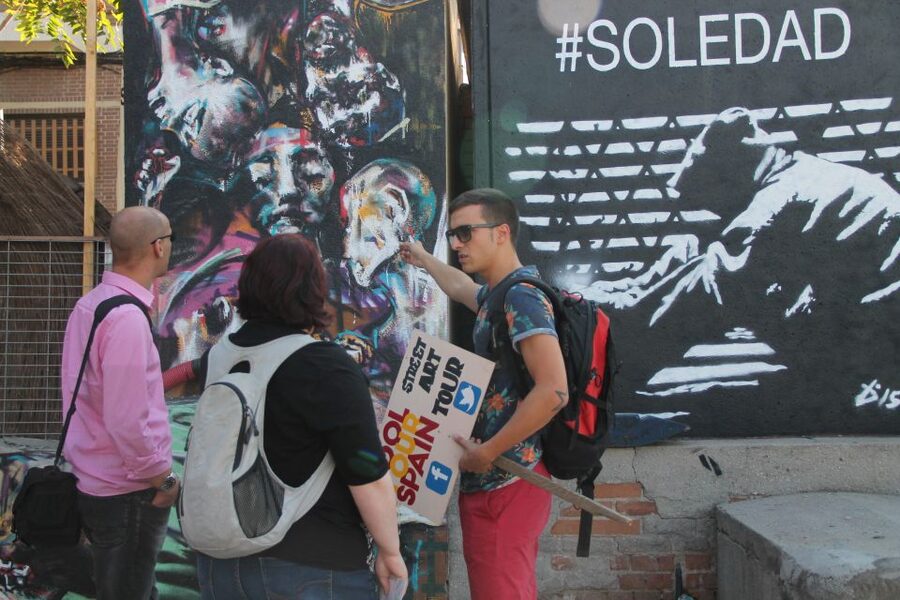
- Free workshops are part of the story, with topics like photography, dance, yoga, cycling, and longboarding mentioned during the walk
Why these Madrid neighborhoods are the real street art classroom
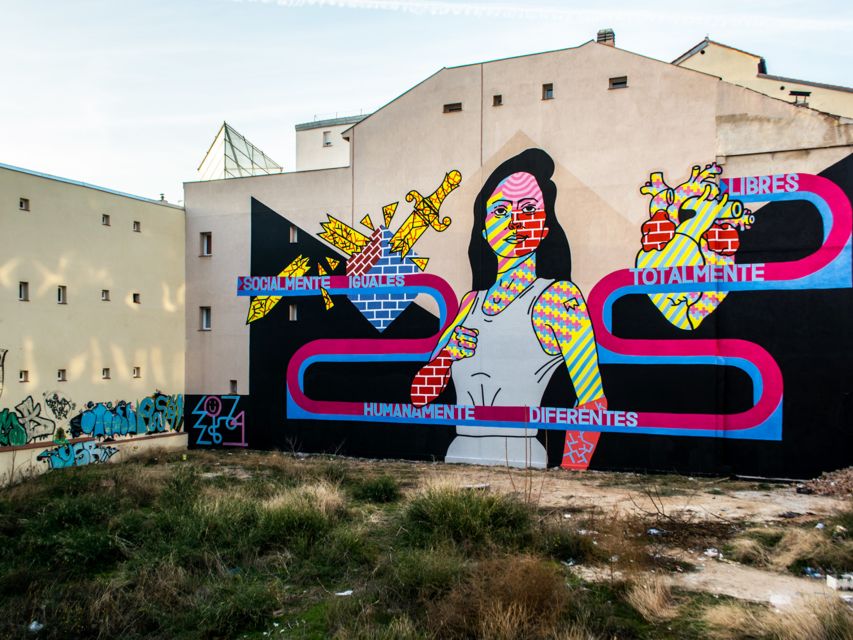
Madrid’s street art is not one style on one street. It changes by neighborhood, by community, and by what happens around a wall, from legal mural programs to unofficial tagging and stencil work. This tour is built around that idea, starting in Lavapiés, then moving through Embajadores and La Latina.
Lavapiés is a great starting point because it is multicultural and fast-moving, which shows up in the art. You tend to see layered visuals, quick messages, and styles that feel like they are talking back and forth. Embajadores keeps that energy but shifts the look, and then La Latina adds another layer of character, especially once you reach the big industrial wall surfaces at La Tabacalera.
If you like walking tours, this one is especially good because the art is not isolated. It sits inside real streets, near everyday life, so you learn by seeing how the work interacts with the city.
Other days out near Madrid
- Madrid: Tour Bernabéu Entry Ticket
★ 4.5 · 21,573 reviews - Madrid: Prado Museum Entry Ticket
★ 4.6 · 20,699 reviews - Madrid: “Emociones” Live Flamenco Performance
★ 4.8 · 12,866 reviews
Meeting at Teatro Valle Inclán, and how to start seeing like a graffiti hunter
Your meeting point is the entrance of Teatro Valle Inclán, Calle de Valencia, 1, 28012 Madrid. The nearest metro station is Lavapiés. It is a practical spot because it keeps you close to the start of the neighborhood, and you do not burn time getting oriented.
The tour runs for 2 hours and is guided in English. Wear comfortable shoes, because you will be stopping often but still walking between clusters of art. I also suggest you dress for the weather, since Madrid sidewalks can be uneven and shaded spots are not always where you want them when you are trying to photograph.
When you start, the guide typically frames what you are about to see: graffiti versus stencil versus sticker, and the idea that street art can be political, personal, and sometimes playful, all at the same time. That matters, because you stop judging a wall as a random mess and start noticing technique and intent.
Lavapiés streets: graffiti walls, stencils, and sticker culture in motion
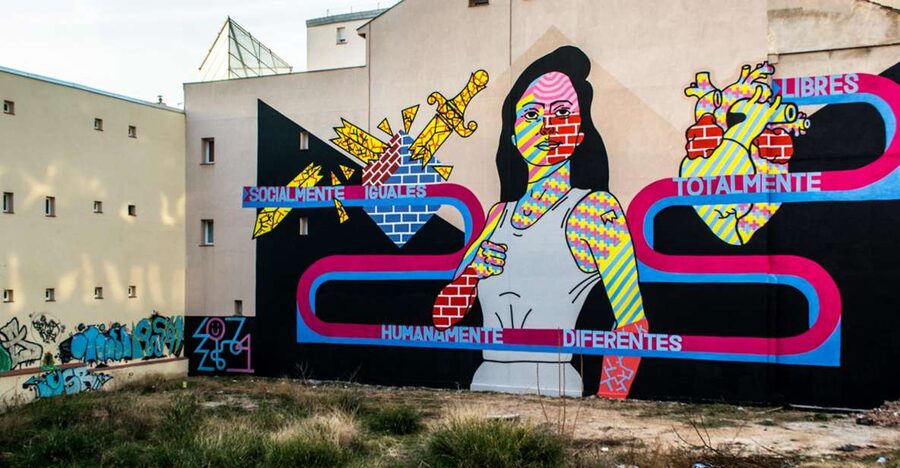
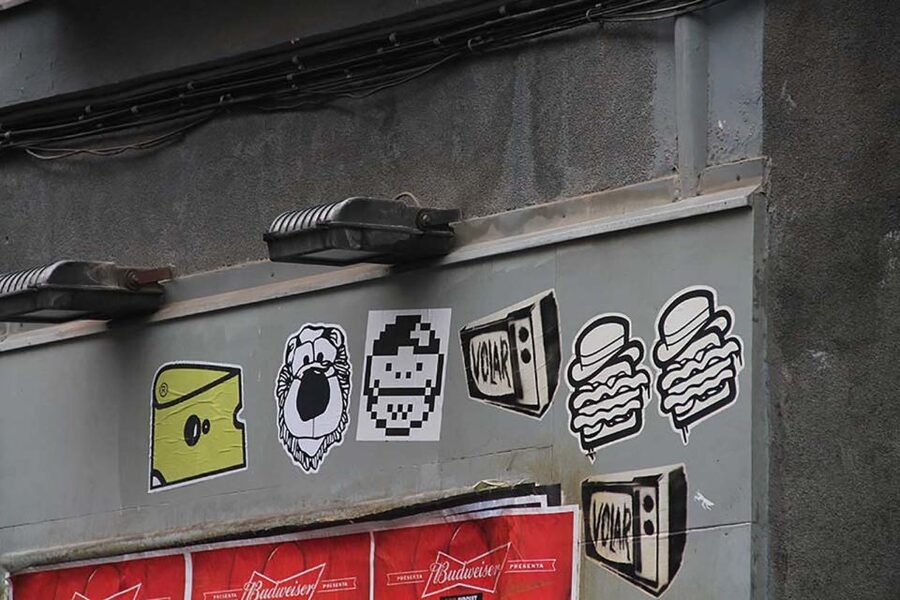
The walk begins in Lavapiés, where you are meant to understand the city’s underground street art culture. You will spend real time looking at graffiti walls plus stencil and sticker art, not just one or two stops for a quick photo.
This is where the guide’s approach makes a difference. A good street art guide teaches you to notice details you would otherwise skip, like:
- how letters change by artist and by purpose
- how stencils create repeated visuals with different levels of color and texture
- how stickers often feel like quick, street-level announcements
You will also get neighborhood history, since the street art here is tied to the community around it. The best part is that you are not stuck with one interpretation. The guide shares context, then invites you to look again with that context in mind.
If your group has both street art fans and first-timers, this segment is usually a good equalizer. The art is visually strong, and the explanations are meant to be accessible.
Calle Argumosa and Calle de Embajadores, where the route starts to feel curated by the walls
After Lavapiés, the tour moves down Calle Argumosa and then Calle de Embajadores. These street corridors matter because they create a natural flow between different styles and different “moods” of walls.
In practice, what you get is an easy rhythm:
you spot a piece, you pause, you learn the story behind it, then you walk two minutes and the scene shifts again. That rhythm keeps you from feeling overwhelmed, and it also helps your eyes adjust to the fact that street art is not always meant to be obvious from far away.
It also helps that these streets sit inside real neighborhoods. You are not walking through an art-only bubble. That makes the stop-and-look moments feel earned.
Also within reach of Madrid:
- Madrid: Panoramic Route City Tour
★ 4.1 · 12,259 reviews - Madrid: Live Flamenco Show with Food and Drinks Options
★ 4.5 · 9,901 reviews - Avila & Segovia Tour with Tickets to Monuments from Madrid
★ 5.0 · 9,762 reviews - Madrid: Reina Sofía Museum Entrance Ticket
★ 4.5 · 8,788 reviews
La Tabacalera: the former tobacco factory walls and why industrial space changes the art
One of the most meaningful stops is La Tabacalera, the former tobacco factory. The tour focuses on the walls there, which is where scale becomes part of the experience.
Big industrial surfaces do something that smaller residential walls cannot. They invite larger compositions and more visible technique. When a place like this is repurposed into a street art hub, the art often becomes both more ambitious and more community-facing.
You also get a sense of the difference between underground and semi-official art spaces. Even when the art feels rebellious, the setting changes what can happen, what gets supported, and what people are trying to say to the neighborhood.
In other words, this stop is not only about seeing a mural. It is about understanding the relationship between art, space, and permission, whether that permission is formal, informal, or somewhere in between.
Workshops at La Tabacalera: street art as a community activity, not just graffiti on walls
Another highlight is the chance to learn about free workshops that run in this area. The tour mentions workshops in photography, dance, yoga, cycling, longboarding, and more.
This part matters because it expands what street art means to you. If all you associate graffiti with is tagging, you may miss the bigger picture here: street art is part of a wider creative ecosystem, and people build skills through community programs.
So when you are walking and the guide points out a wall, you are not just seeing art. You are also learning how the neighborhood organizes creativity in day-to-day life. That is a big reason this tour lands well for people who normally think of street art as background noise.
Esta es una Plaza at Plaza del Sombrerete, and what veteran plus new talent looks like
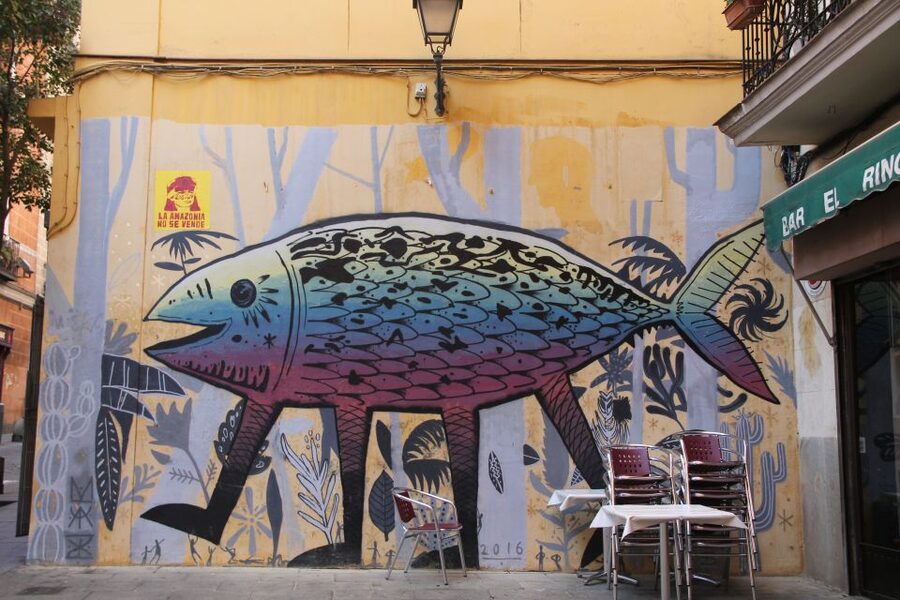
The tour gives you an insider guide to the street art at Esta es una Plaza in Plaza del Sombrerete. This stop is specifically described as a place to see how veteran artists and newer talents show up in the same visual conversation.
That matters, because you start noticing how time works on walls. Some pieces feel like they have matured into landmarks. Others feel like they arrived recently and are still forming their audience. By the time you reach this area, you are primed to compare technique and tone.
If you love learning how artists build a signature, this is a good moment to slow down. Look for:
- how characters and letters are handled
- how color choices shift from piece to piece
- how composition stays readable even from the sidewalk
It is the kind of stop where you might find yourself standing longer than you expected, mainly because the guide gives you a framework and then lets you see it.
Calle Sombrete and the biggest mural in Madrid’s Center District
From there, the tour highlights Calle Sombrete, described as a place to see up-and-coming new talents. This is the part that adds future energy to the walk. Older pieces can teach you a lot, but new work shows you what the street art scene is becoming.
The tour also aims for a chance to see the biggest mural in Madrid’s Center District. I would treat that as a “target” rather than a guaranteed moment, since the city changes and mural schedules can shift. But the intent is clear: the route is designed so you end up somewhere impressive before you wrap.
When that kind of mural lands at the right moment, it changes your whole sense of what “graffiti art” can be. It stops being just street writing and becomes an event in the street.
How the local graffiti hunter makes the difference (Ester, Julian, Hector, and more)
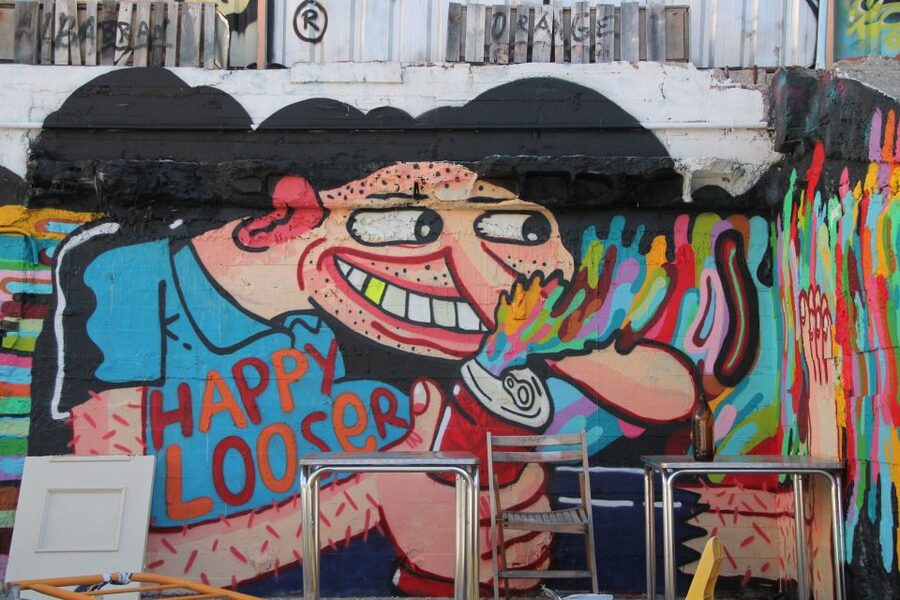
This tour is led by a local graffiti hunter who collaborates with street art festivals such as CALLE Lavapies, Urvanity, and Muros Tabacalera. That collaboration point is not just branding. It means the guide can connect what you see to the local network where artists work, share, and get visibility.
In the recent guide lineups people have shared names like Ester, Julian, Hector, Javier, Ana, and Santiago. While the exact guide can vary by day, the common thread in their teaching style is the same: clear explanations, lots of stopping to answer questions, and a focus on both technique and neighborhood context.
A couple practical things I love about this kind of guided approach:
- You do not feel talked at. You get invited to look and ask
- You can be new to graffiti and still follow, because the guide connects art choices to community meaning
- You pick up street-smart tips for spotting details later, even after the tour ends
One bonus I have found with this sort of guide is that they often treat the neighborhood history as part of the art literacy. That makes the whole walk feel less like sightseeing and more like learning a local language.
Price and value for a $29, 2-hour street art walk
At $29 per person for a 2-hour English-language walking tour, the value comes from what you get per minute. You are paying for:
- a real local guide with street art connections
- time at multiple key areas, including La Tabacalera and Plaza del Sombrerete
- focused street-level interpretation of stencil, sticker, and graffiti styles
This is not a bargain because it is cheap. It is a bargain because it gives you context you would struggle to piece together on your own, especially in neighborhoods that do not read like a formal tourist route.
Beverages are not included, so if you get thirsty (and you will, walking in Madrid adds up), plan to buy your own along the way or bring water before you start.
Who this tour fits best, and who might want a different option
This tour is a strong match if you:
- love street art but want a framework for understanding it
- enjoy neighborhood walks that feel local, not just postcard views
- want to see more than the major center sights by adding Lavapiés and Embajadores to your day
It can also work well for families with teens, because the guide typically invites discussion around art ethics, community impact, and interpretation. The pace is usually designed so people can keep up without feeling rushed.
If you hate walking tours, or if you only want famous landmarks with obvious photo backdrops, this may feel too street-level. Street art rewards patience, and the best moments come when you pause and look.
Practical tips for comfortable shoes and better photos
Bring passport or ID card. Bring comfortable shoes, because the route is a walking loop through active streets. If you plan to photograph, give yourself time at each stop instead of rushing to the next wall. The fun part is the details.
Also, keep in mind that the guide is operating in English, so if English is difficult for you, you might want to find an alternative tour option that matches your language needs.
FAQ
FAQ
How long is the Madrid street art tour?
The tour lasts 2 hours.
Where is the meeting point?
Meet at the entrance of Teatro Valle Inclán, Calle de Valencia, 1, 28012 Madrid. The nearest metro station is Lavapiés.
Is the tour guided in English?
Yes. It is an English-speaking live tour guide.
What is included in the price?
The price includes the English-speaking guide.
Are beverages included?
No. Beverages are not included.
What should I bring?
Bring a passport or ID card and comfortable shoes.
Is the tour wheelchair accessible?
Yes. The tour is wheelchair accessible.
Is cancellation free if my plans change?
You can cancel up to 24 hours in advance for a full refund.
Should you book this Lavapiés street art tour?
Yes, if you want Madrid through the lens of street art culture, not just museum highlights. For $29 and 2 hours, you get a walk that focuses on real neighborhoods, key stops like La Tabacalera and Plaza del Sombrerete, and a local guide who helps you read stencil, sticker, and graffiti like it has meaning. Book it when you want a day that feels distinctly Madrid, one where the walls teach you back.
Recently added around Madrid
- Toledo Experience Tour from Madrid with optional Toledo Cathedral★ 4.5 · 703 reviews
- Madrid: Tapas Walking Tour with Food and Drinks Included★ 5.0 · 108 reviews
- Madrid Royal Palace and Prado Museum Private Tour with Transfers★ 5.0 · 185 reviews
- Tasty Tapas & Drinks Tour with a Rooftop Included★ 5.0 · 82 reviews
- Tickets for the Authentic Flamenco Show at the Madrid Theater★ 4.5 · 301 reviews
- Madrid Tapas Crawl ️Tour by FLT★ 5.0 · 269 reviews
- Prado Museum Madrid Guided Tour Semi-Private 6ppl Max★ 5.0 · 67 reviews
- Toledo Day Trip from Madrid: Cathedral & Monuments★ 5.0 · 368 reviews
Street Art, compared.
Barcelona Street Art and Graffitti Bicycle Tour
Read our review →
Barcelona Street Art Tour with Exclusive Artist Studios Visit
Read our review →
Raval Street Art and Graffiti Guided Tour in Barcelona
Read our review →
Browse the lists this tour appears in