
Reviewed · STREET ART
Street Art Guided Tour in Madrid
Street art in Madrid comes with stories, and this small street-art guided walk turns walls and buildings into a living map. You start in central Madrid, then the route threads through Lavapiés and into old industrial spaces now used by artists like Himen, Ze Carrión, and Laguna626.
What I like most is the mix of locations. La Neomudéjar is a former power plant, and La Tabacalera was a tobacco warehouse, so the art feels plugged into the city, not pasted onto it. Second, the guide style matters here: expect clear explanations, lively energy, and real context for the messages behind the spray paint and stencils.
One thing to keep in mind: La Tabacalera can have restrictive timing during weekdays, and one stop (Esta es Una Plaza) depends on whether it is open, so your exact access can vary a bit by day.
In This Review
- Key highlights to look for
- Madrid Street Art, Powered by Old Buildings
- Price and What $30.38 Gets You
- Starting at Teatro Valle-Inclán, Then Moving Like a Local
- La Neomudéjar: The Former Power Plant That Artists Reclaimed
- La Tabacalera de Lavapiés: Tobacco Workers to Street-Art Stencils
- Esta es Una Plaza and Lavapiés Streets: Small Spaces, Big Energy
- Campo de Cebada: Community Art Where Protest Became Routine
- What to Watch For During the Walk (So You Get More Than Photos)
- Guides Make or Break It, and This One Is Usually Strong
- Should You Book This Street Art Guided Tour in Madrid?
- FAQ
- How long is the street art guided tour in Madrid?
- What does the tour cost?
- Is the tour in English?
- Where do I meet the guide and where does the tour end?
- How big is the group?
- Is it a mobile ticket?
- What are the main places you visit?
- Are any of the stops ticket-free?
- Will I still see La Tabacalera if it is closed during weekdays?
- What if the weather is bad?
- Can I cancel and get a full refund?
Key highlights to look for
- La Neomudéjar’s industrial-to-artist transformation in a former 19th-century power plant
- Stencils and projects in La Tabacalera’s basement for a deeper look than just murals on walls
- Protest context around Spanish article 626, which tries to penalize graffiti creators
- Campo de Cebada (15-M movement roots), now used for movies, music, and even a collective garden
- Small group energy (maximum 13 travelers), making it easier to ask questions and hear details
Madrid Street Art, Powered by Old Buildings

If you think street art is only about random walls, this tour will recalibrate that. Madrid’s best street art is tied to places that once had other jobs: power generation, tobacco processing, worker warehouses, and community gathering areas. When you see art inside those real settings, the messages land harder.
I also like that this walk doesn’t treat street art like a museum item. You are moving through neighborhoods where creativity is part of daily life, especially around Lavapiés. The pace is built for looking closely, not just getting photos.
The route is about 2 hours, usually starting at 11:15 am for the morning departure, and it also runs in the afternoon. It is offered in English, and the guide team can support English, French, and Spanish. The tour uses a mobile ticket, which is handy because you can keep everything on your phone.
Other days out near Madrid
- Madrid: Tour Bernabéu Entry Ticket
★ 4.5 · 21,573 reviews - Madrid: Prado Museum Entry Ticket
★ 4.6 · 20,699 reviews - Madrid: “Emociones” Live Flamenco Performance
★ 4.8 · 12,866 reviews
Price and What $30.38 Gets You
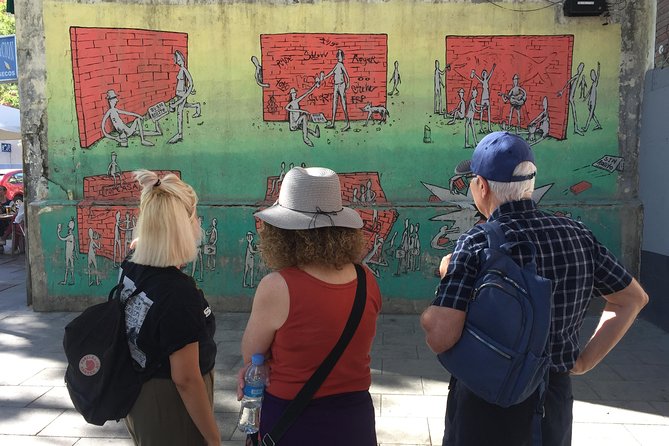
At about $30.38 per person for roughly 2 hours, you are paying for three things: a local guide, structured stops at the best street-art locations, and context that you would miss if you just wandered. The value is strongest if you enjoy learning how artists think, not only what they painted.
Here’s how I’d frame the deal for you. This tour leans into interpretation. You get guided viewing of exterior graffiti walls, a closer look at stencils and street-art projects, and an explanation of the community spaces that make the art possible. If you are the type who wants to know why something is there and what it is responding to, the price makes sense.
If, instead, you only want to maximize photo spots with zero discussion, a self-guided walk might feel cheaper. But you would likely miss the key layers, like the protest angle around Spanish article 626, and the way artists use old industrial spaces to build momentum.
Starting at Teatro Valle-Inclán, Then Moving Like a Local
The meeting point is Teatro Valle-Inclán, Pl. de Ana Diosdado, s/n, Centro, 28012 Madrid. The tour ends at Plaza de Cascorro, in Centro Madrid. The nearest metro options listed are La Latina or Tirso Molina.
In practice, this layout is convenient. You start fairly central and end in an area with lots of local life, so you are not trapped back where you began. Also, ending at Plaza de Cascorro makes it easier to keep exploring after the tour, because you can flow into nearby streets without a big transit scramble.
Along the way, the walk includes passes you might miss on your own, like the big-headed babies monument in front of Atocha train station. You also pass through the orbit of an avant-garde art center that now sits in the Mediodía metro station area. Those quick glimpses help you understand Madrid’s street art scene as part of a wider creative ecosystem.
La Neomudéjar: The Former Power Plant That Artists Reclaimed
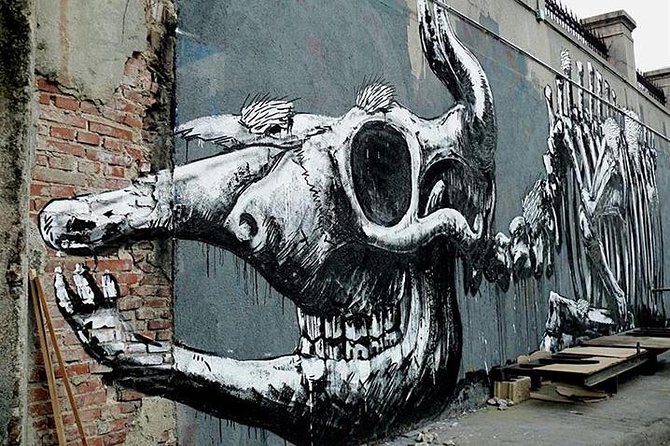
La Neomudéjar is one of the reasons this tour feels different. It was a 19th-century power plant that helped power the train station systems. Today it hosts work from street artists from around the world, and that original industrial purpose still shapes the vibe.
You will walk around the space with your guide, looking at how artists use the building’s textures and surfaces. The tour also flags specific names you can watch for as you look: Himen, Ze Carrión, and Laguna626. When you know a few artist names going in, the whole visit gets more satisfying, because you are not just seeing anonymous style. You start noticing recurring techniques, themes, and how the works interact with the walls.
A key context point here is the political edge. Many of the artists use their work to protest against Spanish article 626, a law that tries to penalize graffiti creators. That matters for you because it changes the way you read the art. You are not only looking at color and composition, you’re looking at tension and messaging.
Also within reach of Madrid:
- Madrid: Panoramic Route City Tour
★ 4.1 · 12,259 reviews - Madrid: Live Flamenco Show with Food and Drinks Options
★ 4.5 · 9,901 reviews - Avila & Segovia Tour with Tickets to Monuments from Madrid
★ 5.0 · 9,762 reviews - Madrid: Reina Sofía Museum Entrance Ticket
★ 4.5 · 8,788 reviews
La Tabacalera de Lavapiés: Tobacco Workers to Street-Art Stencils
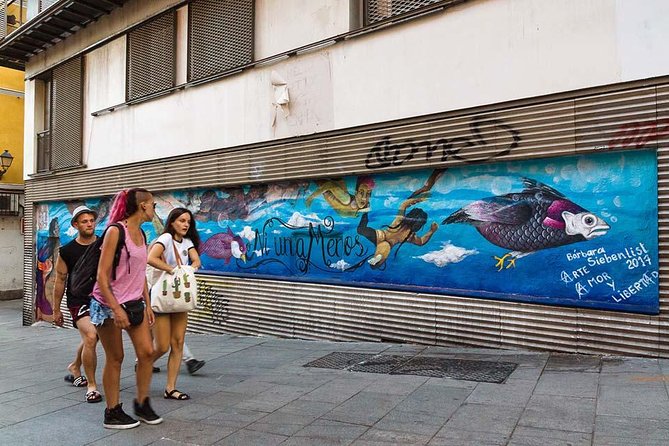
Next comes La Tabacalera de Lavapiés, a 19th-century warehouse once used by over 1,000 workers to chop, shred, and roll tobacco products. That workforce past is part of the meaning of the place. The building has a long industrial memory, and street artists now treat it like a creative engine.
On the surface level, you focus on exterior graffiti walls and learn what to look for: artist intent, the message behind the piece, and techniques used on the walls. There is also a note that it connects to major urban art energy in Madrid, which fits what you’ll feel as you walk around.
Then there’s the deeper part, the basement. You take a trip down there to see hundreds of street art projects and stencils lining the walls. That is where you get the behind-the-scenes feeling. Murals outside are the finished product, but stencils and projects show the pipeline, the planning, and the layering that leads to what you see.
One practical caution for you: La Tabacalera has restrictive timing during weekdays. If your trip falls on a weekday, it’s smart to go in with flexible expectations. You might get access during certain windows, and if timing is tighter, your view could be more limited than what you hoped for.
Esta es Una Plaza and Lavapiés Streets: Small Spaces, Big Energy

Between the bigger anchor sites, you get a stop that highlights the neighborhood fabric. Esta es Una Plaza is an urban garden space, and you look at the walls there. The catch is simple: access to the walls is only guaranteed if the location is open. So if you are the kind of person who hates missing one stop, plan your day with a little wiggle room.
After that, you spend time walking around Lavapiés. This is where the tour shifts from isolated murals to street art as neighborhood language. You’ll get a history-focused walk, with your guide explaining how the district developed and why it attracts so much creative expression.
Lavapiés is also one of those places where you benefit from learning how to look. After a couple of minutes, you start noticing layers: older tags, newer pieces, sanctioned murals, and informal additions tucked into corners. Your guide helps you sort the signal from the noise, so you understand what you’re seeing instead of treating it as random.
Campo de Cebada: Community Art Where Protest Became Routine
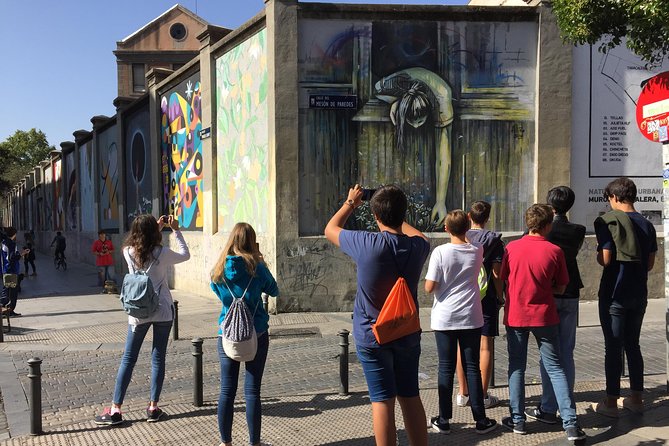
The finale is Campo de Cebada, a reclaimed community gathering place and performance site. The name comes with a story. It links to Spain’s 15-M movement, when people recaptured streets and squares for communal use. That origin matters because the space is not only about art. It’s about how public space can be reimagined.
You’ll learn how Campo de Cebada has changed over time. It was once the home for a swimming pool, but local associations reorganized the space. Now it works as a gathering hub where you can catch movies in summer, listen to music, or visit a collective garden where vegetables are planted together.
This stop rounds out the tour nicely. If you only focused on murals, you’d miss the community side. Campo de Cebada shows you that street art culture is tied to how people use space, share time, and make room for creativity.
What to Watch For During the Walk (So You Get More Than Photos)
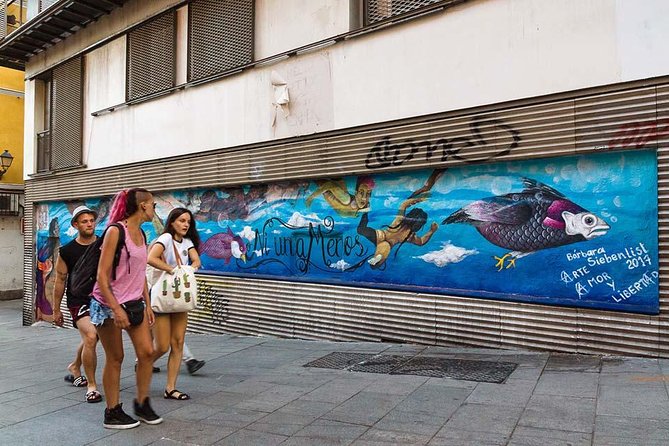
To make this tour click, I suggest you train your eyes on a few things.
First, watch for the relationship between art and surface. In places like La Neomudéjar and La Tabacalera, the building itself helps define what gets painted. Harsh textures, industrial shapes, and awkward angles all affect the final look.
Second, listen for the message layer. The tour specifically brings up Spanish article 626, and that frames street art as a response to rules and enforcement. When you hear that context, even abstract or purely graphic works start to feel more purposeful.
Third, pay attention to technique. Outside murals can look fast from a distance, but the stencils and projects in La Tabacalera’s basement show how much planning goes into repeating shapes and crisp edges.
Finally, follow the guide’s movement. One criticism I’ve seen for this kind of tour is missing explanations when you drift too far back. This is a walking, looking tour. Staying in the listening distance helps you catch the “why” behind each stop.
Guides Make or Break It, and This One Is Usually Strong
This tour’s biggest recurring strength is the guide. People describe guides as friendly, enthusiastic, and truly invested in Madrid’s street art scene. Names you may hear include Santi, Santiago, and Julia, and the common thread is the ability to explain with energy, not just facts.
If you want a practical tip, it’s this: bring questions. Ask about what makes a piece sanctioned versus unsanctioned in Spain, or how artists communicate protest without losing legibility. When the group stays engaged, the route tends to feel less like a script and more like a conversation.
Should You Book This Street Art Guided Tour in Madrid?
I think this tour is worth booking if you want street art with context, not just street art for sightseeing. It combines three strong anchor locations, La Neomudéjar, La Tabacalera, and Campo de Cebada, and it adds neighborhood walking through Lavapiés. The basement stop at La Tabacalera is a real value builder for anyone who likes the craft behind the finished walls.
I would hesitate only if you strongly prefer pure illegal graffiti with zero focus on curated or sanctioned festival walls. Also, if your travel dates land you on a weekday and you are hoping for specific indoor access, expect that timing restrictions at La Tabacalera could affect what you see.
If you like small groups, this fits nicely. Maximum group size is 13, which makes it easier to ask questions and hear details without shouting over a crowd.
FAQ
How long is the street art guided tour in Madrid?
It runs for about 2 hours.
What does the tour cost?
The price is $30.38 per person.
Is the tour in English?
Yes, the tour is offered in English, and the guide support is multilingual (English, French, and Spanish).
Where do I meet the guide and where does the tour end?
You start at Teatro Valle-Inclán, Pl. de Ana Diosdado, s/n, Centro, and you end at Plaza de Cascorro. The nearest metro options listed are La Latina or Tirso Molina.
How big is the group?
The tour has a maximum of 13 travelers.
Is it a mobile ticket?
Yes, the tour uses a mobile ticket.
What are the main places you visit?
The tour includes La Neomudéjar, La Tabacalera, and Campo de Cebada, plus walking in the Lavapiés area and a stop at Esta es Una Plaza.
Are any of the stops ticket-free?
The stop notes list admission ticket free for Muros La Tabacalera, Esta es Una Plaza, and the Lavapiés walking portion.
Will I still see La Tabacalera if it is closed during weekdays?
La Tabacalera has restrictive timing during weekdays, so access can depend on the day and hours. Esta es Una Plaza also depends on whether the location is open.
What if the weather is bad?
The tour operates in all weather conditions, so dress appropriately.
Can I cancel and get a full refund?
Yes, you can cancel up to 24 hours in advance for a full refund. If you cancel less than 24 hours before the start time, the amount paid is not refunded.
Recently added around Madrid
- Toledo Experience Tour from Madrid with optional Toledo Cathedral★ 4.5 · 703 reviews
- Madrid: Tapas Walking Tour with Food and Drinks Included★ 5.0 · 108 reviews
- Tasty Tapas & Drinks Tour with a Rooftop Included★ 5.0 · 82 reviews
- Tickets for the Authentic Flamenco Show at the Madrid Theater★ 4.5 · 301 reviews
- Madrid Royal Palace and Prado Museum Private Tour with Transfers★ 5.0 · 185 reviews
- Madrid Tapas Crawl ️Tour by FLT★ 5.0 · 269 reviews
- Prado Museum Madrid Guided Tour Semi-Private 6ppl Max★ 5.0 · 67 reviews
- Toledo Day Trip from Madrid: Cathedral & Monuments★ 5.0 · 368 reviews
Street Art, compared.
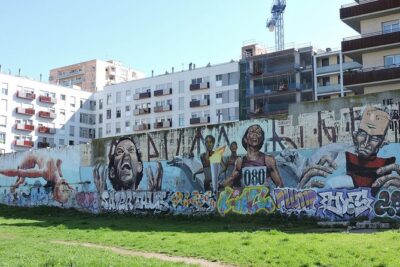
Barcelona Street Art and Graffitti Bicycle Tour
Read our review →
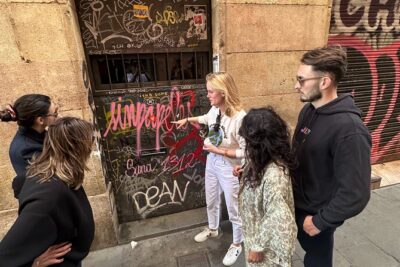
Barcelona Street Art Tour with Exclusive Artist Studios Visit
Read our review →
Raval Street Art and Graffiti Guided Tour in Barcelona
Read our review →
Browse the lists this tour appears in