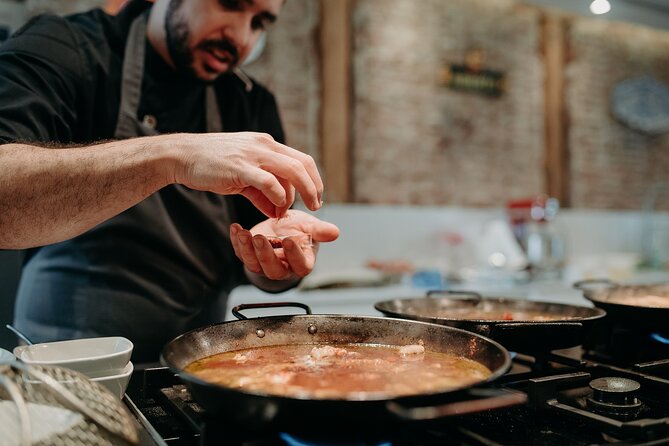
Reviewed · TAPAS TOURS & FOOD EXPERIENCES
Madrid Tapas & Paella Cooking Experience with Local Market Visit
A market first, then you cook it. I really liked the Mercado de Anton Martín start, where you chat with vendors and grab fresh ingredients, and I also liked the small-group kitchen time that turns recipes into repeatable technique for tapas, croquetas, patatas bravas, and paella. One thing to think about up front: the format is not suitable for vegans, celiac disease, or lactose intolerance.
This is also a nice way to get an English-speaking guide who can explain not just what to do, but why Spanish cooking works the way it does. From the names that come up in past sessions, you might be taught by people like Arantxa, Andrea, Daniel, or Danielle, and the common theme is clear teaching with a good sense of humor.
Logistically, you meet at Plazuela de Antón Martín at 10:30 am and finish back at the same spot. Transport is not included, but the meeting point is near public transit, which makes this easier than the typical long transfer day.
In This Review
- Key things that make this tour worth your time
- Mercado de Anton Martín: the morning that sets your flavor targets
- Ferreting out ingredients: what you should pay attention to
- Ferretería Restaurante kitchen time: vermouth, teamwork, and real technique
- Tapas, croquetas, bravas, and paella: what you’re actually learning
- Lunch at the table: what you’ll eat and why it feels special
- Dietary needs and who this class actually fits
- English-led, small-group teaching, and how to get the most out of it
- Price and value: is $114.93 a fair deal in Madrid?
- Should you book Madrid Tapas and Paella with a market visit?
Key things that make this tour worth your time
- Market shopping with real context: You start in Mercado de Anton Martín, where high-quality products are part of everyday Madrid life.
- A sweet vermouth aperitivo: You get an aperitivo before you cook, using market products.
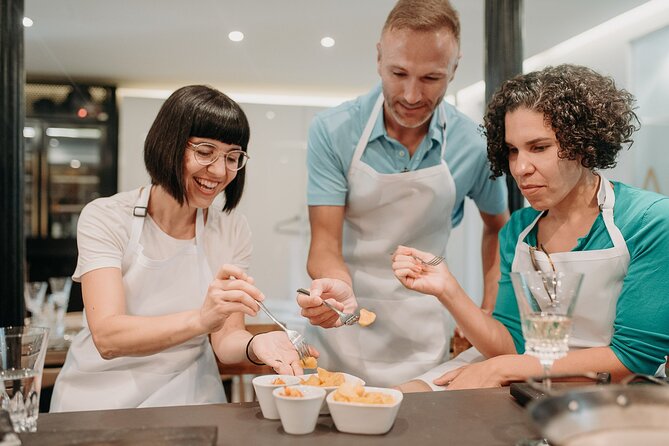
- Hands-on cooking, not just watching: You’ll work on dishes like croquetas and patatas bravas, with help from your chef/guide.
- A small group capped at 12: That limit helps the session feel interactive and keeps questions from getting lost.
- Lunch plus dessert is included: You eat what you make, with seasonal fruit for dessert.
- Diet options exist, with clear limits: Vegetarian, pescatarian, and gluten-free (not celiacs) are supported, but not vegan, celiac, or lactose-intolerance needs.
Mercado de Anton Martín: the morning that sets your flavor targets
The day starts right in the Centro area at Plazuela de Antón Martín, and the timing is made for hungry people. You head to Mercado de Anton Martín first, a market where neighborhood shoppers have been coming for generations, not just tourists with tote bags.
What I like about beginning at the market is simple: it stops Spanish food from feeling like a list of dishes. You see how ingredients actually look and smell when they are at their best, and you get that quick mental map of what matters for Spanish cooking: freshness, simple building blocks, and the way sauces pull everything together.
You’ll also get time to talk with vendors and pick ingredients for the cooking class. That part matters more than you’d think. Even if you do not memorize everything, the act of choosing helps you understand how cooks think, especially when you’re later deciding what to add and when.
More Paella Cooking Classes in Madrid
- Spanish Cooking Class Paella Tapas and Sangria in Madrid
★ 5.0 · 1,340 reviews - Madrid: Paella and Sangria Workshop in the City Center
★ 4.9 · 1,264 reviews - Paella Cooking Class in Madrid with Bottomless Wine Pairing
★ 5.0 · 985 reviews
Ferreting out ingredients: what you should pay attention to
At the market, you are not just collecting food, you are learning to spot the differences that chefs use. You might focus on staples that show up across Spanish cooking, like the ingredients for croquetas and bravas sauces, plus items that will make their way into your meal.
Here’s the practical mindset I’d recommend: look for freshness, not perfection. Markets reward your senses. Smell is a cheat code, and you’ll catch yourself noticing what tastes right just by how it looks and smells.
Also, this is a good time to ask questions. If your guide is the kind of instructor who has taught before people like Andrea or Daniel, you can expect more than recipe talk. The best moments are usually when you ask why a specific ingredient is chosen for a specific flavor role.
Ferretería Restaurante kitchen time: vermouth, teamwork, and real technique
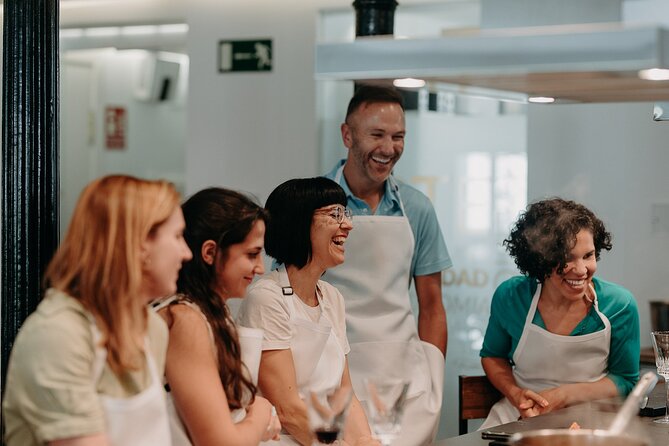
After the market visit, you go to the cooking location in the Huertas neighborhood. This is not a giant auditorium class. It’s a dedicated cooking space reserved for your small group, which makes it feel less like a performance and more like a shared project.
First up is an aperitivo, and it’s not the bland kind. You get a sweet vermouth drink plus a snack paired with market products. It’s a nice reset. You’re not rushing straight into heat and knives, and the vermouth gives you an early taste of the Spanish rhythm of eating.
Then comes the main work: you prepare a set of classic dishes in a group format. The day typically includes traditional tapas, homemade croquetas, and patatas bravas with two homemade sauces, and the experience is also branded around paella, so plan for that showpiece element at the table later.
Now, here’s the balanced part. Some people get closer to direct ownership of a full dish, while others may do structured tasks like chopping, stirring, and helping drive the final steps. One past participant felt it could be more personalized, so if you want maximum control, come with a can-do attitude and be ready to take your role seriously. In other words, don’t just stand there hoping your chef will hand you the entire pan for every course.
Safety is real here. With sharp knives, hot stoves, and higher work surfaces, the experience is not suitable for children under 12. Even if you’re traveling with older kids, think hard about whether this style of active cooking fits your family.
Tapas, croquetas, bravas, and paella: what you’re actually learning
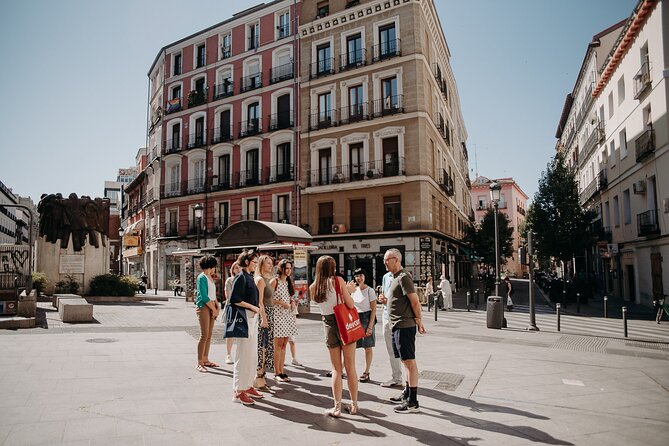
The best cooking classes leave you with repeatable technique, not just a memory of flavor. This one is built around fundamentals you can bring home: timing, texture, and the way sauces pull simple ingredients into something that tastes like a proper meal.
Croquetas are a great example. People love them, but the real skill is hitting the right thickness and consistency during cooking so the inside stays creamy. Patience is the trick, and that’s exactly the kind of technique that makes the difference between good croquetas and croquetas that vanish in the pan.
Patatas bravas teach you a different lesson: sauce balance. You learn how to build flavor depth in homemade sauces, not just rely on a store-bought bottle. If you pay attention here, you’ll walk out knowing how to adjust for tang and savoriness, which is what makes a bravas sauce work with your personal taste later.
Tapas then rounds out the day by showing you how Spanish meals spread out across small plates. It helps you understand that you are not making one heavy dish. You’re building a spread that feels abundant even when each piece is straightforward.
And paella, which often steals the show, is usually where people realize cooking is not just about ingredients. It’s about the heat, the order of steps, and knowing when to trust the process. If you like eating paella but always assumed it was too technical, this is the kind of class that can flip that idea.
More Tapas & Food Tours in Madrid
- Madrid Tapas & Wine Tasting Walking Tour – Small Group Local Bars
★ 5.0 · 3,644 reviews - Madrid Tapas & Taverns Small Group Food & History Tour
★ 5.0 · 2,664 reviews - Madrid: Small Group of Prado Museum Tour & Optional Tapas
★ 4.6 · 2,437 reviews - Madrid: Tapas & Wine Tasting Tour with Local Guide
★ 4.8 · 2,171 reviews
Lunch at the table: what you’ll eat and why it feels special
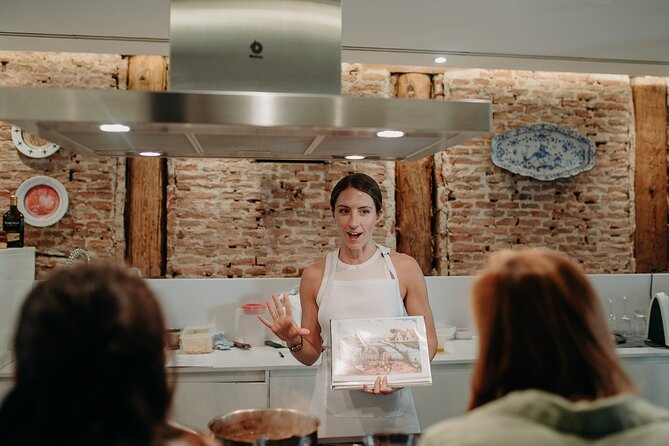
After cooking, you sit down and enjoy the meal you helped make. The experience includes enough food for lunch and dessert, so you are not stuck doing the typical Madrid math of tapas here, wine there, and a late snack to fix the gap.
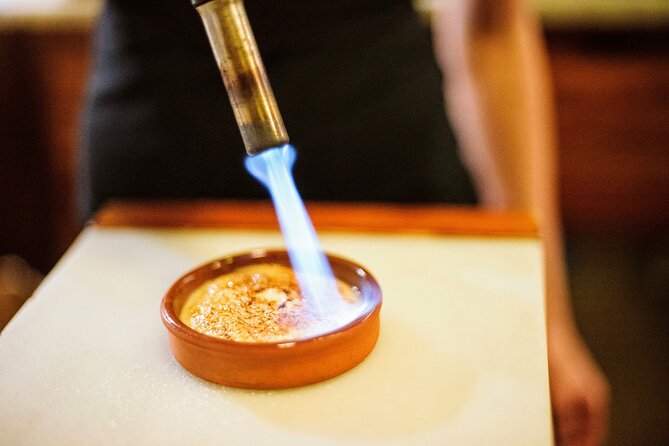
Dessert is seasonal fruit from the market, which is a smart ending. It keeps the meal grounded and lets you taste what’s current, not just what’s easiest to package.
You also get a choice of beer or wine with lunch. That matters for the vibe. Spanish cooking often comes with the idea that food is social, and the meal portion is built to help you feel like part of the group, not like you’re finishing a class and disappearing.
One practical tip from the way people describe the end of class: don’t assume you will get take-home options automatically. If paella or any cooked dish is the part you want to save for later, ask your team before you get too deep into eating. It’s a simple move that can save you from the classic, I blinked and it was gone problem.
Dietary needs and who this class actually fits
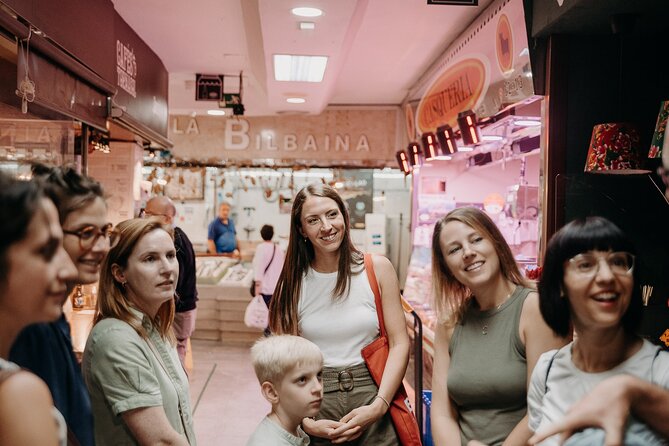
This experience is designed to work for several common diets, but with clear boundaries.
It can be adapted for vegetarians, pescatarians, gluten free (not celiacs), non-alcoholic options, and pregnant women. Dietary restrictions and food allergies need to be emailed to the guest experience team after booking so ingredients can be arranged.
What it is not suitable for: vegans, those with celiac disease, and people with lactose intolerance. So if any of those apply to you, skip this one rather than hoping for substitutions. Your safest bet is to choose a class that is built for your needs from the start.
English-led, small-group teaching, and how to get the most out of it
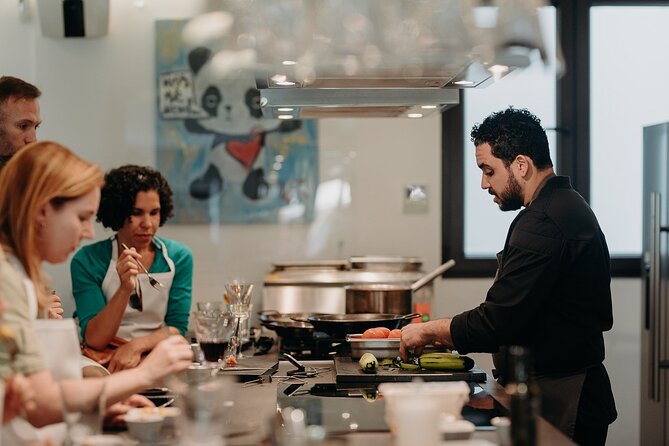
The class runs in English, and the small group size matters. With a maximum of 12 people, you’re more likely to get answers instead of standing silently in the back while time ticks away.
Past guides mentioned in the experience include Arantxa and Andrea, plus Daniel and Danielle. The common compliment across those names is energy and humor, with instruction that focuses on technique and not just storytelling. That’s what you want. You want Spanish cooking explained like a skill, not a lecture.
To maximize your learning, I’d do two things:
- Ask one question early about a step you think you’ll forget later.
- Take notes on texture, not just ingredients. With sauces and frying, texture tells you when you’re on track.
Finally, come ready to meet people. The social part is not forced, but the format does encourage bonding while you cook together and then eat as a group.
Price and value: is $114.93 a fair deal in Madrid?
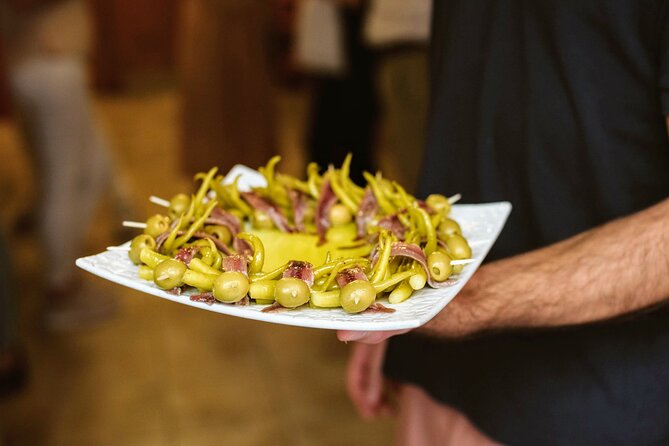
At $114.93 per person for about 3 hours 30 minutes, this is not a bargain class. But it is also not a stripped-down demo. You’re paying for four big value drivers: the market visit, the cooking instruction for a small group, the ingredients, and a full meal with drinks and dessert.
Here’s what that means for you in plain terms. Many food experiences in Madrid charge you for access, and then you pay again for the actual food. This one includes enough food for lunch and dessert, includes drinks, and includes the ingredients from the local market. You also do not have to figure out what to buy and where to buy it, which is a real hidden cost if you try to replicate the day on your own.
Transport is not included, but because the meeting point is near public transport, you’re not likely to lose the savings to taxis.
If your goal is a market-to-kitchen day where you walk away able to cook Spanish flavors at home, this price can make sense.
Should you book Madrid Tapas and Paella with a market visit?
Book it if you want an easy, structured way to learn Spanish cooking without the hassle of sourcing ingredients yourself. It’s a great fit for food-focused travelers who learn best by doing, not by watching.
Also book it if you like the idea of starting at a historic market first and then using those ingredients immediately in a real kitchen. That flow is the point.
Skip it if vegan meals, celiac-safe cooking, or lactose-free needs are non-negotiable. Skip it too if you’re traveling with children under 12, because the setup includes knives and hot stoves.
If you’re on the fence, your best decision tool is simple: do you want technique you can recreate, plus a full lunch day that feels social? If yes, this one is a strong pick for Madrid.
More Tapas Crawls in Madrid
- Madrid Tapas & Wine Tour with Rooftop Views and Local Guide
★ 5.0 · 2,047 reviews - Madrid by Night Small Group Tour: Stories, Sights and Tapas Bites
★ 5.0 · 1,956 reviews - Tapas and history tour ending with churros with chocolate
★ 5.0 · 119 reviews - 2.5-Hour Evening Tapas Tour through Madrid
★ 4.8 · 64 reviews
More cooking classes in Madrid
- Taste of Spain: Tapas Cooking Class with Bottomless Wine Pairing
★ 5.0 · 414 reviews
Recently added around Madrid
- Madrid: 1-Hour Segway Tour with Chocolate and Churros★ 4.9 · 65 reviews
- From Madrid: Toledo Guided Tour of All Major Monuments★ 4.6 · 127 reviews
- From Madrid: Toledo and Segovia Guided Day Trip★ 4.1 · 845 reviews
- From Madrid: Toledo Guided Tour & Winery Visit with Tasting★ 4.8 · 313 reviews
- From Madrid: Transfer & Entrance to Puy du Fou España★ 4.7 · 59 reviews
- From Madrid: Segovia Guided Afternoon Tour★ 3.9 · 220 reviews
- From Madrid: Hot Air Balloon over Segovia with Transfer★ 4.9 · 128 reviews
- From Madrid: Half-Day or Full-Day Trip to Segovia★ 3.9 · 211 reviews
Tapas Tours & Food Experiences, compared.

Montserrat Half-Day Tour with Tapas and Gourmet Wines
Read our review →
Montserrat & Cogwheel Train, Gourmet Wine Tasting & Tapas/Lunch
Read our review →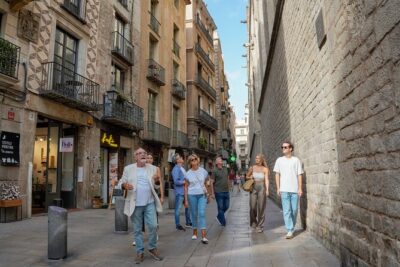
Barcelona Tapas and Wine Experience Small-Group Walking Tour
Read our review →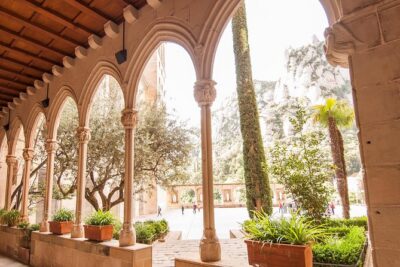
Montserrat with Black Madonna & Medieval Winery with Tapas/Lunch
Read our review →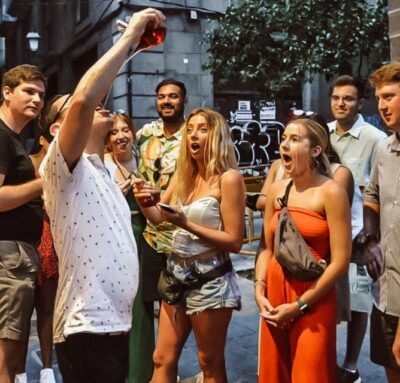
Tapas Walking Tour with Food, Wine, and History
Read our review →
Madrid Tapas & Wine Tasting Walking Tour – Small Group Local Bars
Read our review →
Sevilla Food Tour: Tapas, Wine, History & Traditions
Read our review →