
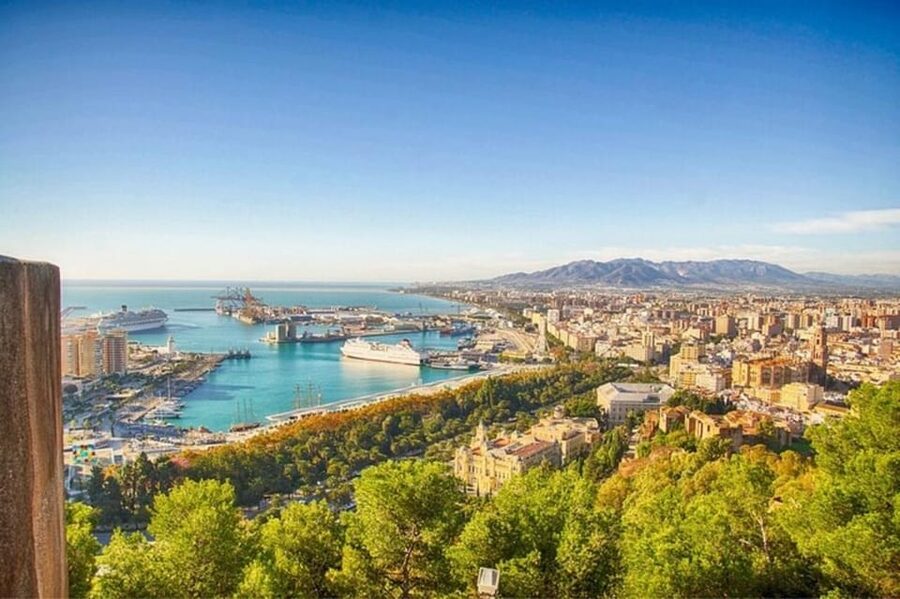
Reviewed · WALKING TOURS
Malaga: Walking Tour of Must-See Attractions
Malaga has layers you can walk through. In two hours, you move from the Roman Theater to the Moorish fortress of the Alcazaba, then pick up Picasso clues and finish in the city’s classic shopping street.
I like this tour because it keeps the story moving, not just site-hopping. Two things I especially value are the way the route links art and archaeology, and the guiding quality, with names like David, Borja, and Maura repeatedly praised for being prepared, friendly, and responsive.
One consideration: there’s no food or drinks built into the plan, so you’ll want to pair it with a nearby snack or meal.
In This Review
- Key highlights worth your time
- Why this Malaga walk works so well in 2 hours
- Meeting at Alameda Principal, then finding Picasso in Plaza de la Merced
- Malaga Cathedral and the museum stop that connects art to the ground beneath it
- Alcazaba first, because the views and defensive logic matter
- Roman Theater and Malaga Museum area: seeing 1st-century BC remains up close
- Church of Santiago, plus the Picasso baptism detail that gives the whole walk a theme
- Costa del Sol photo pause and the orientation shift toward the coast
- Calle Larios and Calle Marqués de Larios: shops, market energy, and a classic Malaga stroll
- Price, pacing, guide quality, and practical tips for your best experience
- Who this Malaga tour is best for
- Should you book this Malaga walking tour?
- FAQ
- Where is the meeting point for the tour?
- How long is the Malaga walking tour?
- What is the price per person?
- What is included in the tour price?
- What languages are available for the live guide?
- Which sights are included on the route?
- Are food or drinks included?
- Is the tour wheelchair accessible, and is a private group available?
- Is free cancellation or pay later booking available?
Key highlights worth your time
- Alcazaba and the Roman Theater in one compact walk, so you see how Malaga reinvented itself over centuries
- Picasso connections tied to real places, including the Church of Santiago and Plaza de la Merced
- Malaga Cathedral and Malaga Museum stops that help you understand what you’re looking at, not just where to stand for photos
- Calle Marqués de Larios (Calle Larios), the iconic pedestrian street for atmosphere, shopping, and market energy
- Teatro Romano de Málaga moments where the archaeology feels immediate and human-sized
- Guides with strong reviews for being calm, pleasant, and genuinely helpful, including David, Borja, and Maura
Why this Malaga walk works so well in 2 hours

Malaga is one of those European cities where the past doesn’t sit quietly behind velvet ropes. It shows up in stone you can touch, in neighborhood corners, and in the way people still use the streets that powered the city long ago. This walking tour is built for that reality.
The best part is the balance. You get major landmarks like the Cathedral and Alcazaba, but you also get the connective tissue. Your guide helps you connect Roman remains, Moorish defensive architecture, and later Christian and artistic influence, including the Picasso story tied to real buildings and plazas. For first-time visitors, that means you leave with a mental map that actually makes sense.
Price matters too. At $35 for a 2-hour guided walk, you’re paying for expert routing and context, not just movement from A to B. If you’ve ever walked around Malaga feeling like you’re looking at impressive stuff but missing the why, a good guide is the difference.
More Walking Tours in Malaga
- Málaga: 3-Hour Complete Walking Tour with Tickets
★ 4.5 · 976 reviews - Málaga: 2h Walking Historical Tour–Art, Culture and Legends
★ 4.9 · 341 reviews - Málaga: Cathedral, Alcazaba, Roman Theater Walking Tour
★ 4.7 · 315 reviews
Meeting at Alameda Principal, then finding Picasso in Plaza de la Merced
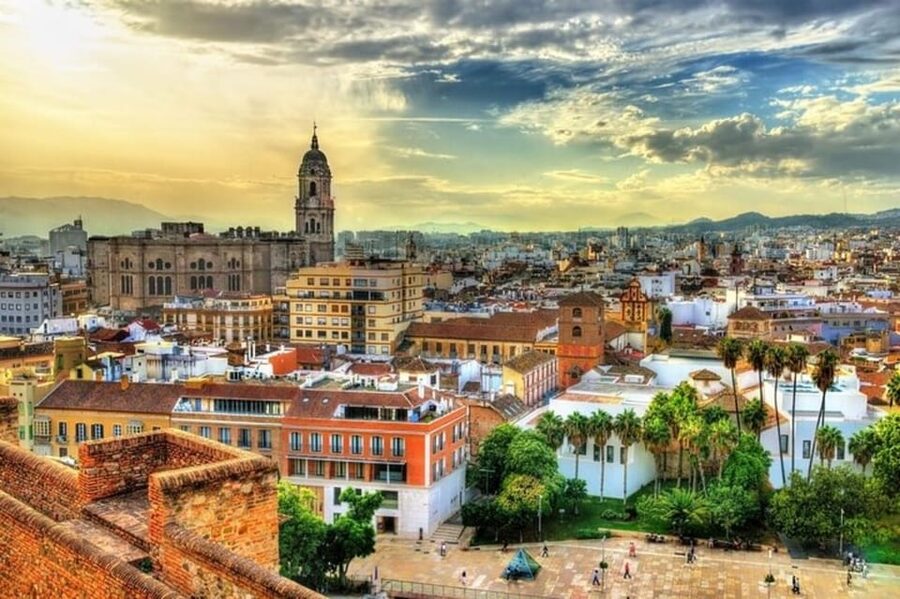
The tour starts at Alameda Principal, 1, right in the city center. This is smart. You’re not beginning miles out. You’re already where you’ll want to be later for cafes, shops, and follow-on sightseeing.
From there, you head to Plaza de la Merced for a photo stop and a guided look. This is where the Picasso connection becomes personal. It’s tied to the childhood days of Picasso, which gives the walk an emotional hook. Even if you’re not a hardcore art historian, having a specific person linked to a specific square changes how you see it. You’re not just passing a pretty plaza, you’re using it as a reference point for the rest of the city.
Practical tip: if you want photos, bring a phone battery pack or low-tech backup. This tour includes several short photo pauses, and you’ll want to use them.
Malaga Cathedral and the museum stop that connects art to the ground beneath it
Next up is Malaga Cathedral, with another photo stop and guided visit. Cathedral stops can be hit-or-miss on walking tours, because sometimes the guide just points and moves on. Here, the value comes from what you learn while you’re standing there. A guide can explain what you’re noticing in the architecture and how the building fits into Malaga’s timeline.
After that, you pass the Malaga Museum area, where you’ll hear about what’s housed there, including Fine Arts and Archaeology museums. The wording matters: Fine Arts on one side, Archaeology on the other. That pairing reflects what you’ll keep seeing on this route, a city where layers of different eras coexist.
Why I like this structure for you: it trains your eye. When you later reach the older remains like the Roman Theater, you’re less likely to treat them like random ruins. Instead, you can recognize them as part of a longer story, the same way you can when you visit a museum with clear interpretation.
Possible drawback at this stage: you spend limited time at each place because the tour is only 2 hours total. So if you want to linger in the cathedral area or read every label in a museum, you’ll need follow-up time after the walk. This tour is about orientation and meaning, not marathon exploring.
Alcazaba first, because the views and defensive logic matter
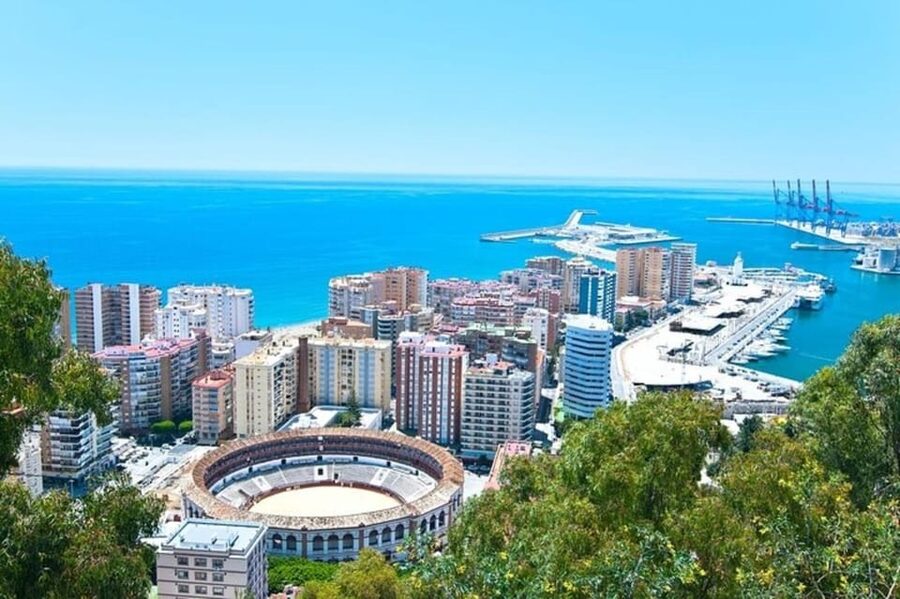
The Alcazaba of Malaga is one of the defining stops. It’s an 11th-century Moorish fortress, and the tour gives you time for a guided visit and sightseeing stops.
Fortresses can sound intimidating, but the point here isn’t intimidation. It’s understanding how defensive architecture shapes a city. Your guide helps you connect what you see in the stone and the layout to the logic of protection and control, while you still get the satisfaction of being in a major landmark.
Also, Alcazaba is where walking tours start to feel scenic. Even with short pauses, you get that sense that Malaga isn’t flat in your perception anymore. The fortress makes you look at the city differently, which pays off later when you reach the Roman Theater.
If you’re sensitive to stairs or uneven paving, keep your expectations realistic. The tour is listed as wheelchair accessible, which is a good sign, but historic-center terrain can still be tricky. Wear good shoes. Walk like you’re on cobbles, not smooth sidewalks.
Other days out near Malaga
- Malaga Private Walking Tour, Alcazaba & Catamaran Cruise
★ 5.0 · 159 reviews - Malaga Private Walking Tour, Alcazaba & Catamaran Cruise
★ 4.7 · 92 reviews - Malaga: Taste-of-Spain Walking Food Tour
★ 4.8 · 72 reviews - Malaga: 1.5-Hour Walking Tour
★ 4.6 · 62 reviews
Roman Theater and Malaga Museum area: seeing 1st-century BC remains up close
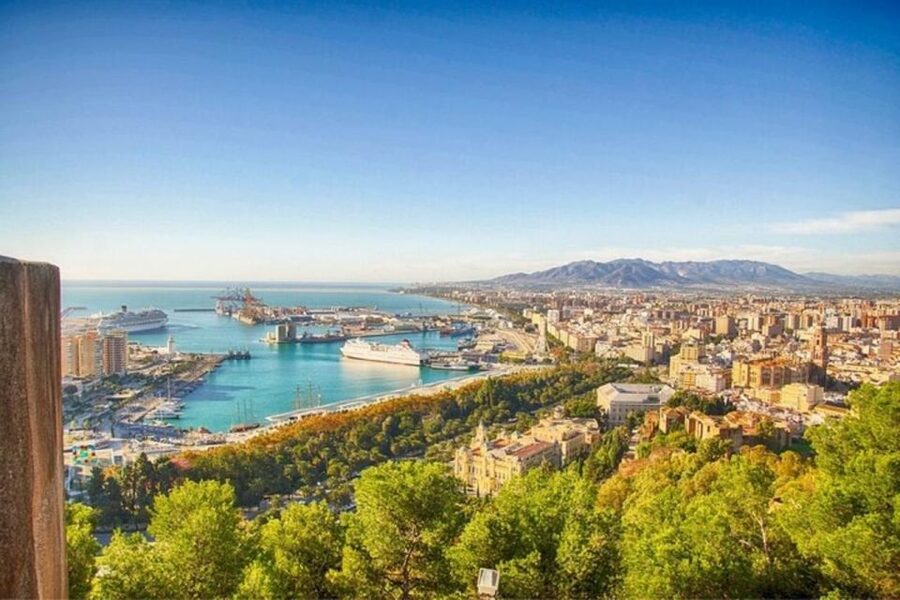
Then comes the Teatro Romano de Málaga, with photo and guided visit time. This is archaeology with personality. You’re looking at remains from the 1st century BC, and your guide helps translate what you’re seeing so it feels less like scattered stones and more like an actual space people once used.
This is a standout moment because Roman Theater stops are often treated like quick photo breaks. Here, you get enough structure to make it stick. The Roman Theater isn’t just old. It’s a clue about how Malaga functioned and attracted culture at a time when entertainment and civic life were tied together.
If you’re the type of traveler who likes “what am I looking at?” moments, this stop is built for you. The guide’s job is basically to prevent that feeling of standing in front of history and only seeing shape and age.
Church of Santiago, plus the Picasso baptism detail that gives the whole walk a theme
The Church of Santiago is one of the most meaningful stops on the route. It’s described as the oldest church in Málaga, and it was erected in 1490. But the real hook for many people is the Picasso baptism connection.
That detail matters because it makes the church more than an architectural stop. You’re not just seeing a Christian temple from the late 15th century. You’re standing in a place tied to a major cultural figure, and you can feel how long-lasting these cultural threads are.
Also, this stop helps your understanding of the timeline you’re building. Roman Theater, Moorish fortress, then later Christian architecture, then Picasso-era cultural influence. Even within short walking segments, you’re getting a clear sense of how Malaga evolved.
Practical tip: if you want the best photos around church exteriors, watch for the light. Cathedral and church lighting can change quickly, and this is the kind of tour where you want to take advantage of any bright moments your guide points out.
Costa del Sol photo pause and the orientation shift toward the coast
You’ll also have a stop labeled Costa del Sol, with a photo stop and guided sightseeing time. This is one of those route moments that feels small until you realize it’s giving you orientation.
Even if you’ve never been to Malaga before, the Costa del Sol association helps you picture the city’s geography. It’s a reminder that the Mediterranean is not a distant background. It’s part of the city’s identity, and it explains why Malaga has such a strong link to the broader coast region.
From a planning standpoint, this stop is useful because it sets you up for the final stretch of the walk.
Calle Larios and Calle Marqués de Larios: shops, market energy, and a classic Malaga stroll
Next, you’ll move toward Calle Marqués de Larios, which is the same well-known Calle Larios. This is where the tour turns more street-level and less monumental.
Calle Larios is described as one of Malaga’s best known pedestrian streets, and it’s one of the most emblematic and elegant stretches in the historic center. On this part of the walk, you get shopping time, sightseeing, and the city atmosphere.
There’s also mention of a market feel, and that’s exactly what you should expect here. This isn’t a quiet scenic promenade. It’s an active street where people shop, pause, and take in the day. If you like travel that mixes big sights with everyday life, this is the section where that balance shows.
One warning, in a friendly way: since it’s a busy shopping street, you may feel the crowd more than at fortress ruins or theatre remains. That’s normal. The value is you’re ending on something you can keep exploring right after the tour, without needing to re-enter a museum or taxi somewhere new.
Price, pacing, guide quality, and practical tips for your best experience
Let’s talk about the money and why it makes sense.
At $35 per person for a 2-hour guided walk, you’re getting:
- a live guide
- a structured route across major landmarks
- enough time at each stop for guidance, not just passing by
In other words, you’re paying for comprehension. If you’re the type of traveler who reads a bit of signage but wants more human context, this is the sweet spot.
The guide quality seems to be a major theme in the strongest feedback. Names like David, Borja, and Maura come up alongside praise for being prepared and responsive. One review specifically calls out Borja’s professional work and responsive attitude. Another highlights David’s extra effort and energy, and even mentions that the guide pointed out places beyond the usual list.
That matters because in a city like Malaga, interpretation is where a walking tour earns its keep. A guide who knows how to slow you down at the right moment can turn a quick stop into a lasting memory.
For pacing, remember the tour is short by design. You’ll see a lot, but you won’t linger long enough to become a deep-dive archaeologist or spend half a day in museum galleries. If you want museum time or longer views, treat this as your launch. Do it early in your trip, then return under your own steam.
A few practical tips you’ll be glad you followed:
- Wear comfortable walking shoes with solid traction.
- Bring a light layer. Churches and fortresses can feel cooler than the streets.
- Since there’s no food or drinks included, plan a snack or meal before or after. You’ll last longer and enjoy it more.
- If you use a wheelchair, the tour is listed as wheelchair accessible. Still, ask your operator if there are route-specific constraints that matter for your comfort level.
Who this Malaga tour is best for
This tour is especially good if you:
- want a compact overview that links Roman, Moorish, and later influences
- care about Picasso’s Malaga roots, including baptism and childhood ties
- prefer guided interpretation over wandering with no plan
- want a route you can extend later along Calle Larios for shopping and local street life
It’s less ideal if you want a full museum day or you like to spend long stretches inside buildings reading every label. You’ll enjoy the highlights, but you’ll likely crave more time in your favorite stop afterward.
Should you book this Malaga walking tour?
Yes, I think you should book it if you want your first Malaga day to feel coherent and meaningful. For $35 and 2 hours, you’re covering big-name landmarks and getting the kind of guided context that turns stone and streets into a timeline you can remember.
Book it earlier in your trip so you can use what you learn for follow-up visits, especially if Picasso is on your must-see list. And if you’re picky about tour guides, this one has strong signals of guide quality, including praised names like David, Borja, and Maura, known for being prepared and genuinely friendly.
If you’re sensitive to time pressure, go into it with the right mindset. This is a guided walk built for orientation and key stops, not slow museum immersion. With that expectation set, it’s great value.
FAQ
Where is the meeting point for the tour?
You meet your guide at Alameda Principal, 1 in the heart of Málaga’s city center.
How long is the Malaga walking tour?
The tour lasts 2 hours.
What is the price per person?
The price is $35 per person.
What is included in the tour price?
The tour includes a guide and the walking tour itself.
What languages are available for the live guide?
The live guide is available in English, French, Italian, and Spanish.
Which sights are included on the route?
You’ll visit or stop at key sites including the Malaga Museum, Roman Theater of ancient Malaga, Malaga Cathedral, the Alcazaba, the Church of Santiago, Picasso-related places around Plaza de la Merced, and time along Calle Larios (Calle Marqués de Larios).
Are food or drinks included?
No. Food or drinks are not included.
Is the tour wheelchair accessible, and is a private group available?
Yes, the tour is wheelchair accessible. A private group is also available.
Is free cancellation or pay later booking available?
Yes. You can cancel up to 24 hours in advance for a full refund, and you can reserve now and pay later.
Recently added around Malaga
- Malaga: Sierra de Mijas Guided Quad Tour★ 4.7 · 86 reviews
- Tour to Gibralfaro★ 4.7 · 182 reviews
- Malaga: PREMIUM TAPAS TOUR Paella, Tapas, Winery & Flamenco★ 4.6 · 82 reviews
- Málaga: Picasso Birthplace Museum Ticket & City Audio Guide★ 4.1 · 158 reviews
- From Costa del Sol: Gibraltar Day Trip with Free Time★ 4.0 · 99 reviews
- From Costa del Sol: Mijas, Marbella and Puerto Banús Tour★ 4.3 · 234 reviews
- Malaga: Wine and Tapas Tour with Tastings and Drinks★ 4.8 · 217 reviews
- Málaga: Traditional Andalusian Tapas and Wine Tour★ 4.7 · 167 reviews
Walking Tours, compared.
Barcelona Tapas and Wine Experience Small-Group Walking Tour
Read our review →
Tapas Walking Tour with Food, Wine, and History
Read our review →
Madrid Tapas & Wine Tasting Walking Tour – Small Group Local Bars
Read our review →
Albaicín and Sacromonte Guided Sunset Walking Tour
Read our review →
Toledo Tour & Vineyard Walk with Wine Tasting from Madrid
Read our review →
Madrid Walking Tour from Puerta del Sol to Retiro Park
Read our review →

Barcelona Tapas Walking Tour: Food, Wine & History
Read our review →Browse the lists this tour appears in