
Reviewed · SANTIAGO DE COMPOSTELA TOURS & ACTIVITIES
Finisterre and Costa da Morte: The Most Complete Tour of Santiago
The coast feels like an end-of-world postcard. This 9.5-hour tour turns Santiago into a jumping-off point for Galicia’s Atlantic edge, with Ponte Maceira legends and Faro de Fisterra views that feel built for reflection. I also like that it is a tight route with lots of short stops, so you get meaningful moments without needing to drive.
One thing to plan around: it is a long day and it depends on weather. When mist, rain, or cold fog roll in, the dramatic “end of the world” feeling can get muted, since the experience requires good weather.
In This Review
- Key things I’d circle before you go
- Entering Galicia’s Atlantic edge from Santiago, not a rental car
- The meeting point and coach day rhythm (Plaza de Galicia vibe)
- Stop 1: Ponte Maceira, a Roman bridge with a “start of the way” feeling
- Santuario da Virxe da Barca and the Muxía stone rituals (spiritual stops without the museum tone)
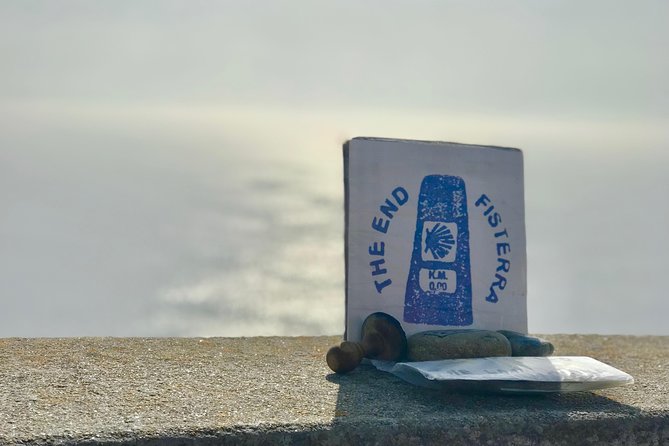
- Faro de Fisterra plus lunch in Finisterre village, where prices can be kind
- Stop 5 and beyond: free time in Fisterra, then waterfalls and working coast
- Horreo de Carnota: the granary symbol you actually understand after seeing it
- Muros estuary viewpoints, bateas, and how seafood farming shapes the coast
- Guide and driver reality check: what matters for an English-Spanish day
- Price and value: what $59.26 buys you in this coast-heavy day
- Weather, time, and how to pack for a long Atlantic day
- So, should you book the Finisterre and Costa da Morte tour?
- FAQ
- What time does the tour start?
- How long is the Finisterre and Costa da Morte tour?
- Where do I meet for the tour in Santiago de Compostela?
- Is pickup offered?
- What language is the tour guide?
- Is transportation included?
- Are admission tickets included for the main stops?
- Is lunch included?
- How big is the group?
- What if the weather is poor?
- Is there free cancellation?
Key things I’d circle before you go
- End-of-world sites in one route: Finisterre and the Costa da Morte highlights in a single day.
- Pilgrimage details at Muxía: stop at Santuario da Virxe da Barca, plus time for the Pedra d’Abalar and Pedra dos Cadris.
- More than just cliffs: Ezaro waterfall and the giant horreo of Carnota add Galician culture, not only sea views.
- Working coast at Muros: you get a look at bateas, the platforms used to cultivate seafood.
- Coach comfort and bilingual guiding: air-conditioned transportation and English plus Spanish interpretation.
- A packed schedule, but timed well: lots of stops, with free time at Fisterra for lunch and wandering.
Entering Galicia’s Atlantic edge from Santiago, not a rental car
If you want the Costa da Morte experience without the hassle of navigating coastal roads all day, this is built for you. You start in Santiago de Compostela, with a central pickup, then the day flows west along the shoreline and inland viewpoints. The route is designed around “pilgrimage geography,” places tied to the Camino spirit and the local legends that grew around it.
The other practical win: many of the major stops listed are marked free for admission. That does not mean you pay nothing for the day, but it helps keep your total cost sane if you are also budgeting for lunch.
Where this tour fits best is right after (or around) your Camino walk. After weeks of walking, you usually crave scenery, stories, and a break from planning. This day gives you that reset: short outings, guided context, and a chance to look at Galicia from sea level instead of trail dust.
Other days out near Santiago de Compostela
- Santiago: Cathedral & Museum Tour + Pórtico of Glory Option
★ 4.7 · 2,116 reviews - From Santiago: Tour To Finisterre, Muxia & Costa da Morte
★ 4.7 · 1,842 reviews - Excursion to Finisterre + Muxia + Costa da Morte (7 stops)
★ 5.0 · 1,367 reviews
The meeting point and coach day rhythm (Plaza de Galicia vibe)
The tour starts at 9:00am from Santiago. The listed meeting address is R. de Montero Ríos, 2, and the pickup location is also described around Plaza de Galicia. Because there have been issues with directions in the past, I’d treat this as a “confirm it on your day-of confirmation” moment. If you are arriving close to start time, give yourself buffer time so you are not hunting streets.
You travel by air-conditioned coach, which matters on this route because the day includes plenty of time seated between stops. Group size is capped at 55 travelers, so you are not in a tiny private vehicle, but you also are not swallowed by an enormous bus-fleet feel. Your pace is controlled by the itinerary timing, not by you individually.
You also get a mobile ticket, which is simple, and the tour includes insurance. Even if you do not think about insurance day-to-day, it is one less “what if” item you have to worry about on a long coastal excursion.
Stop 1: Ponte Maceira, a Roman bridge with a “start of the way” feeling
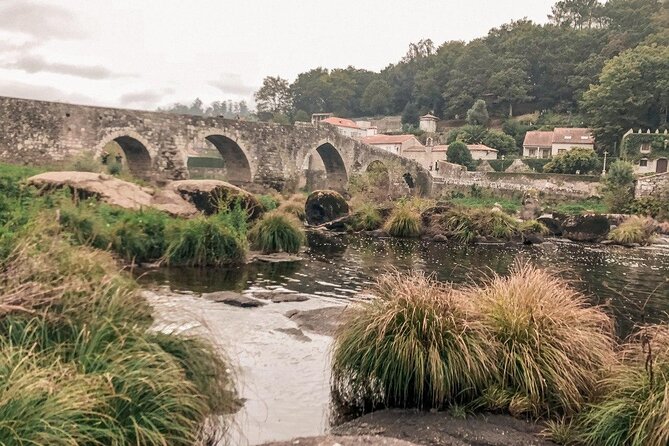
The day opens with Ponte Maceira, a Roman bridge (Pontemaceira). This is not just a photo stop. It is framed as part of the Finisterranean way, a symbolic beginning tied to the idea of traveling toward the end of the world.
What I like about anchoring early here is that it sets expectations. Before you hit the dramatic coastline, you get an early geography lesson: the land has layers, and these routes have been walked and retold for centuries. Even if you only catch a chunk of the narration, the setting helps it make sense.
The stop is listed for about 30 minutes, and admission is free. That is a realistic slice of time to stretch, look over the structure, and reset your legs before the bus pushes on.
Santuario da Virxe da Barca and the Muxía stone rituals (spiritual stops without the museum tone)
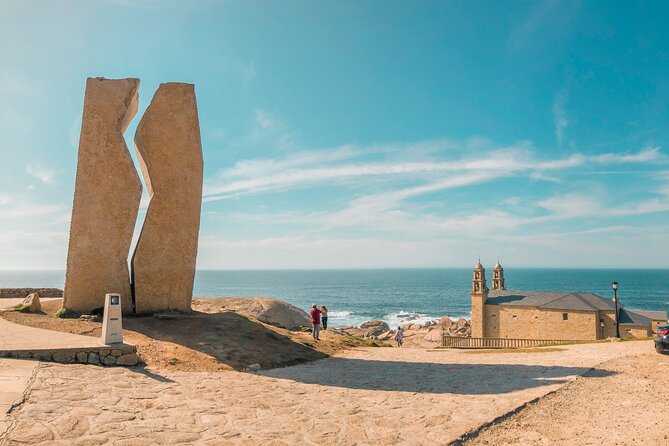
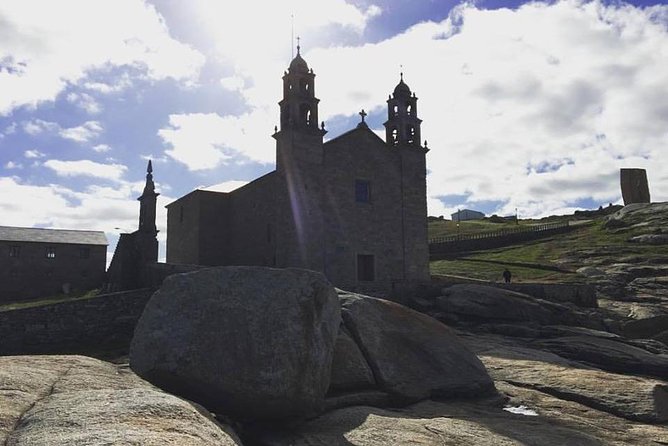
Then you head to Santuario da Virxe da Barca, a sanctuary described as important for pilgrimages connected to the Santiago Way. The emphasis here is on spiritual storytelling: the strength of the ocean, local legends tied to the arrival of Santiago and the Apostol, and why pilgrims treat this place as more than scenery.
You get about 45 minutes at this stop, with admission free. That extra time helps, because sanctuaries are the kind of place where you want a little room for slow looking, not just a quick group pass.
Next comes Muxía sanctuary time for Pedra d’Abalar and Pedra dos Cadris. The tour description explicitly mentions rituals people do there, and it even asks if you dare to do them. I’d treat this as participatory culture, not performance. If you want to join in, do it respectfully, watch what others do first, and keep your tone quiet around the locals.
That stop is about 30 minutes. It is short, but enough to learn what these stones mean to the community and get your own moment standing where the tradition lives.
Also within reach of Santiago de Compostela:
- From Santiago: Finisterre, Muxía & Costa da Morte Tour
★ 4.8 · 721 reviews - From Santiago: Tour to Rias Baixas with Boat Trip and Winery
★ 4.7 · 400 reviews - From Santiago: Excursion to Ribeira Sacra and Ourense
★ 4.5 · 135 reviews - Finisterre Express: the route to the end of the world
★ 4.8 · 78 reviews
Faro de Fisterra plus lunch in Finisterre village, where prices can be kind
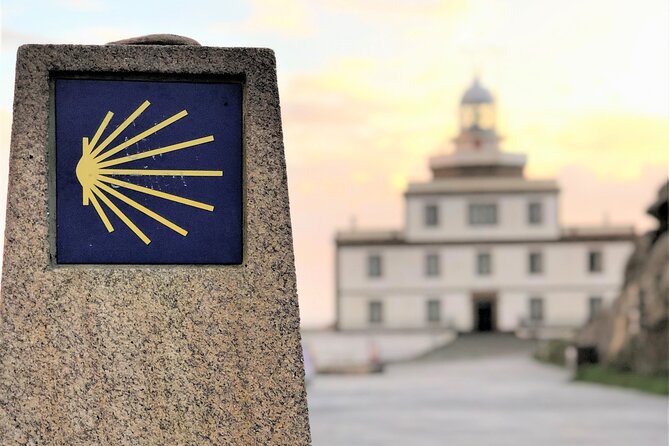
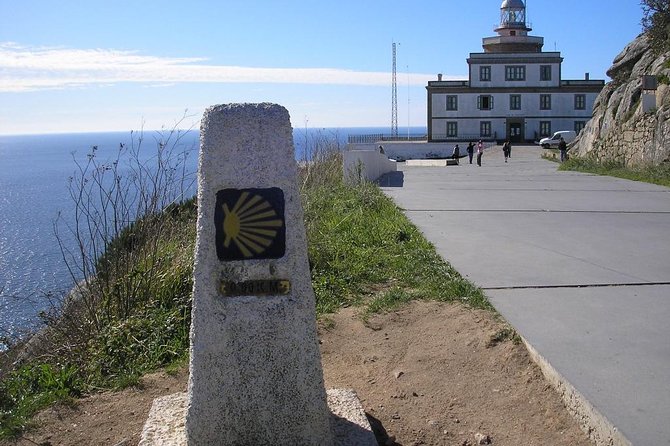
The next big anchor is Faro de Fisterra, the lighthouse area at Finisterre. This is one of those “you came for this” places. Even if the wind is rude or the sky is gray, the setting carries weight, because it is the point where you can feel the Atlantic taking over.
The tour lists a 45-minute time block here, with admission free. After the lighthouse views, you shift into practical mode with lunch time in the village of Finisterre. The plan gives you a lunch stop and notes that many restaurants in the area offer local gastronomy at prices that fit the day.
Lunch is not included. That is normal for Spain, and it gives you flexibility. If you want value, choose the place that looks busy with locals or offers a set menu option. If you want a safer budget, go for simpler dishes rather than seafood platters that can jump in price.
Also, this is where the day can become personal. If you are coming from the Camino, you might want to order something solid and not too fancy, then use the next stretch for walking off lunch and soaking in the coast views.
Stop 5 and beyond: free time in Fisterra, then waterfalls and working coast
After Faro, the itinerary continues to Fisterra itself. You get 1 hour 30 minutes here, and admission is free for the stop as listed. This is your biggest free-time window, so you can pace yourself.
Use this time smartly:
- Walk toward viewpoint spots you can reach without rushing.
- Spend a few minutes watching fishermen or the shoreline activity if it is visible.
- If weather is questionable, prioritize indoor warmth for a bit, then return outside when the wind shifts.
From the info provided, many people treat this as the emotional highlight of the day. That makes sense. Finisterre is rugged, exposed, and built for big thoughts, even when you just let your camera do the work.
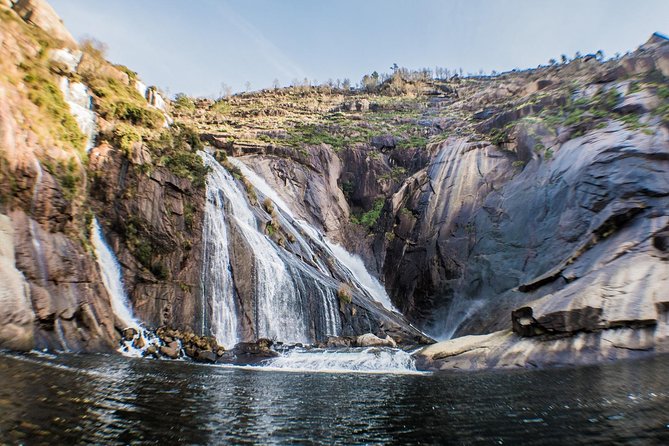
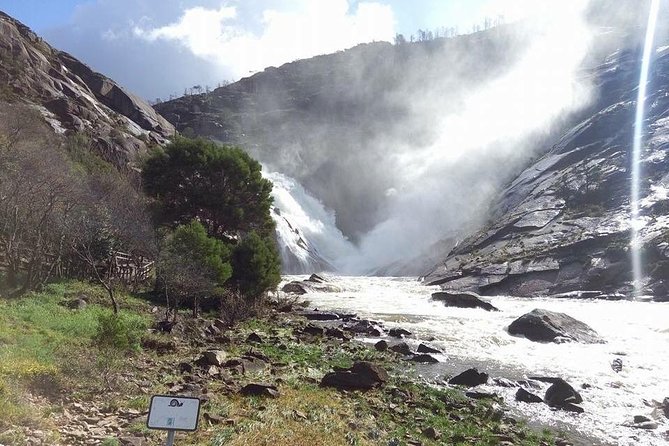
Then the tour pivots from “cliffs and end-of-world” to a different kind of Galician power with Fervenza de Ezaro. This is about 40 minutes, also free. The waterfall is described as connected with pre-Roman culture and local legends, so it is not only natural spectacle. It is framed as a place where people made meaning long before modern tourism labels arrived.
Bring layers here. Waterfall weather tends to be cooler, damp, and windy.
Horreo de Carnota: the granary symbol you actually understand after seeing it
Next is Horreo de Carnota, a large horreo, Galicia’s distinctive elevated grain store structure. The tour description calls it one of the largest in the world and explains why it matters locally.
This stop is about 30 minutes, free. What I like is that it gives you a break from sea views while still staying in the same “Galicia has working traditions” theme. Once you see a horreo up close, you understand why locals treat these as symbols: they are practical architecture designed for food storage, not decorative folklore.
If you like architecture, it is worth slowing down and checking details. If you do not, you can still get the main point quickly, then move on refreshed.
Muros estuary viewpoints, bateas, and how seafood farming shapes the coast
The final stretch described is Muros, where you enjoy views tied to the southern estuaries of Galicia. The tour notes you’ll see bateas, which are platforms used to cultivate mussels, oysters, and scalops (scallops).
This is a great ending if you like your travel grounded in real industry. The sea is not just a backdrop here. It is an active workplace. Even when the weather is moody, you can usually spot how the coastline supports seafood farming.
The stop is 30 minutes, free. It is not long, but it is enough to get the big picture, take photos, and wrap the day with a calmer kind of scenery than the Faro cliffs.
Guide and driver reality check: what matters for an English-Spanish day
The tour includes an English and Spanish guide, and the coach is air-conditioned. That is the baseline. Where your experience can rise or dip is how clearly the narration lands, plus how smoothly the group moves at each stop.
In the feedback you provided, Maria is repeatedly praised as a guide who explains places well and keeps the group moving on time, including for people needing extra help stepping around. That kind of guidance changes the whole feeling of a day trip, because it turns each stop from sight into context.
There are also a couple caution flags in the provided details:
- Some people reported trouble understanding English on the day.
- There were comments about pacing, such as stops feeling rushed or the tour running over time.
- One note described onboard rules being enforced by the driver, with a coffee thrown away before boarding.
So here is my practical advice. If English clarity is important to you, arrive early and be ready to ask questions in a simple way during stops. Keep expectations flexible on weather and timing. And if you are carrying drinks or snacks, follow the driver’s instructions, or keep items packed until you’re sure what is allowed. The driver controls these rules in the moment.
Price and value: what $59.26 buys you in this coast-heavy day
At $59.26 per person, you are paying for a full-day structure: transport by air-conditioned coach, a guide (English and Spanish), insurance, and a sequence of free-access stops. You are also buying convenience. Without the tour, you would need a car, parking planning, and the ability to hop between viewpoints and villages without losing time.
What you should remember: lunch and drinks are not included. The day explicitly gives you time to eat in Finisterre, but you bring your own budget. Alcohol is available to purchase, so you can plan a calmer meal if you want to stay sharp for the afternoon viewpoints.
In my view, the value is strongest if you want the route, stories, and logistics handled. If you want maximum flexibility, you could do this by car, but that comes with fatigue, navigation, and parking stress. This tour is the low-stress path, especially if you are staying in Santiago and want a proper day out without turning it into a second job.
Also, the tour has a maximum group size of 55. That matters because it affects how easy it is to move as a group at stops. A smaller group often means less waiting. In a larger one, you may stand and shuffle more. Here, the cap helps keep it workable.
Weather, time, and how to pack for a long Atlantic day
The experience requires good weather. That line should guide your packing and your mindset. Even when you book months ahead, coastal weather changes fast. Wind can pick up near the lighthouse. Cool air can settle near the waterfall. Fog can reduce long-distance views.
Pack for temperature swings. Bring a light rain layer. Wear shoes that handle uneven ground around viewpoints and old stone areas. This route is a day of legs and short walks, not a sit-and-forget cruise.
Also, bring patience for the rhythm of a coach day. Even when the schedule is solid, you may feel like there is never enough time at every stop. The itinerary is designed around balance, but you still need to choose what you care about most if conditions are tight.
Finally, if your goal is photography, aim to capture:
- Faro and Fisterra for the “end of the world” shots.
- Ezaro for movement and texture.
- Muros for the working-coast look.
If weather is bad, prioritize the stops where you can still get strong atmosphere even without perfect light.
So, should you book the Finisterre and Costa da Morte tour?
I think this is a great choice if you want a structured, coach-based day that hits the big Galicia coastal hits: Finisterre, Muxía pilgrimage sites, Ezaro waterfall, a Carnota horreo, and a Muros estuary viewpoint with bateas. It is especially smart if you are coming off Camino walking and want a meaningful “how did I end up here” kind of day without planning transport.
You might skip it, or at least choose it with realistic expectations, if you hate long bus days. This is a 9 hours 30 minutes outing. It also relies on weather, so if you are traveling in a period with frequent storms, know that conditions can change.
If you do book, do one thing that pays off immediately: verify the exact pickup spot for your departure day, since meeting-point direction confusion has shown up in the provided notes. Then go in ready to learn, walk a bit, and let the coast do what it does best.
FAQ
What time does the tour start?
The tour start time is 9:00am.
How long is the Finisterre and Costa da Morte tour?
It is about 9 hours 30 minutes.
Where do I meet for the tour in Santiago de Compostela?
The tour listing gives the meeting area as R. de Montero Ríos, 2, 15702 Santiago de Compostela, La Coruña, Spain, and it also references Plaza de Galicia as the central departure point.
Is pickup offered?
Pickup is offered.
What language is the tour guide?
The tour is offered with an English and Spanish tour guide.
Is transportation included?
Yes, transportation is included, and you travel by air-conditioned coach.
Are admission tickets included for the main stops?
For the stops listed in the itinerary, admission is marked free.
Is lunch included?
No. Lunch and food and drinks are not included.
How big is the group?
The tour has a maximum of 55 travelers.
What if the weather is poor?
The experience requires good weather. If it is canceled due to poor weather, you will be offered a different date or a full refund.
Is there free cancellation?
Yes, free cancellation is available. You can cancel up to 24 hours in advance for a full refund.
Recently added around Santiago de Compostela
- From Santiago: Tour to Rias Baixas with Boat Trip and Winery★ 4.7 · 400 reviews
- From Santiago: Finisterre, Muxía & Costa da Morte Tour★ 4.8 · 721 reviews
- Finisterre Express: the route to the end of the world★ 4.8 · 78 reviews
- From Santiago: Excursion to Ribeira Sacra and Ourense★ 4.5 · 135 reviews
- Excursion to Finisterre + Muxia + Costa da Morte (7 stops)★ 5.0 · 1,367 reviews
- From Santiago: Tour To Finisterre, Muxia & Costa da Morte★ 4.7 · 1,842 reviews
- Santiago: Cathedral & Museum Tour + Pórtico of Glory Option★ 4.7 · 2,116 reviews
Santiago de Compostela Tours & Activities, compared.
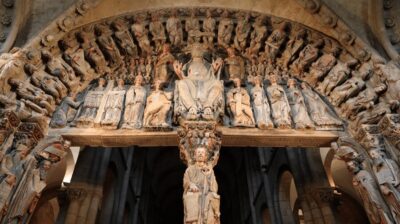
Santiago: Cathedral & Museum Tour + Pórtico of Glory Option
Read our review →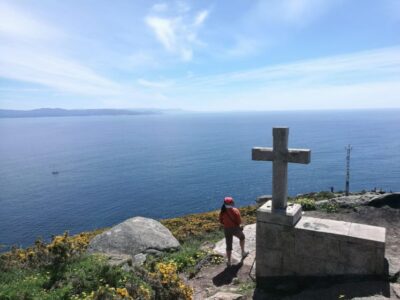
From Santiago: Tour To Finisterre, Muxia & Costa da Morte
Read our review →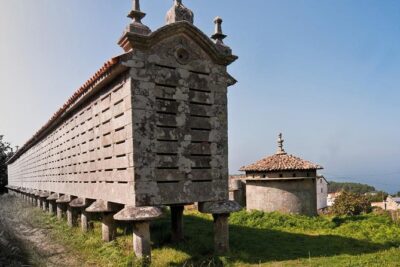
Excursion to Finisterre + Muxia + Costa da Morte (7 stops)
Read our review →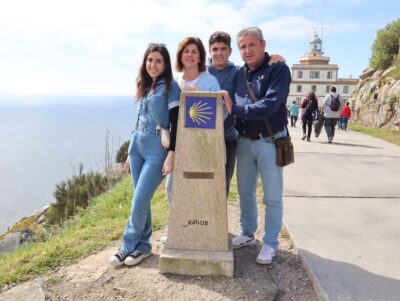
From Santiago: Finisterre, Muxía & Costa da Morte Tour
Read our review →
From Santiago: Tour to Rias Baixas with Boat Trip and Winery
Read our review →
From Santiago: Excursion to Ribeira Sacra and Ourense
Read our review →
Finisterre Express: the route to the end of the world
Read our review →Browse the lists this tour appears in