
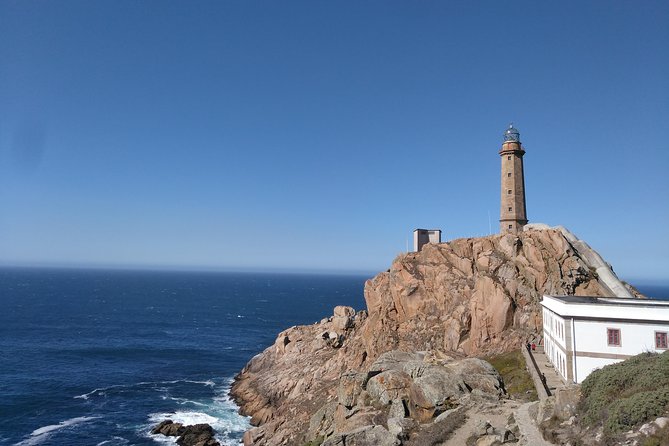
Reviewed · SANTIAGO DE COMPOSTELA TOURS & ACTIVITIES
Santiago de Compostela: Finisterre, Muxia & Costa da Morte
Galicia’s coast feels like the edge of Europe. On this 9-hour ride from Santiago de Compostela, you get Finisterre and Muxía plus a real guide who turns the myths into something you can picture. I love the way the commentary connects each place to the Camino mindset, and I love the mix of big sea views and small, walkable port towns where you can actually slow down.
One thing to plan for: it is a full day in the bus, so a few stops are time-limited. If you want long, unhurried exploration at every viewpoint, you may feel the schedule a bit.
In This Review
- Key Highlights You’ll Care About
- A Day Along the Costa da Morte That Starts Feeling Like the Camino Again
- Meeting at Toxo Travel and How the Day Stays Practical
- Muros: Estuary Views, Coffee Time, and a Real Taste of the Region
- Ponte Maceira Over the Tambre: Pilgrims, Medieval Mills, and a Bridge You’ll Remember
- Ézaro Fervenza do Xallas: The River Meets the Sea Like It Means It
- Cape Finisterre and Fisterra: Lighthouse Views, Kilometer Zero, and a Lunch Break That Matters
- Muxía: The Sanctuary at the Atlantic and the Sacred Stones Moment
- What the Guide Adds, and Why Language Options Matter on a Long Day
- How to Make the Most of Your Free Time at Each Stop
- Price and Value: Is $58 a Good Deal for This Kind of Coast Day?
- Who Should Book This Tour (and Who Might Want Something Else)
- Should You Book This Finisterre, Muxía, and Costa da Morte Day Trip?
- FAQ
- How long is the tour?
- Where do I meet for the tour?
- What is included in the price?
- Is food or drinks included?
- What stops are included in the itinerary?
- How much free time do I get at Fisterra for lunch and sightseeing?
- What languages are offered by the live guide?
- Are audio guides included, and in which languages?
- What should I bring?
- Can I cancel for a full refund?
Key Highlights You’ll Care About
- Ponte Maceira over the Tambre: a 14th-century bridge stop tied to pilgrims and medieval mills.
- Muros and the estuary drive: short scenic time plus a coffee tasting moment to break up the route.
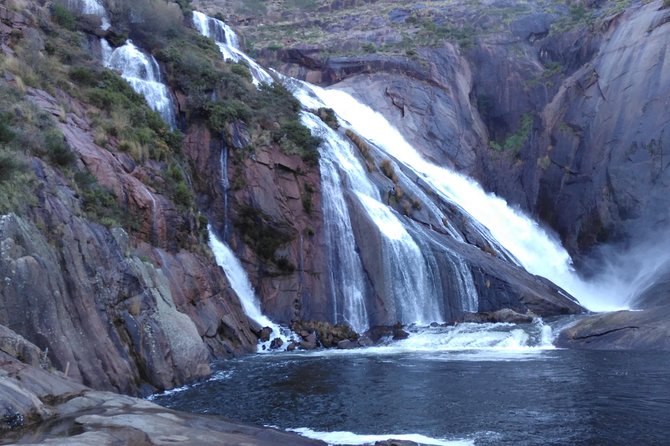
- Fervenza do Xallas (Ézaro waterfall): the Xallas river drops into the sea, often a standout if weather cooperates.
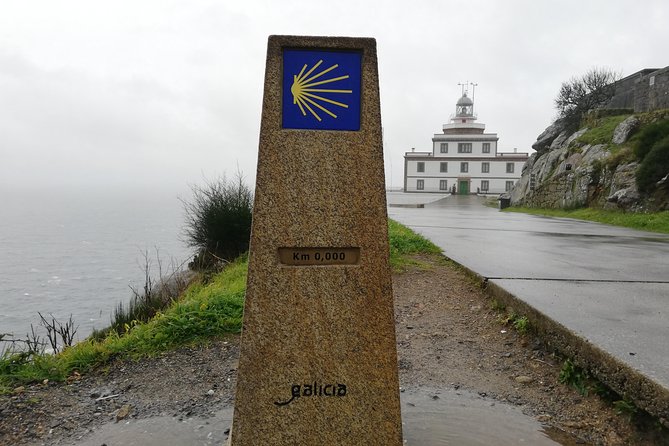
- Cape Finisterre plus Fisterra: lighthouse and the Camino kilometer zero area, then a proper lunch and walk pause.
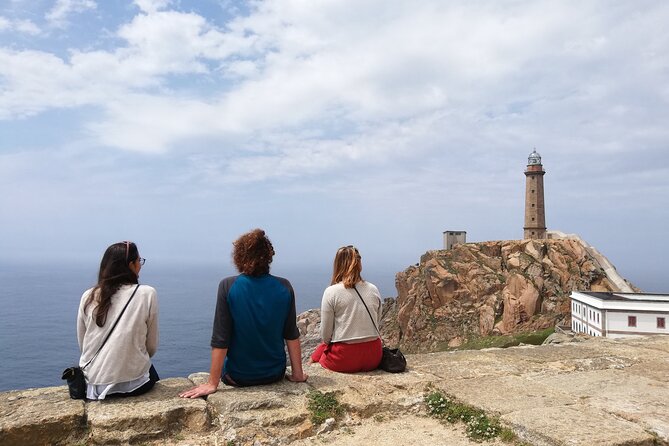
- Muxía sanctuary and sacred stones: guided visit with time to feel the Atlantic winds at the foot of the coast.
- Guide in multiple languages: live Spanish, English, and Galician, with audio options in French, Korean, and German.
A Day Along the Costa da Morte That Starts Feeling Like the Camino Again
After the Camino, it is easy to miss the feeling of moving through sacred places, even if your legs are finally resting. This day trip does something simple but effective: it takes the idea of the end of the route, the sea, and the local legends, then connects it stop by stop as you drive along the Costa da Morte.
What I like most is that you are not just collecting photos. The guide’s job is to explain why people have attached meaning to cliffs, stones, and shorelines here. That is what makes Finisterre and Muxía feel more than tourist stops, even if you are doing this by coach instead of on foot.
The scenery is dramatic too. You get long coastal views, cliff-side landmarks, and ocean air at points where you can step out and actually look around instead of just watching from a window.
Other days out near Santiago De Compostela
- Santiago: Cathedral & Museum Tour + Pórtico of Glory Option
★ 4.7 · 2,116 reviews - From Santiago: Tour To Finisterre, Muxia & Costa da Morte
★ 4.7 · 1,842 reviews - Excursion to Finisterre + Muxia + Costa da Morte (7 stops)
★ 5.0 · 1,367 reviews
Meeting at Toxo Travel and How the Day Stays Practical
You meet at the TOXO TRAVEL office at Rúa dos Bautizados, 12. From there, you are set up for a straightforward day: air-conditioned transport, a live guide, and built-in time at each place.
The tour runs for 9 hours, so it is not a quick taste. It is also not a nonstop sprint, because there are scheduled stops with free time. The trick is to treat each stop like a mini outing: walk, look, take your pictures early, then use your remaining time to wander a little without overthinking it.
You also get an express security check, which can help keep things smooth before you settle into the ride. Bring comfortable shoes because you will want to move at viewpoints and port areas.
And yes, it can be a weather day. Coastal Galicia can shift quickly, and the day plan still aims to keep you comfortable in the coach when conditions make sightseeing harder.
Muros: Estuary Views, Coffee Time, and a Real Taste of the Region
Your route includes a stop at Muros, with a short visit plus time to look around. This is not the dramatic “end of the world” moment. It is more like the calm before it, a chance to see how the coast towns live.
The drive in includes scenic views along the Muros e Noia estuary, so you get water and shoreline before you hit the wilder cliffs. Muros itself gives you a place to reset your eyes after road time, and it works well if you like charming streets and harbor energy more than pure viewpoints.
One of the nicer details here is the coffee tasting (about 30 minutes). It helps break up the day, and it is a small cultural stop that feels less like a detour and more like a gentle reset.
Ponte Maceira Over the Tambre: Pilgrims, Medieval Mills, and a Bridge You’ll Remember
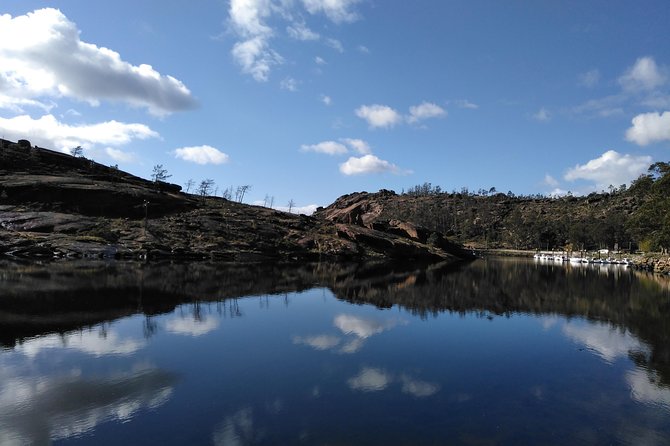
Ponte Maceira is a key stop on the tour route, and it is tied to pilgrims who travel toward the western end of the Camino story. The big draw is the medieval bridge over the Tambre river, including a 14th-century structure.
You also see the area’s medieval mills, which gives you more than a “pretty bridge photo.” It helps you understand why this region mattered long before modern roads and parking lots.
What makes this stop feel satisfying is pacing. You get around 25 minutes here, long enough to walk, look, and take in the river setting without feeling rushed. If you are traveling right after doing the Camino, this kind of place hits emotionally. Even without the long trek, you still get that sense of route and ritual.
Also within reach of Santiago De Compostela:
- Finisterre and Costa da Morte: The Most Complete Tour of Santiago
★ 5.0 · 733 reviews - From Santiago: Finisterre, Muxía & Costa da Morte Tour
★ 4.8 · 721 reviews - Santiago de Compostela Cathedral and Museum Guided Tour
★ 4.6 · 511 reviews - From Santiago: Tour to Rias Baixas with Boat Trip and Winery
★ 4.7 · 400 reviews
Ézaro Fervenza do Xallas: The River Meets the Sea Like It Means It
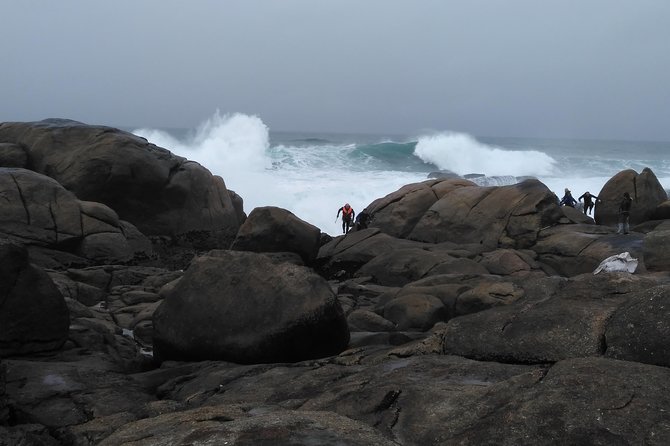
Next up is Ézaro, specifically the Fervenza do Xallas, where the Xallas river falls into the sea. The waterfall is one of the most famous coastal features in Galicia, and it has that rare feel of water doing something very direct and physical.
You get about 35 minutes for sightseeing and free time. In that window, you want to do two things fast: find the best viewpoints from your walking path, then decide if you want to linger for a second look. When conditions are right, this is one of those stops that makes the whole day click.
A practical consideration: weather can change what you see. If it is rainy or misty, the waterfall can look dramatic, but road conditions can also affect access. Plan mentally for the fact that coastal Galicia does not always play by perfect itinerary rules.
Cape Finisterre and Fisterra: Lighthouse Views, Kilometer Zero, and a Lunch Break That Matters
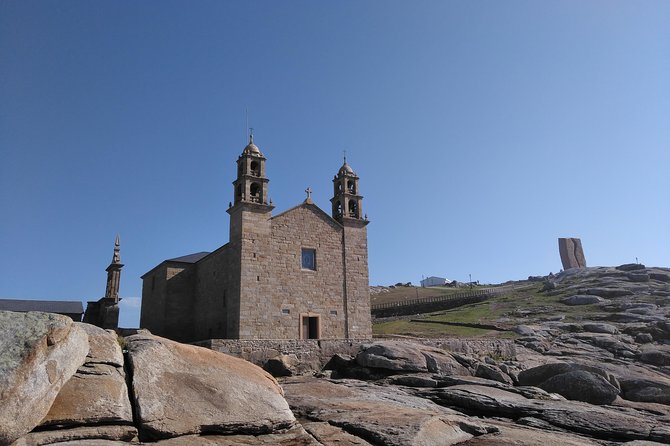
Then you reach Cape Finisterre (Cape Fisterra), the area that was long believed to be the westernmost point in Europe. You get about 45 minutes here, and you can focus on two things: the lighthouse area and the sense of arrival tied to the Camino de Santiago kilometer zero point.
After Cape Finisterre, the route continues to Fisterra, where you get time for sightseeing plus lunch. Your scheduled window here is about 1.5 hours, which is enough to eat without rushing, walk around the fishing port area, and take your photos before the light shifts.
This is the first part of the day where the coast feels fully “you are here now.” The lighthouse and the end-of-route symbolism are big. But the best moment is usually simpler: standing by the sea, looking back at what you came from, and noticing how ordinary life still runs beside all the meaning.
If you are doing this after walking the Camino, you might find it strangely emotional, even if you try not to be sentimental about it.
Muxía: The Sanctuary at the Atlantic and the Sacred Stones Moment
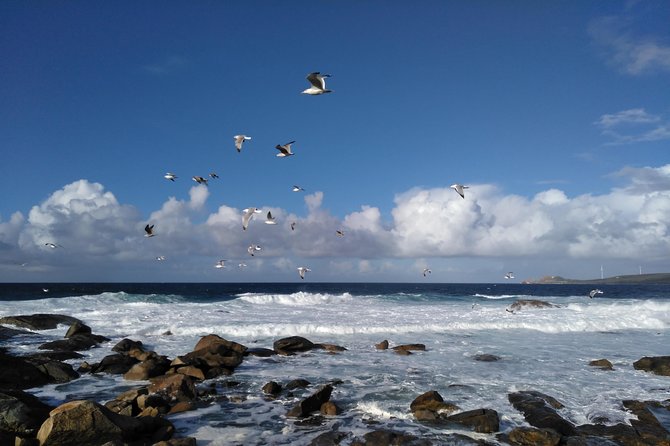
You finish with Muxía, where the Atlantic air does most of the talking. The route includes a guided visit at the sanctuary area, plus free time to explore.
The central theme here is the sacred stones. The tour explains the three stones considered sacred by Galicians, and you get a guided moment (about 40 minutes) designed to help you understand the local meaning behind the legend.
Muxía also feels different because it is not just about looking out. It is about being close to the place people return to, the foot of the coast where wind and water keep the setting alive.
This stop is a strong choice if you want the tour to end with atmosphere. Many people find Muxía memorable because it feels calmer than the biggest cliff viewpoints, even though it is still totally exposed to the sea.
What the Guide Adds, and Why Language Options Matter on a Long Day
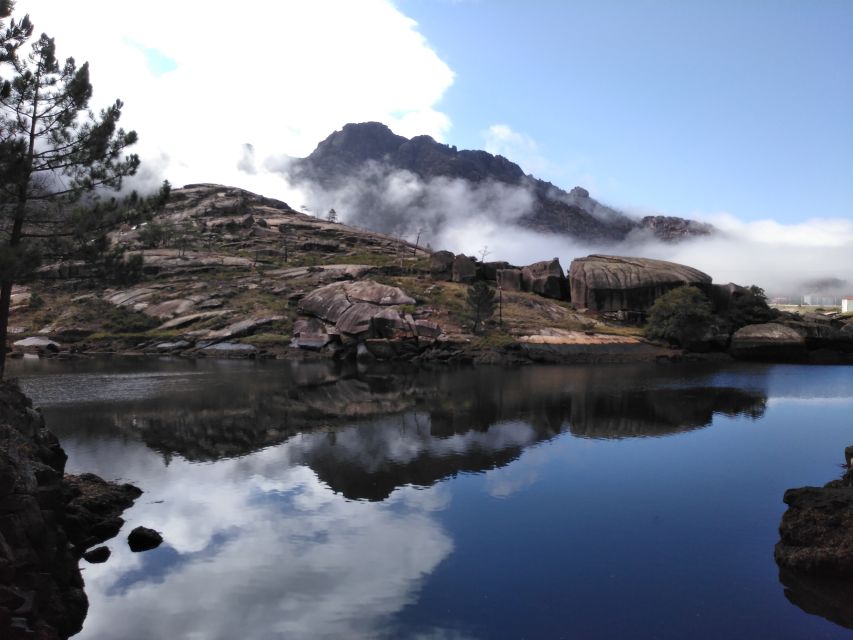
On a day like this, the guide can make or break the experience. The best version of this tour is when you stop thinking in terms of “where to stand for photos” and start thinking in terms of “what is the story here.”
The tour provides a live guide in Spanish, English, and Galician, plus an audio guide in French, Korean, German. That matters because a 9-hour route includes a lot of moving time, and you do not want to lose the meaning while you are seated.
From past days, different guides have led the group, including Andrea, Pablo, Christian, Dani, and Ruben. You will feel the difference in how they pace explanations, how they answer questions, and how they keep the group moving without making it feel mechanical.
How to Make the Most of Your Free Time at Each Stop
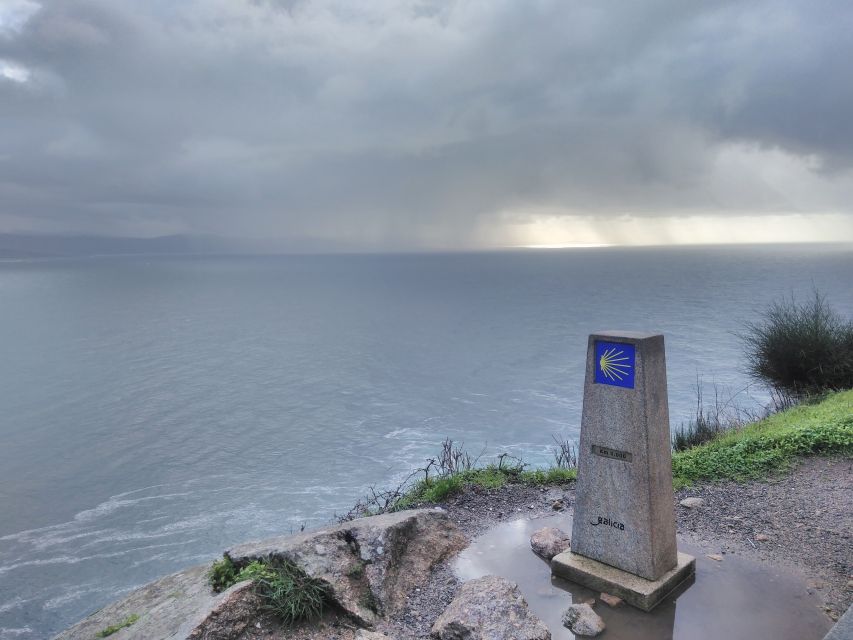
This is not a “march from place to place” tour. You get free time, but you still need a plan. Here is how I would run it, stop by stop.
For Muros, walk the area once for orientation, then return to whatever street or viewpoint seems best. Use the coffee break to reset.
For Ézaro, prioritize the viewpoints quickly. If the waterfall access is clear, take a few minutes to watch the water action more than the buildings around it.
For Cape Finisterre and Fisterra, start with lighthouse and viewpoints first, because light changes fast along open coast. Then save your slower wander time for the port and town streets once you know where you want your best photo.
For Muxía, treat it like a final ritual stop. Slow down. Look at the stones and sanctuary area, then use your free time to stand by the sea long enough for the wind and sound to land.
Price and Value: Is $58 a Good Deal for This Kind of Coast Day?
At $58 per person for a 9-hour guided day trip with transport included, you are basically paying for convenience plus local interpretation. You are not just driving out to one viewpoint. You are covering multiple coastal towns and famous sites: Muros, Ézaro waterfall, Cape Finisterre, Fisterra, and Muxía, plus the Tambre bridge stop.
That is the value equation. If you tried to do this yourself by public transit, you would likely lose time to scheduling and connections, and you would spend more energy planning than exploring. Here, the day is packaged so you can show up, follow the route, and use free time effectively.
The only reason the value might feel uneven is the nature of day trips: some stops can feel short, especially if you want extended time at the most iconic points like Cape Finisterre. If you are the type who wants deep time everywhere, you might prefer a slower stay in the area instead. But if you want the coast highlights efficiently, the price makes sense.
Who Should Book This Tour (and Who Might Want Something Else)
This day trip is a great fit if you:
- Want a guided route that connects Camino legends to real places
- Prefer a coach day after walking the Camino or after a busy Santiago schedule
- Like coastal viewpoints and small town wandering, not just one big attraction
- Appreciate language support, with live guide options plus audio
It might not be perfect if you:
- Want hours alone at the iconic end-of-route spots, with no time limits
- Get restless with long bus rides and prefer shorter outings
Still, even with the pacing, the combination of sites is exactly why people sign up.
Should You Book This Finisterre, Muxía, and Costa da Morte Day Trip?
I would book it if your goal is to experience the Costa da Morte highlights in one day without fighting logistics. The guide layer is strong, and the stops are chosen for a reason: pilgrimage symbolism at Finisterre, the dramatic water moment at Ézaro, and the quiet sacred tone at Muxía.
To make the call, ask yourself one question: do you want a full day of “see the major places, learn why they matter,” or do you want “live here for a few days and explore slowly”? If it is the first, this tour is a very practical way to do it from Santiago. If it is the second, then plan more time along the coast and return to the end-of-route sites on your own terms.
Either way, pack good walking shoes, keep your phone charged, and plan to let the sea air do what it always does in Galicia, it changes your mood fast.
FAQ
How long is the tour?
The tour duration is 9 hours.
Where do I meet for the tour?
Meet at the TOXO TRAVEL office at Rúa dos Bautizados, 12.
What is included in the price?
Transportation by air-conditioned vehicle and a guide are included.
Is food or drinks included?
Food or drinks are not included. Lunch time is built into the schedule at Fisterra.
What stops are included in the itinerary?
You visit Muros, Fervenza do Xallas (Ézaro), Cape Finisterre, Fisterra, Muxía, and Ponte Maceira.
How much free time do I get at Fisterra for lunch and sightseeing?
The schedule includes about 1.5 hours for lunch and sightseeing at Fisterra.
What languages are offered by the live guide?
The live tour guide is available in Spanish, English, and Galician.
Are audio guides included, and in which languages?
Yes. Audio guides are included in French, Korean, and German.
What should I bring?
You should bring comfortable shoes.
Can I cancel for a full refund?
Yes, free cancellation is available up to 24 hours in advance for a full refund.
Recently added around Santiago De Compostela
- Tierra de Leyendas y Meigas★ 4.8 · 102 reviews
- Santiago: Guided Foodie Tour with Drinks, Tapas & Live Music★ 4.7 · 153 reviews
- Santiago de Compostela: Private Guided Tour in two hours★ 4.8 · 59 reviews
- Santiago de Compostela: Massage Treatment★ 4.8 · 170 reviews
- Santiago de Compostela: Cathedral, Museum, and Old Town Tour★ 4.8 · 382 reviews
- Santiago Complete Tour: City, Portico and Cathedral Tickets★ 4.7 · 108 reviews
- Santiago de Compostela Cathedral and Museum Guided Tour★ 4.6 · 511 reviews
- Santiago de Compostela: Cathedral & Carraca Tower Roofs Tour★ 4.7 · 79 reviews
Santiago de Compostela Tours & Activities, compared.
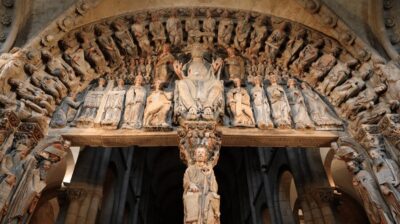
Santiago: Cathedral & Museum Tour + Pórtico of Glory Option
Read our review →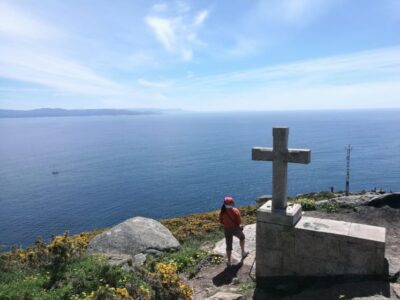
From Santiago: Tour To Finisterre, Muxia & Costa da Morte
Read our review →
Excursion to Finisterre + Muxia + Costa da Morte (7 stops)
Read our review →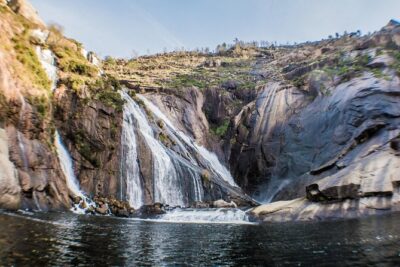
Finisterre and Costa da Morte: The Most Complete Tour of Santiago
Read our review →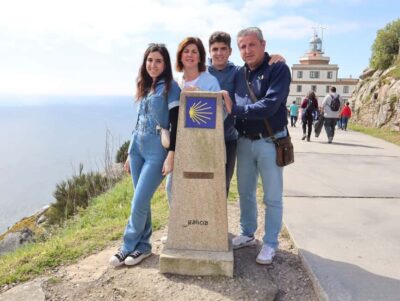
From Santiago: Finisterre, Muxía & Costa da Morte Tour
Read our review →
Santiago de Compostela Cathedral and Museum Guided Tour
Read our review →
From Santiago: Tour to Rias Baixas with Boat Trip and Winery
Read our review →
Santiago de Compostela: Cathedral, Museum, and Old Town Tour
Read our review →Browse the lists this tour appears in