
Reviewed · SANTIAGO DE COMPOSTELA TOURS & ACTIVITIES
Santiago de Compostela Cathedral and Museum Guided Tour
Saint James waits inside. This 2-hour cathedral and museum visit gives you a guided path through the most important sacred spaces in Santiago de Compostela. It also saves you time with skip-the-line entry into the complex.
I especially like the museum-first route, because you get the setting before you step into the big church. I also love how the guide connects details like the tomb of Saint James the Great and the famous Codex Calixtinus to the pilgrim story that still drives this place. One consideration: the focus is mostly inside the cathedral areas, so you may not get an extended explanation of the exterior facades and street-level symbolism.
In This Review
- Key highlights to look for
- Why this Santiago Cathedral tour is worth your limited time
- Museum first: sacred art you can actually place in your mind
- Entering the cathedral: naves, chapels, and the main altar story
- Saint James’s tomb: where the pilgrim story turns tangible
- The crypt, the Codex Calixtinus, and why documents matter here
- Treasury, Chapter House, cloister, and balcony views
- Botafumeiro and the performance side of pilgrimage culture
- Guide quality: why names keep showing up in positive reviews
- Who this tour suits best, and who should consider a different option
- Price and value: what $29 buys you in Santiago
- Should you book this Santiago Cathedral and Museum guided tour?
- FAQ
- How long is the Santiago de Compostela Cathedral and Museum guided tour?
- How much does the tour cost?
- What is included in the tour?
- Does the tour include skip-the-line entry?
- What languages are offered for the live guide?
- Where is the meeting point?
- Is there free cancellation?
- Are large backpacks allowed?
- Is the tour wheelchair accessible?
Key highlights to look for
- Skip-the-line entrance into the cathedral and museum, using a separate entrance
- Saint James’s tomb plus the chapels around the main altar, all explained in context
- Codex Calixtinus and other museum treasures tied to pilgrims and sacred tradition
- Treasury, Chapter House, cloister, and balcony views as part of the cathedral circuit
- Botafumeiro included in the tour route, with the guide putting it into story and practice
- Small group format, which helps you ask questions without feeling rushed
Why this Santiago Cathedral tour is worth your limited time
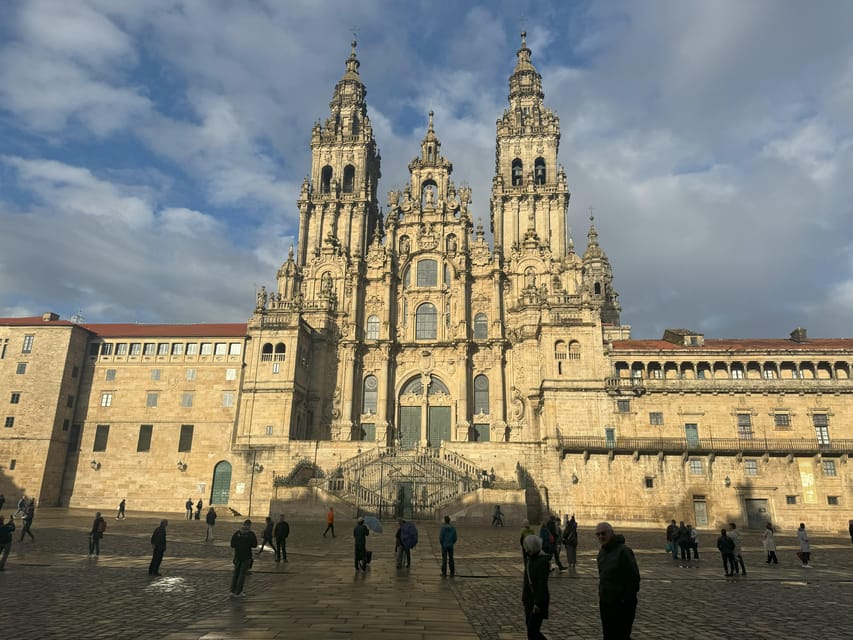
Santiago de Compostela Cathedral is one of those places where you can walk around for hours and still feel like you only scratched the surface. This tour helps you do the smart thing: it turns a big, complex site into a clear route with story and meaning attached to what you’re seeing.
For $29 per person, you’re not just buying admission. You’re getting a live guide plus an entrance ticket to the cathedral museum, and you’re doing it in a 2-hour window that moves you from the museum into the cathedral interior. That timing matters in Santiago, where the cathedral area can get crowded and your day is always competing with places like the Old Town streets and the Camino atmosphere.
Also, the tour runs with multiple languages, including English, Spanish, Italian, Portuguese, and French. If you’re traveling with mixed language comfort, a small group guide can be a real quality-of-life upgrade.
Practical note: large backpacks are not allowed, and the tour is not suitable for wheelchair users. If you’re traveling with daypacks or small bags, you should be fine, but keep it simple.
Other days out near Santiago De Compostela
- Santiago: Cathedral & Museum Tour + Pórtico of Glory Option
★ 4.7 · 2,116 reviews - Santiago de Compostela: Cathedral, Museum, and Old Town Tour
★ 4.8 · 382 reviews - Madrid: Prado Museum Entry Ticket
★ 4.6 · 20,699 reviews
Museum first: sacred art you can actually place in your mind
The tour starts at the Cathedral Museum, which is the right move if you want understanding, not just sightseeing. Before you stand under the cathedral’s soaring interior, you get the background that explains why pilgrims cared so much, and why the church collected and protected certain objects.
In the museum, you’ll see artwork and religious artifacts tied to the cathedral’s role over centuries. The guide’s job here is practical: connecting what you’re looking at to the larger Santiago story, instead of letting you face a room full of art and guess at the meaning.
One of the best things about this museum start is that it sets up the rest of your visit. When you later hear a name like Saint James the Great, or you learn why specific items are so important to pilgrims, those details land with more weight. It’s the difference between walking through rooms and feeling like you understand what the rooms were built to communicate.
If you’re a visual person, you’ll appreciate that the tour doesn’t treat the museum like a brief stop. It’s part of the main experience, with the guide guiding your attention to the standout items and the stories behind them.
Entering the cathedral: naves, chapels, and the main altar story
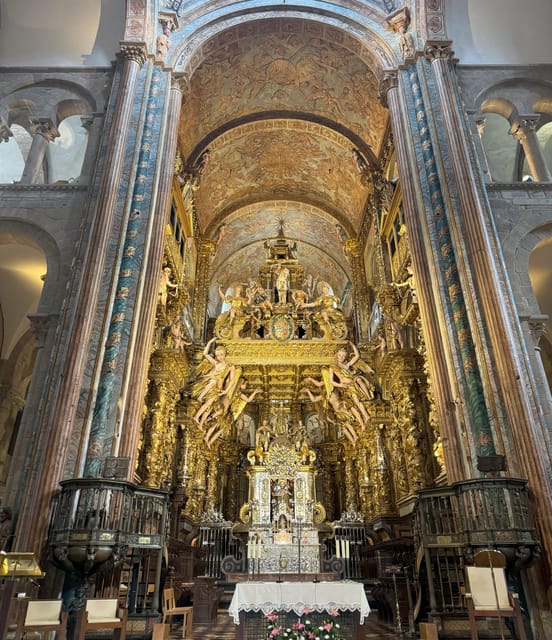
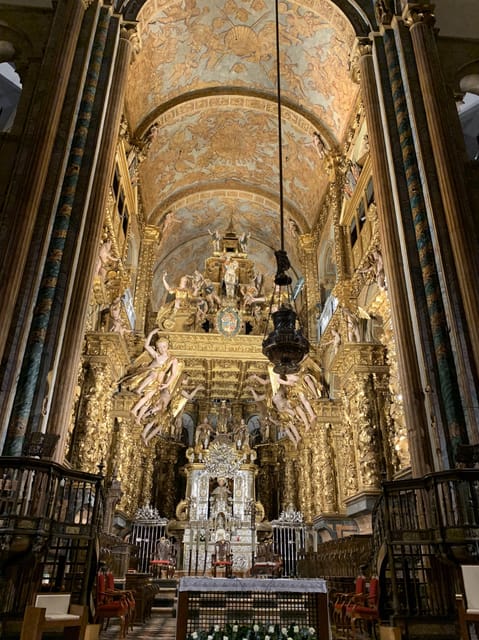
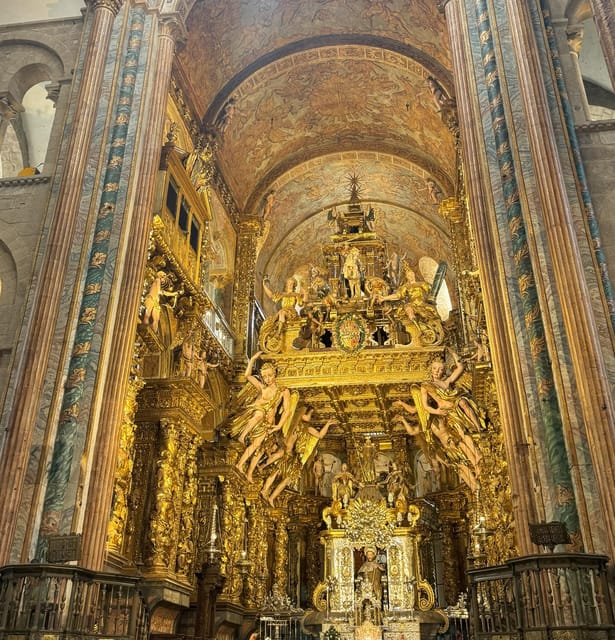
After the museum, you move inside the cathedral itself, which has recently been restored. That restoration piece is worth knowing because it affects what you notice. Freshly maintained stonework and cleaned surfaces make architectural features easier to read, especially the decorative areas around the central focus.
Inside, you’ll walk through the cathedral’s naves and then spend time with the decorative chapels around the main altar. This is one of the tour’s biggest strengths: you’re not left to wander. You get a route and a guide who helps you interpret what you’re seeing.
Why that matters: Santiago Cathedral isn’t a single uniform style. It’s a layered site, shaped by time, changing artistic tastes, and centuries of pilgrim devotion. A guided stop at the chapels around the main altar helps you see the building as a program, not just a collection of stunning corners.
The guide also explains the cathedral’s significance to pilgrims. That can sound like a big claim, but in practice it means you’ll understand why certain locations matter more to pilgrims than others, and why the art and architecture were meant to reinforce faith, memory, and movement.
Saint James’s tomb: where the pilgrim story turns tangible
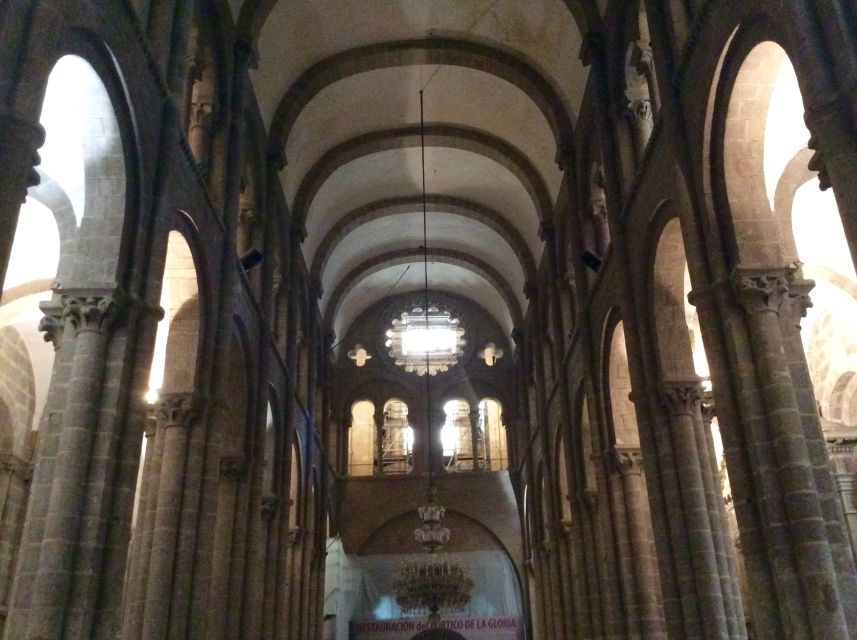
The highlight for many people is the tomb of Saint James the Great, and this tour puts that experience in the right context. You don’t just rush to the most famous spot and move on. You get the background behind the devotion and the broader role Santiago played in pilgrimage culture.
The guide’s explanation helps you see the tomb as part of an intentional pilgrimage ecosystem. It’s not only a sacred object. It’s also the spiritual destination that organizes how visitors move, what they hope to understand, and what the cathedral represents in the larger Camino tradition.
If you like when history feels personal, this is the spot. The cathedral atmosphere encourages quiet focus, but the guide’s narration gives you something to hold onto while you’re standing there. That combination helps you pay attention longer, without turning the visit into a lecture.
Also within reach of Santiago De Compostela:
- From Santiago: Tour To Finisterre, Muxia & Costa da Morte
★ 4.7 · 1,842 reviews - Excursion to Finisterre + Muxia + Costa da Morte (7 stops)
★ 5.0 · 1,367 reviews - Finisterre and Costa da Morte: The Most Complete Tour of Santiago
★ 5.0 · 733 reviews - From Santiago: Finisterre, Muxía & Costa da Morte Tour
★ 4.8 · 721 reviews
The crypt, the Codex Calixtinus, and why documents matter here
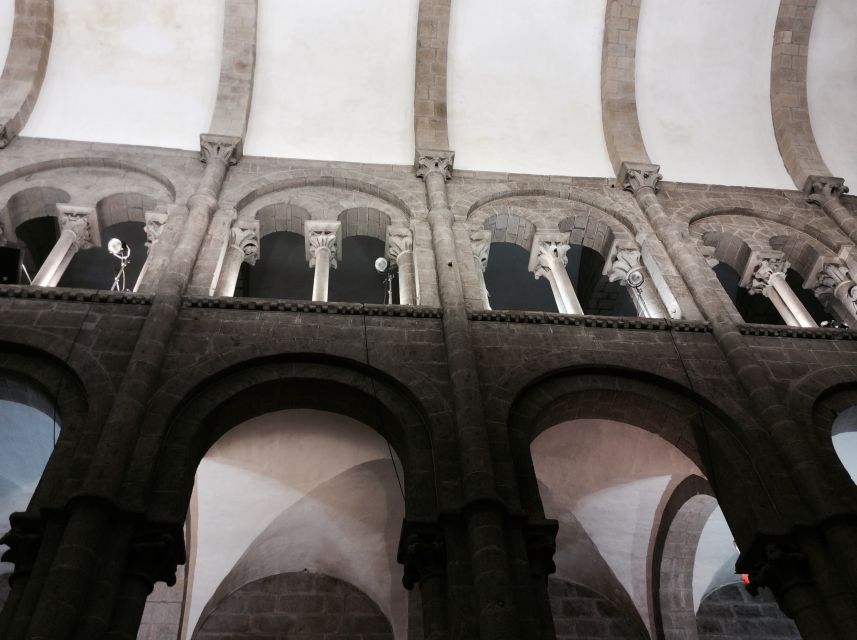
This tour includes time around the crypt and features the Codex Calixtinus, one of the cathedral’s most famous connections to pilgrimage culture. That combo is smart because it ties two kinds of heritage together.
The crypt side makes the story physical, rooted in sacred space and tradition. The Codex side brings it into the world of texts, records, and the way pilgrims traveled with guidance and shared meaning. For people who usually prefer reading over watching, this is where the tour can feel especially satisfying.
The guide also discusses the cathedral’s role in preserving and passing down these traditions. That helps explain why objects like codices show up as highlights in a cathedral museum tour, instead of being treated like unrelated academic extras.
You should leave with a clearer sense of how Santiago became a magnet. Not just because it’s impressive, but because it offered people a structured spiritual destination, supported by sacred art, architecture, and preserved materials.
Treasury, Chapter House, cloister, and balcony views
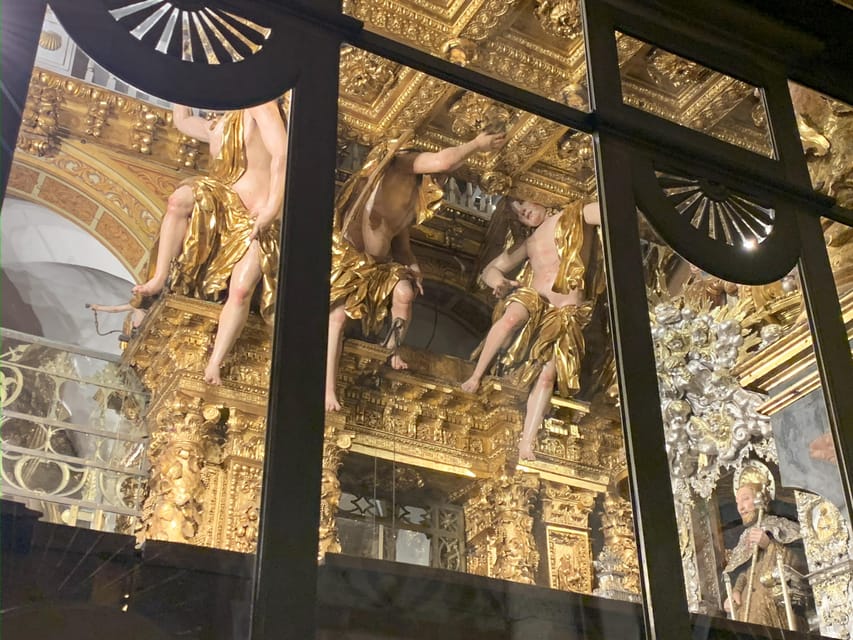
The cathedral route in this tour is designed like a circuit. You’re not only chasing the biggest icons. You’re also seeing the supporting spaces that make the cathedral feel like a functioning world.
You’ll visit the Treasury and the Chapter House. Even if you’re not an art-history person, these stops can be rewarding because they show how wealth, power, and faith were organized around the cathedral.
Then comes the quieter, more atmospheric portion of the visit: the cloister. Cloisters are made for walking slowly, letting your eyes rest, and catching the rhythm of a sacred building when you’re not inside a major worship space.
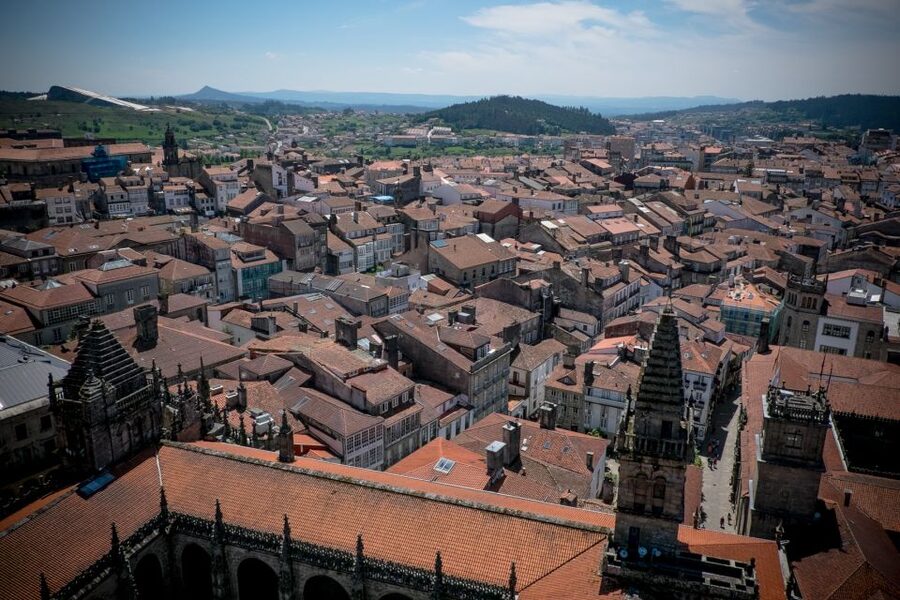
Finally, you’ll get views from the balconies. This is a useful break from close-up details. It helps you reset your eyes, and it gives your brain a sense of scale. In places like Santiago, where architecture is intimate and streets are narrow, having a higher viewpoint helps you understand how the cathedral dominates the setting.
Botafumeiro and the performance side of pilgrimage culture
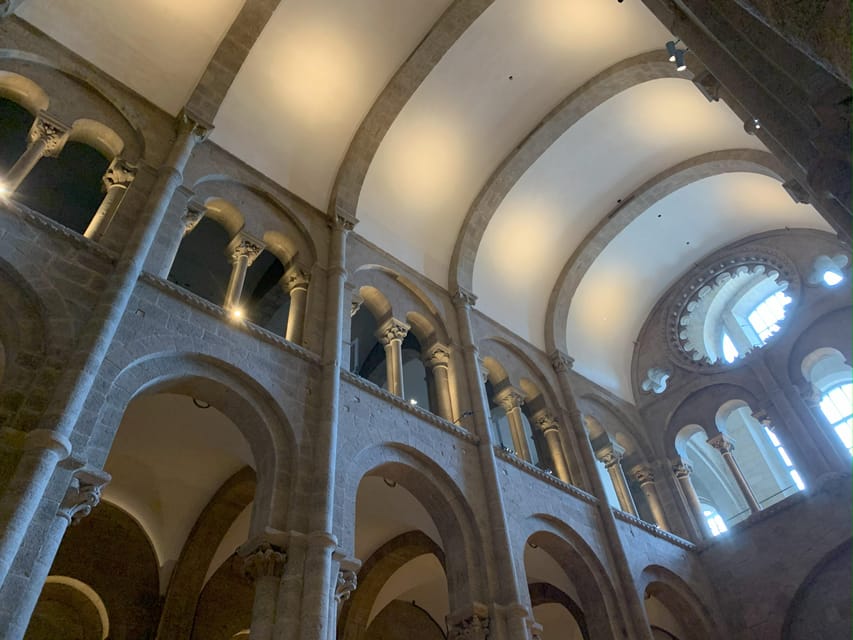
One of the more intriguing inclusions is the Botafumeiro. Even if you have only a vague idea what it is, having it explained as part of the tour gives it meaning beyond spectacle.
The guide helps you understand why this tradition belongs in a Santiago Cathedral visit. It’s tied to ritual life and the way pilgrimage includes ceremony, not just destination worship. For some visitors, it’s the kind of detail that makes a cathedral feel less frozen in time.
If you love cultural practices, this stop may end up being one of your favorites, because it connects art and architecture to living tradition.
Guide quality: why names keep showing up in positive reviews
A big reason this tour scores high is the consistency of the guiding style. The tour’s English speaking quality is often praised, and guides such as Carmen, Maria, Laura, Miriam, and Alberto show up repeatedly in positive feedback.
Across those guides, the recurring strengths are practical: they pace the visit so you keep up, they explain what to look for in the museum and cathedral, and they answer questions without rushing you out the door. In one case, a guide even spoke both Spanish and English to match the group flow, which is a big win if you’re switching between languages while traveling.
One more detail you’ll appreciate: the tour format seems to give the guide time to stop in front of key pieces and explain why they matter. That’s how you notice the cathedral’s meaning instead of just taking photos.
Who this tour suits best, and who should consider a different option
This tour is a strong fit if you want:
- A guided route through museum plus cathedral interior in a tight 2-hour window
- Clear explanations for the tomb, chapels, and key treasures like the Codex Calixtinus
- A small group setting where you can ask questions
It may be less ideal if:
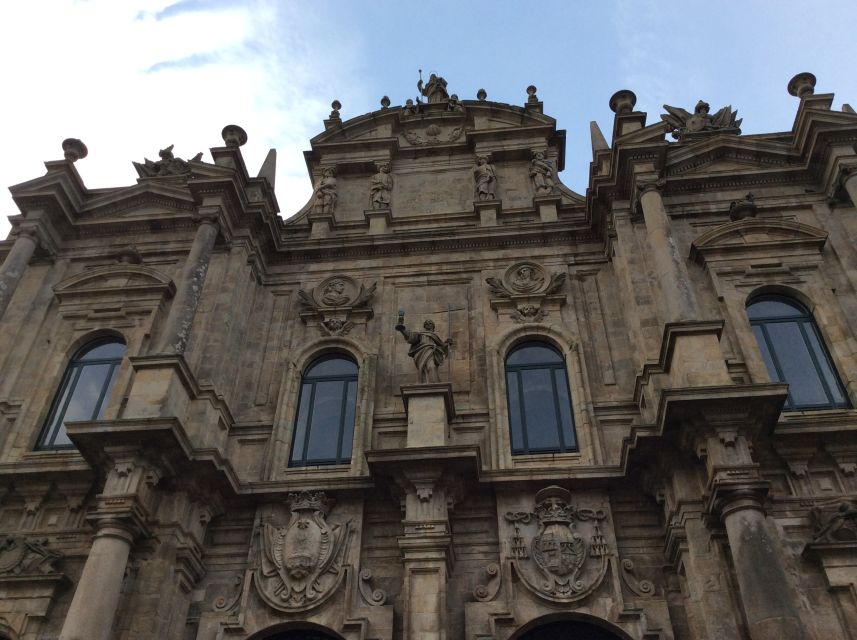
- You’re hoping for a long, in-depth walk around the outside facades and symbolic exterior details. One visitor noted that the tour did not include a walk around the cathedral facades for that kind of exterior symbolism. So if your main goal is exterior architecture analysis, you might want to plan additional self-guided time outside.
Also, because the tour is not suitable for wheelchair users, it’s best reserved for visitors who can comfortably navigate interior spaces and walking routes.
Price and value: what $29 buys you in Santiago
At $29 per person, the value comes from three things that work together.
First, you get a live guide. On a site this famous and this large, the difference between a self-guided walk and a guided visit is huge, especially once you start focusing on chapels, crypt spaces, and museum objects that you might otherwise overlook.
Second, the price includes entrance to the cathedral museum. That means you are bundling museum access with guided storytelling, rather than paying separately or losing time searching for the right entry.
Third, you get a time-saving strategy: skip-the-line access through a separate entrance. In Santiago, where queues can feel like part of the tourist tax, saving that friction is not a small thing. It protects your day so you can still see other neighborhoods and sights after the tour.
In short, the price is fair if your goal is to understand the cathedral’s major points without spending a half day lost in logistics.
Should you book this Santiago Cathedral and Museum guided tour?
I think you should book it if you want the best shot at making the cathedral feel meaningful quickly. The tour is built around the core elements that define Santiago, including the Saint James tomb, the museum’s sacred art, and major indoor spaces like the crypt and chapter areas. It also adds helpful extras such as the cloister, balcony views, and the Botafumeiro connection, which help the visit feel rounded rather than one-dimensional.
Skip it or pair it with extra time if your main priority is slow exterior architectural exploration, or if you have accessibility needs since the tour is not wheelchair suitable.
If you’re deciding between a quick self-guided pass and a guided format, this one is the smarter use of a limited Santiago day. You’ll spend less time figuring out where to go, and more time understanding why the cathedral matters.
FAQ
How long is the Santiago de Compostela Cathedral and Museum guided tour?
The tour lasts 2 hours.
How much does the tour cost?
The price is $29 per person.
What is included in the tour?
It includes a guided tour and an entrance ticket to the cathedral museum.
Does the tour include skip-the-line entry?
Yes. You get skip-the-line access through a separate entrance.
What languages are offered for the live guide?
The live tour guide is available in English, Spanish, Italian, Portuguese, and French.
Where is the meeting point?
The meeting point may vary depending on the option booked.
Is there free cancellation?
Yes, free cancellation is available. You can cancel up to 24 hours in advance for a full refund.
Are large backpacks allowed?
No. Large backpacks are not allowed.
Is the tour wheelchair accessible?
No. It is not suitable for wheelchair users.
Recently added around Santiago De Compostela
- Tierra de Leyendas y Meigas★ 4.8 · 102 reviews
- Santiago: Guided Foodie Tour with Drinks, Tapas & Live Music★ 4.7 · 153 reviews
- Santiago de Compostela: Private Guided Tour in two hours★ 4.8 · 59 reviews
- Santiago de Compostela: Massage Treatment★ 4.8 · 170 reviews
- Santiago de Compostela: Cathedral, Museum, and Old Town Tour★ 4.8 · 382 reviews
- Santiago de Compostela: Finisterre, Muxia & Costa da Morte★ 4.7 · 526 reviews
- Santiago Complete Tour: City, Portico and Cathedral Tickets★ 4.7 · 108 reviews
- Santiago de Compostela: Cathedral & Carraca Tower Roofs Tour★ 4.7 · 79 reviews
Santiago de Compostela Tours & Activities, compared.
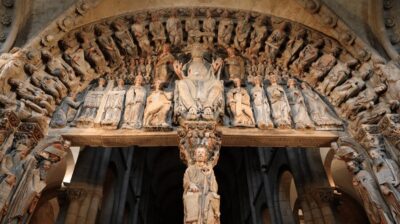
Santiago: Cathedral & Museum Tour + Pórtico of Glory Option
Read our review →
From Santiago: Tour To Finisterre, Muxia & Costa da Morte
Read our review →
Excursion to Finisterre + Muxia + Costa da Morte (7 stops)
Read our review →
Finisterre and Costa da Morte: The Most Complete Tour of Santiago
Read our review →
From Santiago: Finisterre, Muxía & Costa da Morte Tour
Read our review →
Santiago de Compostela: Finisterre, Muxia & Costa da Morte
Read our review →
From Santiago: Tour to Rias Baixas with Boat Trip and Winery
Read our review →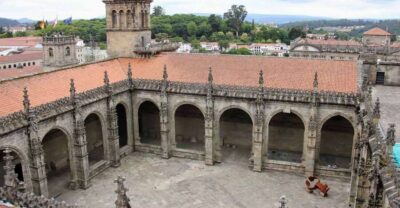
Santiago de Compostela: Cathedral, Museum, and Old Town Tour
Read our review →Browse the lists this tour appears in